Introduction
The African declination of Modernism has been the topic of recent research, which has mainly focused on the works realised in Sub-Saharan countries by architects coming mostly from Europe, after the end of colonial mandates. Being directly commissioned by local administrations, these architects were able to design works that were able to give a modern face to these developing countries. On one hand, the current reinterpretation of these works aims at highlighting their significance from a critical and historiographic point of view, in relation to better-known experiences in other continents. On the other side, however, in the perspective of urgent environmental and climate issues, many of these works pose serious problems of conservation, but also of their integration inside local contexts. Very often they appear today as decontextualised objects, reflections of distant cultures, which have nothing to share with the urgent search for an autochthonous identity by many of these countries, which in younger generations are trying to find it in the building traditions that have been handed down for centuries. These ancient techniques are, moreover, also the only ones that can respond to the increasingly pressing urgency of climate and environmental issues.
Early Examples of North African Modernism
The research group led by Tom Avermaete, Serhat Karakayali, Marion von Osten – curators of the travelling exhibition In the Desert of Modernity. Colonial Planning and After (Berlin/Casablanca, 2008 - 2009) (Avermaete, Karakayali and von Osten 2010) – were among the first to focus on the complex relationship of the Modern with colonialist culture, tracing the reciprocal cultural exchanges, which occurred because of the migration processes after World War II, between the European context and the North African countries. In these different contexts, the urban principles inherited from the European Modern had to be confronted with climatic and environmental conditions, as well as with secular local building traditions. The declination of imported models in individual African countries has led to heterogeneous architectural works in which old and new, tradition and innovation coexist in a state of dynamic tension.
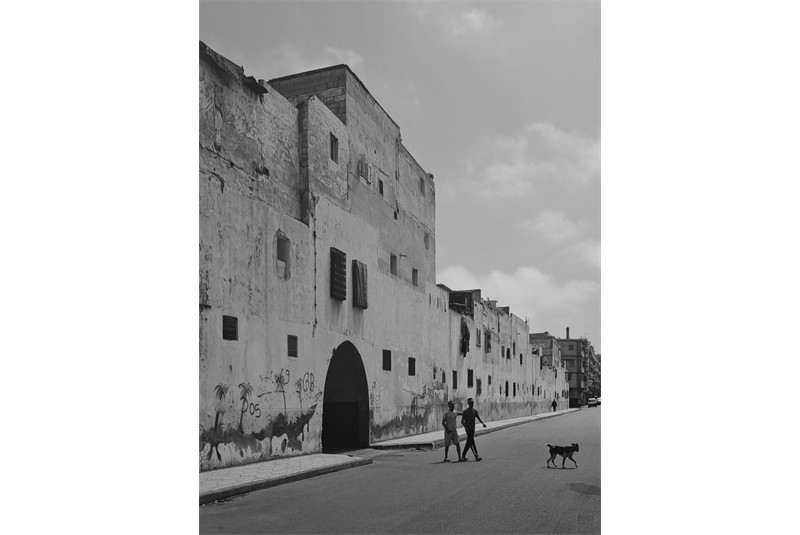
Already before the Second World War, some French architects – as Edmund Brion – were working in the Moroccan colony, to build new urban neighbourhoods in the suburbs of Casablanca (Cohen and Eleb 2002), and company towns related to phosphate mining in the area around the city of Khourigbah, using urban models referred to the morphological and typological principles of the local medinas (Avermaete 2012). According to these first examples, other European architects, working in the North African colonial territories from the early 1950s onwards, also moved away from rigidly modernist schemes, seeking new solutions closer to local settlement characteristics (Caja, Landsberger and Fumagalli 2020).
The models tried out in these new urban parts reflect the discussion on the legacy of Modernist principles introduced by the young generation of architects – later brought together in Team 10 – at the 9. CIAM in Aix-en Provence in the summer of 1953. An articulated debate, united however by the desire to overcome the rigid principles of functionalist zoning enshrined in the Athens Charter in favour of a closer interconnection between house, street, neighbourhood and city. It would take more than a decade for new typo-morphological approaches to the historic city – initially introduced in the Italian context – to study and analyse in greater depth the form and the primary factors that compose the individuality of the Islamic city compared to the European one. As early as 1952, Victor Bodiansky, George Candilis, Henri Piot and Shadrach Woods reinterpreted the traditional typology of the patio house in the Cité Verticale – a pilot project for a new urban part of Casablanca, built as a low-cost residential neighbourhood for rural immigrants. This was however developed in height to create a regular mesh of multi-storey blocks, whose irregular boundaries fit one of the city’s largest suburban bidonvilles.
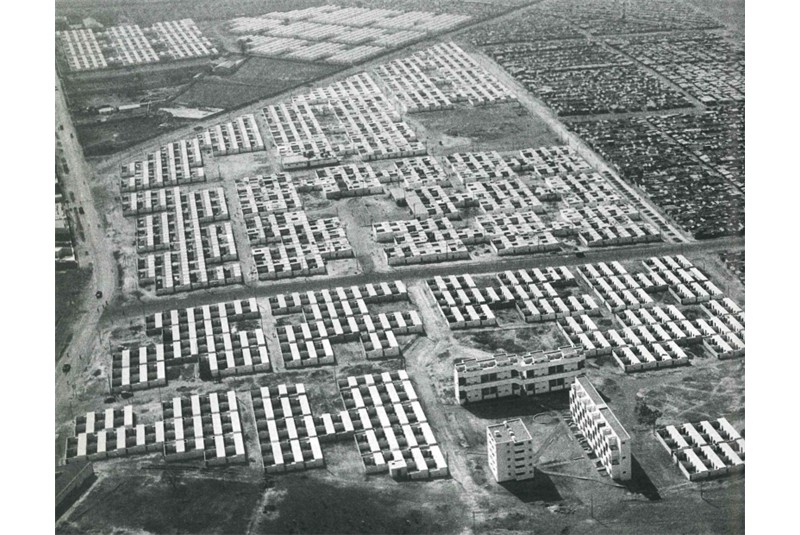
Similarly, Michel Écochard’s districts, also built on the fringes of Casablanca and other Moroccan cities, abandoned the open building schemes of functionalist matrix to accord with the layout of the local medinas, whose density and scale are here adopted as a scale of aggregation for new forms of community. In contrast to these horizontally developed schemes, the Climat de France in Algiers, realised by Fernand Pouillon in Algeria in the same years, introduced a new monumental scale for collective residence, drawing on the large courtyards of local historical complexes. This project became a pilot experience in the search for new settlement forms, which was only later rediscovered as an alternative model to the Lecorbusieran Unitè, thanks to its ability to integrate itself into the existing urban context, making use of local architectural and construction solutions.
Cultural transfers between Europe and Sub-Saharan Africa
Compared to the rest of the African continent, the specificity of the urban and architectural interventions carried out by European architects in the territories of the South-Sahara clearly emerges. Particular attention has recently been devoted to them by international, mainly European, scholars. In particular, the series of architectural guides by the Berlin-based Dom Publishers has explored with Prussian systematicity in as many as seven volumes all the possible national declinations of Sub-Saharan Africa (Meuser and Dalbai 2021).
The introduction by Philipp Meuser – editor of the series – underlines the multiplicity of cultural transfers that took place in the last century between European countries and the examined territories. These exchanges involved architects from different European nations, who in various ways tried to give a local version of the International Style then prevailing.
If we consider the case of Italian architects, these countries have often been the occasion to realise large-scale works with individual characters which however today show the difficulty of relating to changing climatic and environmental conditions. Precisely for this reason, many of these works remain iconic pieces today, mostly characterised by unusual shapes and a dimension that is mostly alien to the fabric of local urban contexts. Such as the office building La Pyramide in Abidijan in Ivory Coast by Rinaldo Olivieri (1972), which is characterised by the unusual composition of a pyramid-shaped glass office volume, leaning against the stereometric reinforced concrete distribution tower behind it, without, however, finding a dialogue with its surroundings.
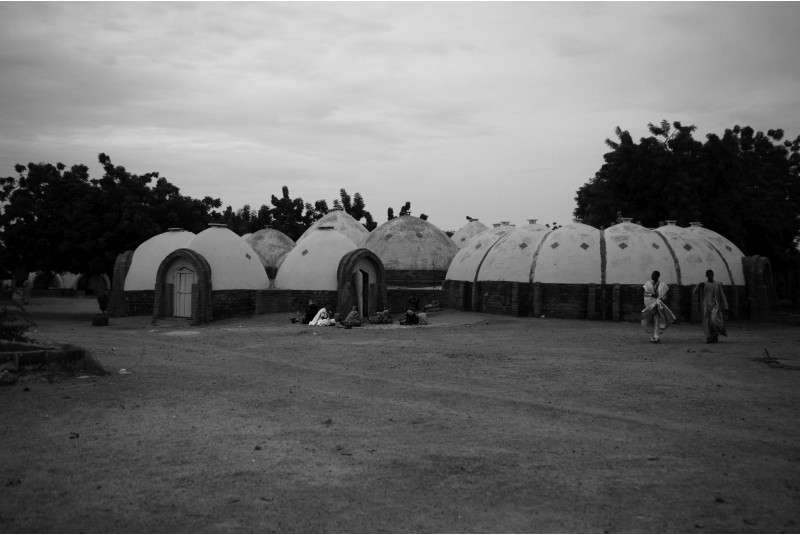
Among the authors who have instead sought to relate in a concrete manner to local climatic and environmental conditions, emerges the figure of Fabrizio Caròla, an architect of Neapolitan origin who moved to Africa in the early 1970s. In his works, he has been among the first to take up traditional techniques, such as the use of unbaked earth to create self-supporting domes, as in the hospital in Kaédi, Mauritania (1989), a central work in his work, which won the prestigious Aga Khan Award (Alini and Caròla 2016).
The works of architects from other European nations, mostly linked to previous colonial mandates – particularly those of the British and French, but also Portuguese, Belgian and Spanish – show clear references to European models, influenced by late Lecorbuserian work and British Brutalism. Despite their foreignness to indigenous architectural culture and traditional urban contexts, these interventions were often welcomed by the local community, viewing them as instances of adhesion to an international language, capable of extending the cultural boundaries of individual countries to other continents – as Udo Kultermann, one of the first to deal with African modernism, pointed out at the time (Kultermann 1963).
The activity of German architects in these countries remains poorly documented, following the cession of their colonies to French and British power after the First World War. Following the independence of the nations from the colonial powers, some German architects were mainly commissioned for public buildings and diplomatic headquarters. Among these, the German Embassies designed by Heinz Seidlitz in Lagos, Nigeria, and Monrovia, Liberia, employed a technocratic language typical of the administrative buildings constructed in Germany in the same years.
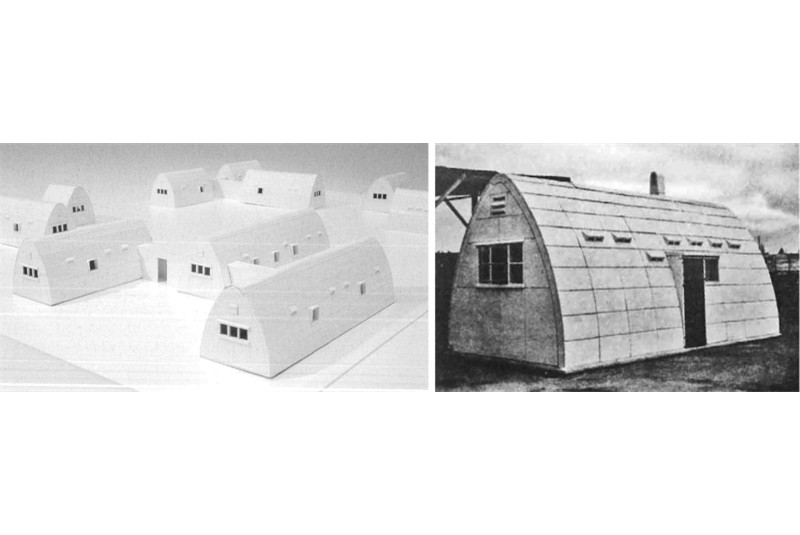
Compared to these, Ernst May’s work in East Africa – well documented in the 2001 exhibition at DAM in Frankfurt (Herrel 2001) – is an exception. Having emigrated to Kenya in 1934 – following his experience as chief architect of Das Neue Frankfurt and his subsequent brief period in the Soviet Union – May imported the experiences of low-cost housing reform made there. Here he used prefabricated prototypes, which he used to build housing estates in several countries, including Kenya and Uganda.
Tropical Architecture
In Great Britain, tropical architecture became a privileged field of research from the early 1950s onwards (Lu 2010). In the Conference of Tropical Architecture, held at University College London in ‘53, the debate was on the advantages and disadvantages of exporting western models and on the relationship between new building technologies with reference to the return to traditional knowledge, vernacular styles and local materials.
Among the speakers was the German architect Otto Königsberger, long active in the Indian colonies, who propagated the use of local building traditions, against the export of western technologies. From 1954 onwards, he will direct a post-graduate programme in tropical architecture at the Architectural Association in London. This study programme was very successful and attracted many architects from different countries of the European Community.
Emblematic figures such as Maxwell Fry and Jane Drew will teach there. These two architects – well-known for their later participation in the making of Chandigarh beside Le Corbusier – will be the authors in the 1950s of many key works in Nigeria and Ghana. Of particular interest is their National Museum in Accra, Ghana, which consists of a horizontal volume with staggered baffles on which a lowered dome is grafted, containing a large central space for the display of the main emblematic artefacts symbolising the country’s national identity.
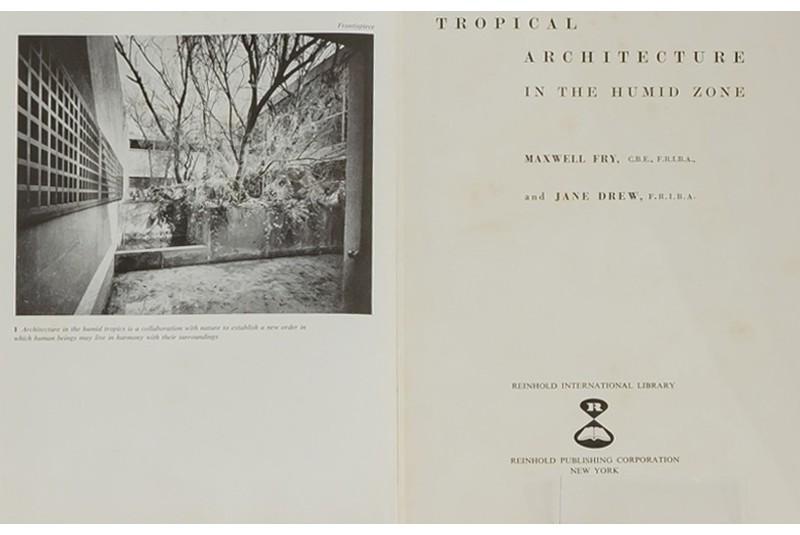
Fry and Drew would later systematise their theoretical and design principles put into practice during the realisation of these works in the book Tropical Architecture in the Dry and Humid Zones (Maxwell Fry and Drew 1964), published in its final version in 1964. In this manual, the authors attempt to set the foundations for a new design methodology customised for tropical areas, attempting to apply western methodology to the conditions of cultural and social underdevelopment in Sub-Saharan countries. This gives rise to the idea of a deeply rooted approach to local climatic and geographic conditions, which seems to anticipate the regionalist trend, even if far away from any vernacular accent (Galli 2016).
Also related to this research line is the German architect Georg Lippsmeier, whose theoretical and architectural output remains little studied until today, even though part of his legacy was transferred to the archives of the CCA in Montreal in 2016. Founder of the Institut für Tropenbau (IFT) in Germany in the 1960s, with his studies and projects he linked up with Ernst May’s experience of low-cost housing designed for the poorer layers of the African population. From his studio in Düsseldorf – the headquarters of the Institute of Tropical Construction – he opened several satellite offices in the countries – Kenya, Senegal and Tanzania – where he worked as an architect.
The Architectural Legacy of Modernism
The legacy of these modernist works by European architects has been the subject of another recent study, coordinated by Swiss architect Manuel Herz, which focuses on five Sub-Saharan nations – Ghana, Senegal, Ivory Coast, Kenya and Zambia – chosen based on their specific climatic and cultural conditions and their reflection on the development of local architecture (Herz 2022). This research opens new perspectives for Western critical and historiographical culture – which until now has been reluctant to include this geographical area – focusing on architectural production after the emancipation from colonial domains, mostly during the period from 1957 to 1966. Within this little or not at all known heritage, one discovers works that can become, in the opinion of the authors, cornerstones of the late Modernism of the 1960s and 1970s, on the same level as much more famous projects realised in the same years in other continents. The goal of the research is not only historiographical, but also aims to stimulate interest in the local institutions, to allow for future conservation interventions, that would be desirable for many of the selected buildings, often in a state of neglect today, before their imminent demolition.
This research aims to show the different facets in these works, overcoming the often-recurring prejudice, mostly referring to ethnographic and vernacular aspects, of the existence of common features in many of the cities of these countries. As Achille Mbembe, a Cameroonian theorist and expert on post-colonial issues, well explains, an image of Sub-Saharan countries emerges today that differs from the one predominantly referring to the elementary and primitive living conditions to which most of the population is subjected (Mbembe 2001). Contradicting this image, the works realised by predominantly European architects during the 1960s and 1970s trigger a critical dialogue with long-consolidated cities, referring to urban and architectural principles that are for the most part foreign to local settlement patterns.
The International Style of the post-World War II period, as well as Brutalism of British origin, are here declined according to forms and stylistic features that are individualised in different ways from time to time, which only in certain fortunate cases manage to integrate with the surrounding context.
In this modernisation process, autonomy from traditional urban and architectural development models opens the experience of Sub-Saharan countries to international debate. With respect to which there is a slight temporal gap at times, also due to the different cultural matrices of the architects involved. Architects who had mostly been trained in English, German, Belgian or French schools and universities, as the level of university education in these countries was almost non-existent at the time – the first school of architecture will be active from 1960 in Ghana. While most of these architects came from France and England, there are also representatives from other countries, besides the already mentioned Italy and Germany, such as Scandinavia, Eastern Europe and Israel. Scarcely involved in colonialism, the Nordic architects had easier access than the others thanks to their democratic tradition, showing particular interest in the territories of Sub-Saharan Africa both on a political and diplomatic level. These countries, on the other hand, represented for them an opportunity to obtain important architectural commissions that were difficult to obtain at home.
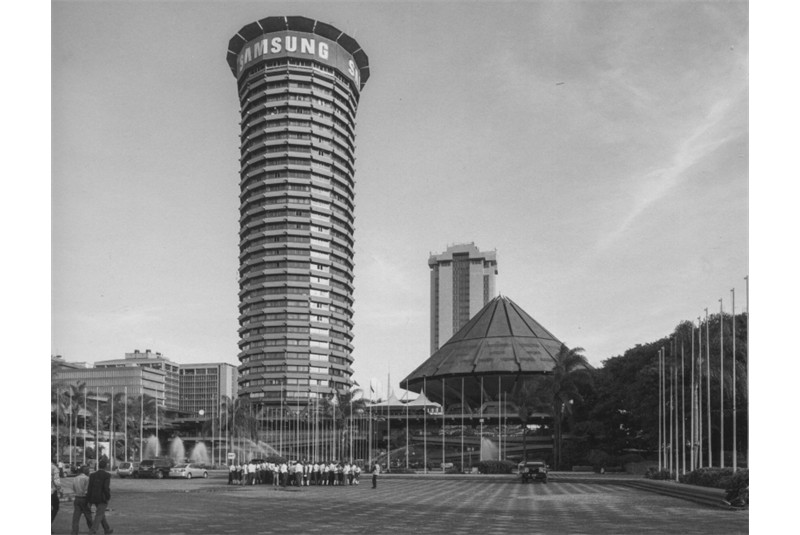
Public works stand out, which often become new landmarks on an urban scale. Among them, the Kenya International Conference Centre, designed by Norwegian architect Karl H. Nostvik, is soon recognised by the local community as a symbol for the country’s independence. The complex, consisting of a tower on a circular plan and an amphitheatre with a closed flower-shaped roof, is based on an articulated and decorated concrete plinth. Among others, the Danish architect Max Gerlach realised the Great Hall at Knust in Kumasi, which dialogues between the lightness of the pilotis, on which the volume is suspended, and the granite inserts which accentuate the character of solidity. His compatriot Erhard Lorenz, active in Lusaka, the capital of Zambia, will also design several works, including the chapel of the University Campus, a large portico with giant pillars under which is inserted the the circular volume of the church.
As for the projects realised in the same years by architects from Eastern Europe, the relationship is mainly explained by the common political orientation of these countries, often administered by socialist regimes. Prominent among these projects is the Accra International Fair, designed by the Polish architects Jacek Chyrosz and Stanislaw Rymaszewski, which is characterised by the large circular volume of the entrance, covered by a large oculus opened towards the sky.
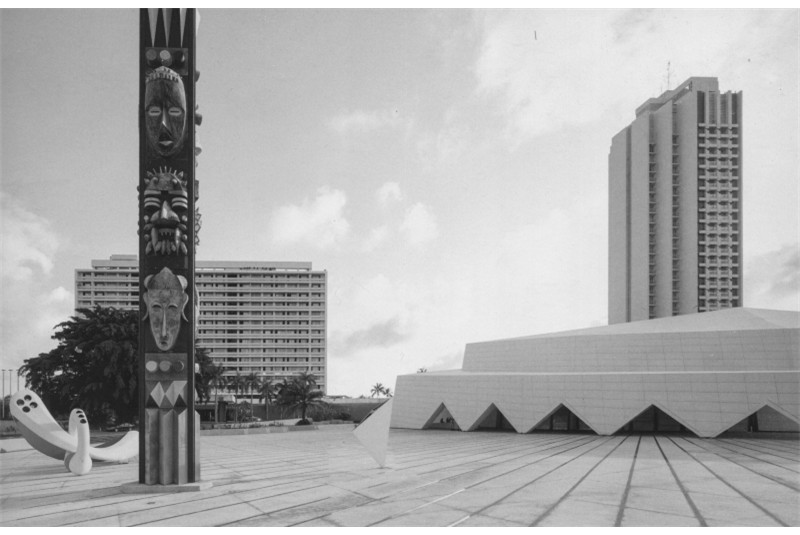
More surprising, however, is the relationship of the Sub-Saharan countries with Israel: both united by the struggle against British dominion, they had recently found their independence by becoming active members of a common ongoing process of decolonisation. It will be Golda Meir – the first woman to lead the country – who will resolutely support this process, influencing the political choices made by African governments. Among the projects realised by Israeli developers and architects two hotel complexes stand out, which differently interpret the relationship between basement and autonomous buildings. The Hotel Ivoire in Abidjan, by the architects Thomas Leitersdorf and Heinz Fechel, is built around a large open conference space that keeps together two isolated buildings, a tower with staggered walls and a rectangular prism with horizontally curved façades. The Hilton Hotel in Nairobi by Zevet Architects, develops in height in a tower building with a circular layout, with a façade punctuated by full-height vertical pillars, supported on a compact base connecting it to the surrounding urban context.
New Postcolonial Activisms
The role and involvement of European architects active in the countries that were once part of the colonial empire has now become a subject of critical investigation, different from the previous research mentioned above aimed at re-evaluating their role within a historiography of the Modern Architecture limited mostly to European and Western contexts. This change of perspective is mainly based on the current desire – parallel to the ongoing battles in various disciplinary fields – to assert independence from imported models from an architectural and urban point of view.
On the other hand, many doubts remain today as to the actual cultural autonomy of these countries. Despite the countless efforts made to mend ties with traditions and forms linked to their past, very often these countries are the terrain of foreign investment, for real estate operations that are based on globalised models.
About the works of imported Modernism of the 1960s and 1970s mentioned above, two divergent positions emerge. On the one hand, there is an attempt to preserve them as testimonials of a time in which these countries, following the conquest of their political independence, placed themselves critically in relation to the international debate, re-elaborating it according to original forms; on the other hand, however, these same forms are now read as extraneous references to the local culture, disconnected from real ties to the environment, climatic conditions, constructive and craft traditions of the individual countries.
This question was placed at the centre of the last Venice Architecture Biennale, which focused on two keywords that seem to centre on the two emerging issues discussed here so far: decolonisation on the one hand, and decarbonisation as an answer to environmental issues on the other. In the militant intentions of the Anglo-African curator Lesley Lokko, the two themes were tackled by actively involving young local collectives who, in different ways – often also at the limits of other disciplines and far from architecture – have tried to show how it is possible to rediscover one’s own identity today through the search for continuity with one’s own historical and cultural roots, rereading them in close relation to today’s pressing environmental and energy issues (Lokko 2023).
In this new phase of decolonisation – which differs from the first in its greater awareness of the cultural and ideological objectives it sets itself – African countries seem today to be seeking alternative models to both those of Western modernism and those proposed by the globalised economy, drawing on the identity of local cultures and traditions. This act of resistance – the first principle of any form of critical regionalism, as asserted long time ago by Kenneth Frampton in his manifesto-text, which is still today the object of worship and critical revision (Frampton 2019) – seems today to be particularly felt by the new generations of architects, ready to question an abstract notion of modernity in favour of a deeper rootedness to reality.
A new Sub-Saharan architecture scene is emerging from below, made up of young and mostly unknown authors. Using ways that are at times unrealistic, naive and often far removed from real architectural proposals, at the risk of becoming a bad copy of much more convincing forms of activism in the artistic sphere, these new forms of resistance give voice to new identity and gender demands (Magnago Lampugnani 2023). Compared to the fragility of these bottom-down actions, which often remain far removed from the disciplinary sphere of the architectural project, new figures of architects of African origin, but for various reasons active in Europe, are strongly emerging. In the most interesting of these, the ability to combine their Western education with their culture of origin in the search for appropriate solutions to local issues is intertwined (Biraghi 2023).
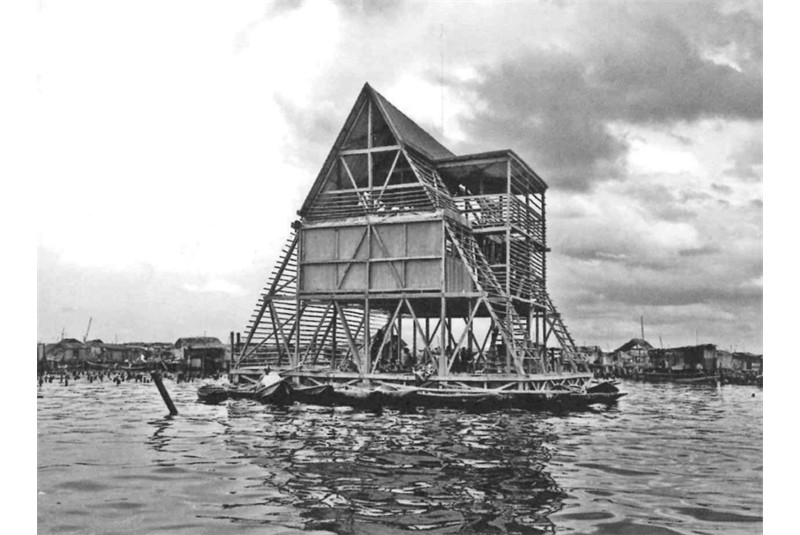
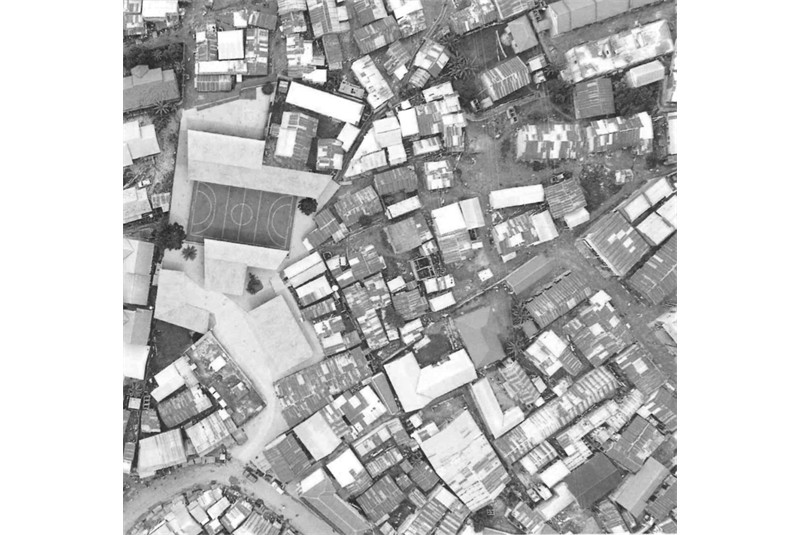
Once again, as after the liberation from the colonies, we see a phenomenon of cultural transfer, but in this case according to an inverse relationship. Now, in fact, it regards Afro-European architects returning to their countries of origin to deal with issues related to their roots, seeking unusual solutions capable of finding a more general meaning that goes beyond specific localisms. Such as Francis Kerè’s recent proposal for a playground within the Kamwokya community in Kampala, Uganda, which successfully acts as a regenerating element for an entire community and fits organically into the minute fabric, creating a small but significant island of order intended as a meeting place for the district’s youth. As has also been shown on another recent occasion – the exhibition Africa: Big Change Big Chance, curated by Benno Albrecht (2014) – these countries can now become spaces of a new modernity, where a different universal, cosmopolitan, global culture can be erected, despite the problems caused by the rapid urbanisation underway, the incongruous use of natural resources and territories.
Is this the right way to approach the country’s difficult renaissance with the tools of architectural design?
Bibliography
ALBRECHT B. (2014) – Africa: Big Change Big Chance. Compositori Editore, Boulogne.
ALINI L. & CARÒLA F. (2016) – Opere e Progetti 1954-2016. Con un saggio di Renato de Fusco. Clean, Naples.
AVERMAETE T., KARAKAYALI S. & VON OSTE M. (a cura di) (2010) – Colonial modern. Aesthetics of the Past. Rebellions for the Future. Black Dog, London.
AVERMAETE T. (2012) – “Excavating the company town: Small Moroccan mining cities in European archives. À la recherche des villes patronales: les petites villes minières marocaines dans les archives européennes”. In: PIATON C., GODOLI E. e PEYCERÉ D. (a cura di), Building Beyond the Mediterranean. Studying the Archives of European Businesses (1860-1970). Arles: Publications de l’Institut national d’histoire de l’art.
AVERMAETE T., PATTEEUW V., TEERDS H. & SZACKA L.C. (a cura di) (2019) – “Critical Regionalism Revisited”. OASE 103, May.
BIRAGHI M. (2023) – Storia dell’architettura contemporanea II 1945-2023. Einaudi, Turin, cap. XXV: Storia dell’architettura dal “resto del mondo”, 603-605.
CAJA M., LANDSBERGER M. & FUMAGALLI C. (2020) – “Tools for Reading and Designing the ‘Islamic City’. Italian Urban Studies at the Crossroads”. In: ASTE N. et alii (edited by), Innovative Models for Sustainable Development in Emerging African Countries, Research for Development. <https://doi.org/10.1007/978-3-030-33323-2_14>.
COHEN J.L. & ELEB M. (2002) – Casablanca: colonial myths and architectural ventures. The Monacelli Press, New York.
FRAMPTON K. (1983) – Prospects for a Critical Regionalism. Perspecta 20, pp. 147-163.
GALLI J. (2016) – “A Cosmopolitan Manual in Decolonizing Africa – Fry & Drew’s Tropical Architecture in the Dry and Humid Zones”. SAJ - Serbian Architectural Journal, pp. 193-216.
HERREL E. (2001) – Ernst May. Architekt und Stadtplaner in Afrika 1934-1953. DAM, Frankfurt am Main /Ernst Wasmuth Verlag, Tubinga.
HERZ M. (a cura di) con SCHRÖDER I., FOCKETZN H. e JAMROZIK G. (2022) – African Modernism. The Architecure of Indipendence: Ghana, Senegal, Cotè d’Ivoire, Kenya, Zambia. Park Books, Zurich.
KULTERMANN U. (1963) – New Architecture in Africa. Universe Books, New York.
LOKKO L (2023) – The Laboratory of the Future. Biennale Architettura Venezia 2023, Venice.
LU D. (edited by) (2010) – Third World Modernism. Architecture, Development and Identity. Routledge, New York.
MAGNAGO LAMPUGNANI V. (2023) – “Indignazione senza architettura”. Domus 1081, july-august, 68-69.
MAXWELL FRY E. & DREW J. (1964) – Tropical Architecture in the Dry and Humid Zones. London.
MBEMBE A. (2001) – On the Postcolony. University of California Press, Oakland (CA).
MEUSER P. & DALBAI A. (a cura di) (2021) – Sub-Saharan Africa. Vol. 1, Dom Publishers, Berlin.