The Island Theater Of Europe
Boundaries territories and narratives
Midway between Europe and Africa, the small island of Lampedusa, the largest of the Pelagie Islands, is the southernmost inhabited land in all of Italy. Farther south than Tunis and Algiers, Lampedusa’s landscape is marked by transitional features between Mediterranean and desert climates and the incessant blowing of winds. Despite the name Lampedusa, of uncertain etymology, now almost automatically associated with human history on the territory, the island, was almost uninhabited until modernity (it was colonized by small French and Maltese nuclei in the second half of the eighteenth century). The land remained on the fringes of History for centuries, serving as a simple stopover for vessels in need of shelter and supply along Phoenician, Greek, Roman and Arab nautical routes; of the passage of these peoples some traces of settlements and especially underwater wrecks remain today.
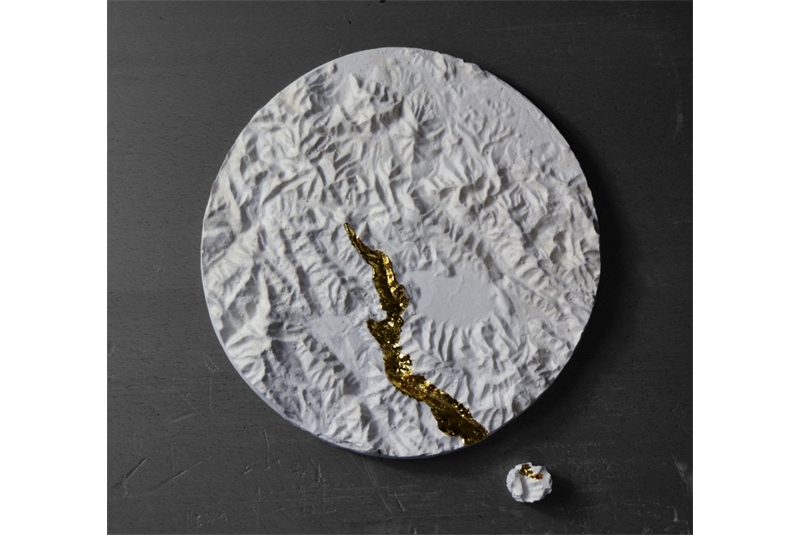
Its easy-landing status, a condition that continues into contemporary times, seems almost to be an intrinsic feature of its morphogenesis: scientifically classified as a horst (a German term for a portion of the Earth’s crust raised above a fault system in structural geology), it is configured as an anomaly: a portion of Europe on the African submarine plateau. This dual and contradictory feature typifies the island of Lampedusa: geologically African and administratively Italian. This contradiction is outlined as the hinge upon which we set up an experiential reflection that aims at highlighting the ambiguity between physical place and political space, between material limit and symbolic boundary, between stasis and path.
Morphologically, the island has the appearance of a barren limestone platform outcropping from the water etched by cliffs. In fact, Lampedusa, originally a forest, was deforested in the mid-nineteenth century in order to accommodate cultivation under support of Ferdinand II of Bourbon; the island lost its rich native flora to rapid desertification: crops, exposed to the Mistral and Sirocco, lasted very little. The material and historical record dictates that we must confront a landscape characterized by marked orographic trends but devoid of significant anthropogenic signs. Today Lampedusa is above all a symbol: it is the border between Africa and Europe, it is the tiny threshold to cross, in the total emptiness of the sea, to access the vast benefits of the Old Continent.
Its status as an ex-clave frontier has led it over the years to be at the center of contention and violence: the first landing, of 71 people, occurred in October 1992, six years after the attempted Libyan missile attack targeting the U.S. LORAN military base on the island. Over the next three decades, hundreds of thousands of people arrived on Lampedusa at the end of mass exoduses and tens of thousands died trying to reach it[1]. By August 2023, one hundred thousand migrants had landed over the first eight months of that year. The data takes on an even more significant and dramatic proportion when compared with the island’s population: just six thousand residents.
This human density has led over the years to two significant types of spatial modifications of the territory. On the one hand, reorganization and provision of voluminous and temporary emergency reception facilities has been necessary. On the other, a new contemporary monumental system was gradually established, adding new traces to those only two that had been there so far: the sharp incision of the airport runway and the Cartesian grid of the urban agglomeration to the south.
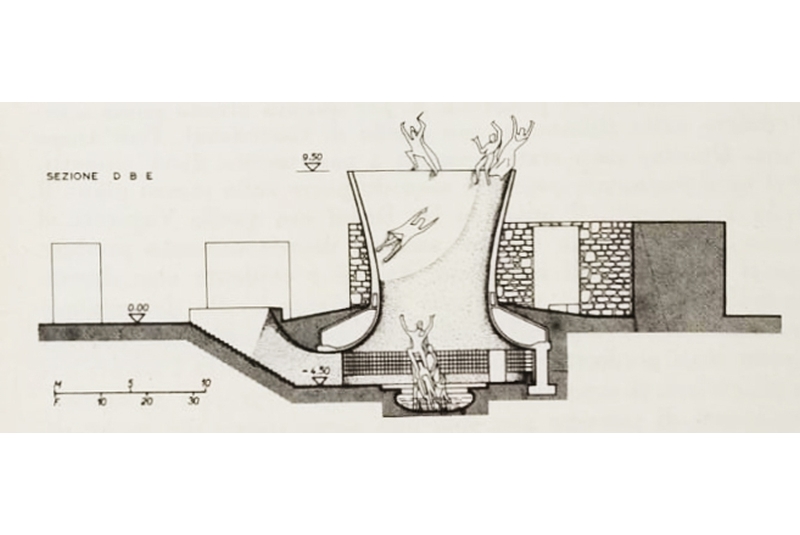
In 2008, Mimmo Paladino’s Gate of Europe was inaugurated, and currently the Natural Theater of the Quarry (connected to a new Migration Memorial) by Vincenzo Latina is about to open. Renato Rizzi (2017), meanwhile, has imagined for Lampedusa the Solomon’s Cathedral, a majestic underground space of recollection without religious vocation dedicated to the tragedies connected to expatriations.
Lampedusa is thus projected into the contemporary, and into the future, not only as a land tied to the ongoing migratory phenomenon, but as a narrative space of the historical event: in the attempt to understand it now, and remember it later. Its arid land is the raw and unavoidable material through which to convey new narratives: an ideal cathartic stage, where to paradigmatically represent the drama of all exoduses to Europe.
Actors and actions in space
Diderot from The Encyclopédie imagines, in his bourgeois drama The Natural Son, having a group of chosen theatricals settle in the Lampedusa of the time, lacking residents, which would make it a laboratory of experimentation, aiming at a radical change in the way of doing theater. Diderot was probably fascinated by Lampedusa’s liminal condition as a fundamental quality for the encounter of different cultures. This welcoming attitude is captured in the play by the ironic figure of the island hermit Clement, who in the island’s small church
had consecrated one chapel to Mohammed and the other to the Holy Virgin. If he saw a Christian ship coming he would light the lamp to the Virgin. If the vessel was Mohammedan, he would immediately extinguish the lamp of the Virgin and light one for Mohammed (Diderot D. 1757, 2020).
This passage, which for Rizzi manifested the absence of a secular place of contemplation on the island, generally describes the need to constitute a logical spatial structure capable of addressing culturally heterogeneous audiences, yet without being generic, ambiguous or grotesque as Clement's character may appear. On the contrary, the project attempts to highlight and unmask the ambiguities of reality by revealing a layering of senses conveyed exclusively through the experience of space.
With this in mind, this monument symbolizes the dual narrative of, on the one hand, migrants and islanders who, over time, have given rise to a shifting, nationless community governed by the rules of rescue and welcome. On the other hand, within institutional arenas, cultures and people are numbers to be managed, relocated, and buried by exerting material and symbolic forces that come far beyond physical boundaries. The complex totality of these actions of the bodies, and on the bodies, of migrants continually leaves on the territory of Lampedusa traces, objects and forms that the operation of monumentalization resemantizes to the status of symbols capable of staging and narrating this strabic dichotomy.
The Monument.
Duality
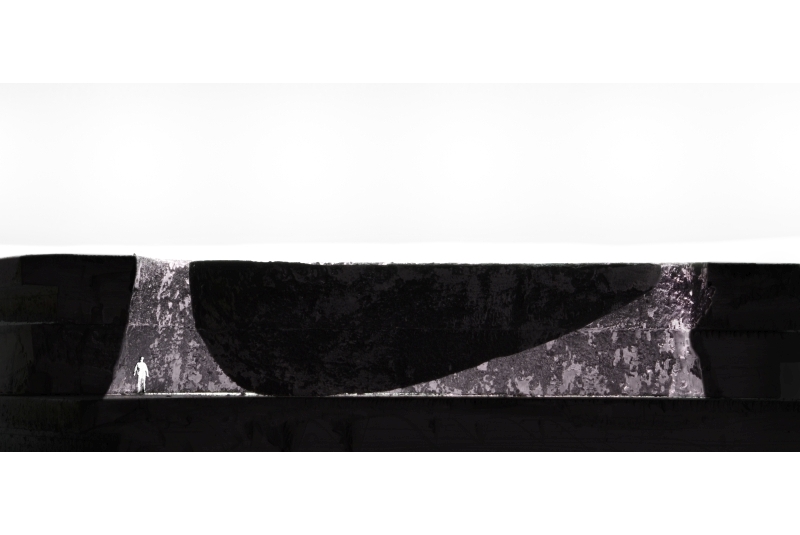
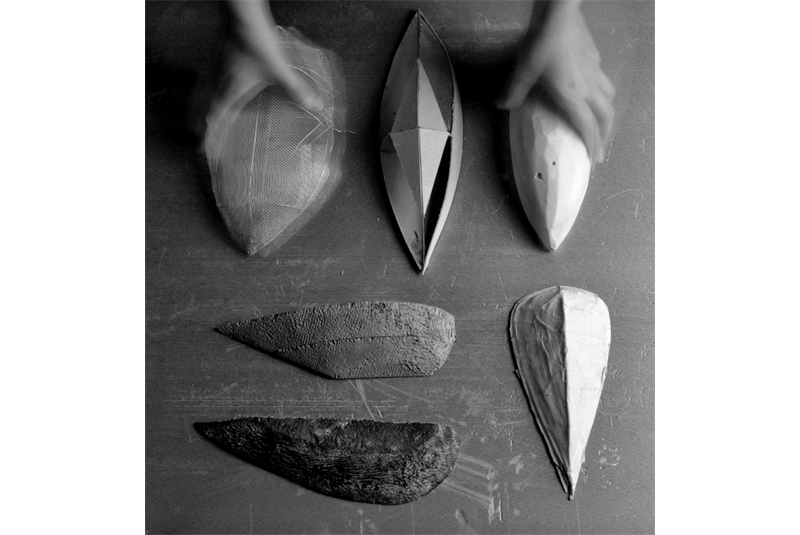
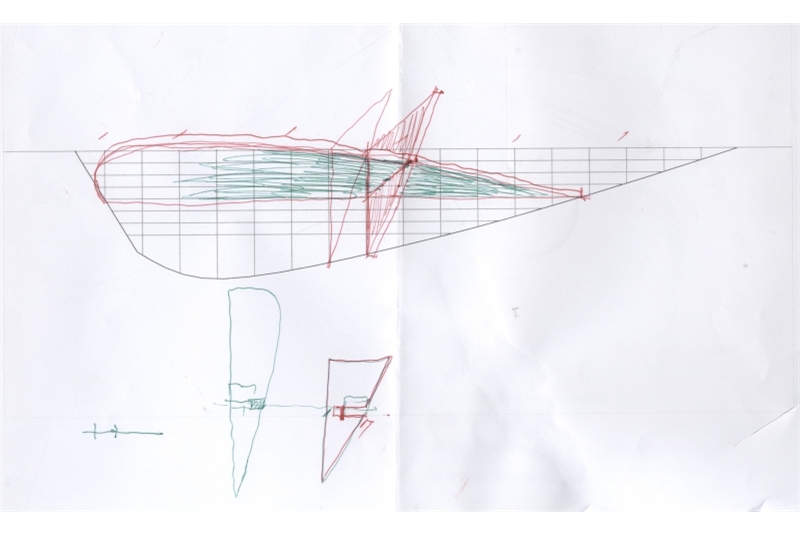
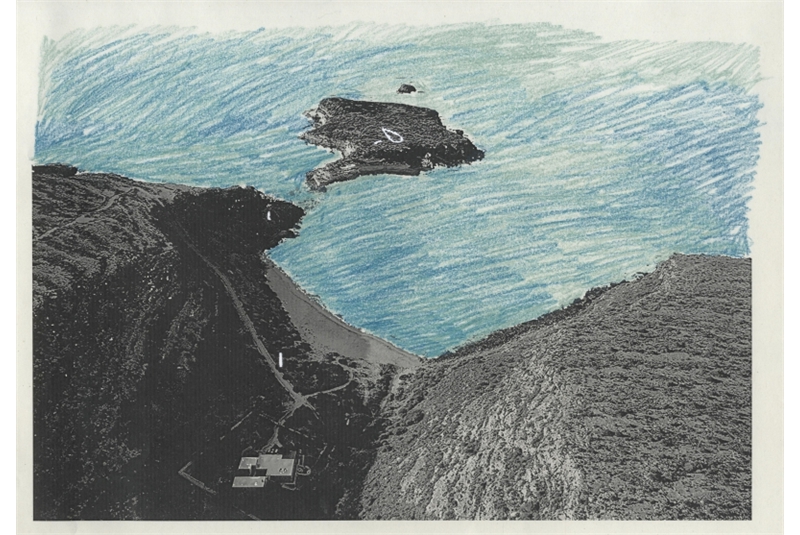
The design proposal for the memorial is configured as a landscape system capable of relating both to the landscape of the island, calibrating the insertion of architectural devices so that they interact with the territory, and to the monumental apparatus in place. The project also intends to connect the visitor with contemplation and memory through the spatial experience of a calibrated sequence of elements that, when put together, make up the memorial: the shell, the path, the excavation. [Fig. 1]
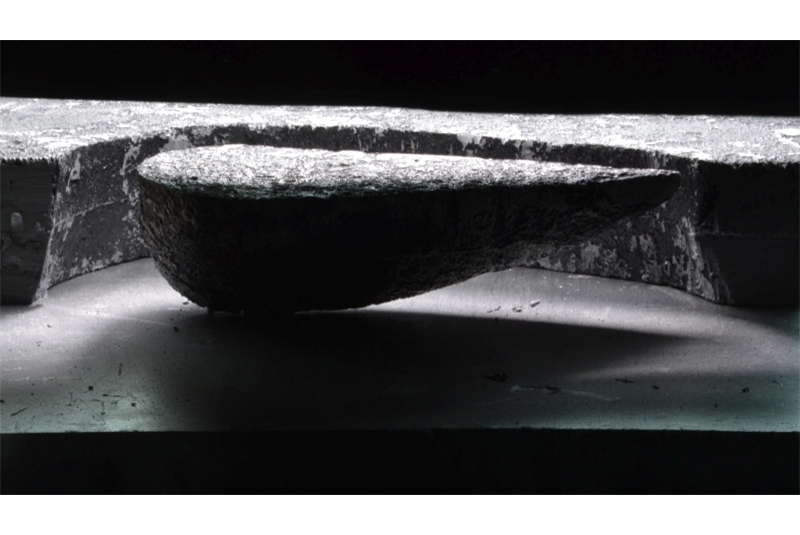
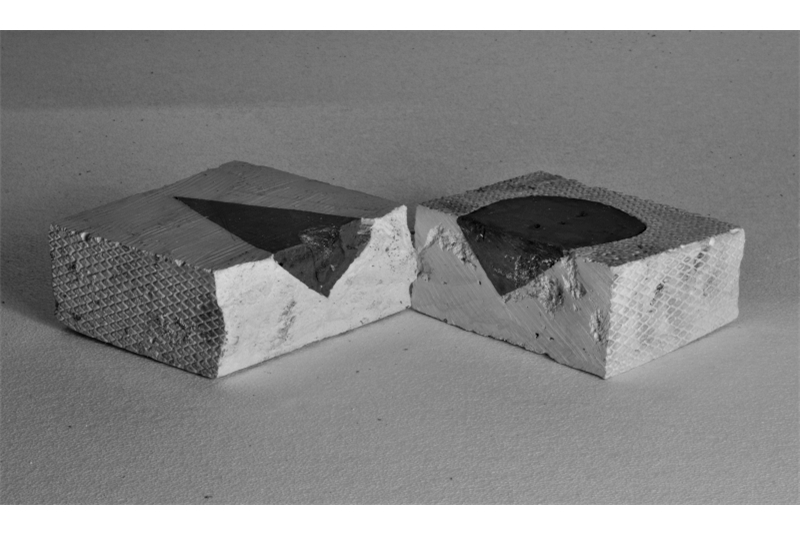
The proposal is articulated as a diptych of complementary elements (a shell and an excavation), and between them a path capable at the same time of separating and correlating them. The shell, the incipit on the surface, is configured as a catalyzing element capable of attracting and simultaneously projecting toward the extended monumental sequence. The route winds from north to south in the barren territory of the island following trajectories suggested by the shapes and irregularities of the landscape. In the last episode of the excavation, the architecture becomes hypogeal as a bare excavation in the rock, beyond the sea, in the belly of the Rabbit Island.
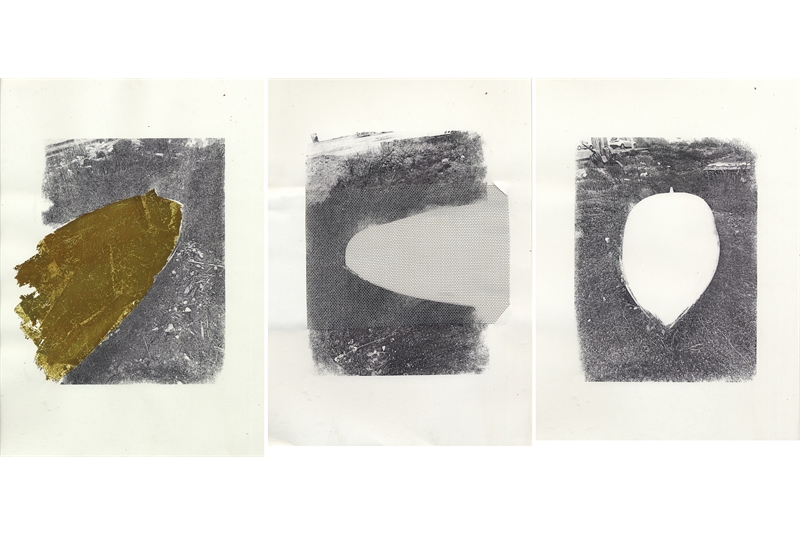
The inversion of the two extremes of the monument, which are composed of the same inverted form, stages the reversal of a dual migratory condition. An external duality in which the affair is alternately shouted and concealed, punctually monitored and at the same time poorly investigated as a systemic condition. Just as dual is also the internal condition of those who migrate on the boundary between survival and death: the very drama of the journey is located halfway between air and water and materially in the hulls of boats, in which the waterline separates, according to the nautical code, the living work (submerged surface) from the dead work (emerged surface).
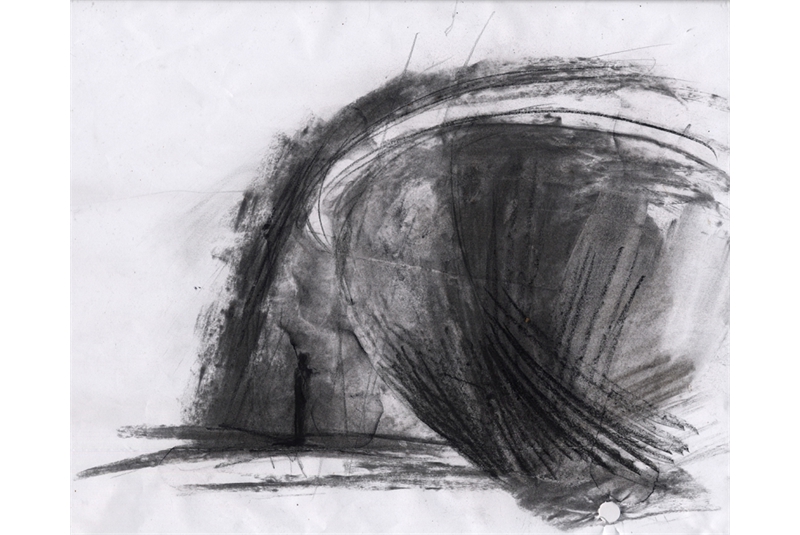
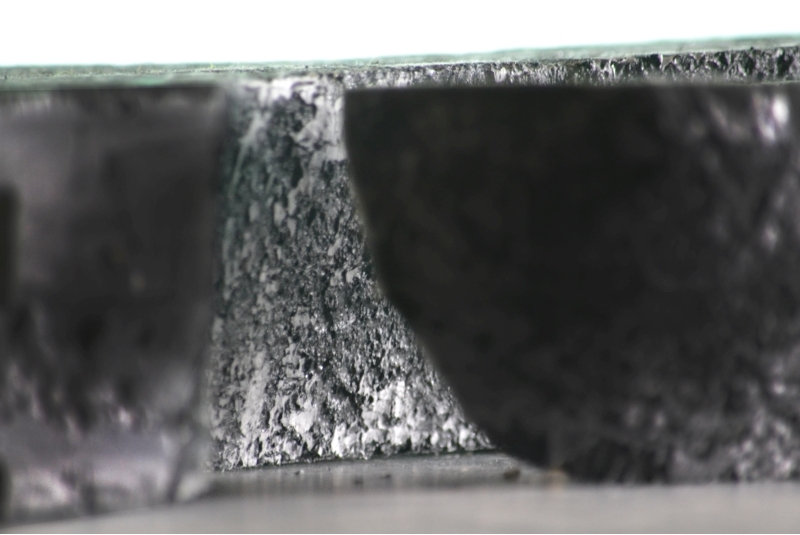
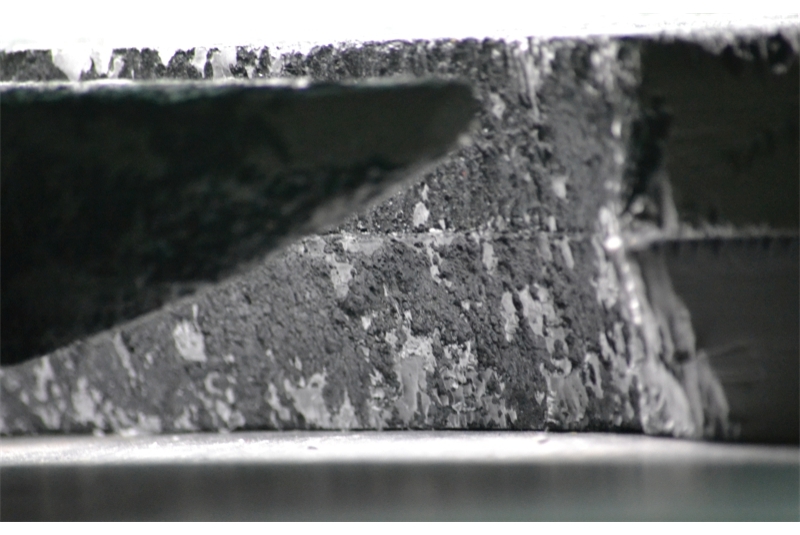
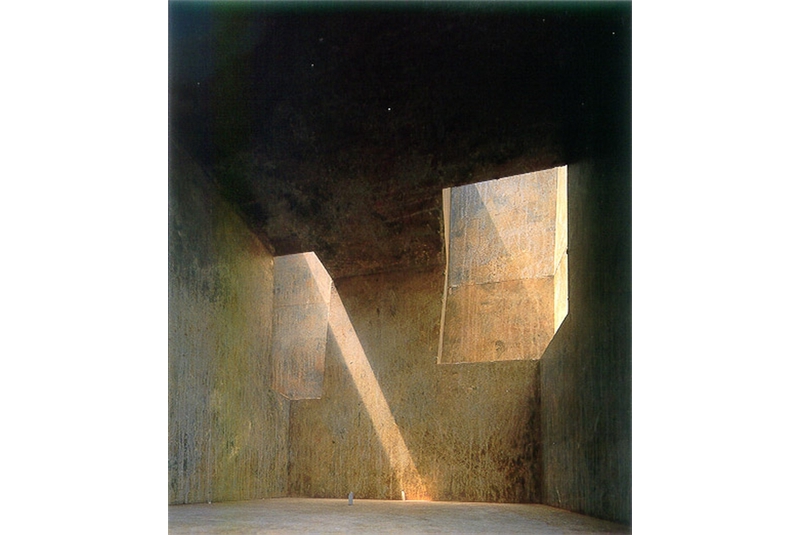
These inversions and reversals are reaffirmed by the architectural precisions of the devices: in the first part convex tectonic forms, fragile and airy, bright with veils and light elements; in the second part a stereotomic, hypogeal space in semi-darkness, carved from a deep excavation in the stone that takes shape from a concave stone device. [Fig. 2]
The path takes a direction starting from the first light sculptural element; the device sits on a rise from which one can glimpse in the distance, and barely, the end of the monumental sequence. The prevailing direction of the monumental system does not exclude a recursiveness of the experience and the potential for it to be walked through backwards.
Shell – Living work
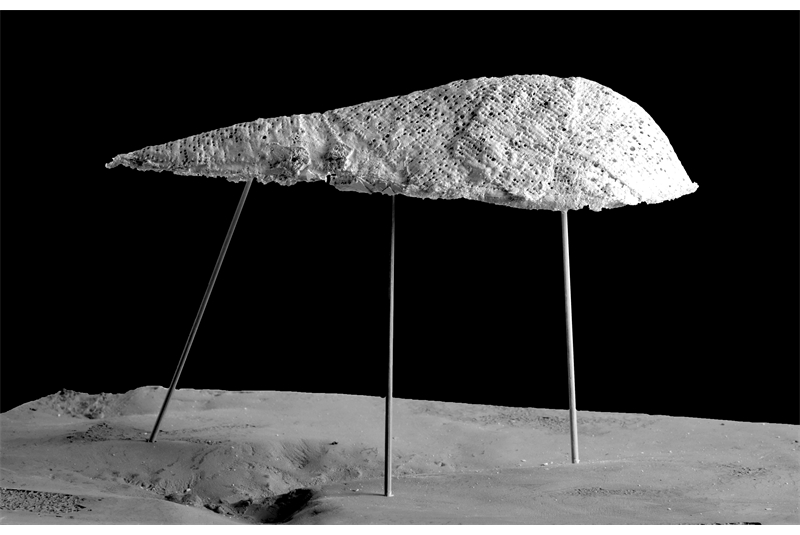
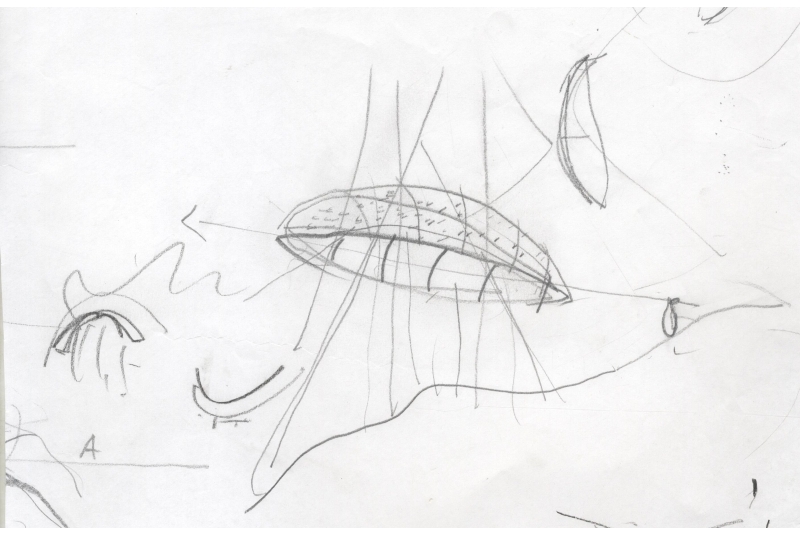
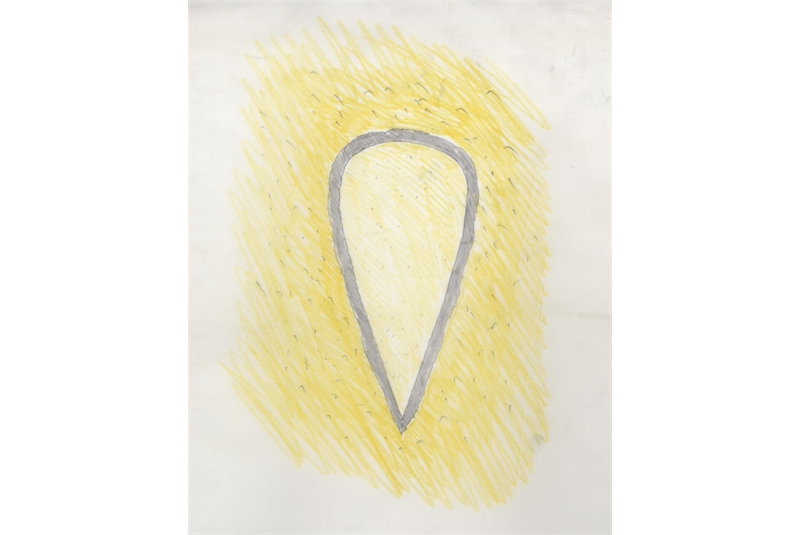
This initial element serves as an activator through which the position of other parts is recognized and is composed of perishable materials, textiles and wooden elements, which need to be taken care of so that they can continue to communicate, in a constant act of responsibility to memory: a living work[2] to be kept as such. The fragility and perishability of these elements recalls the fragility of life exposed to the weather and the dangers of travel. Moreover, the notion of the memorial as a static and imperishable object, to be celebrated once and for all in regular formal recurrences, is to be questioned. The first element, essential to begin the monumental spatial sequence, is meant to express in its stages (including decay), the human capacity to keep awareness and memory alive. [Fig. 3]
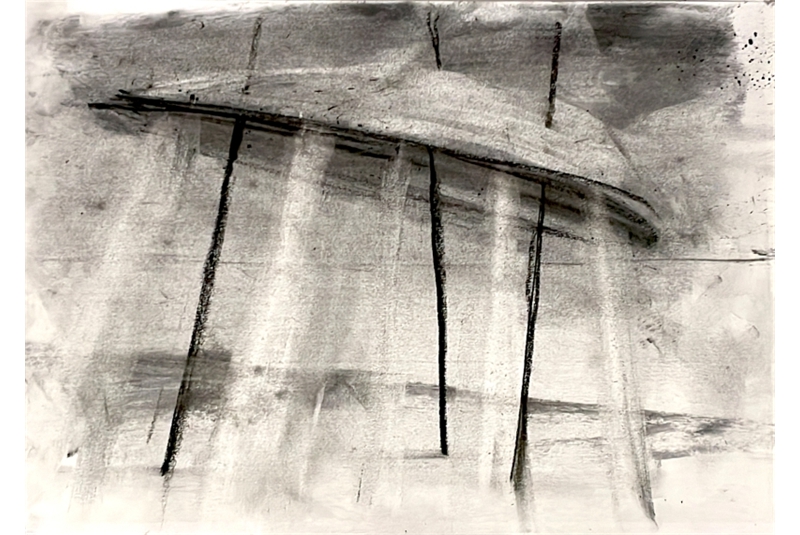
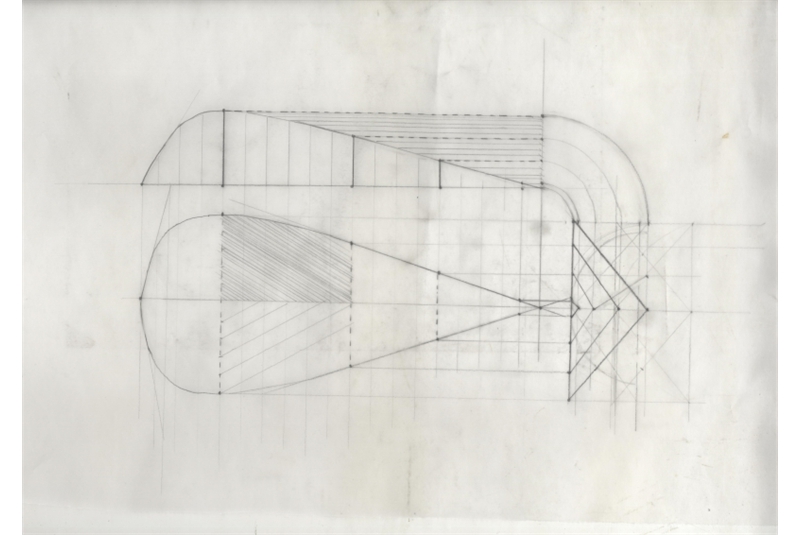
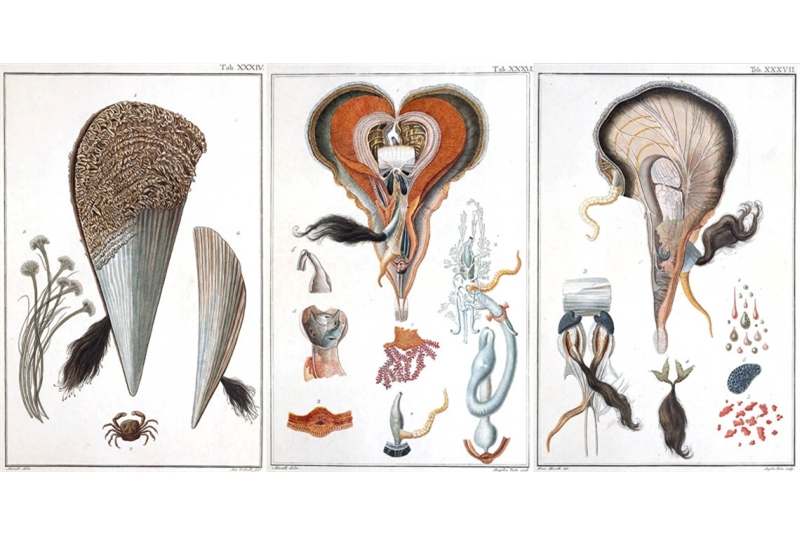
This device is composed of an aerial shell supported by three slender sloping wooden poles, conveying the precariousness of the migratory condition. The organic and textile materials that make up the shell allow sunlight to filter through the cover. The shape of this “sailhouse,” whose lying indicates the direction of the path in the landscape system, refers abstractly both to the nautical world, recalling the upturned hulls of the “boat graveyard” present on the island and the sails of ships deformed by the winds, but also to a primal form of the shell understood as “home,” “casing.” In shellfish, widespread in several species in the Mediterranean, the inhabited shell represents not only a means of shelter, but also contributes to that duality in which, again, the animal exists in the world: composed of both living and dead parts, half soft organic and half hard inert substance.
This first element, located at one of the highest points on the island (approximately 107 m above sea level) and at the top of the valley of Cala Pulcino (the most prominent on the south coast), constitutes the apex of the slow system of descent to the excavation. The structure is the first metaphor - shelter, which welcomes but presupposes the act of leaving - of the migrant who leaves his shelter-shell, albeit precarious, and exposes his body (as a soft part), to the weather and uncertainties of exodus. At the same time, the visitor, sheltered from the sun in the dusty Lampedusa landscape, can begin to recognize the first poles of the path, which connects the two ends of the memorial, denoted by shape by the fragile shelter. [Fig. 4]
Route
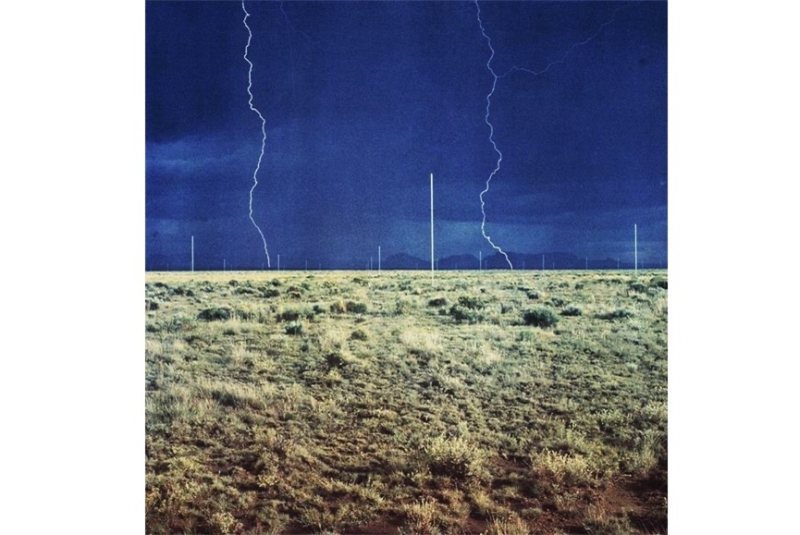
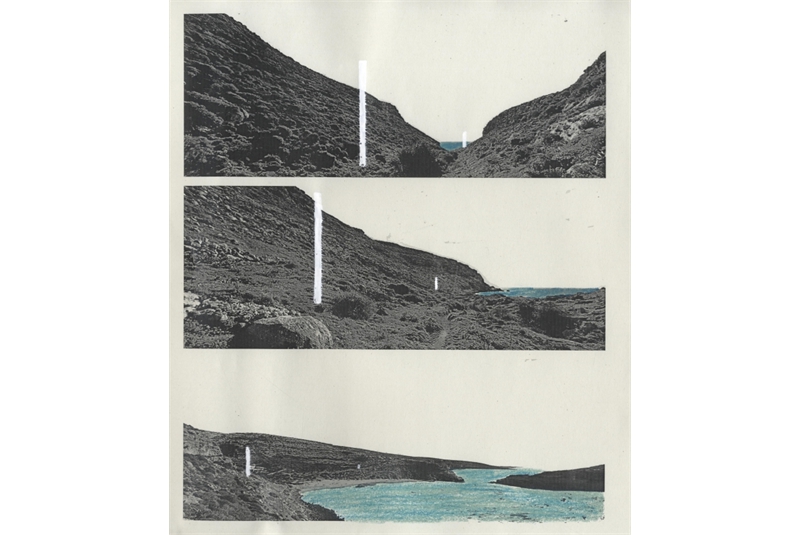
Having exited the shell, the visitor’s “migration” thus begins. A system of punctual elements scattered across the landscape helps with orientation: a sequence of vertical cylindrical poles, made of brushed aluminum, indicates the route by reflecting the colors and shapes of the landscape in an approximate, blurred manner.
On the Lampedus territory, stripped of most of its trees, the poles constitute a landscape-scale reference system. The slender and isolated elements opaquely reflect the territory, placing themselves in a relationship of mimesis and dissimilarity at the same time, so as to make the walk an experience, at the same time, orderly and alienating: «Only what was capable of dissimulation in the beginning can appear» (Didi-Huberman G. 2011).
The complex of poles represents to the user what the stars meant to sailors who have sailed the Mediterranean since the earliest times: an immutable and abstract system of orientation, yet not easily perceived.
The rods are placed to be spotted little by little, walking along the valley that leads from the upper part of the island to Rabbit Beach: a path of steady descent that gradually reveals the last component of the memorial, the excavation.
Excavation - Dead work
The route takes advantage of the circumvolutions of the natural valley to only partially reveal to the visitor the last element of the memorial. This is presented as a double dry incision in the terrain of Rabbit Island. The rocky outcrop is also a significant site for the representation of the migration tragedy: near this small rock, one of the worst migratory shipwrecks in the Mediterranean occurred on October 3, 2013, in which at least 368 people lost their lives and 20 people went missing. [Fig. 6]
In this place, the memorial is configured as a rock carved element, reachable only by walking along the short stretch of sea that separates the small island from Lampedusa. The lanceolate shape of the veil-shell is reversed to take on the appearance of a large stone object embedded in the earth and resting in one spot. The object is made visitable through the void containing it and remains accessible by a single ramp placed on the longitude in the barycenter of the sculptural element. [Fig. 7]
The submerged bulk of the monumental mass is perceptible only by entering its hollow womb. The space, in half-light and bathed in constant grazing light, is characterized by the strong materiality of its stone. The last moment of the memorial is a hypogeal spatial device where the heaviness and immobility of the stone geometrically and allegorically form a dead work[3], perceptible only from its outside, out of water, hewed by subtraction from the ground itself. [Fig. 8]
Notes
[1] ANSA “New wave of landings in Lampedusa, towards 100 thousand migrants since the beginning of the year” Agency news 05/08/2023 https://www.ansa.it/sito/notizie/cronaca/2023/08/04/nuova-ondata-di-migranti-a-lampedusa-verso-quota-100mila. [accessed 07/08/2023]
[2] In Italian opera viva (living work) is also the name of the part of the hull submerged by water.
[3] In Italian opera morta (dead work) is also the name of the part of the hull not wetted by water.
Bibliography
BACHELARD G. (1975) [1957] – La poetica dello spazio. Edizioni Dedalo, Bari.
BÖHME G. (2010) [2001] – Atmosfere, estasi, messe in scena. L’estetica come teoria generale della percezione. Christian Marinotti Edizioni, Milan.
DIDEROT D. (2020) [1757] – “Il figlio naturale”. In Id., Binni L. (eds.), Teatro. Garzanti, Milan.
DIDI-HUBERMAN G. (2011) – La conoscenza accidentale. Apparizione e sparizione delle immagini. Bollati Boringhieri, Turin.
FOCILLON H. (2002) – Vita delle forme. Einaudi, Milan.
MARTÌ ARÌS C. (1999) [2002] – Silenzi eloquenti. Christian Marinotti Edizioni, Milan.
SERRA R. (1994) – Writings and interview. Chicago University Press.
VENEZIA F. (1988) – Torre d’Ombre o l’architettura delle apparenze reali. Arsenale Editrice, Venice.
VIRILIO P. (2009) [1975] – Bunker archeology. Princeton architectural press, New York.