What makes the act of “remembering”, the purpose to which the monument should respond, effective is the time of “return”. Remembering means witnessing the return of something that, not only physically, no longer exists; an eternal return of the corpse from the grave, which is made omnipresent to the viewers. The monument thus fits into a “timeless” context, namely that of eternity. Deleuze (2005, p. 147) in “The Logic of Meaning” deals with the theme of Aion, explaining that:«Look at this cart gate, dwarf» I continued: «it has two fronts. Two roads join here: no one so far has travelled all the way. This long road backward: lasts an eternity. And that long road forward: that is another eternity. They contradict each other, these roads; they collide with their heads against each other: and here, under this door, is the point where they join. The name of the door is written above it: “moment”. But whoever would go forward on one of them, and go further and further: do you think, dwarf, that these roads would contradict themselves forever?»
«Everything that is straight lies» muttered the dwarf scornfully.
«All truth is curved, time itself is a circle.» (Nietzsche 2017, p. 161)
According to Aion only the past and the future insist and subsist in time. Instead of a present that summarizes the past and future, a future and past that divide the present at each instant, endlessly subdivide it into past and future, in the two senses simultaneously. Or rather, it is instant without thickness and extension that subdivides each present into past and future, instead of vast and thick presents that encompass future and past concerning each other.» (Deleuze 2005, p. 147)There is not, in the ancient conception, a present that hopes for the future and mourns the past. Instead, there is the coexistence of past and future and, between them, a virtual line that separates them. It is precisely in that particular dimension that monuments are also found. On the other hand, to narrate the past to the future one must be uniquely eternal. The monument speaks neither the language of the past nor the language of the future, it lives in a place - support[1] placed on the threshold that separates/unites two opposite directions, bringing back to us the image of the two-faced Janus or Janus the God of beginnings.
They no longer believed, as had been the case in the Renaissance, that the architectural figure corresponded to a hidden reality, revealed through biblical authority or the classics; they continued, nevertheless, to make use of the Greco-Roman repertoire, whose meanings were considered stable social usage. [...], they combined the traditional elements in new ways, thus managing to extend and modify the classical meanings. [...] it can therefore be said that it represents not only a speaking architecture but also an ‘architecture qui parle de soi meme’: it consciously manipulates an existing code (Colquhoun 1989, p. 123).
This hybridization of meanings, related to the eternity of nature
and death, in the case of the examples cited above, is all Baroque; a
Vanitas in its own right, whose “Hybris”[3] underscores its invulnerability and emphasizes its
fundamental task, which is to «perpetuate memory»
(Boullée 1981, p.122). This conception of “perfect
harmony”, which we can, not too forcibly, transpose into the
category of the “monstrous,” can be found in
Boullée's work – “Monumenti funerarii o
Cenotafii”[4] – whose
descriptions, and “characters”, are manifested through a
strong symbolic and figurative dimension.
In this sense, the architectural project, through its character,
becomes an artifact evoking different meanings that cause a certain
kind of impression on us. The concept gains strength through form, and
form is enhanced using definite figures. Indeed,
while the concept of figure encompasses conventional and associative meanings, the concept of form excludes them; while the concept of figure presupposes architecture as a language composed of a limited set of elements that already existed in their historical specificity, the concept of form presupposes that architectural forms can be reduced to an ahistorical “degree zero”; architecture as a historical phenomenon is not determined by what existed before, but by emergent social and technological facts, operating based on a minimal number of constant physiological and psychological laws (Colquhoun 1989, p. 122).Thus, the idea of the sublime collides with dense layering of meanings, confronting us with an idea of monstrosity embodied in the guise of “Hybris”, etymologically translatable as “excess, insolence, tracotance”, thus understood, in the ancient sense, as «any violation of the norm of measure, that is, of the limits that man must meet in his relations with other men, with divinity or with the order of things» (Abbagnano and Fornero 1998, p. 547). But it is also true that the monument can no longer be understood in an “archaic” sense, as society is no longer structured in an archaic sense, the ethos and polis of the Greek world making room for technique (téchne takes over from archè, unlike the classical world where the two dimensions coexisted instead). See how already Schlegel, in the “Discourse on Mythology”, argues that «poetry lacks a center such as mythology was for that of the ancients, and all the essential for which modern poetry remains behind the ancient can be expressed by saying that we have no mythology.» (Schlegel 1967, p.192)
in fact, there are no longer any norms and rules. [...] In the Middle Ages society was self-regulating, self-regulating. Regulation took place at the center of society itself. The prince of the city dictated the rules [...]. In the industrial age, societies began to be artificially regulated. The power of economic and industrial forces took over (Tschumi 2005, p.176).
The difficulty in keeping forms linked with meanings has changed the
relationship with spaces and the way they are experienced. This
important detachment produces an autonomy of the image concerning its
“support”, taking away
psychological depth from the character to allow attention to focus in toto on the action. [...] in other words, the story, the narrative plot ideally precedes and overrides the character's psychology (Vercellone 2014, p.29).The concept precedes the artifact, and in this case the concept is time.
we are obliged to face a thorough reconsideration of all concepts related to depiction and representation: the constant storm of images to which we are exposed (be they drawings, graphics, photographs, films, television images or computer-generated) increasingly nullifies any attempt to re-establish the Renaissance ideal of the coincidence between reality and its representation (Tschumi 2005, p.176),
going against a general flattening. Memory in this way atrophies,
becoming as malleable as the reality in which it is exercised, becoming
capable of
reconfiguring itself when it wants to. [...] In such a condition of ontological precariousness, forgetting becomes a strategy of adaptation (collective forgetting). [...] In a condition where reality and identity are “updated” in the same way as software, it is little surprise that one of the main symptoms of cultural anxiety is memory disorders (Fisher 2018, p.116).
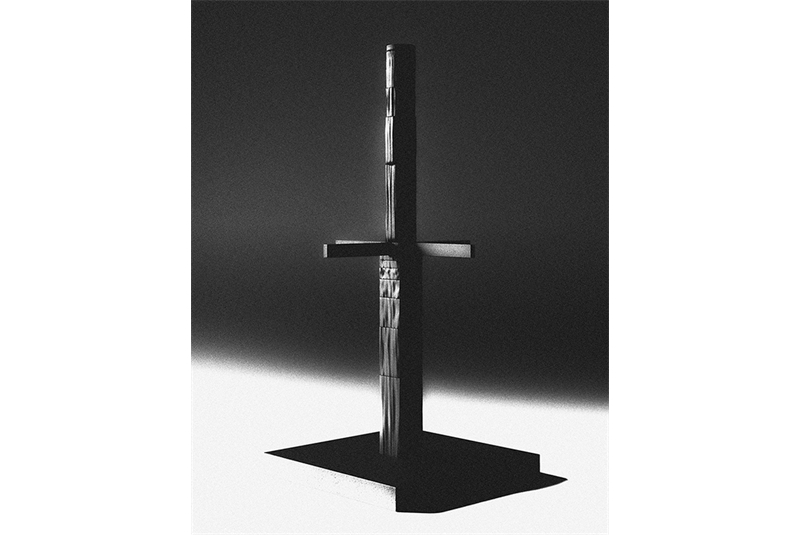
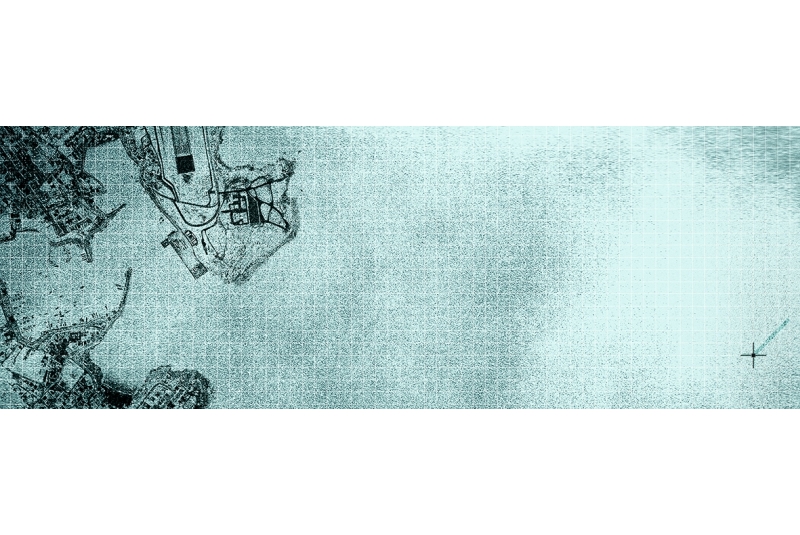
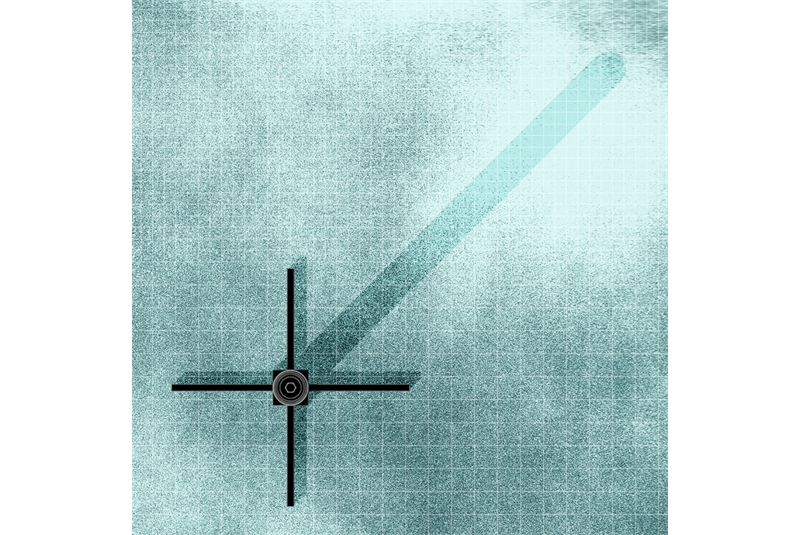
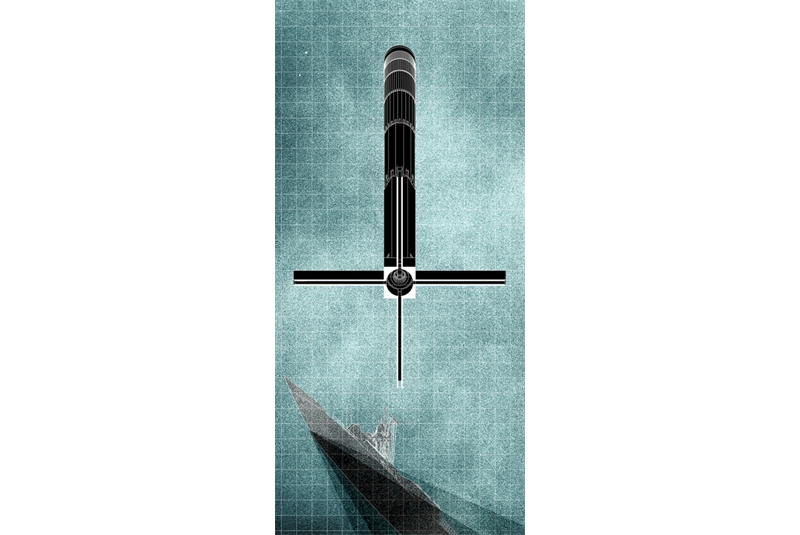
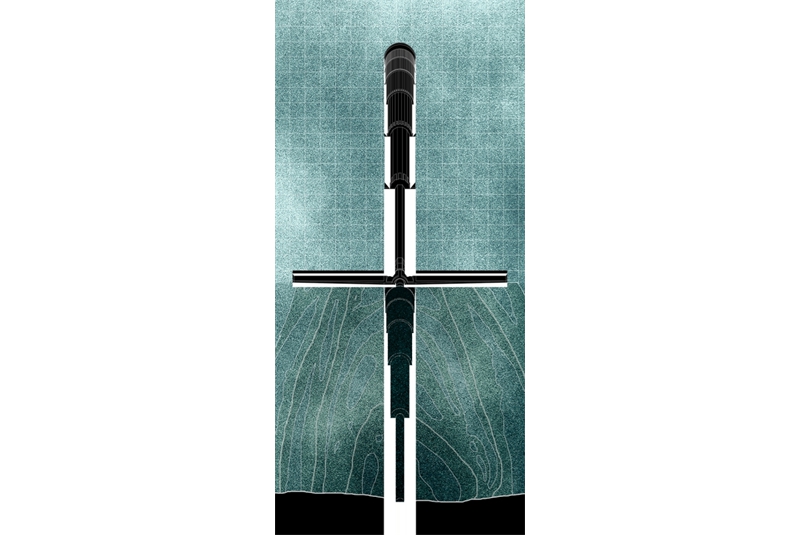
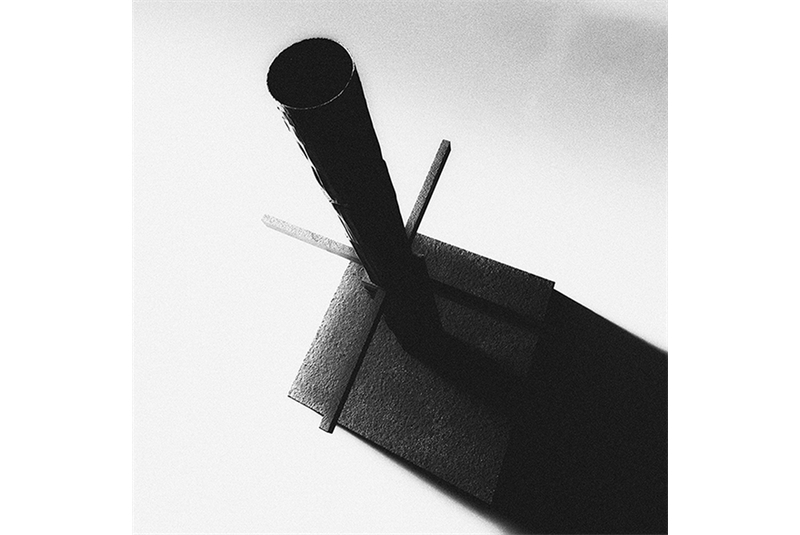
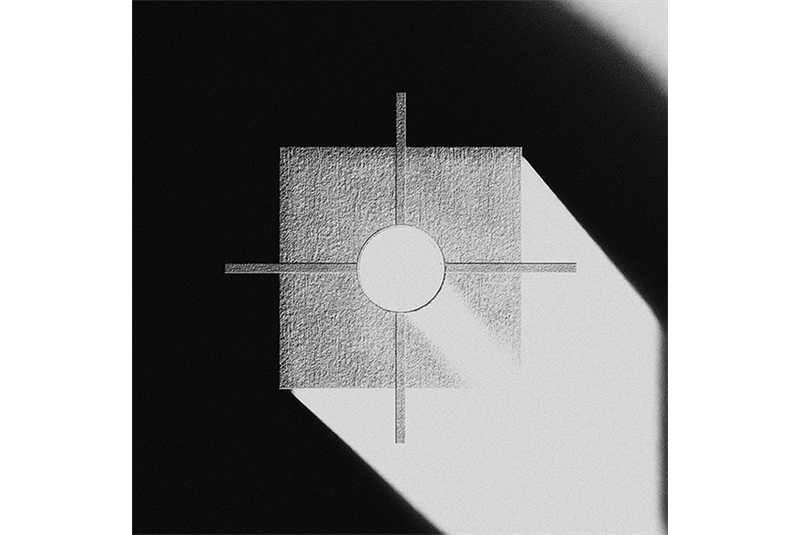
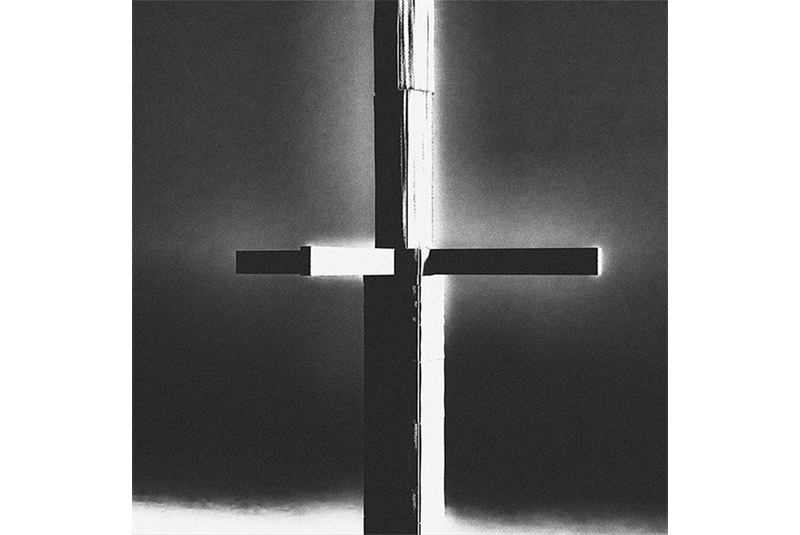
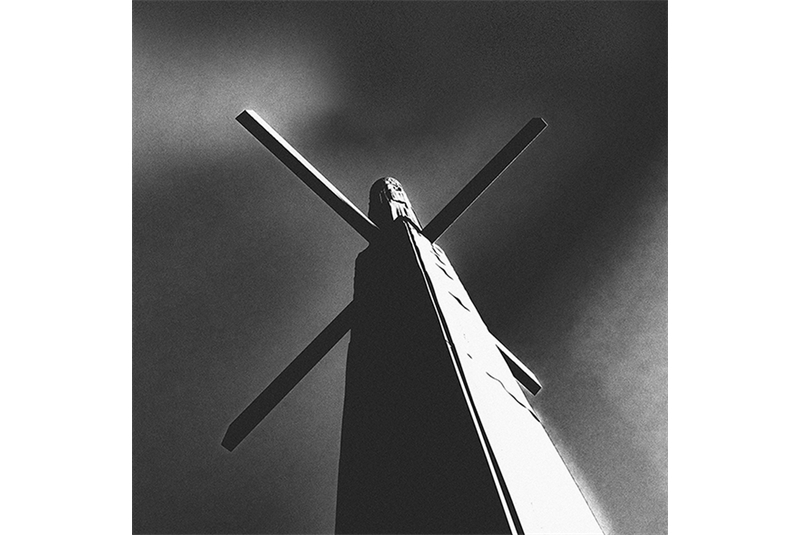
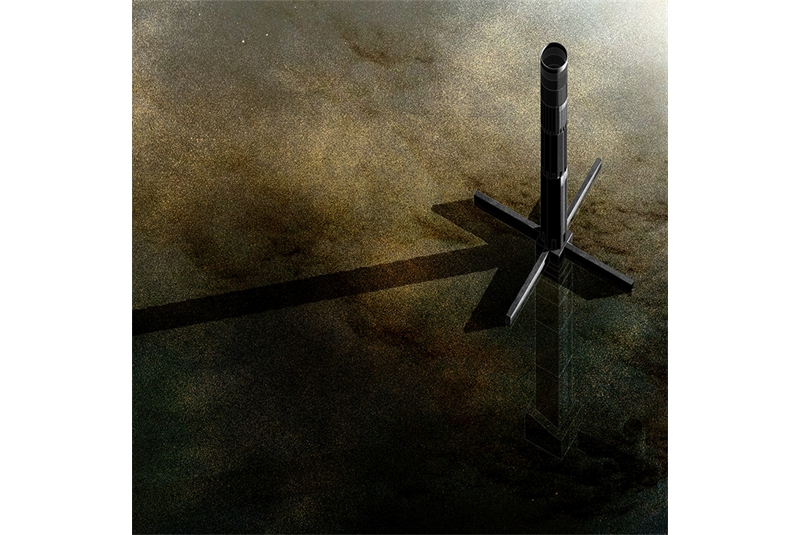
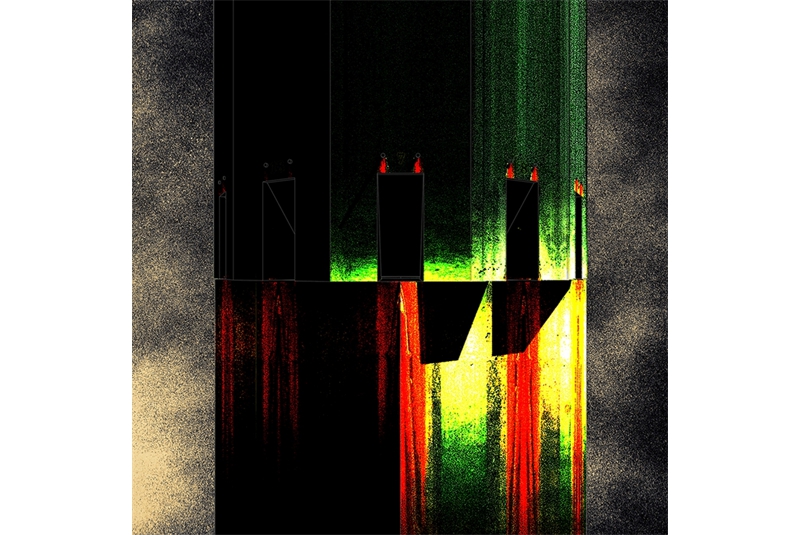
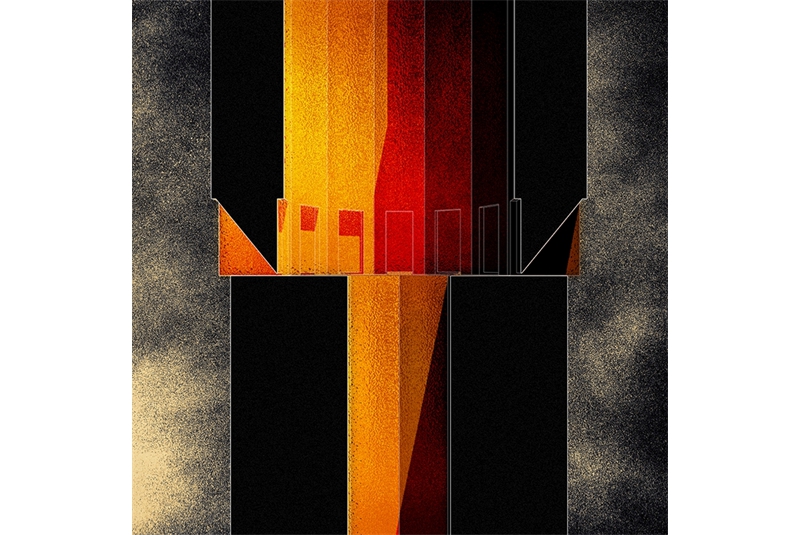
With these premises, in the project “Torre Viva | Torre Afona” an attempt was made to interpret through the tools of art, and therefore architecture, the catastrophic event of the 3 October 2013, that saw the death of 368 migrants in the Mediterranean Sea. An event that, to this day, recurs cyclically along the routes and coasts of the Mediterranean[5]. The artifact is designed and placed at the exact spot of the incident about 1.6 kilometers off the coast of Lampedusa, where the depth of the seabed is about 47 meters. The poetic narrative[6], even before the architectural work, collaborates in the description of the artifact. In this sense, the Hybrid, mediated by its Hybris, takes on the guise of the monstrous, making its way into the field of the uncanny.
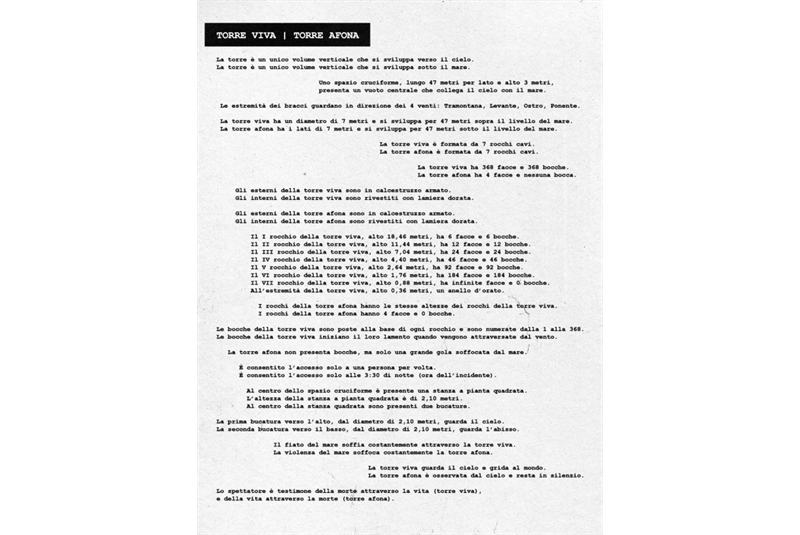
The vertical structure, called the Tower, stands as a single volume
extending towards the sky. This same building, the Tower, extends
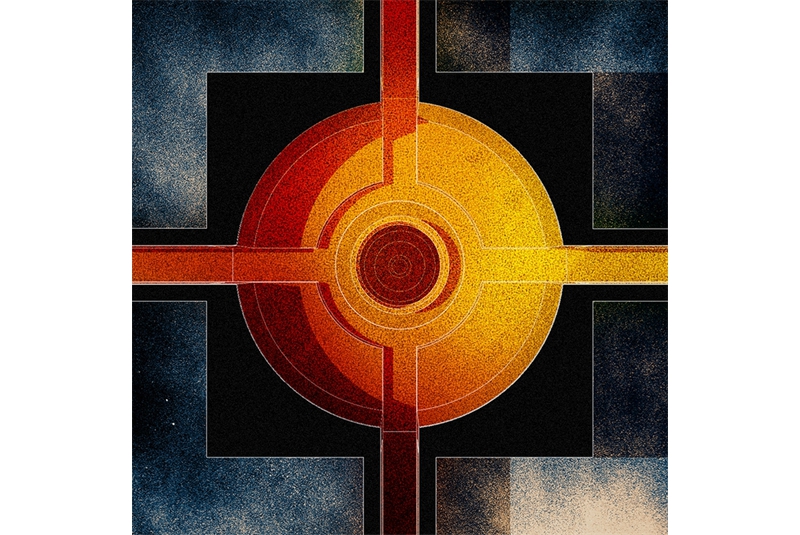
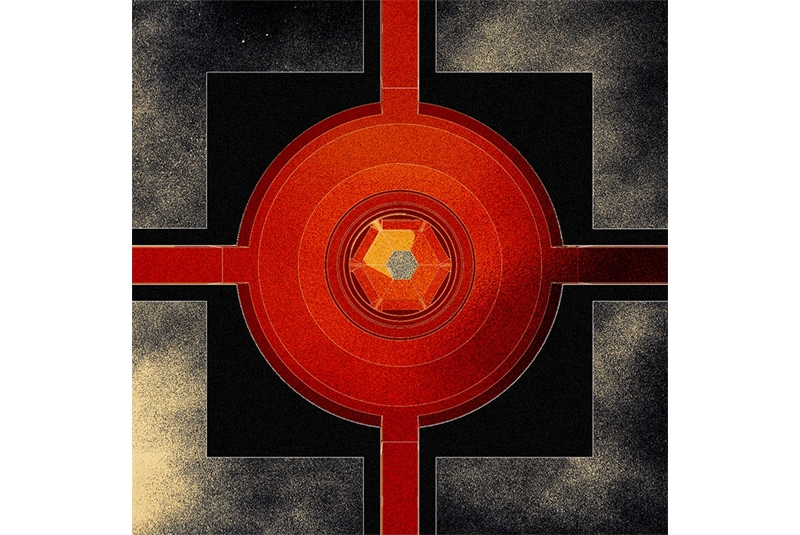
downwards, towards the seabed. A spacious cross-shaped area, with
47-meter sides and a height of 3 meters, has a void in the center that
connects the sky and the sea, a “threshold of origin first, where
the soul arose following the rhythm of the heart's drum. When the earth
became the drum of the sky, whose instrument cavity is the womb of life
and death”[7]. The ends of the
arms point towards the four cardinal points: Tramontana, Levante,
Ostro, and Ponente. The “alive” tower [Torre Viva] has a
diameter of 7 meters and rises 47 meters above sea level. Its
counterpart, the “aphonic” tower [Torre Afona], has similar
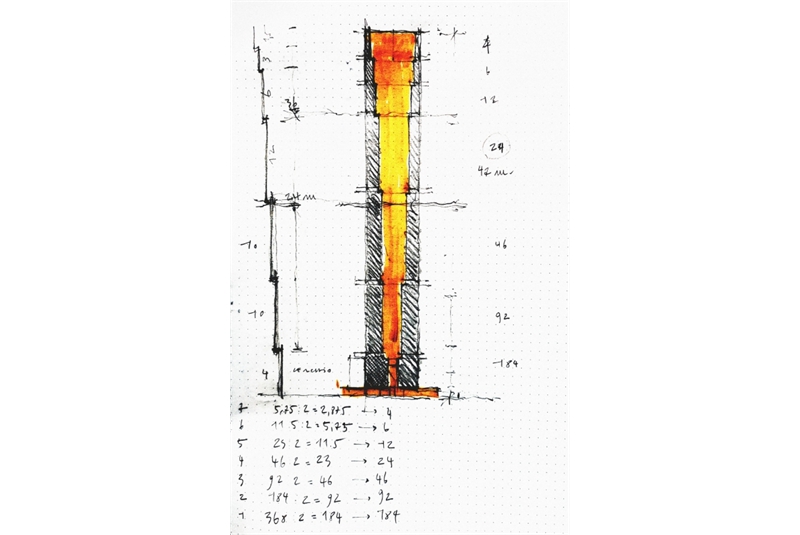
dimensions but rises 47 meters below sea level. Both towers consist of
seven hollow blocks stacked on top of each other. The
“alive” tower consists of seven hollow blocks, each with
368 faces and 368 mouths. Whereas the “aphonic” tower has
only 4 faces, with no openings. The exterior envelope of the
“alive” tower is made of reinforced concrete, while the
interior is clad in gilded sheet metal. The “aphonic” tower
has similar characteristics in terms of materials and cladding. Each of
the “alive” tower’s rochos varies in height, from
18.46 meters for the first rochos to 0.88 meters for the seventh
rochos. Each has a different number of faces and mouths. At the upper
end of the “alive” tower, at a height of 0.36 meters, is a
golden ring. The rooks of the “aphonic” tower correspond in
height to those of the “alive” tower, but differ in
structure, with only four faces and no mouths. The mouths of the
'living' tower are located at the base of each roch and are numbered
from 1 to 368. These mouths produce moans when the wind blows through
them. Whereas, the “aphonic” tower has no mouths, but a
huge opening choked by the sea. Access to the tower is limited to one
person at a time and only at 03:30 a.m., the time of the accident.
In the center of the cruciform space is a square room with a height of 2.10 meters. This room has two openings: one facing upwards with a diameter of 2.10 meters looking at the sky, and the other downwards with the same dimensions looking at the abyss. A constant sea breeze passes through the “alive” tower, while the “aphonic” tower is constantly suffocated by the fury of the sea. The “alive” tower seems to stare at the sky and communicate with the world through its cry. The “aphonic” tower, on the other hand, is observed from the sky and remains silent. The observer witnesses death through life via the 'alive' tower, and life through death via the “mute” tower.
The monument is thus to be understood as embedded in a
contemporaneity characterized by an «infinitely plastic reality,
capable of reconfiguring itself as and when it wishes» (Fisher
2018, p.110), pregnant with new mnemonic pathologies such as amnesia
or, as Fisher would put it, a “collective forgetting”. This
character of “invisibility” (Musil 2004, p.62) must be
countered through the clash of the codes of eternity (archè)
with the codes of stratifications (téchne), and thus by
emphasizing, even more, the shift from the Hybris – archaic
– with the Hybrid, being able provocatively to admit that
architecture – like poetry – is everything in a
construction that does not aim at utility.
Notes
[1] «By support is to be understood here as the threshold, that is, the ideal place of reflection and mirroring. [...] what it shows is a figure [...] it is precisely this figure that appears, not the support, which is a mere site of an in-objectifiable threshold and event of the original separation. [...] Happening, the two projects back its figure onto the one, figuring its origin, and at the same time projects forward its meaning or telos, into the figure of the three» (Sini 1990, pp. 150-152).
[2] «The positive antithesis of the sublime beautiful is the pleasant beautiful. The sublime tends toward infinitude, while the pleasant both rests within the limits of finiteness. The former is grand, strong, and majestic; the latter is graceful, playful, and attractive. The negative antithesis of the sublime, the vulgar, contrasts the great with the mean, the strong with the weak, the majestic with the vile. The positive antithesis of the pleasant and beautiful is repugnant, which contrasts the graceful with the awkward, the playful with the empty and dead, and the attractive with the hideous. [...] The repugnant comes from the pleasant beautiful as its opposition. As the positive opposition of the sublime in a quantitative sense the pleasant is that small, clearly visible in its totality of the delicate execution in its parts, which we Germans call “niedlich”, gracious. [...] The positive opposition of the dynamic sublime is the pleasant, the playful. The sublime as power expresses its infinity in creating and destroying the great» (Rosenkranz 2020, pp. 184-185).
[3] «The Greeks understood any violation of the norm of measure that is, of the limits that man must meet in his relations with other men, with divinity or with the order of things» (Abbagnano e Fornero 1998, p. 547).
[4] «Temple of death! Your image stops our hearts. The artist flees the light of heaven. He descends into the sepulchers and traces figures in the pale, dying glimmer of the sepulchral lamps! Our purpose in raising monuments is to immortalize the memory of those to whom they are consecrated. It is therefore necessary that these monuments be designed to defy the ravages of time» (Boullée 1981, p. 120).
[5] According to the O.I.M.
(International Organization for Migration), since 2014 more than 26,000
people have died or gone missing while attempting to cross the
Mediterranean Sea.
https://italy.iom.int/it/news/mediterraneo-il-naufragio-di-sabato-evidenzia-lurgente-necessita-di-fare-di-piu-salvare-vite#:~:text=Secondo%20il%20Progetto%20Missing%20Migrants,nel%20Mar%20Mediterraneo%20dal%202014.
[6] «This is what distinguishes it – Architecture – from construction, its sacredness that provokes emotions and feelings and disturbs our soul or unconscious. Architecture is this engaging, the mind through the senses, in a narrative.» from the transcript of a lecture by Luciano Semerani entitled “Architettura Arte Cosmica” as part of the first of the appointments in the cycle “Narratività e Architettura” within the event “Gaia che passione”, dialogues between disciplines on 27 May 2013. At the Stazione Rogers in Trieste. https://www.youtube.com/watch?v=ccUysHPbQFY.
[7] Sini, C.; Scoto Eriugena e la Teologia - Sessione 5. https://www.youtube.com/watch?v=FtaO1HSagRc
Bibliography
ABBAGNANO N. e FORNERO G. (1998) – Dizionario di
filosofia. UTET, Turin.
BOULLÉE E. T. (1981) – Architettura Saggio
sull’Arte, con l’introduzione di Aldo Rossi. Marsilio
Editori, Padova.
CHUL HAN B. (2021) – La scomparsa dei riti. Una
topologia del presente. Nottetempo, Milan.
CIORAN E. M. (1996) – Sommario di Decomposizione.
Adelphi, Milan.
COLQUHOUN A. (1989) – Architettura moderna e storia.
Laterza, Bari.
DELEUZE G. (2005) – Logica del senso. Feltrinelli,
Milan.
FISHER M. (2018) – Realismo capitalista. NERO,
Rome.
MUSIL R. (2004) – Pagine postume pubblicate in vita.
La Vita Facile, Milan.
NIETZSCHE F. (2017) – Così parlò
Zarathustra. Un libro per tutti e per nessuno. Feltrinelli, Milan.
PANOFSKY E. (1999) – Il significato nelle arti visive.
Einaudi, Turin.
ROSENKRANZ K. (2020) – Estetica del brutto.
Aesthetica Edizioni, Sesto San Giovanni.
SCHLEGEL F. (1967) – Frammenti critici e scritti di
estetica. Sansoni, Florence.
SINI C. (1990) – La mente e il corpo. Filosofia e
psicologia. Adelphi, Milan.
TSCHUMI B. (2005) – Architettura e disgiunzione.
Pendragon, Bologna.
VERCELLONE F. (2014) – Dopo la morte dell’arte.
Il Mulino, Bologna.