What are the roots that clutch, what branches grow
Out of this stony rubbish? Son of man,
You cannot say, or guess, for you know only
A heap of broken images, where the sun beats,
And the dead tree gives no shelter, the cricket no relief,
And the dry stone no sound of water. Only
There is shadow under this red rock,
(Come in under the shadow of this red rock),
And I will show you something different from either
Your shadow at morning striding behind you
Or your shadow at evening rising to meet you;
I will show you fear in a handful of dust
Thomas Stearns Eliot, The burial of the dead, 1922
.
In 1967 George Steiner published Language and Silence, a collection of essays on language, literature, and the “inhuman”. The title foreshadows the author’s deep reflection on the decline of contemporary society and its consequent impact on language, both in communication and in the arts, leading him to question: «Are we perhaps exiting an historical era of verbal dominance – the classical period of literary expression – to enter a phase of decayed language, “post-linguistic” forms, and perhaps partial silence?» (Steiner 1967, p. 9). An immediate observation follows: «Today, like few other times, poetry feels the temptation of silence» (Steiner 1967, p. 22).
To describe today’s cultural decline, paraphrasing the author, we could assert that nowadays we know that a minister can read Dante in the evening and the next morning go to work to decide the fate of some human lives[1].
Bringing Steiner’s words into the present, particularly relevant in the case of the project for “A memorial monument in the Mediterranean” on the island of Lampedusa, following the tragedy of three hundred and sixty-eight migrants on October 3, 2013, it spontaneously raises the question: «To whom is this monument addressed? What memory does it bear? Can a monument of this kind have a resonance of a civil, if not political, nature»?
One possible answer – among the answers – lies in interpreting the theme according to an anti-rhetorical vision, in which no form of language is able to express the memory of tragedy, assuming the sensorial and perceptive dimension of silence, metaphysical and almost transcendental, as the only possible: «The highest and purest level of the contemplative act is the one that has learned to leave language behind. The ineffable is beyond the borders of words» (Steiner 1967, p. 27). Consider, for example, Wittgenstein’s “untranslatable”[2], a composition by Webern[3] or a performance by John Cage[4]. Hence the conclusion that perhaps architecture is the only art capable, through what Giuseppe Samonà called “second language”[5], of translating meaning into space through the experience of a place, «knowing that there are no exact equivalences between languages, only betrayals, but that the attempt to translate is a constant necessity if poetry is to fully realise its life» (Steiner 1967, p. 23).
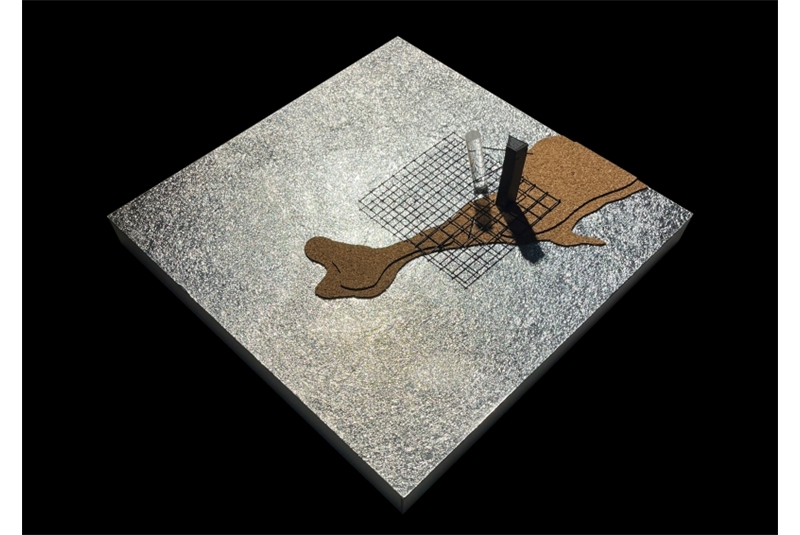
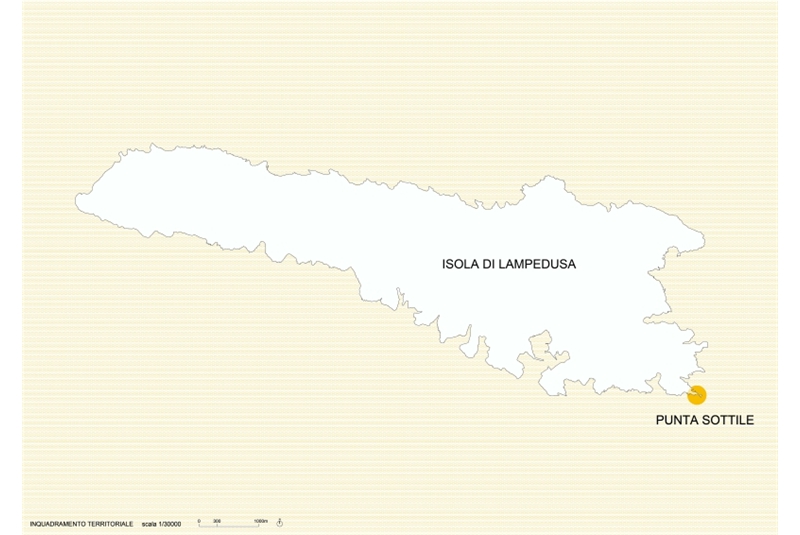
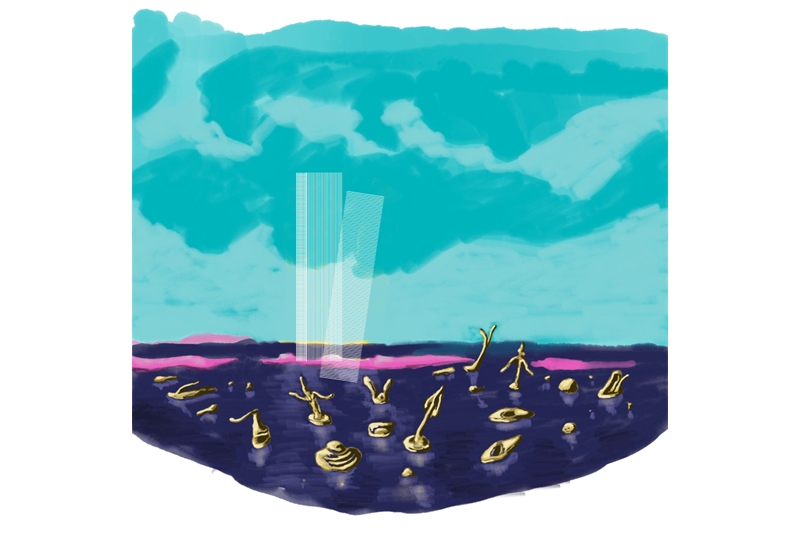
Located near Punta Sottile, the southernmost strip of land in Europe, the project takes shape through a combination of elements perceptible at different scales, following an approach path from land or sea that progressively reveals the meaning within a space, where space follows a proxemics made of references that gradually unveil its significance.
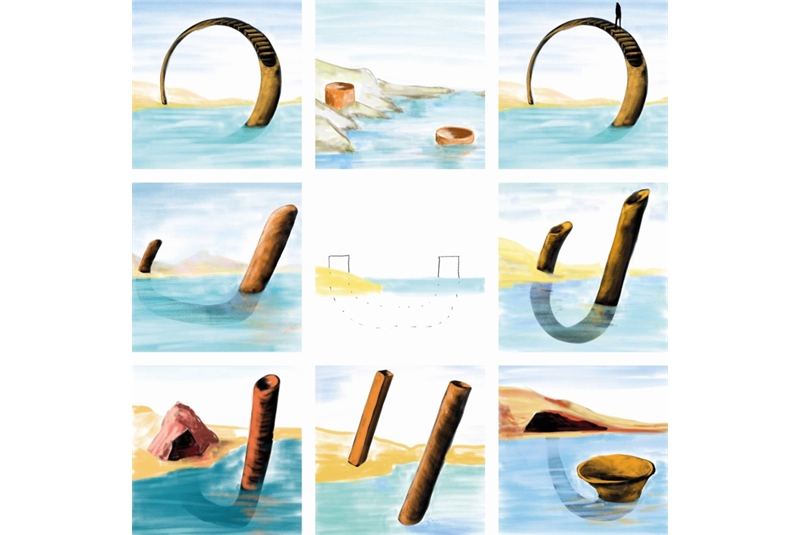
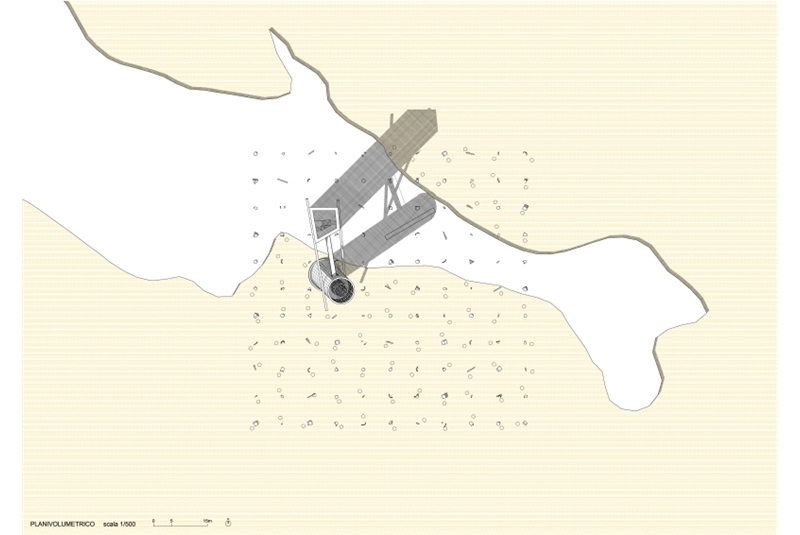
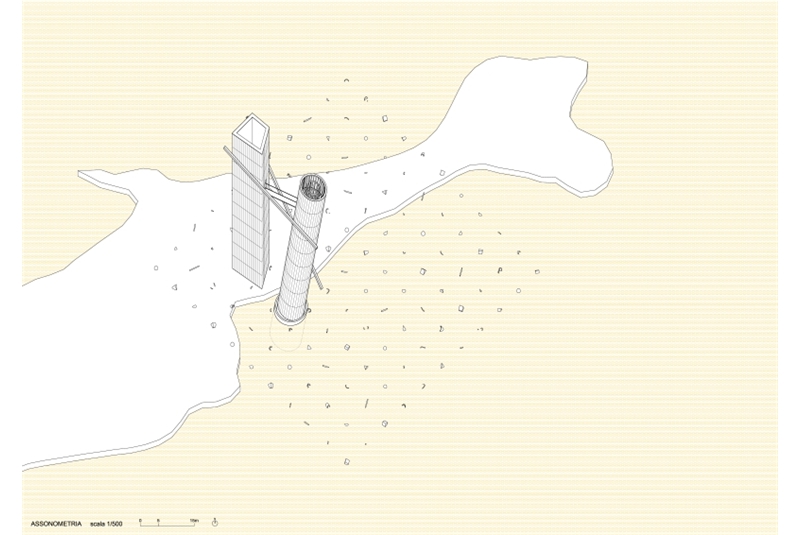
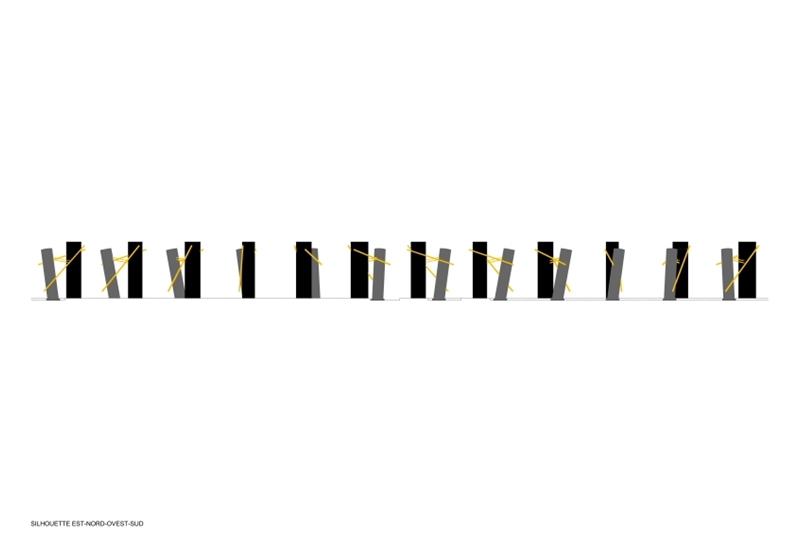
The experience of this place begins with a shipwreck. At the geographic-territorial scale, the monument carves out its own space through a parterre of sculptures, transfigured remnants of an incident at sea: allusive fragments of a broken becoming. These elements are arranged between land and sea along a regular layout[6] that orders the overall composition[7]; they can be embedded in the ground or anchored to the seafloor, functioning as buoys: their position can vary over time, generating a different scenario each time[8].
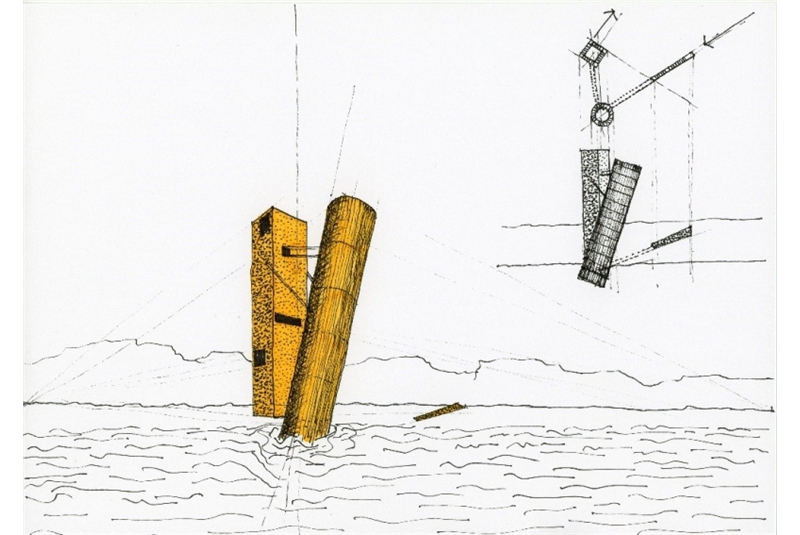
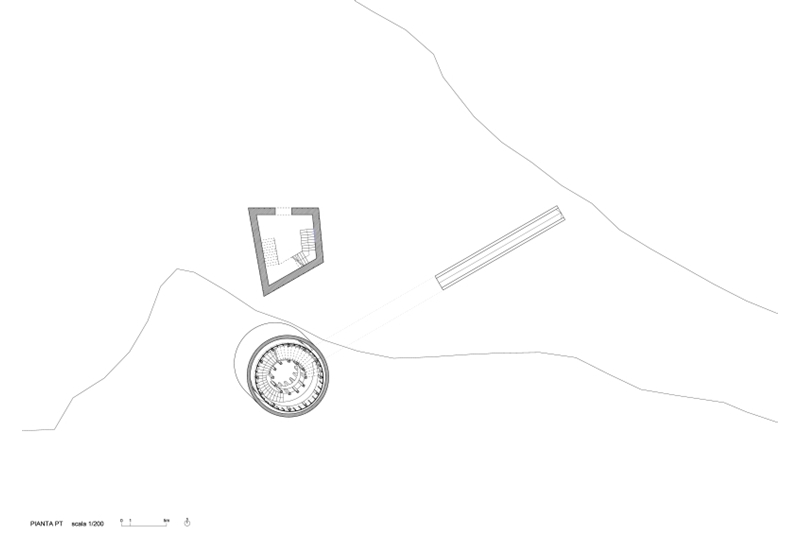
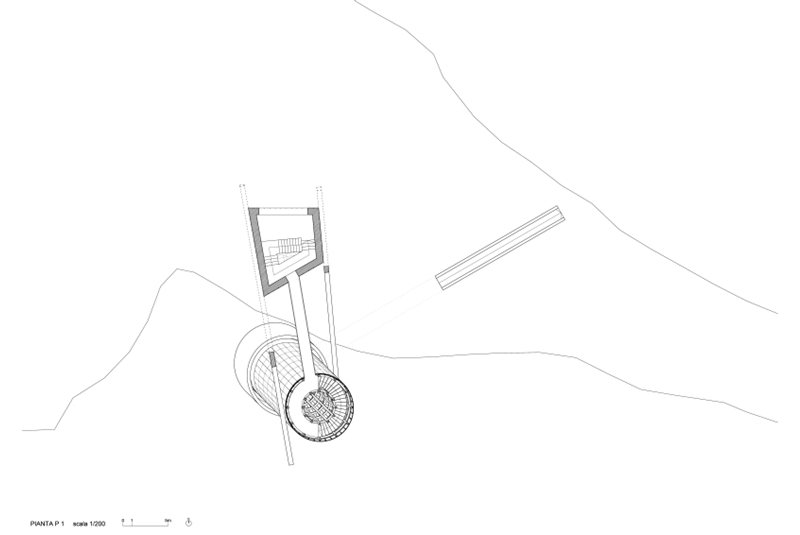
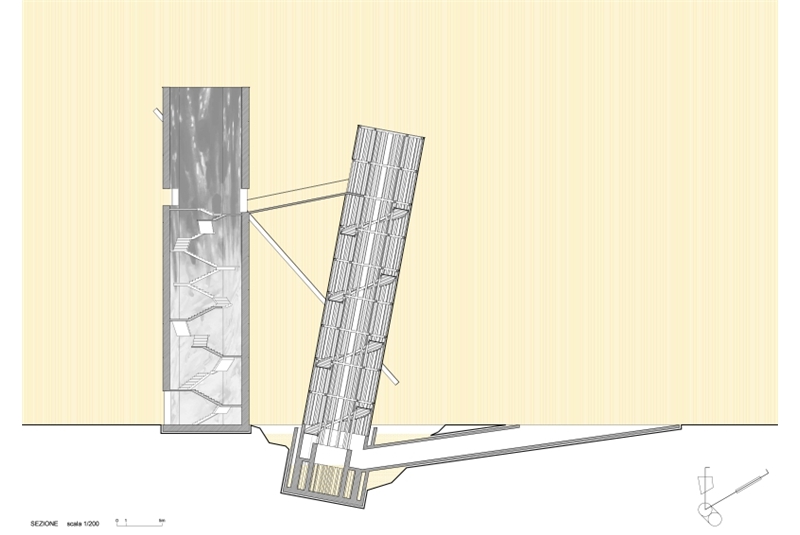
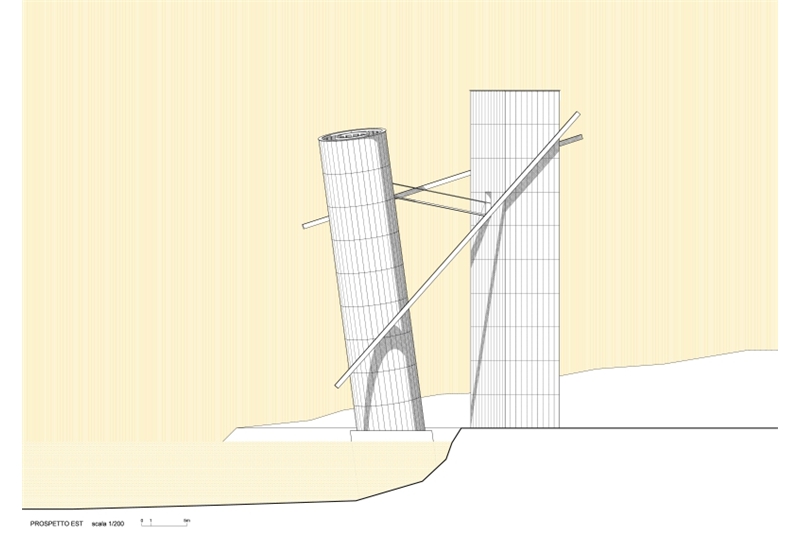
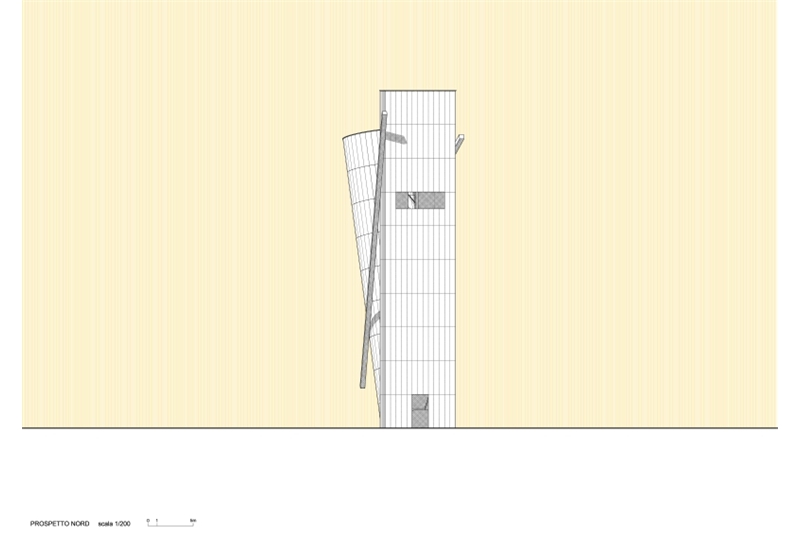
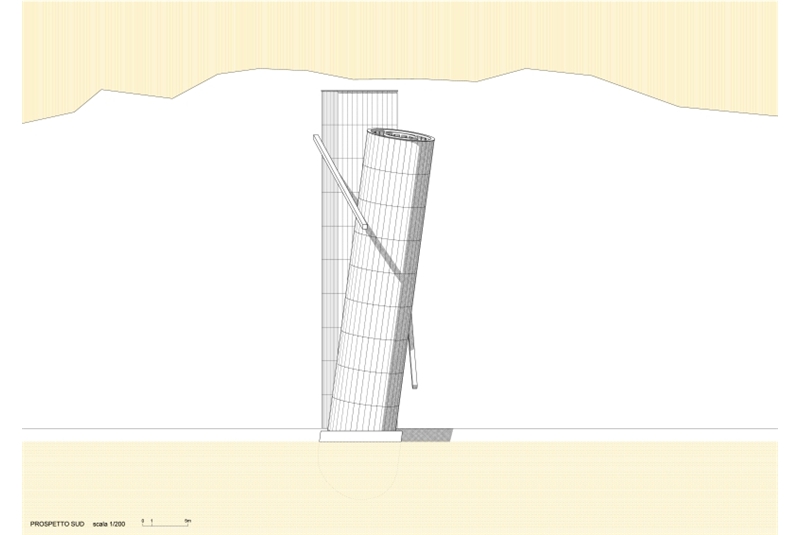
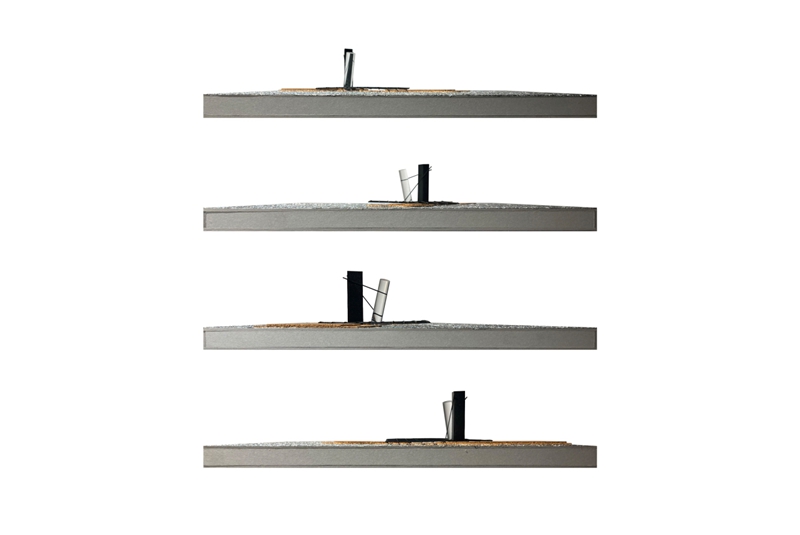
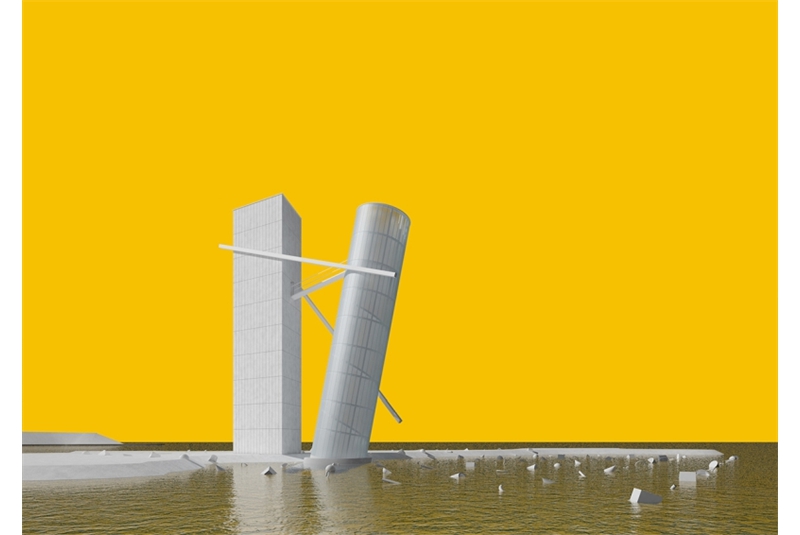
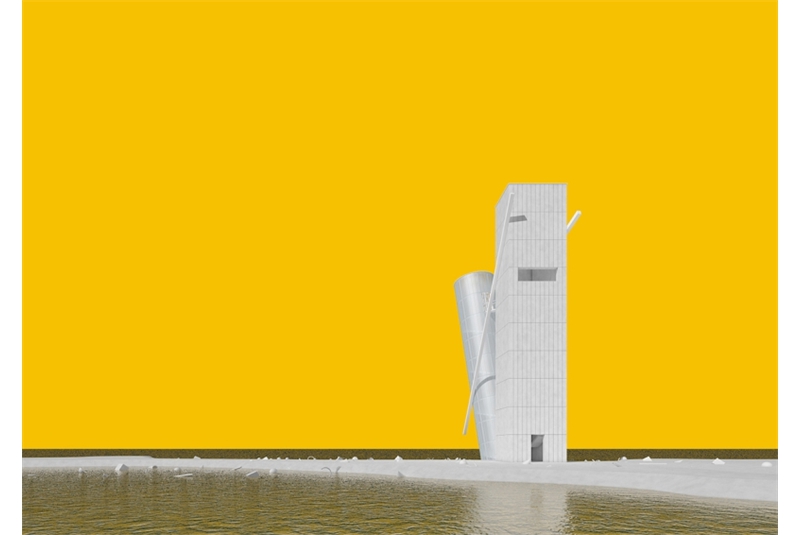
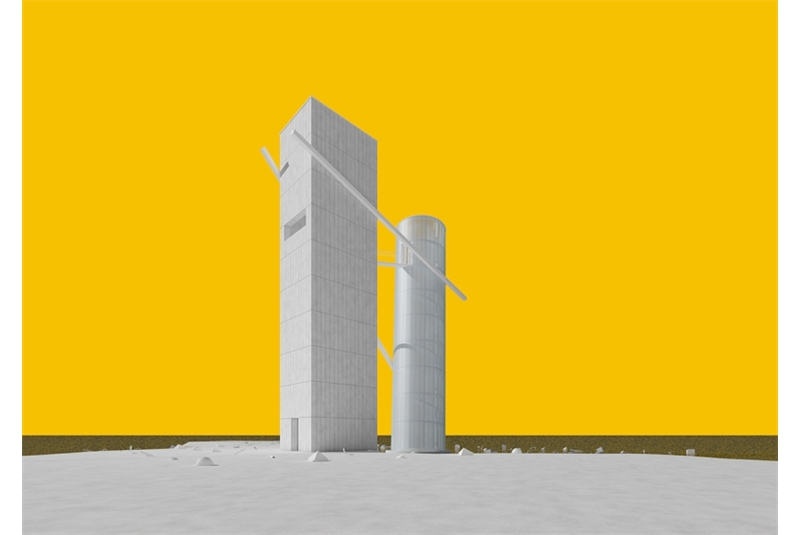
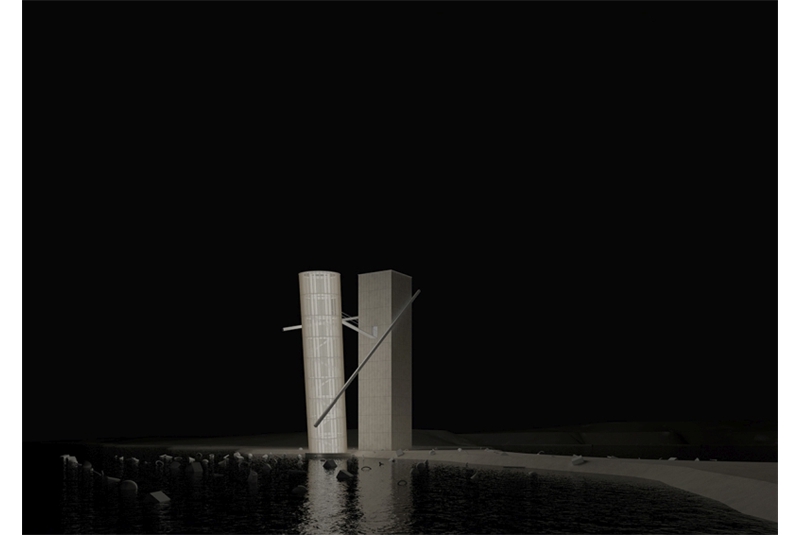
Continuing on, we reach the central moment of the route represented by two towers, one of which is inclined, rising between the mainland and the sea, placing itself in a condition on the boundary between stable (land) and unstable (water). Two rods unite them and in their extension, taking on different inclinations depending on their positioning, from being a technical component they become a compositional element, dramatically loading the figure by means of a set of “harmonic dissonances” or “distant consonances”[9].
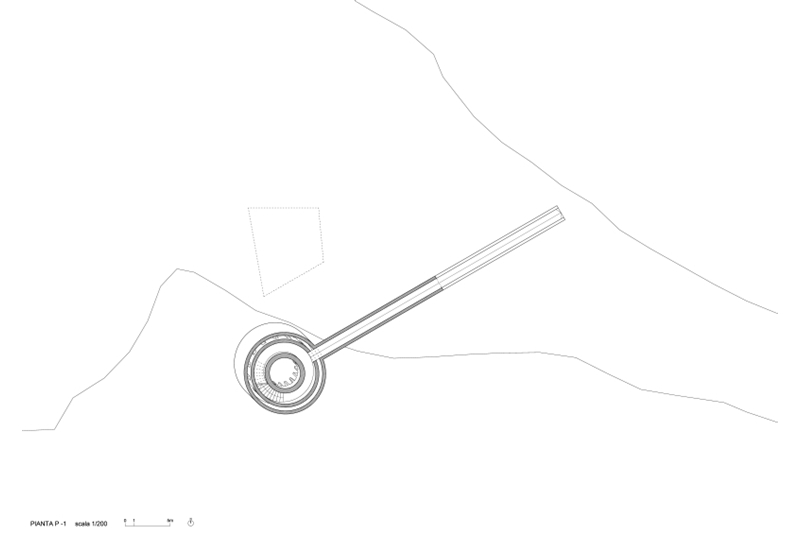
A dig in the ground – «under the shadow of this red rock»[10] – identifies the entrance to the underground/underwater route that leads to the first tower in the sea. It is a slightly inclined hollow cylinder[11], composed of a metal structure inserted on a cement base, which, through an interstitial system, allows water, depending on the tide’s height, to invade the tower’s bottom (think of the principle of communicating vessels). The outer cladding is made of a translucent material that constructs a diaphanous environment: light enters and uniformly permeates the space, but our gaze cannot leave except towards the cavity at the top, towards the sky; everything is turned inwards, where the only sensory elements are the lapping of the waves of the sea, the hissing of the wind, the lapping of the water at the bottom of the well.
An ascending path invites us to escape towards the sky, leaving the darkness behind. The inclination means that the ascent along the perimeter of the tower does not have a linear course, causing a feeling of disorientation[12] within an adverse place: one ascends laboriously enveloped and overwhelmed by the echoes of a journey across the sea.
Arriving at the top, a high-altitude path with a filamentous character opens up to the surrounding landscape, allowing access to the second tower. Anchored to the ground, solid and with a masonry character, it nevertheless presents a deformed planimetric profile[13], stretched towards that twin tower that seems about to fall into the sea. The connecting path that unites them heads inside the second tower, where an opening facing north frames a glimpse of the landscape on the horizon, the hoped-for destination: Italy, Europe. But the journey is not over.
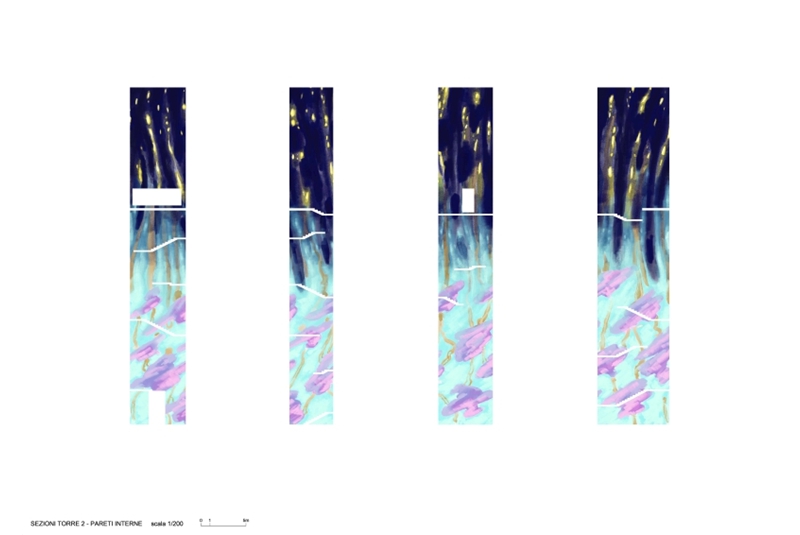
As the eye adjusts to the faint light of the environment, elements present in this interior begin to be perceived. On the walls, blind and so thick that no noise from outside can be heard, we recognise frescoed figures – as if we were in a primitive place – memories of a storm into which we are suddenly thrown: it is dark again.
A descending staircase, representing the only way out, invites us to descend. Here too, the path is not linear; the ramps have an irregular course, pushing us from one wall to another, as if we were inside a scene from Labyrinth[14]. During the descent, a light begins to be glimpsed at the bottom of the tower, the exit. The figures on the walls take on lighter and brighter tones, we are emerging from the storm, salvation is near. The descent takes place in an inverted landscape, darkness is above, and light is below, as in a dream where: «time runs, and at an accelerated speed, towards the present, in the opposite direction to the movement of waking consciousness time. It is turned back on itself, and all its concrete images are similarly turned back» (Florenskij 1922, p. 23).
Upon reaching the ground, the path concludes; the landscape is again serene, and that hostile nature from which we wanted to escape is now far away. But perhaps our consciousness, our spirit, our memory are no longer the same, we become witnesses to the tragedies that have occurred in these places.
At night, the tower at sea lights up to become a lighthouse, a lantern, a light in the waters of the Mediterranean that signals the presence of man.
The monument finds its meaning through multiple levels and scales of perception: the geographical-territorial one in its relationship between land and water and its connection to the landscape; the figurative-metaphorical one of two characters supporting each other amidst the remains of a shipwreck; the experiential-perceptive one, alluding to a remote reading, developed through a cathartic ascent and descent path that evokes the tragic memory of the sea journey.
At this point, it would be more appropriate to define it as an anti-monument[15], akin to a «Pietà for the fallen and for us who can no longer make Monuments» (Boico 1975, p. 3), where formal rhetoric is minimized. Its composition develops through few signs and small movements, while the language diminishes, becoming rarefied, tending towards abstraction, in a union that holds together architecture, painting, and sculpture.
From this dialectical relationship and the resulting synthesis, this sign is born, whose true meaning is found in the act of inhabiting this place, in traversing it, entering and crossing it: the perceptive and sensory dimension prevails, memory lives in people who experience this place, in the perception of this space over time, in the «plastic feeling»[16] that manifests along the path, not in possible forms and symbolic references or in the figure of the monument itself.
Contrary to what happens in William Golding’s The Spire (1964) where Dean Jocelin hoped for the construction of a monument that “touched the sky” to reach God – this work does not lead us anywhere. Assuming the existence in humans of a given perceptive and behavioural Gestaltung[17], it takes us on a journey within ourselves, where the “sound of silence” becomes a sensory instrument of emotional transport[18].
Braque was confronted with
An impossibility
He began to paint frantically
Before everything dried
Rodin went down to the beach
Scattered in the sand
Were all his figures
From the gates of hell
He felt Braque
To be in danger
He sensed the beautiful
Angels had drowned
And his friend
Was painting them[19].
John Hejduk, Sound of the sea
Notes
[1] See George Steiner, Prefazione, in Id., Linguaggio e silenzio. Saggi sul linguaggio, la letteratura e l’inumano, p. 11; in this case the author gave an example by relating reading Goethe and working in Auschwitz.
[2] See Ludwig Wittgenstein, Tractatus Logico-Philosophicus e Quaderni 1914-1916, edited by A. G. Conte, Einaudi, Turin, 1987.
[3] In the twelve-tone compositions of Anton Webern, silence, which can be translated as empty space, assumes essential importance within the melodic structure.
[4] Reference is made here specifically to John Cage’s composition 4’33”, in which, according to the author, the composition must consist of the sounds present in the environment in which it is performed, giving an idea of the importance of the environment itself. Look at the various texts published by Richard Kostelanetz on the composer’s work.
[5] See Giuseppe Samonà, Il significato storico del presente e i suoi problemi nell’unità del linguaggio architettonico, in Id., L’unità architettura-urbanistica. Scritti e progetti: 1929-1973 (II ed.), edited by P. Lovero, Franco Angeli, Milan, 1978, pp. 44-50.
[6] A 10x10 grid with square meshes measuring 7,5x7,5 metres and a total side of 75x75 metres.
[7] See Rem Koolhaas’ competition design with OMA for the Parc de la Villette (1982) in which a series of “point grids” or “confetti” are placed to define the organisation of the space.
[8] See the memorials by Edvard Ravnikar where the gravestones, starting from a geometrically ordered positioning, gradually sink into the ground, constantly changing configuration.
[9] See Arnold Schönberg’s observation on the harmonic concept of consonance and dissonance, in Id., Trattato di armonia (1922), Il Saggiatore, Milan, 2014, pp. 22-27.
[10] The reference is direct to the above-mentioned verses by T. S. Eliot.
[11] The cylinder has a diameter of 7,5 metres and a height development composed of ten 3,75-metre-high “drums” (one of which is below sea level), for a total height of 37,5 metres (33,75 metres above sea level). The inclination is given by a double rotation: 7,5° with respect to the YZ axis and 7,5° with respect to the XZ axis.
[12] Think for example of the ascent inside the Leaning Tower of Pisa: walking along a helical staircase along an oblique axis, the centre of gravity of the path, in reference to the normal axis and therefore to the force of gravity, changes with each step, unbalancing the normal balance of the body.
[13] The plan originates from a square with a side of 7,5x7,5 metres, grafted onto the regulating layout described above. The deformation takes place on the East, South and West sides, keeping the North side fixed, in the direction of the tower placed in the water. The development in height is composed of ten 3,75 metre high “drums”, for a total height of 37,5 metres. The supporting tie-rods, on the other hand, have a square box section with a side of 0,5 metres, with different inclinations according to the most functional anchorage points from a structural point of view.
[14] Film directed by Jim Henson starring David Bowie and Jennifer Connelly, 1986. Here we refer to the scenes, also featured in the music video of the song Within you by David Bowie himself, in which the antagonist Jareth (Bowie) chases Sarah (Connelly) moving within an “Escherian” space that causes a strong sense of disorientation in the protagonist.
[15] The action of splitting the monument into two mutually antithetical yet twin towers reduces the monumental charge of the monument itself, which does not stand as a rhetorical element, but rather as a phenomenal device that offers the visitor a sensorial experience rather than imposing an objective or idiosyncratic statement.
There are several previous cases that adopt such a strategy. These include the Mausoleo delle Fosse Ardeatine (N. Aprile, C. Calcaprina, A. Cardelli, M. Fiorentino, G. Perugini and the sculptor F. Coccia, Rome 1947-49), also defined at the beginning as an anti-monument; the Mauthausen-Gusen Memorial (L. Barbiano di Belgiojoso, Gusen, 1965-67), conceived according to a formal reduction in which the architectural language tends towards abstraction; from a personal memory, the Memoriale della Risiera di San Sabba (R. Boico, Trieste 1966-1975), conceived through an anti-rhetorical and anti-celebratory vision arguing that no form of language is able to represent the memory of the tragedy. What these works have in common is that they work in space, creating a place for memory through the feelings that the space itself can evoke in the visitor.
[16] The reference is to some definitions that Giuseppe Samonà used to comment on Le Corbusier’s work during his presentation at the press conference held in Florence in 1963 for the exhibition on the Swiss master’s work held at Palazzo Strozzi.
The quotation is taken from a 1963 episode of the Rai television programme L’approdo – Settimanale di Lettere ed Arti, entitled Le Corbusier: verso un’architettura a misura d’uomo (consulted on the Rai Teche website).
See also: Giuseppe Samonà, Relazione ufficiale in occasione dell’inaugurazione della mostra dell’opera di Le Corbusier, in “Casabella-Continuità”, n° 274, April 1963, pp. 12-15.
[17] See Maurice Merleau-Ponty, Il metafisico nell’uomo, in Id., Senso e non senso, Il Saggiatore, Milan, 1962, p. 108.
[18] The theme of silence and the sensory dimension was the starting point on which we decided to work as architect and artist, painter before sculptor. Eliot’s poem was the first “casual” connection, or common affinity, from which we chose to start, seeking references outside the figurative artistic-architectural panorama and focusing mainly on literary texts. The drafting of the project found a meeting point in the two-dimensional approach to the composition, developed through drawing (architect) and painting (artist), placing two apparently antithetical languages, one more abstract (architect) and one more expressive (artist), in a dialectical relationship, to reach a synthesis that would concretise the monument in plastic terms. Through this search for a “two-dimensional plasticity”, it was possible to reason about the spatiality and measure of this place, primary questions from which it was then possible to arrive at its architectural-sculptural formalisation, which compares with the landscape context of the Island of Lampedusa and the Mediterranean. Art and figure inhabit the structure and the structure exists immersed and fluctuating between them, displaying them within it.
[19] John Hejduk, Sound of the sea (da Lines. No fire could burn, 1999), in Renato Rizzi, Susanna Pisciella, John Hejduk. Bronx. Manuale in versi, Mimesis, Milan, 2020, pp. 394-395.
Bibliography
ACHLEITNER F., VODOPIVEC A. e ŽNIDARŠIČ R. (2010) – Edvard Ravnikar. Architect and Teacher. Springer, Wien.
BOICO R. (1975) – “Concorso Nazionale bandito il 18 gennaio dal Comune di Trieste per il progetto del Museo della Resistenza nella Risiera di San Sabba a Trieste. Relazione”. Achivio Privato Piero Boico, Trieste.
BONFANTI E. and PORTA M. (1973) – Città, museo e architettura: il Gruppo BBPR nella cultura architettonica italiana 1932-1970, introduction by P. Portoghesi. Vallecchi, Florence.
ELIOT T. S. (1922) – “The burial of the dead” (da “The Waste Land”). In: Id. (2001), T. S. Eliot. Opere. 1904-1939, Sanesi R. (a cura di). Bompiani, Milan.
FLORENSKIJ P. (1922) – Le porte regali. Saggio sull’icona, [It. Transl. L. M. Pignataro (2021). Adelphi, Milan].
GOLDING W. (1964) – La guglia. Mondadori, Milan.
HEJDUK J. (1999) – “Sound of the sea” (da “Lines. No fire could burn”). In: Renato Rizzi, Susanna Pisciella, John Hejduk. Bronx. Manuale in versi. Mimesis, Milan, 2020.
KOLNEDER W. (1996) – Webern. Rusconi, Milan.
KOOLHAAS R. (1995) – “Congestion Without Matter”. In: KOOLHAAS R. e MAU B., S, M, L, XL. The Monacelli Press, New York.
KOSTELANETZ R. (1974) – John Cage. Allen Lane, London.
MERLEAU-PONTY M. (1962) – “Il metafisico nell’uomo”. In: Id., Senso e non senso. Il Saggiatore, Milan.
MUCCI M. (2015) – “Il monumento ‘assurdo’ della Risiera di San Sabba a Trieste (1966-75)”. Engramma, [e-journal], 123.
SAMONÀ G. (1963) – “Relazione ufficiale in occasione dell’inaugurazione della mostra dell’opera di Le Corbusier”. Casabella-Continuità, 274, 12-15.
SAMONÀ G. (1978) – “Il significato storico del presente e i suoi problemi nell’unità del linguaggio architettonico”. In: Id., L’unità architettura-urbanistica. Scritti e progetti: 1929-1973 (II ed.), Lovero P. (edited by). Franco Angeli, Milan.
SCHÖNBERG A. (1922) – “Consonanza e dissonanza”. In: Id., Trattato di armonia. Il Saggiatore, Milan.
STEINER G. (1967) – Linguaggio e silenzio. Saggi sul linguaggio, la letteratura e l’inumano. Rizzoli, Milan, 1972.
WITTGENSTEIN L. (1921) – “Tractatus Logico-Philosophicus”. In: Id. Tractatus Logico-Philosophicus e Quaderni 1914-1916, Conte A. G (edited by). Einaudi, Turin, 1987.
ZEVI B. (1978) – Cronache di architettura 1. Dal memorial alle Fosse Ardeatine a Wright sul Canal grande, [articoli] n. 1-29, (II ed.). Laterza, Roma.