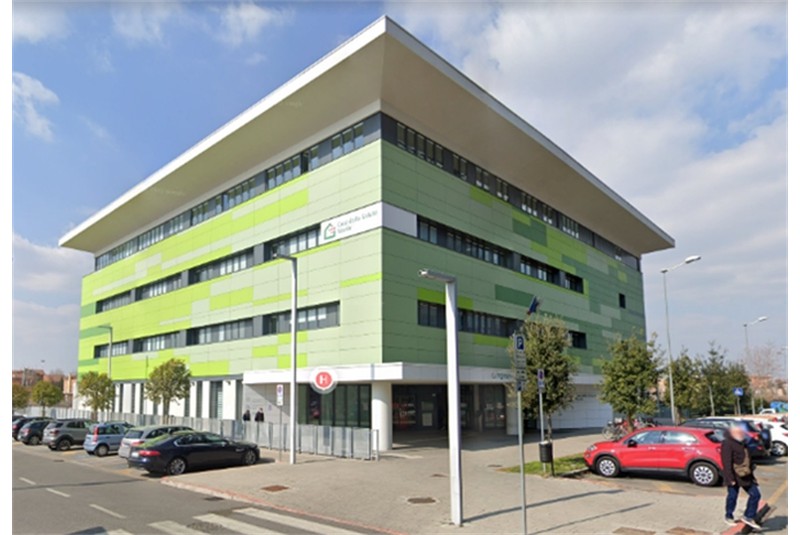
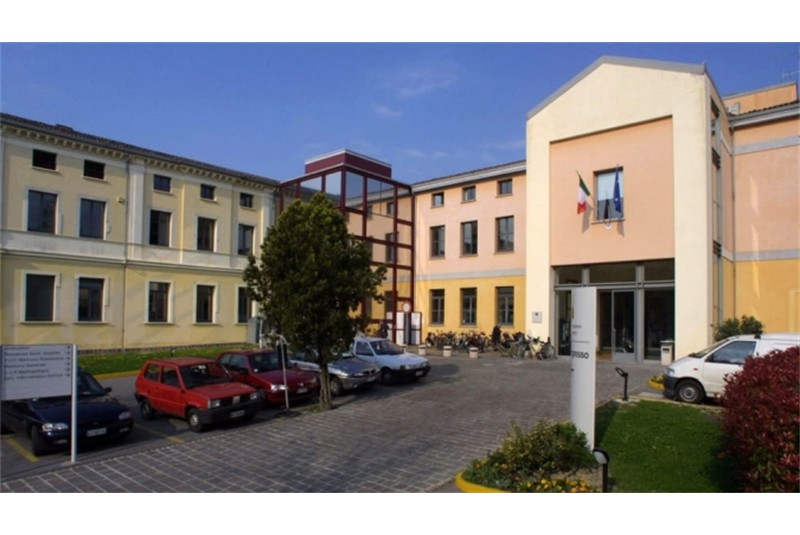
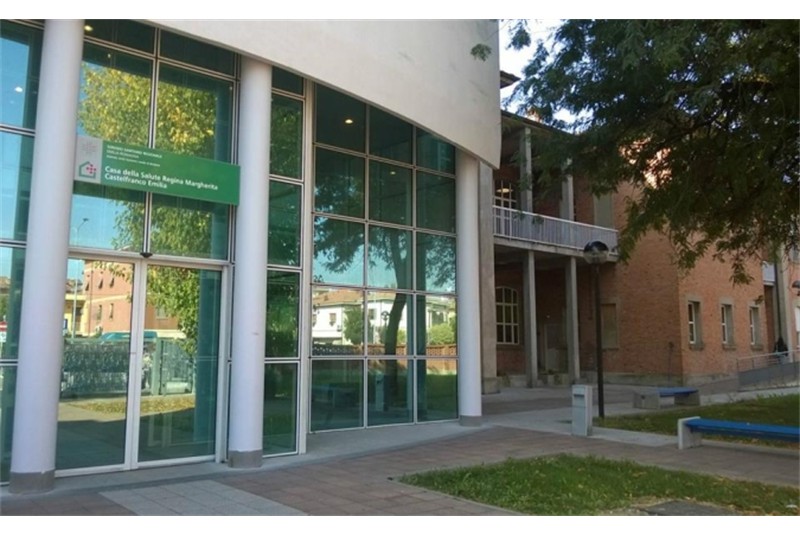
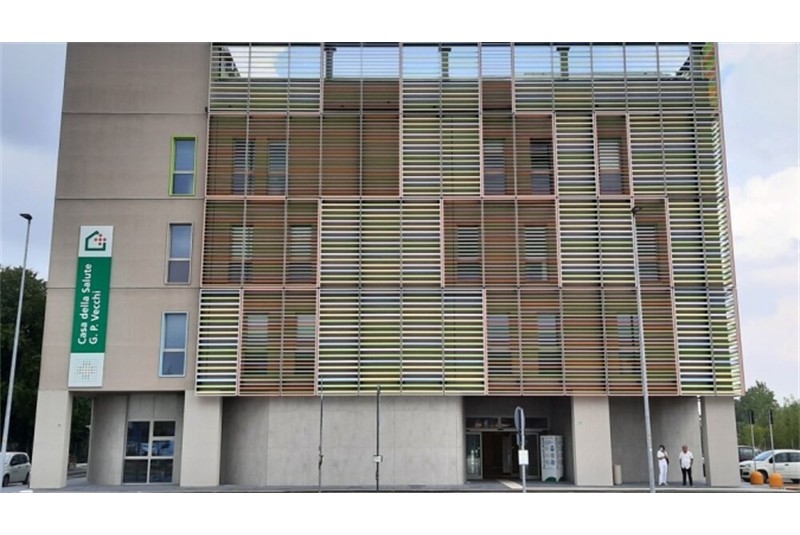
The Emilia-Romagna Region was among the
first to take action on the topic of Health Houses (HH), now Community
Houses (CH). Through what assumptions of health culture and
administrative choices?
The idea of the Health House derives from two impulses:
- at an international level, with the orientation received from the
Health and Consumers Directorate General of the European Commission (10
July 2014) “Definition of a reference model relating to primary
care with particular attention to financing and referral systems”
to provide answers to community health problems, through universally
accessible services, provided by teams of professionals in partnership
with patients and caregivers, providing a central role for the
coordination and continuity of care processes;
- at national level with Law no. 189/2012 and by the 2014-2016 Health
Pact, where the task of defining the organization of primary care
services from a multi-professional and interdisciplinary perspective is
delegated to the Regions. From these assumptions, the Emilia-Romagna
Region has undertaken the path of development of the Health Houses,
formally established with DGR 291/2010 and DGR 2128/2016.
What overall structure is envisaged
between hospital structures and Community Houses in the urban and
territorial context? Which good conditions can make it efficient and
productive and which ones instead tend to slow it down and bring out
critical issues?
The CH are a node in the wider network of health, social and healthcare
services and at the same time they are an integral part of the living
places of the local community. In this sense, the network in which the
CH is inserted includes both the services provided directly by the
Regional Health Service and those provided by other actors such as
local authorities, accredited private individuals, service pharmacies,
social and voluntary networks and last but not least the services
offered by hospitals. of the territory on which the CH is located.
The organizational model identified by Ministerial Decree 77 to connect
services in the area is the Territorial Operations Center (Centrale
Operativa Territoriale - COT), which carries out the function of
coordinating the care of the person and linking services and
professionals involved in the different care settings.
The objective of the COT is to ensure continuity, accessibility and
integration of health and social care. All the players in the system
(district, hospital and intermediate, residential and semi-residential
hospital staff) can request its intervention. This interface process
between territorial structures and services presupposes 7-day-a-week
operations and the provision of adequate technological and IT
infrastructures (common platform integrated with the main business
management applications, software with access to the Electronic Health
Record, information system interconnected with the Regional Operations
Center 116117).
Have you already obtained a
significant picture of feedback on the satisfaction of users and
operators within the Health Houses or now Community Houses?
To evaluate the HH organizational model in terms of satisfaction, in
relation to some quality dimensions (accessibility, relationships with
staff, organizational aspects, environments and overall level of
satisfaction), between June 2018 and July 2019, a questionnaire was
administered to users of Health Houses and Clinics, in which a level of
satisfaction was highlighted that fluctuated from 64 to 98% depending
on the aspects evaluated, with an excellent evaluation of
reliability/trust towards the two types of structure and an excellent
overall perceived quality.
To what extent are the factors of
interdisciplinarity and transdisciplinarity reflected within the
current organizational structures and working regime of Community
Houses?
The CH are healthcare facilities promoting a multidisciplinary
intervention model, as well as privileged places for the planning of
social interventions and socio-health integration. In the CH,
multidisciplinary work is reflected both in the organizational models
(e.g. Multidimensional Evaluation Unit, Single Access Point) and with
the presence of multifunctional spaces such as meeting rooms,
classrooms for training and meetings, which can be used by operators
but also for the involvement of citizens.
The development of the use of IT tools will favor interdisciplinary
work even when professionals are not present in the same place,
reinforcing the concept promoted by the Emilia Romagna region of
widespread CH, made up of the set of relationships that exist not only
between the network of delivery places , but also between the network
of actors and services present in its territory of reference and the
community broadly understood as a set of more or less formally
organized social networks.
Have the regional administration and
the health districts managed, to what extent and through which tools,
to operationally interpret the conceptual passage, which emerged from
Ministerial Decree 77, which closely links the two dimensions of
healthcare and community life?
The CH introduces an organizational model of an integrated,
multidisciplinary, proximity approach, characterized by proactivity
which is achieved through the operational method of the territorial
multi-professional team and by structural participation of the
community. To encourage an innovative transition, which does not end in
a mere nominal transformation, the Emilia-Romagna Region has launched a
three-year training and experimentation path which will involve all the
AUSLs (Health Authorities) and all the Districts. The objective is to
work on elements capable of generating integration, proximity and
participation such as: integrated governance between healthcare, social
and third sectors; integrated organizational coordination between
social and healthcare; multi-professionalism; participation of
citizens, administrators, representatives of the third sector in the
processes of reorganization of territorial assistance, identification
of needs, design and planning of services, implementation, monitoring
and evaluation; adoption and dissemination of an integral approach to
health understood as a collective good to be pursued as a community, in
all its aspects of physical, mental, emotional, relational and cultural
well-being.
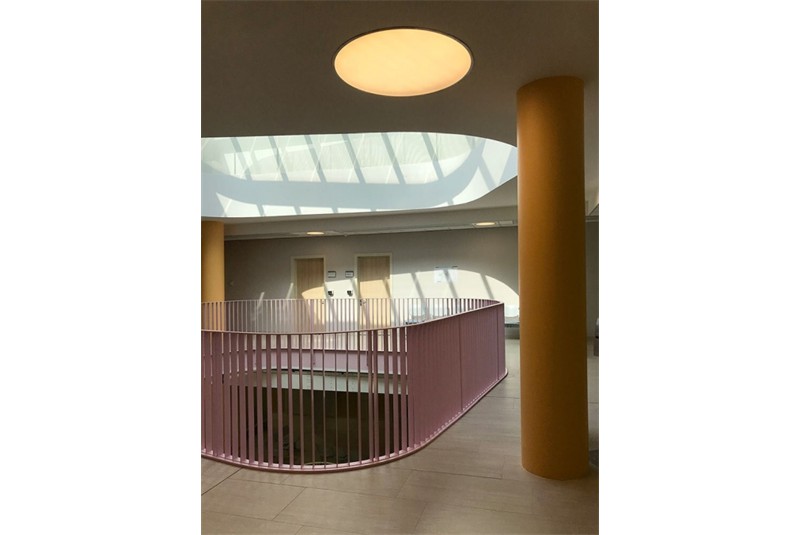
How do you evaluate the factor of
urban quality, of the architectural structures and environments of the
Health Houses, and today of the Community, as a contribution to their
community performativity?
The transition from HH to CH has among its objectives that of
promoting, at a micro-local level, greater integration and continuity
on multiple levels: settings (of care and life), organizational
devices, practices and relationships (interprofessional and
professional-assisted -citizens). To encourage an innovative transition
it is necessary to consider and work on some elements capable of
generating integration, proximity and participation as the main
directions of health promotion, in many aspects, among which the
quality of the architectural spaces of the structures, of the green
areas, of public places are fundamental.
What is the current state of
implementation of the Community Houses to be built with PNRR funds in
ER. also in light of the Government’s renunciation of a portion
of the expected funding?
Given that at the moment we have no updates regarding the waiver of a
portion of funding, we continue with the implementation of the
Community Houses through the DGR N. 2221 of 12/12/2022 in line with the
objectives of the PNRR and with the Institutional Contract of
Development (CIS).
To date, there are 132 active Community Houses, following the planning
of projects financed both with the PNRR and with other funds, it is
expected that, by 2026, 185 Community Houses between hub and spoke will
be built in Emilia-Romagna.
Bibliography
BRAMBILLA A., BOTTURI D., (2014) – Assistenza primaria in Europa in Saluteinternazionale.info 25 giugno Disponibile a https://www.saluteinternazionale.info/2014/06/assistenza-primaria-in-europa/