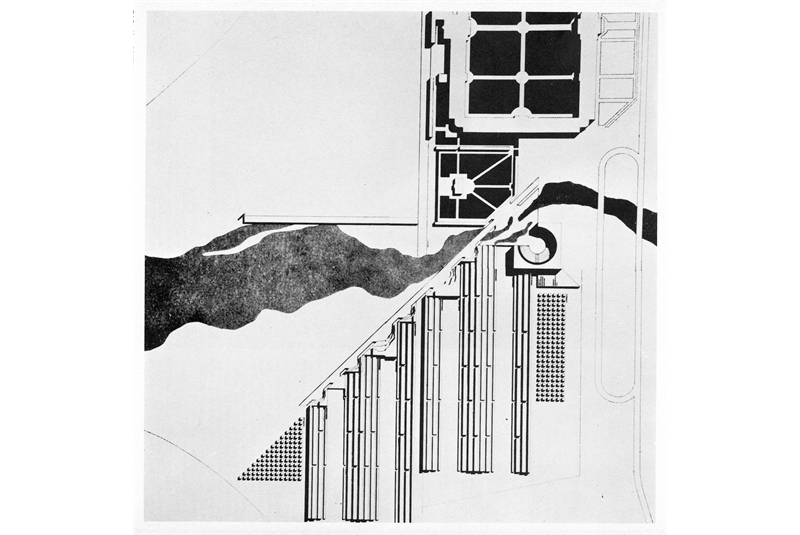
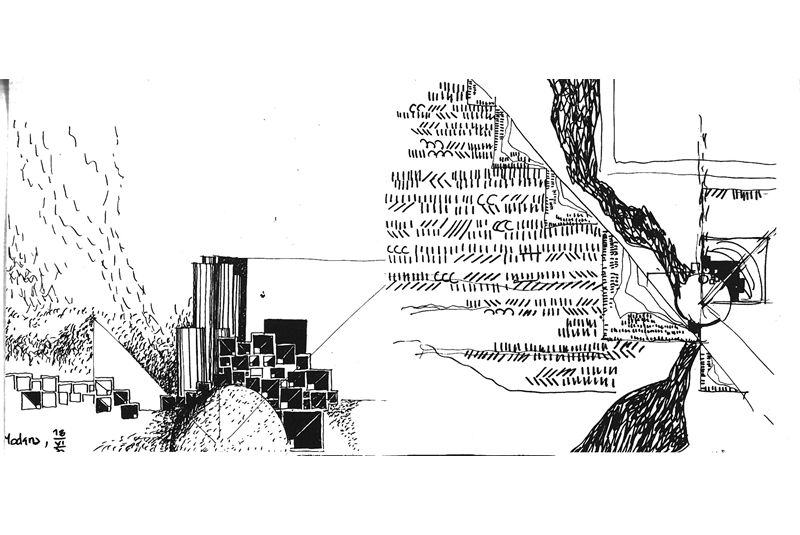
A “Memorial” monument in the form of a sculpture.
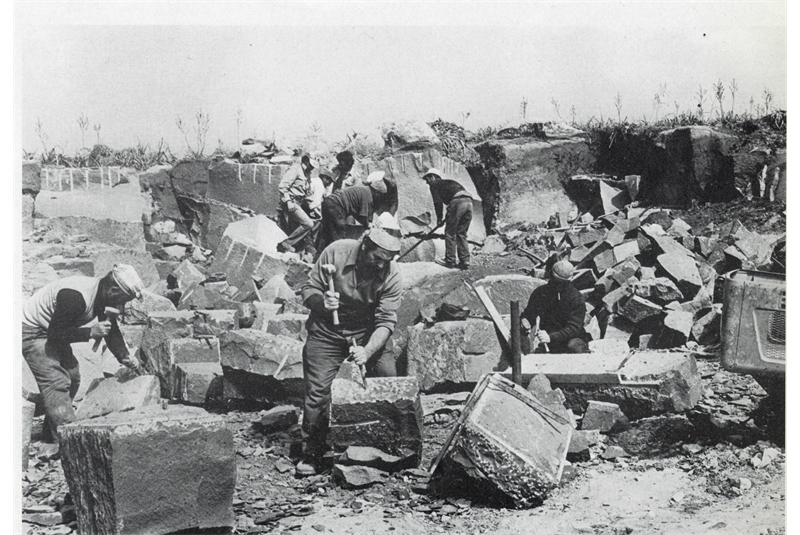
According to the 1973 municipal census, Ales had 2,351 inhabitants […]. The statistics also indicate that there were 200 illiterate people, 300 with no academic qualifications, 600 with an elementary school diploma and 300 with a middle school diploma […]. These figures point to an extremely contradictory and highly problematic social situation, particularly when arriving from Milan with the purpose of building a public work using the local materials, tools and workforce1 [1] (Pomodoro 1977, p. 26)
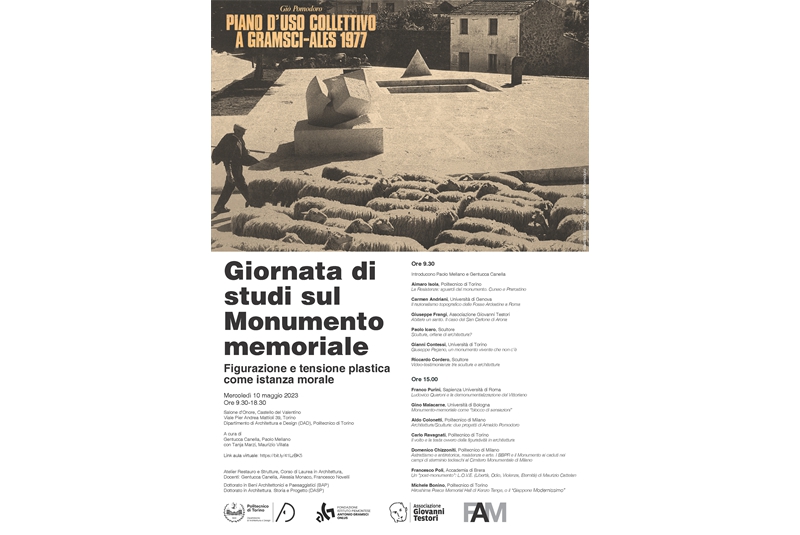
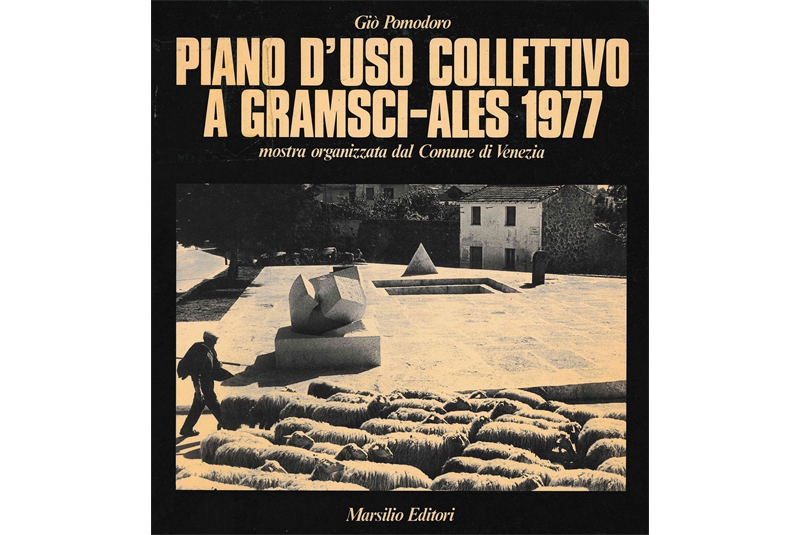
I want to start here, with the introductory image of the Turin Study
Day[2] held in May 2023 –
organised in parallel with the memorial monument contest published in
this edition of FAM –, the Piano
d’uso collettivo by Giò Pomodoro in Ales, a small
memorial monument created in a little town in Sardinia to celebrate an
eminent personage, Antonio Gramsci, which was inaugurated on 1 May 1977
in the presence of the President of the Chamber of Deputies, Pietro
Ingrao.
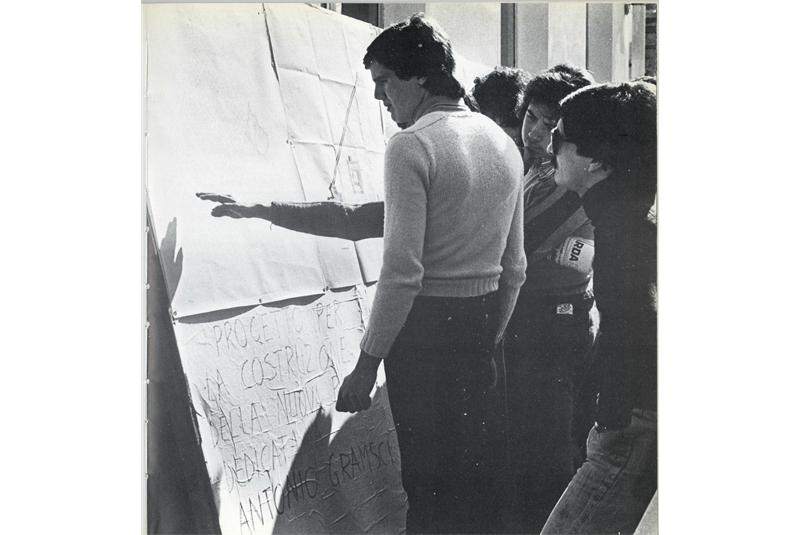
The memorial to Gramsci was completed in three months – from February to April 1977 – with the voluntary contribution of its author, who «came to Ales, settled there, “perceived” and assessed the contradictions that originate from the combination of an exceptional wealth of humanity and a condition of objective marginalisation»[3], in the chaotic work of the local builders, labourers and stonemasons, together with the municipal technicians, firms and students. The limestone quarry of Masullas and the black basalt quarry of Mogoro, which had been closed for more than twelve years, were reopened for the occasion.
Until then, Ales – the birthplace of Gramsci – had been one of any number of extremely poor and entirely anonymous towns, enlivened solely by the excessive size of one of its beautiful churches, but lacking any attraction other than having witnessed the birth of an eminent Sardinian philosopher and politician […]. The great merit of Giò Pomodoro […] was starting, right from the very beginning, with an "anti-monumental" concept, and focusing instead on a communal space that could be used and enjoyed by the entire local population (Dorfles 1977, p. 7).
Gillo Dorfles introduces thus one of the basic questions on which we have decided to seek the opinion of architects, sculptors and critics, called to Turin to offer their insights – and not only in terms of language – on the means of expression and the figurative tension fluctuating between the concepts of “monumental” and “anti-monumental”, which, since the 1960s, have contributed in Italy to highlighting, in certain cases, the creation of “informal” artistic works, frequently transformed, over recent years, into a kind of misunderstood general slogan that has also found fertile ground in architecture. In contrast with these assumptions, the perhaps provocative choice to take inspiration from the small catalogue of the Venice exhibition of 1977 indicates, in the first place, the intention, the deeper meaning, perhaps even one of the greatest merits, in our opinion, of this work by sculptor Giò Pomodoro: celebrating Antonio Gramsci through a “place of collective use”, whether it is a square, a marketplace, a hearth or a fountain, even a livestock transhumance station, a place that would seem to absorb the monument and the memorial into the traditions of a typical agricultural town, without placing them in conflict, «in a single creative process»[4]. A secular interpretation, writes Antonio Del Guercio, of a «highly articulated and malleable cultural philosophy […]. A method that Longhi would perhaps have defined as “workaday”, just as he might have placed this renewed Sardinian square among the possible, and extremely rare, sanctuaries of a simple art of our time»[5].
A monument? I will start by paraphrasing, for the Piano d’uso collettivo dedicated to Gramsci, what Carlo Aymonino wrote in 1988 on the Pesaro Campus: «If what I stated before produces monuments, then yes, it is a monument»[6].
I am, in fact, convinced, perhaps exaggerating a little, that when an artistic union was sought in the compositional project, claimed as far back as the 1950s more by the actual “designers” (including Ponti, Magistretti, Caccia Dominioni, Zanuso, Sottsass) than by the sculptors themselves, entirely original results were not always obtained, in either expression or function, in certain cases even relegating the work of art to a sort of decorative element, albeit of undoubted quality. Equally unpersuasive are the reflections of Gillo Dorfles, insofar as they are established, in a certain sense, by an idealistic valuation of merit, in an interview given in 2003, when he says: «the insertion of a “decorative” work of art into a contemporary setting should be an instance of perfect harmony between the artist and the architect»[7], The same applies to several overzealous attempts of Gio Ponti to create a partnership between a “new” artist and the technical production focused on acceptance.
It has to be recognised that the artistic component of “civil” architecture, mostly in the second half of the twentieth century – and there are not many works that satisfy this condition – was neither a typological nor functional, nor yet figurative, invariant.
The reacquisition of a certain autonomy of language tested and used
on topics of major import or moral tension – from the secular or
religious “memorial”, up to a kind of civil celebration
achieved for integrated functions of “monuments to the suburbs”[8]: such as a school, a civic
centre or a theatre – would therefore now guarantee a more
incisive success of the art in general and perhaps give a new meaning
to “sculpture”, when this takes tangible form in occasions
not motivated by a private commission, in a dimension that is certainly
three-dimensional, but also has a figural freedom.
Sculpting, which is also closer to architecture in the scalar
dimension, could thus reacquire that fleeting moment of pure
expression, its own new “sentimentally more involved”
method of communicating, perhaps introducing certain aspects of
affinity from the pure visibilism of the criticism of Longhi into a
relationship of form and content, between interpretation of the work
and simultaneous complexity of its author. To give an idea of what is
meant here, how much more powerful is the youthful work of sculptor
Lucio Fontana, among others, compared with his involvement in the major
“redevelopment” in architecture and in his
«spatial» exhibitions, however beautiful they may be?
«He therefore believes – wrote Enrico Crispolti in 1962
– in language, as a creative hypothesis, not a module, cipher or
convention […] he invents a new linguistic term every time, a
new idea of communication»[9].
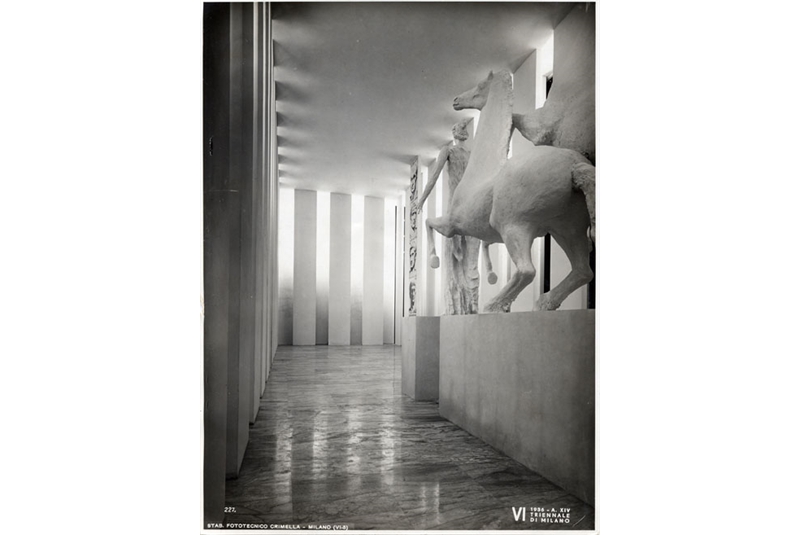
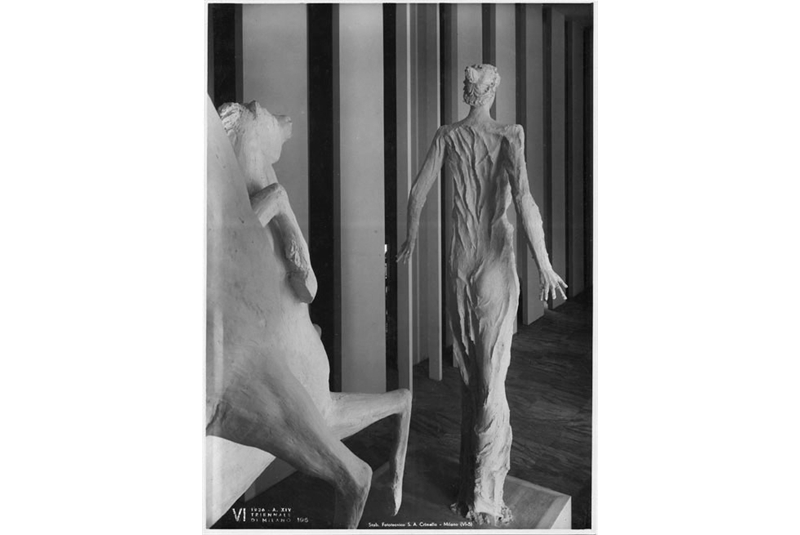
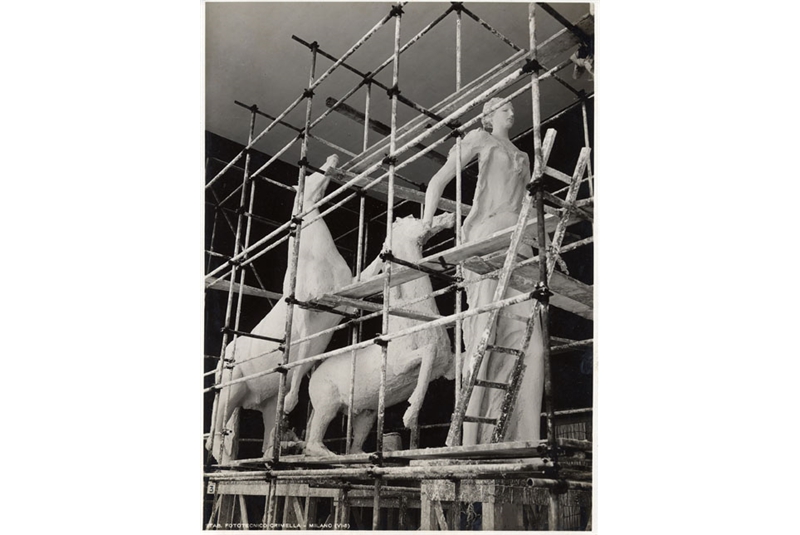
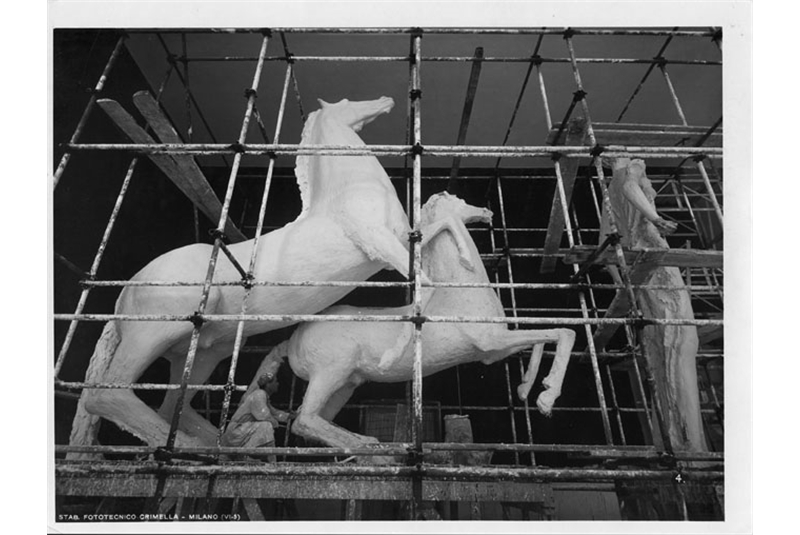
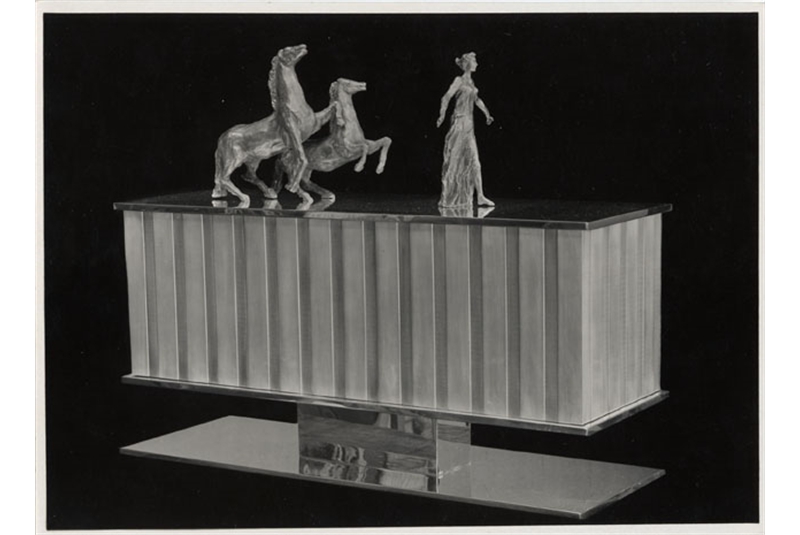
It is worth remembering here the not-to-scale sculptural group of
prancing horses behind the statue of Italy (subsequently renamed
Victory), which almost seem to be leaping out of the two-dimensional
photographic image in the exhibition in the Hall of Honour at the Sixth
Triennial inaugurated in 1936, and the words of Edoardo Persico
himself, author with Nizzoli and Palanti, in the project report:
«sculptures and mosaics are not intended as
“decoration”, or as parts added to the architecture, but
nonetheless almost constitute the topic, due to their stereometry and
to the intimate stylistic bond»[10].
Every claim to political celebration is eliminated, including through
an extraordinary expressive reinterpretation:
[…] leaving intact, because it is deliberate, the rhetoric of suspension intended as a moral testimony. […] Persico […] opts for the “monumental nature”, which re-proposes, in original terms, the ancient archetype of the colonnade in an Italian work that is capable of confirming the principles of contemporary taste with “an act of faith in the magnificence of a Europe at peace” (Guido Canella, 2010, pp. 226-227).
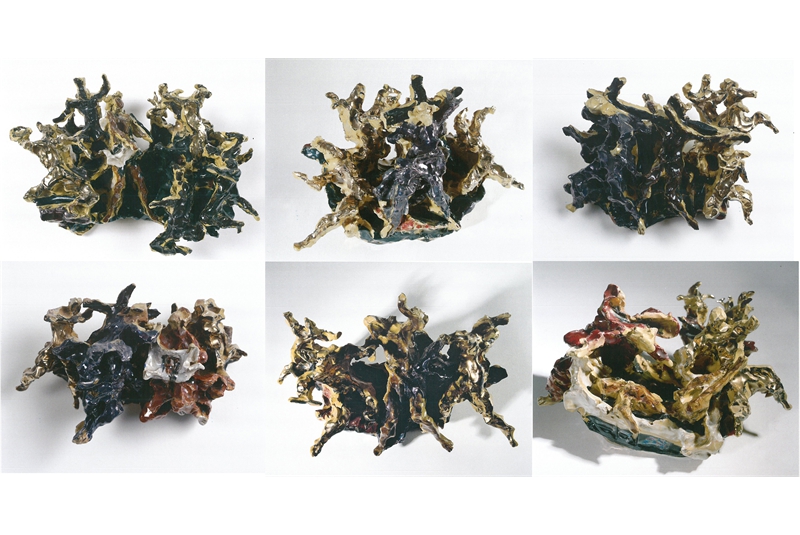
It is even clearer when Fontana addresses, as a sculptor-ceramist, the topics commissioned by the clergy, reinterpreted in the form of secular memorials, including not only the model that remained in sketch form of the figurative studies for the fifth door of the Duomo of Milan, 1951-52, but also the previous extraordinary tiles of the 14 sections of the enamelled Via Crucis of 1947 which, in the words of Giovanni Testori in 1988, «he created without any commission; driven, therefore, by his own highly private tension and need»[11]. But is this internal moral tension, needed to give the Via Crucis of Fontana its “monumental” nature – not in terms of dimensions, but of expressive power – not perhaps driven almost by a profound and transcendent sculptural trauma?
This tangle of materials – continues Testori – superbly glazed, […] agonisingly glazed, almost as if the glaze were a bleeding candy, sacrificial yet also stellar; this tangle, as I said, where the figures follow each other, draw towards each other, twist and stretch, claw at each other, embrace each other, injure each other and kiss each other, and where, act by act, the final event in the life of Christ is humiliated but celebrated at the same time, identifies, to put it bluntly, all of Fontana's work […] In short, what we have always believed and what we now know for certain, with a greater consciousness, and interest, is that Fontana was and will always be, not just primarily, simply a sculptor (Testori 1988, pp. 45,46).
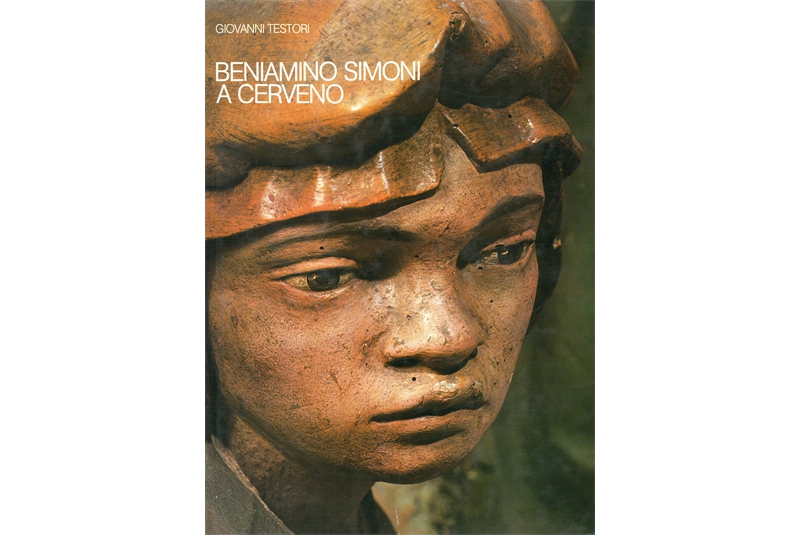
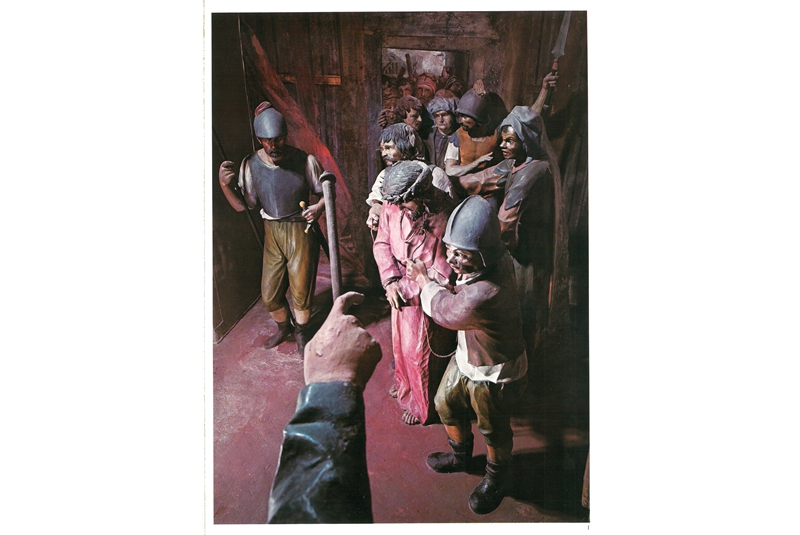
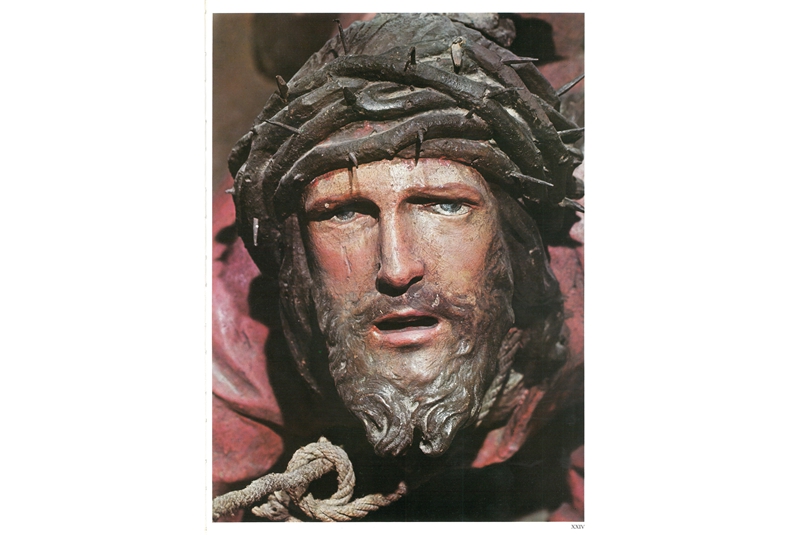
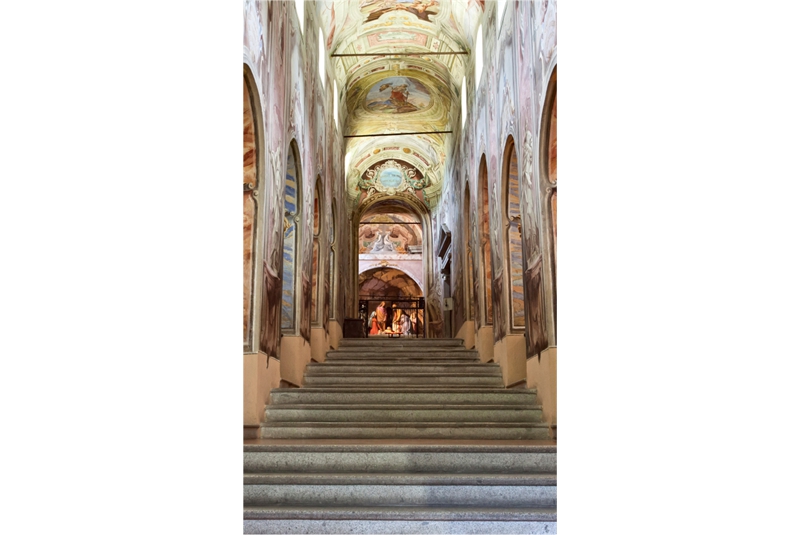
Taking a step back in time, but still focusing on the topics of
“memorial togetherness”, we have the eighteenth century Via
Crucis of Beniamino Simoni in Cerveno, entirely inside the Sanctuary.
The 14 frescoed chapels, containing statues of natural size in wood and
stucco, are distributed along a path ascending in large steps– a
«Sacred stairway or large and irreverent stairway, as it seems
right to me to call our monument»[12] –, culminating at the top with the
Deposition of Christ. It is nice to think that this was also a
reference to the equality extraordinary ascent, dating to the second
half of the twentieth century and marked by two single-flight
staircases, of the Novitiate of Giorgio Raineri at Valsalice in Turin,
now lost and transfigured.
And for the Via Crucis of
Simoni in Cerveno, it is Testori once again who tells us about the
monument, a riotous and dissenting undertaking, including in the
secular manner of understanding sacred sculpture, where the large
statues, in truth, on the verge of making, or being subjected to, a
gesture, an action, together with the «admirable
Staircase», are waiting to be made whole again, also in the
shades of their original colours:
The Simoni […] stands there, right in the middle of the century, with its stubborn and restless bull's hooves; it stands there and lives; lives and suffers, right until the very last drip of sweat and blood, the present and past suffering, injustices, violence, servitude, immorality, famine and shame of its impoverished and desperate populace; it lives, suffers and observes; observing compassionately with the only type of compassion possible in those times (which was indignation), a sculpture that grew in his hands, powerful, tragic, entirely new […] and another that crumbles in his hands, collapses onto the remains and falls into nothing like an empty bag. All of this, mind you, using for both of them the same, absolutely identical means and the same, absolutely identical style.
In this sense, the work of Simoni […] is, in my opinion, the most tragically extreme fact that our figurative culture (not to say our culture in its entirety), within the entire eighteenth century, was able to offer us (Testori 1976, p. 20).
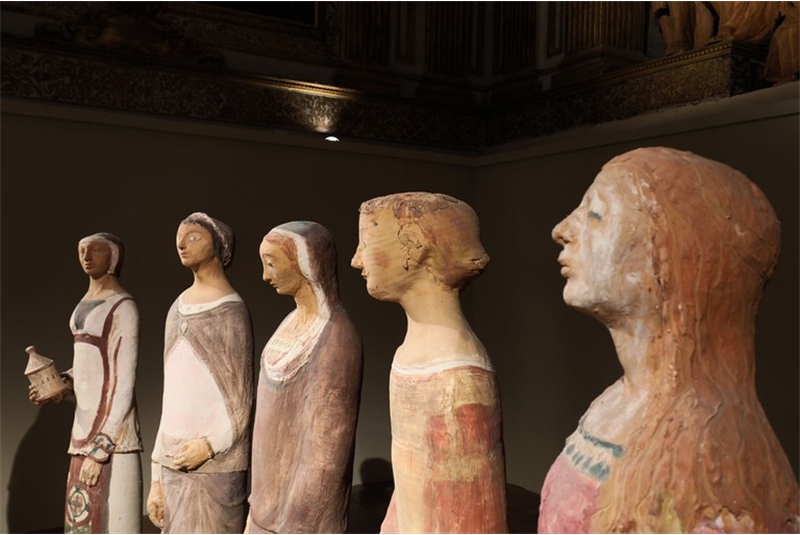
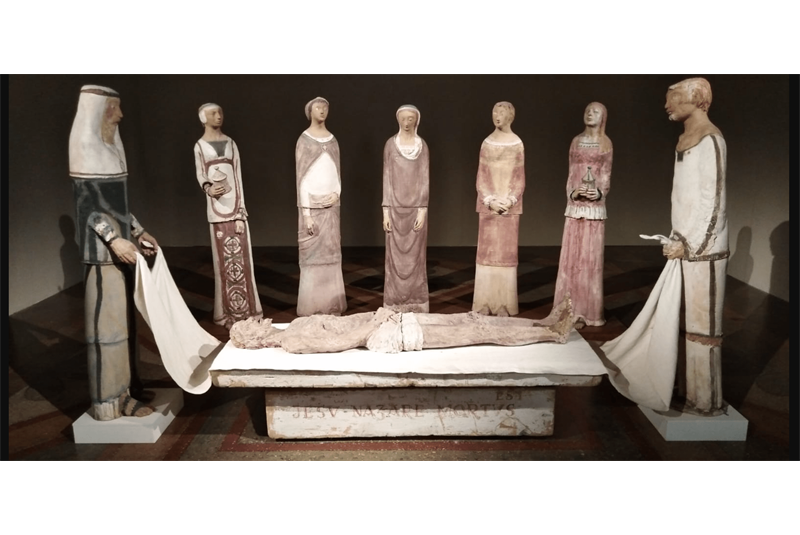
Lastly, in conclusion of this first part, it is worth remembering, in more recent years, the Compianto sul Cristo morto of 1985, in polychrome engobe and engraved terracotta, by Ilario Fioravanti, a sculptor from Cesena, which, although distant from the contextualised architecture of the more well-known and loved Sacri Monti (Sacred Mountains) of Lombardy and the Piedmont, brings to mind the mountain theatre of Gaudenzio Ferrari and Tanzio da Varallo, exaggerating the pain, in body and in spirit, through the sculpture in the round technique and the colour. «Fioravanti's feeling about life is so terrestrially, so fully, so irreparably Christian - we could say so Franciscan – as to leave, now, as forbidden […] what was, and what remains, of the modern terracotta art of our country, the true shepherd kind and true king, lover, singer and cantor»[13].
A monument? If what was stated before produces monuments, then, yes, they are monuments.
The “Memorial” monument in the form of
architecture.
Mors construens. The Monument to the Resistance of Cuneo and the new
Cemetery of Modena
Everything began with the contest for the Monument to the Resistance
of Cuneo, in 1962-63, which has already been written about[14], , and which led to certain
basic choices, not just organisational ones, present in the Call open
to graduate students of the Schools of Architecture and to sculptors.
What was being sought was a less consolidated interpretation that, on
the one hand, did not focus, as usual, on the project of Rossi,
Polesello, Meda, although highly symbolic, but proceeded by trial and
error, combining several assumptions, even improperly and through
improvisation. Thus, the idea was to start with what was written by
Ernesto Rogers in the introduction Progetti
di architetti italiani on
«Casabella-Continuità», no. 276, of June 1963,
«Monuments at the margin of architecture where its borders with
sculpture»[15], which is a
befitting way to introduce this proposal of ours in FAM and also
hopefully to extend its intentions in the future:
Publication of the projects comprising this edition is just the first series of a group of presentations of this kind that we intend to make. Although it establishes a critical choice, «Casabella» does not thus intend to sponsor any one group but, above all, to update the information with the works of people who are, for the most part, unpublished.
This is not a random choice, although it is incomplete in certain aspects: these are young architects who can be considered – within a certain margin – as belonging to the same generation (Rogers 1963, p. 13).
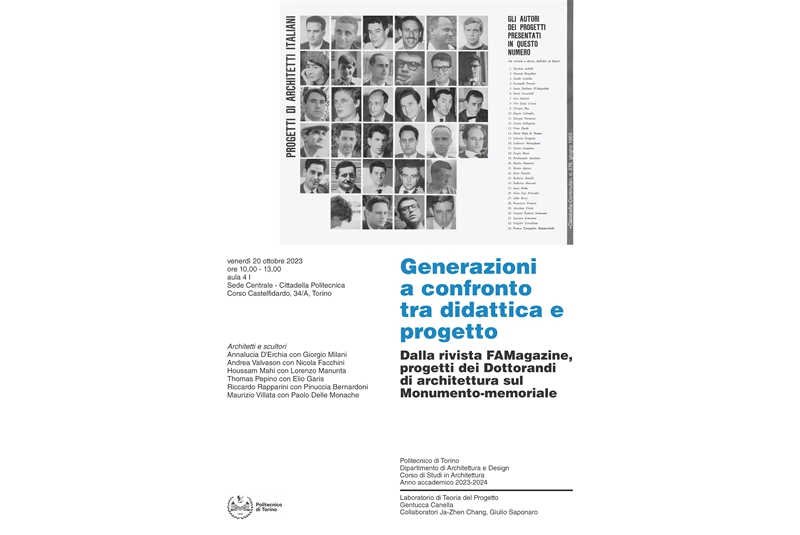
The involvement of a younger generation such as the graduate students, perhaps less used to tackling an architectural project, also offered a second occasion for discussion, in December of last year, in the presentation of several of the 14 works selected for the second round of the contest, in the Theory Workshop of the project at the Turin School. We decided to introduce them to the third-year students with a poster which was, in a certain sense, a homage to “older siblings”: The generation gap between teaching and project. From FAMagazine, projects on the Memorial Monument of graduate students of architecture[16].
As was the case for the second round of the Cuneo contest, in the
intention of this Call on the Memorial Monument «it is
superfluous to advise you that the choice has been made without
considering emblematic definitions»[17]. The sketch or sculptor model intentionally
comes before the report transposed into a paper and, absurdly, before
development of the project idea itself. We do, in fact, believe that
the most convincing projects are those in which the sculptural element,
not necessarily materially produced by the artist, almost gains the
upper hand. This is why it was decided, in the magazine, to publish on
the opening page, for each group – deliberately on a black
background – the not-to-scale image of the model. The celebratory
topic that binds architecture to sculpture therefore does not require
an “artistic union”, but an emotional strength and
expressive tension.
We could say a kind of “uniting of the memory and the spirit”, to use the words of Salvatore Bisogni, an act of regeneration with reference also to «entities that have remained isolated or have subsequently been absorbed by the city around them, as happened with the Campo dei Miracoli and the Cemetery in Pisa or with the Federician Castles on the Adriatic Sea and in the Apulian hinterland»[21], here, in Lampedusa, taking tangible form in a cemetery memorial – taking into consideration the possible extension of the two existing ones facing the eastern bay – along the imaginary line between the Port of Europe of Mimmo Paladino and the migratory routes. A not-to-scale sign, a celebratory monument, based on the urban-territorial redesign and typologically expressive of several emblematic cases, built between the eighteenth and nineteenth centuries, such as the Paupers' Cemetery with 366 graves in Naples and the Cemetery of Santa Maria dei Rotoli in Palermo (but also the more recent extensions of San Michele in Isola in Venice, in 1998, by Gianugo Polesello and Antonio Monestiroli).
A combination of militant criticism and necessary
“prejudice”.
An initial conclusion
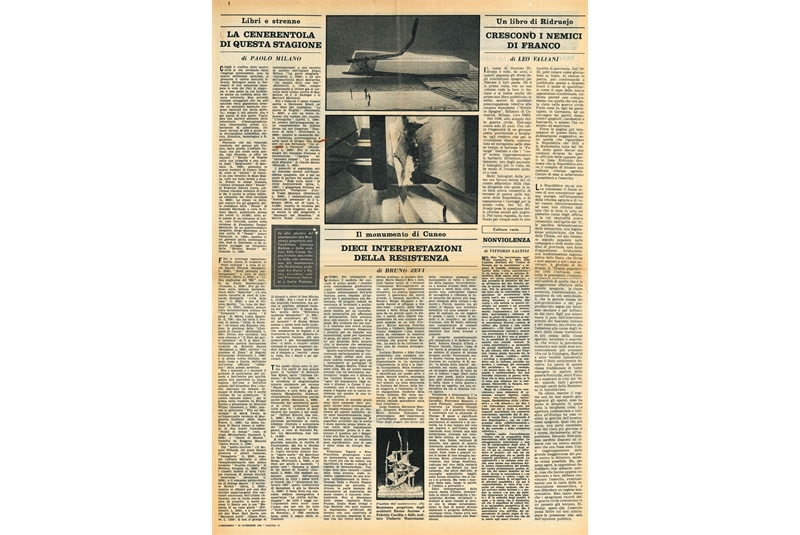
The result of the first round of the contest for the Monument to the Resistance of Cuneo was revealed in advance by Bruno Zevi, through an explicit and passionate judgement that was also clear in the order of opening and closing the ten projects selected, first in «L’Espresso»[22], in 1962, and then in «L’architettura. Cronache e storia», in 1963[23], publishing the images and the report almost in their entirety:
CUNEO. The members of the jury were visibly moved when they handed the result of the first round of the contest to the mayor. The Italian art world had responded in its entirety to the appeal for the monument to the Resistance: 62 projects prepared by hundreds of architects and sculptors, an unprecedented level of participation for a contest;
from the most well-established artists to the youngest, everyone had given the best of themselves.
It was clear that, for many of them, the result was not important: they had drawn or sculpted almost by instinct, almost to re-imagine the gestures, the fallen friends, the most generous part of a life, the hopes that seemed to come back to life, after twenty years. […] the monument in Cuneo was not simply evocative; it marked the bond with the new resistance within the framework of a political revival (Zevi 1962, p. 19).
Zevi had, in any case, already anticipated these non-conformist
predilections and attitudes of a working architect, over those years,
in the unbreakable bond between a magazine and its director, which
became an important element of architectural communication and
contributed to creating a critical culture. He was also atoning for
several peremptory value judgements made on the various poetics and
personalities of modern architecture, as Guido Canella stated in a
lesson on Bruno Zevi in 1982:
Nevertheless, I have personally always had great admiration and affection for him: as a critic and as a historian, for his intellect, as a man of learning who always chose the path of sincerity, to the point of provocation, meaning a moral rebellion of his own poetic truth against the endless ambiguities that too often obfuscate an authentic and honest debate on the controversial destiny of architecture (Guido Canella, 1982, 2002)[24].
Ten years later, in the magazine «Controspazio»[25], in 1972, Paolo Portoghesi introduced the projects for the national contest for another major “memorial monument”, the new Cemetery of San Cataldo in Modena:
The response of Italian architects to the questions posed by the national contest was bountiful and multi-faceted: around fifty projects that were, for the most part, the result of a meaningful commitment and the desire to seek a valid methodological indication that went beyond the incidental occasion. The final result, although provisional, offers a clear indication. It is not the result of an agreement of the jury, but actually of a rift and a lively debate between a majority and a minority of its members. It is also a sign of the firm rejection of that all too frequent compromise of blithely accepting what emerges from mediocrity and rewarding not this choice or that choice, but the absence of choice, the absence of a “trend” (Portoghesi, 1972, p. 2).
The projects of Aldo Rossi for the two national contests for design
of the Monument to the Resistance of Cuneo, in 1962, and for the new
Cemetery of San Cataldo of Modena, in 1972, have been analysed and
perhaps eviscerated in all their aspects. What interests us here,
albeit schematically, is to compare the role of the two juries,
unquestionably both “exceptional”[26], in two of the most significant contests for
the Italian scene, and not just in those years:
The cemetery of Modena was changed slightly in the two rounds of the contest and I remember the interminable discussions to arrive at the victory in the second round, after the project had won outright in the first. We had left each other in the evening with the doubt over whether to indicate a single winner; Carlo Aymonino himself was undecided, partly because Nino Dardi had presented such a truly fascinating project, and one of the most joyful (Portoghesi 2021, p. 42).
While it is impossible to forget the strong and intransigent opposition of Bruno Zevi, limited not just to these two projects by Rossi – from the cubic memorial to the Resistance of Cuneo, which was not among the ten finalists in the second round, to the cries of «scandal» prompted by the results of the contest for ideas for the new cemetery in Modena, in the piece entitled Cadaveri architettonici published in «L’Architettura. Cronache e storia» in 1973[27] – it is also necessary to consider that Paolo Portoghesi was a judge, invariably in several of the most important contests, all of which decisively confirmed the success, also international, of Aldo Rossi, obviously in addition to the direct assignment for the Theatre of the World during the Venice Biennial.
I therefore believe that in L’azzurro
del cielo, by Aldo Rossi with Gianni Braghieri, the assumption
of a meaning perhaps too closely bound to a theory based, a priori, on
combinations that are almost “domestic” in nature:
«the empty cube with holes without windows, like an uncompleted
and abandoned house, the chimney stack as a symbol of the
factory», or even “zoomorphic”: «the central
spine resembles a fish bone, the skeleton of vertebrates»[28], as it was subsequently
reinterpreted by others, students and non-students, over the following
years, and less to the effective value almost of a “symbolic
insurrection” of the composition, has favoured, in contrast, a
kind of «rebound stress» as Zevi would say.
In any case, this withdrawal would seem to be confirmed in the
introduction of Portoghesi in «Controspazio», who was
initially almost hesitant about the final award, and took a personal
stand on this:
In the project entitled «L'azzurro del cielo» […] the architecture reclaims its semantic function, it starts to «speak» in its attempt to set the directly communicable collective values against the privacy of the individual being mourned. However, the lexical choices appear to border on ambiguity […] Are the unquestionably archaistic inspiration of De Chirico and, even more, the bonds with Boullée and ideological Neo-classicism, the "unburned waste" of a short process that was halted too soon, or legitimate cultural kinships? (Portoghesi 1972, p. 3).
In short, as was the case ten years previously in the contest for the Monument of Cuneo, in the contest for the Cemetery of Modena, what would have been expected from such an exceptional jury was that same singular "gestational labour", with an involvement, even alternative, of lines already drawn.
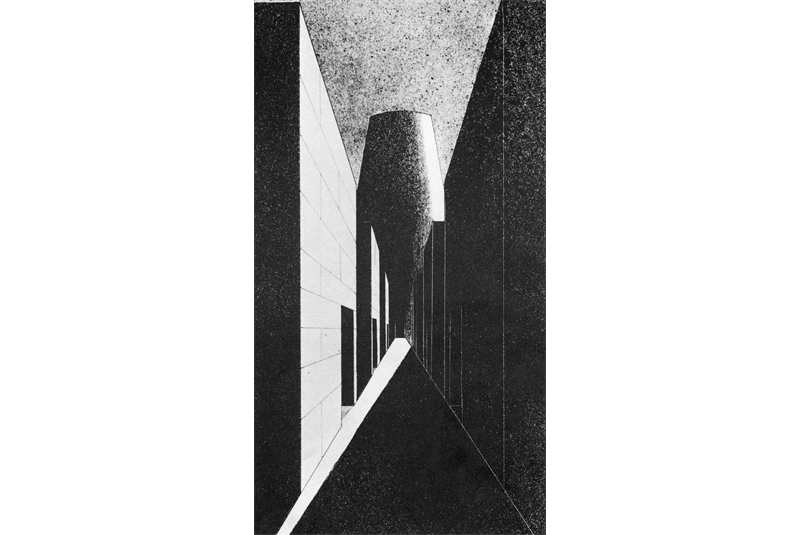
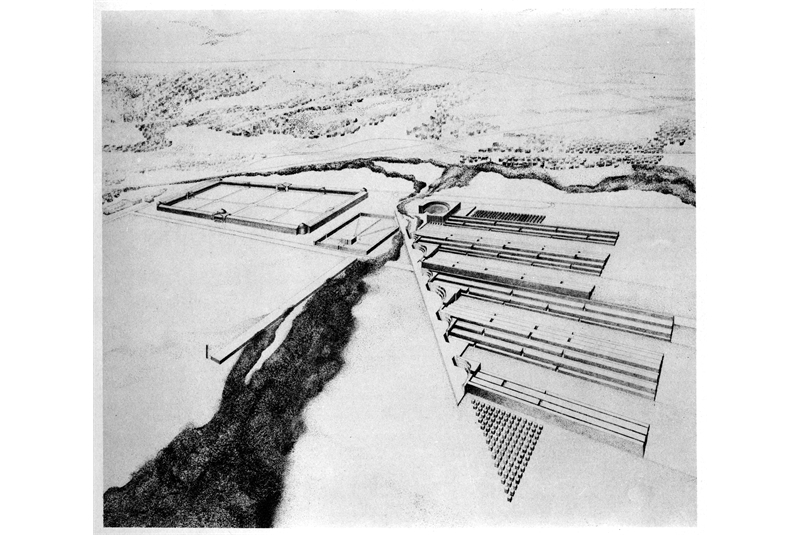
Thus, the first place awarded to the project of Aldo Rossi – I believe more for its poetic-linguistic originality, so deeply entrenched in the sketches and studio drawings, expressed here particularly in the large “Cone” of the Fossa comune, unfortunately never built –, could perhaps have been shared with a first place awarded to the Dom project of Costantino Dardi, which is truly beautiful, and to that “monument to memory” that is the Torre delle ombre:
an explicit citation of the architectural structure of the same name that Le Corbusier placed in the centre of the new Capitol of Chandigarh […], the tower of shadows has become a volume, barycentric to the various areas of the cemetery, performing several functions simultaneously […] and within which, in conclusion, a collective space is created that allows, in a pertinent and significant manner, choral participation in public ceremonies and functions (Dardi 1972, p.12).A monument? If what was stated before produces monuments, then, yes, they are monuments.
Longhi is a master of Italian literature for the way in which he writes. He was also the inspiration for many writers and art critics, such as Briganti, Testori, and so on. His ability to paraphrase the picture through his own reinterpretation is also the reason, in my opinion, for his choice of device. What do I mean by device?
I mean a method he uses to understand the problems of figuration […]. The search for a device in criticism is extremely important. I prefer critics who use the device, in other words I believe that a critic should, for want of a better word, be driven, be motivated by prejudice[29] (Guido Canella 2007).
Note
[1] Giò Pomodoro, Come nasce il «monumento» a Gramsci, in AA.VV., Giò Pomodoro, Piano d’uso collettivo a Gramsci-Ales 1977, Marsilio Editori, 1977, p. 26.
[2] Giornata di studi sul Monumento memoriale. Figurazione e tensione plastica come istanza morale, Turin, 10 May 2023, Hall of Honour, Valentino Castle, Department of Architecture and Design (DAD), Turin Polytechnic. Curated by Gentucca Canella, Paolo Mellano with Tanja Marzi, Maurizio Villata.
[3] Flavio Caroli, Il futuro ha un cuore antico, in Piano d’uso collettivo a Gramsci-Ales 1977, cit., p. 13.
[4] Flavio Caroli, Il futuro ha un cuore antico, in Piano d’uso collettivo a Gramsci-Ales 1977, cit., p. 13.
[5] Antonio Del Guercio, Santuario d’arte semplice per Gramsci, in Piano d’uso collettivo a Gramsci-Ales 1977, cit., p.18.
[6] Carlo Aymonino, Complesso scolastico di Pesaro 1974-1978 in Carlo Aymonino, Piazze d’Italia. Progettare gli spazi aperti, Electa, Milan 1988, p. 54.
[7] Gillo Dorfles, Lucio Fontana e l’artigianato creativo, in Lucio Fontana e il mosaico di Cantù, Catalogue of the exhibition in Cantù, Mazzotta, Milan 2003, p. 31.
[8] Marco Dezzi Bardeschi, Monumenti alla periferia, in «Domus», n. 635, January 1983, pp. 12-27.
[9] Enrico Crispolti, Fontana, Stadtisches Museum Leverkusen, Schloss Morsbroich, 12. Januar bis 25. februar 1962 and in Lucio Fontana. Opere 1931-1968, Martano/Due, Torino 1969.
[10] Edoardo Persico, Marcello, Nizzoli, Giancarlo Palanti, Lucio, Fontana (sculpture), Project for the Hall of Honour at the VI Triennial of Milan, 1936.
[11] Giovanni Testori, Come terrecotte Sukhotai (Lucio Fontana), 1988, in La cenere e la carne. Scritti sulla scultura del Novecento, Le Lettere, Florence 2002, pp. 45-47.
[12] Giovanni Testori, Beniamino Simoni a Cerveno, Grafo edizioni, Brescia 1976.
[13] Giovanni Testori, Fioravanti terrecotte 1982-89, Milano, Compagnia del Disegno, 1990 and in Ilario Fioravanti, 1990, in La cenere e la carne. Scritti sulla scultura del Novecento, Cit., pp. 95-96.
[14] Gentucca Canella, Tanja Marzi, Scale e risalite verso “l’azzurro del cielo” nelle architetture monumento dei protagonisti dell’architettura del Novecento italiano in Scale e risalite nella Storia della Costruzione in età Moderna e Contemporanea, Quaderni di Storia della Costruzione 2, edited by Valentina Burgassi, Francesco Novelli, Alessandro Spila, Construction History Group - Turin Polytechnic DAD, 2022, pp. 439-460.
[15] Ernesto Nathan Rogers, Progetti di architetti italiani. Introduzione, in «Casabella-Continuità», no. 276, June 1963, p. 13.
[16] Generazioni a confronto tra didattica e progetto. Dalla rivista FAMagazine, progetti dei Dottorandi di architettura sul Monumento-memoriale. Architects and sculptors: Annalucia D’Erchia with Giorgio Milani, Andrea Valvason with Nicola Facchini, Houssam Mahi with Lorenzo Manunta, Thomas Pepino with Elio Garis, Riccardo Rapparini with Pinuccia Bernardoni, Maurizio Villata with Paolo Delle Monache, Turin 20 October 2023, Turin Polytechnic, Department of Architecture and Design, Course of Studies in Architecture, 2023-2024 academic year, Theory Workshop of the Project, Lecturer Gentucca Canella, Assistants Ja-Zhen Chang, Giulio Saponaro.
[17] Bruno Zevi, Il monumento di Cuneo. Dieci interpretazioni della Resistenza, L’Espresso, 30 December 1962, p. 19.
[18] Territorialità e cittadinanza della morte, «Hinterland», no. 29-30, June 1984.
[19] If I were involved in a “call” on a memorial monument, I would have chosen to intervene in several contexts, as envisaged in the Call put out by FAM and in the previous contest for Cuneo. I would focus, in particular, on the exceptional third-world supporting vocation of the Havana School of Art and on the transcription, in a design sense, of the Zero School in Eritrea, which provided schools and occupational training centres for fighters and civilians and became, in the years of the war for liberation, a set of classrooms "in the trenches" located throughout the country, for dozens of kilometres, concealed among the valleys and organised with temporary structures to be put up and taken down to avoid the bombardments, alongside field hospitals, workshops, craft workshops and service stations. The young students (often the children of fighters of the People's Liberation Front) received primary and secondary education, thus recreating a normal life and participating in the work in the fields of the rural communities. Once they received their diploma, they taught reading, writing and arithmetic to adults, along with health and hygiene. These topics have always fascinated me, not just in the teaching, but also because they involve a stance being taken on the question of Africa, the south and the Mediterranean, more generally on the countries of the “South” of the world viewed from a different perspective to the current governmental directives. A “thought about the north-south divide”, using the words of Franco Cassano: «Thinking about the south means that the south is the subject of the thought: it does not need to be studied, analysed and judged by an outside way of thinking, but needs to reacquire the strength to think for itself and determinedly reconquer its independence» (Franco Cassano, Il pensiero Meridiano, Laterza, Roma-Bari 1996).
[20] cf. Editorial, Reggio Calabria: il primo cimitero per i migranti morti nei naufragi. Monsignor Morrone: “Riconosciuti almeno nella morte”, Risveglio 2000, 3 June 2022; Maria Teresa Ripolo, A Reggio Calabria il cimitero dei migranti e dei poveri, Corriere della Calabria, 10 June 2022.
[21] Salvatore Bisogni, Zolle. L’architettura della zolla come sintesi di edifici pubblici. Progetti per l’entroterra campano, in Ricerche in architettura. La Zolla nella dispersione delle aree metropolitane, edited by S. Bisogni, Edizioni scientifiche italiane, Naples 2011, p. 268.
[22] Bruno Zevi, Il monumento di Cuneo. Dieci interpretazioni della Resistenza, L’Espresso, 30 December 1962, p. 19.
[23] Concorso nazionale per il Monumento alla Resistenza a Cuneo, in «L’architettura. Cronache e storia», no. 90, April 1963.
[24] Guido Canella, Bruno Zevi, Lesson, 5 February 1992, in La critica operativa e l’architettura, edited by Luca Monica, Unicopli, Milan 2002, p. 12.
[25] Paolo Portoghesi, Città dei vivi e città dei morti, in «Controspazio», no. 10, October 1972, p.2
[26] Jury of the National Contest for the Monument to the Resistance of Cuneo, 1962: Giulio Carlo Argan, chairman, Albino Arnaudo, Nello Ponente, Maurizio Saglietto, Bruno Zevi.
Jury of the National Contest for the new Cemetery of Modena, 1972, including: Paolo Portoghesi, Carlo Aymonino, Carlo Melograni, Pier Luigi Cervellati, Glauco Gresleri.
[27] Bruno Zevi, Cadaveri architettonici, in «L’architettura. Cronache e storia», no. 12, April 1973, p. 773.
[28] Paolo Portoghesi, Il teatro della morte, in Aldo Rossi il teatro e la città, Sagep Editori, Genoa 2021, pp. 40-42.
[29] Transcription of the lesson of Guido Canella with Daniele Vitale on Roberto Longhi as a commentary to the video Breve ma veridica storia della pittura italiana, directed by M. Bosio, Corso di Teorie e tecniche della progettazione architettonica, Facoltà di Architettura Civile Milano Bovisa, Politecnico di Milano, 24 October 2007.
Bibliography
AYMONINO C. (1988) – “Complesso scolastico di Pesaro 1974-1978”. In: C. Aymonino, Piazze d’Italia. Progettare gli spazi aperti. Electa, Milan.
AA.VV. (1977) – Giò Pomodoro, Piano d’uso collettivo a Gramsci-Ales 1977. Marsilio, Venice.
BISOGNI S. (2011) – “Zolle. L’architettura della zolla come sintesi di edifici pubblici. Progetti per l’entroterra campano”. In S. Bisogni (edit by), Ricerche in architettura. La Zolla nella dispersione delle aree metropolitane, Edizioni scientifiche italiane, Naples.
CANELLA G. (1984) – “Mors construens”. In: Territorialità e cittadinanza della morte. Hinterland, 29-30 (june).
CANELLA G. (1992, 2002) – “Bruno Zevi”, Introduzione, Lezione 5 febbraio 1992, Dipartimento di Progettazione dell’Architettura, Politecnico di Milano. In: AA.VV., La critica operativa e l’architettura, L. Monica (edit by), Unicopli, Milan.
CANELLA G. (2003, 2010) – “Torino-Milano: inizi e trasgressione dell’architettura moderna in Italia attraverso Edoardo Persico”. In Guido Canella, Architetti italiani nel Novecento, edit by E. Bordogna with E. Prandi, E. Manganaro. Christian Marinotti, Milan.
CANELLA GE., MARZI T. (2022) – “Scale e risalite verso “l’azzurro del cielo” nelle architetture monumento dei protagonisti dell’architettura del Novecento italiano”. In: V. Burgassi, F. Novelli, A. Spila (edit by), Scale e risalite nella Storia della Costruzione in età Moderna e Contemporanea. Quaderni di Storia della Costruzione 2, Construction History Group, Politecnico di Torino DAD.
CRISPOLTI E. (1962-1969) – “Fontana”, Stadtisches Museum Leverkusen, Schloss Morsbroich, 12. Januar bis 25. Febbraio 1962. In: AA.VV, Lucio Fontana. Opere 1931-1968. Martano/Due, Turin.
DEZZI BARDESCHI M. (1983) – “Monumenti alla periferia”. Domus, 635 (jannuary)
PORTOGHESI P. (1972) – “Città dei vivi e città dei morti”. Presentazione. In: Concorso nazionale di idee per il nuovo cimitero di Modena. Controspazio, 10 (october).
PORTOGHESI P. (2021) – “Il teatro della morte”. In: Aldo Rossi il teatro e la città. Sagep, Genoa.
ROGERS E. N. (1963) – “Progetti di architetti italiani. Introduzione”. Casabella-Continuità, 276 (june).
TESTORI G. (1976) – Beniamino Simoni a Cerveno. Grafo, Brescia.
TESTORI G. (1988, 2002) – “Come terrecotte Sukhotai (Lucio Fontana)”. In: Id., La cenere e la carne. Scritti sulla scultura del Novecento. Le Lettere, Florence.
TESTORI G. (1990, 2002) – “Fioravanti terrecotte 1982-89”. Compagnia del Disegno. In: Id., La cenere e la carne. Scritti sulla scultura del Novecento. Le Lettere, Florence.
ZEVI B. (1962) – “Il monumento di Cuneo. Dieci interpretazioni della Resistenza”. L’Espresso, 30 december.
ZEVI B. (1963) – “Concorso nazionale per il Monumento alla Resistenza a Cuneo”. L’architettura. Cronache e storia, 90 (april).
ZEVI B. (1973) – “Cadaveri architettonici”. L’architettura. Cronache e storia, 210 (april).