La mia Africa: tra Blixen
e Pasolini
Enrico Prandi
A few years ago, within the Architecture/World
section of the Festival dell'Architettura of Parma, in its second
edition of 2005 titled Architecture:
richness
and poverty[1] we went
in
search of figures and projects, native or allochthonous, that seemed to
us worthy of attention for how they dealt with the theme of
architecture in the so-called developing countries. Under the
apparently general title there was the precise desire to invert the two
words in polemical and reflective terms with the aim of arguing that
so-called poor architecture was actually rich and authentic, even in
meanings, while on the contrary rich architecture was often only a
trivial display of wealth. Renato Pallavicini (2005), architect and
journalist, accompanied an article in L’Unità, had
juxtaposed the image of an agglomeration of straw houses in the Hidalgo
valley in Mexico with the image of the skyscrapers of City Life in
Milan. The contrast was not simply between architecture without
architects, to quote Rudofsky, and designer architecture, but above all
between authenticity and falsification.
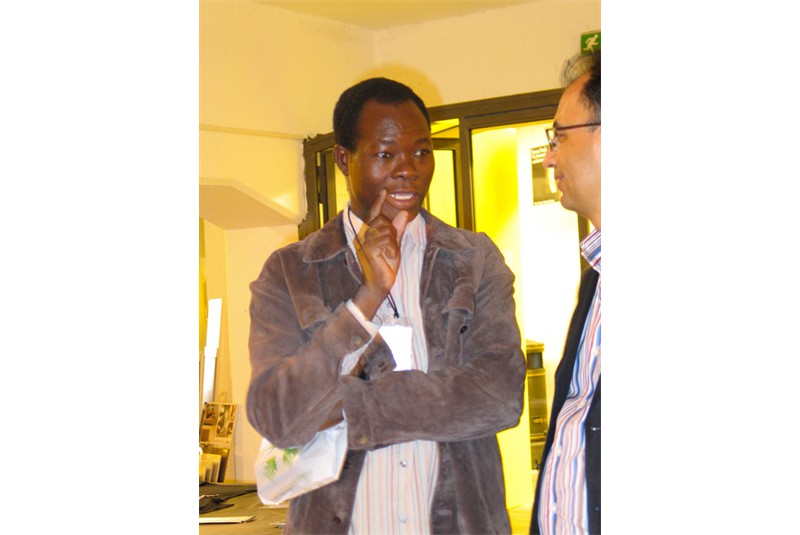
On that occasion, a young Diébédo Francis
Kéré came to Parma who, almost twenty years later, would
be rightly consecrated with the Pritzer Prize for Architecture (the
Nobel Prize for architecture), the Indian architect Raj Rewal, unknown
to most but a figure of great interest in architecture and former
professor at the School of Planning and Architecture in Delhi; we
published projects by Kéré, ADAUA/Fabrizio Carola
Group, Patrick Dujarric, Abdalla Mohammed Sabbar, Demas Nwoko,
Abderrahim Charai and Abdelaziz Lazrak, just to stay in Africa.
This was before a general interest in African architecture broke out,
as evidenced by a considerable number of research and publications
developed especially since the beginning of the new millennium –
the exhibition at the Triennale Africa is worth mentioning Big change, big chance by Benno
Albrecht (2014) – culminated with the entrustment of the
direction of the 2024 Venice Architecture Biennale to the Ghanaian-born
architect Lesley Lokko.
More recently, within a network of intercultural academic exchanges
between European universities including the University of Parma and the
University of Rwanda (Capacity Building in the Field of Higher
Education) I had the opportunity to confront myself with a young Dean
who submitted to me the study structure of the courses of the School of
Architecture and Built Environment of the Kigali RU. If in the print of
more than three hundred sheets there had not been written at the foot
of the page “University of Rwanda, Department of
Architecture”, that order of studies with the relative contents
of the individual courses, educational objectives, reference
bibliography, etc., could have been mistaken for any university course
of study in Europe or perhaps in the world, so general was it,
international and little characterized with respect to the territory in
which it stood. I learned that the School of Architecture was born in
2009 with a European approach, not because of yet another act of
cultural colonialist imposition, but because the leaders of the
University of Rwanda at the time saw in the international generalist
approach the possibility of inserting itself into a global circuit of
university education in architecture and architecture in general, which
was well framed in the broader phenomenon of Globalization.
On the contrary, a counter-colonial movement was emerging to export a
thought on architecture that recovered local building and linguistic
traditions, modernizing them without imposing “out of
place” techniques (interpreting this term in both a literal and
metaphorical sense) that laid the foundations of an awareness as a
cultural conquest that began to generate interesting results such as
those we witnessed in that edition of the Architecture Festival,
unfortunately the only one not to have seen a printed catalog published.
Nothing more came of that project to reform the educational system
– the shared idea was to characterize the training course
according to the principles of architecture and cities of tropical
places – but from the discussions with Manlio Michieletto, former
professor at the Institute Superiore d’Architecture et Urbanisme
in Kinshasa in the Democratic Republic of Congo and then Dean of the
School of Architecture and Built Environment of the University of
Rwanda the idea of deepening the theme of sub-Saharan tropical
architecture remained. It can be said, therefore, that the idea of the
monographic issue of FAM was born on that occasion.
Within the magazine we had already delved into the themes related to
the critical Regionalism of Framptonian memory – to which the
theme of African tropical architecture is evidently linked –
within which Anna Bruna Menghini (2022) speaking of Sub-Saharan Africa
in an article, to which we refer for a concise but exhaustive
historical-architectural historical-critical analysis of Africa, posed
the problem of the cultural identity of a vast and complex continent
with a difficult history.
This aspect of contrasting characters is emphasized by many: Africa is
a variegated continent made up of “vast prehistoric landscapes,
its miserable villages inhabited by a peasant and primitive humanity,
two or three very modern cities that were already industrial and
proletarian.” These are the words of Alberto Moravia who shares
with Pasolini and Elsa Morante the journey first to India and then to
Africa in search of cinematographic settings. This crude contrast,
which recalls the Pallavicini approach reported above, was the basis of
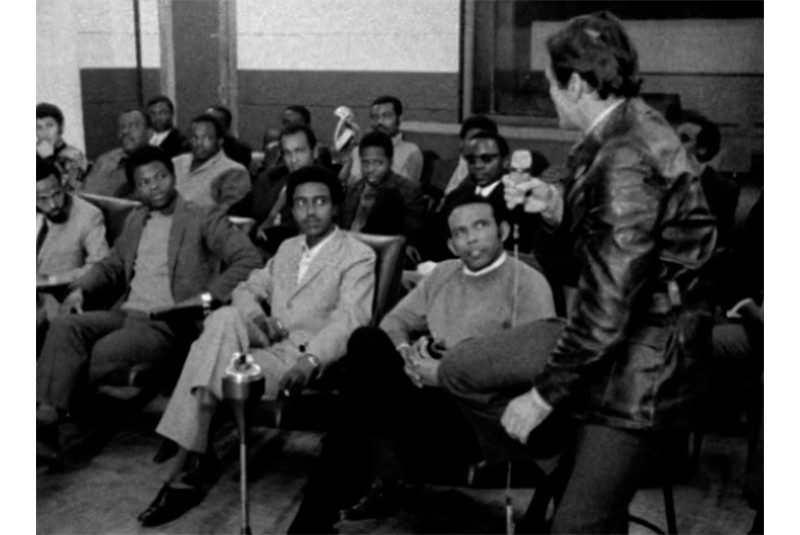
Pasolini’s idea of constructing a Poem on the Third World in the
form of an episodic film. (Chiacchiararelli 2013)
The episode shot in
Africa will have as its specific theme the relationship between
“white” culture (Western: i.e. rationalistic and typical of
a bourgeois and already completely industrialized world) and
“colored” culture, i.e. archaic, popular, pre-industrial
and pre-bourgeois (with the conflict that follows, and all its dramatic
ambiguities, its insoluble knots). (Pasolini 1968)
The problematic knot was played, and in an architectural sense is still
played today, between traditional native and archaic
“colored” culture and rationalist modernism resulting from
the “white (architectural) culture” imposed by the Western
vision. Conflict and ambiguity have in fact accompanied the trials of
the modern African, which has managed only in a few cases to achieve
convincing results, albeit in a broad sense of modern that welcomes
local declinations (what Luciano Semerani (2000) ultimately called
“Altro Moderno”)[2].
The imagination always plays a fundamental role in all those who
approach distant and different cultures. An imaginary often built on
biased narratives because they were made outside the countries whose
events are told, often for the use of colonizers according to
clichés based on stories of slavery and imperialism. So that
while waiting for a history made from the inside, such as that of
Zeinab Badawi (2024) who recriminates An
African History of Africa, the most important testimonies are
those of explorers (anthropologists or ethnologists) who have entered
the territories in order to document their physical environment but
above all their culture, even symbolic. Above all Leo Frobenius of whom
Lucio Valerio Barbera narrates well.
Then there are those who have left their hearts on the African
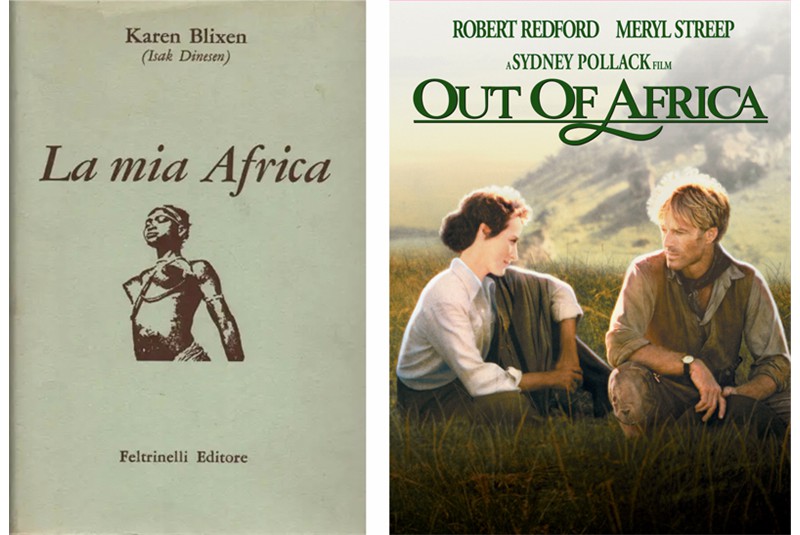
continent, such as Baroness von Blixen-Finecke. The English title of
his famous novel, Out of Africa,[3] – from which the
award-winning
film of the 80s ruinously translated into Italian in La mia Africa (the Italian
translation was already in the novel published in Italy in the Fifties)
– is however the pretext to underline again the relationship
between the before and the after, between pre-colonialism and
post-colonialism. Out of Africa is also the paleoanthropological
hypothesis of the first human migration by Homo erectus from which all of us
(Europeans, Westerners) would have derived according to the most
accredited scientific theories. In other words, humanity would have
been born in the Rift Valley in the middle of tropical Africa also
known as Black Africa. Eve was
African, is the title of a book by Rita Levi Montalcini.
We architects, by general cultural training and by specific
architectural cultural training, so attentive to the theme of history,
tradition, memory of places, etc., cannot fail to consider Africa as
our heritage to be defended from that “International of
ideas” that flattens differences and homogenizes languages.
Claiming, therefore, the existence of a “kind of
architecture” (understood as a classificatory category) that
takes its name from the geographical strip crossed by the equator and
delimited by the tropics in search of specific identity characteristics
is no small thing. Of course, it is a type of architecture that owes a
lot to specific climatic and natural as well as cultural conditions:
from these, obviously including the set of construction techniques,
which are fundamental for projects to be feasible by local workers, a
specific interest of a generation of architects has restarted who, if
on the one hand have grasped the need to address the theme, on
the other hand, they have often adopted the modelling approach of the
Manual as a tool of action that is too general to understand the
differences in approach.
This is the difference between Otto Koenigsberger, former Head of the
Department of Development and Tropical Studies at the Architectural
Association, on the one hand, and Maxwell Fry & Jane Drew, who
exemplify their theory with the numerous field tests represented by the
buildings they have been building since the 1940s in Ghana, Togo and
Nigeria on the other.
After all, the experience (and value) of Fry & Drew earned him an
invitation from Le Corbusier to join the design of Chandigarh
That it is necessary to “design with the climate” seems all
too obvious: it is, however, a matter of assuming that balanced
attitude between tradition and innovation that has always characterized
the good work of Architecture. In this regard, it should be remembered
that Ernesto N. Rogers, in the first issue of
Casabella-Continuità, juxtaposes the publication of Cameroon
huts as Examples of equatorial
architecture (Tam Tam Group 1953), with the advanced technology
applied to mass architecture by the self-taught Jean Prouvè
(Zanuso 1953) to demonstrate that one must meet the other.
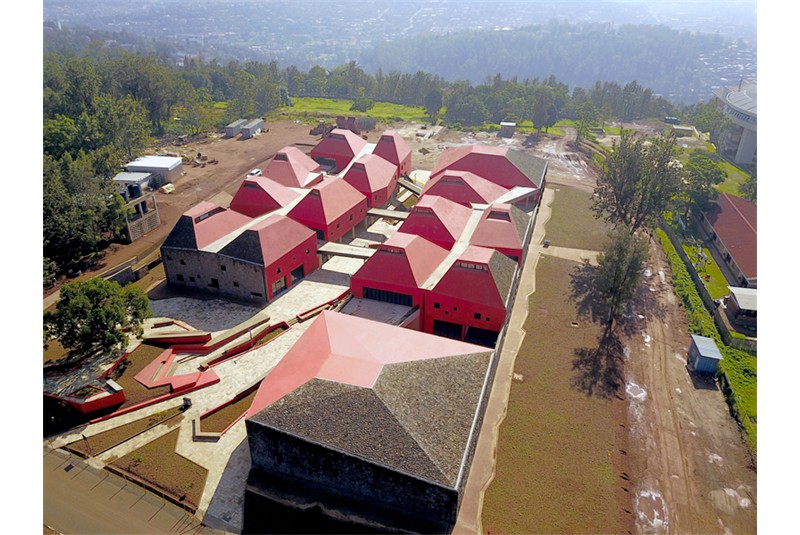
To conclude, returning to that cultural project of the School of
Architecture and Built Environment of the UR of Kigali, which in the
meantime had built a new headquarters that is an example of how
European sensitivity can be combined with the characteristics of the
place (I am referring to the new headquarters designed by the Swiss
Patrick Schweitzer & Associés following the international
competition of 2012) the core of the “capacity building” to
which we were called, consisted in instilling awareness of the cultural
richness of a tropical architecture on which the new school could base
its teaching. To my knowledge, it could have been the first School of
Tropical Architecture in which the themes of sustainability, technology
but also history, tradition and memory could find a meeting point in
the design laboratory.
Not an imposition, therefore, but a collaboration from the outside so
that Africans could use Out of Africa
as a warning to an economic-architectural neo-colonialism that now
invades the great Africa from north to south.
Notes
[1] Red., Ricchezza e povertà al
Festival dell’architettura, in DomusWeb, 19 settembre
2005.
Available at
https://www.domusweb.it/it/architettura/2005/09/19/ricchezza-e-poverta-al-festival-dell-architettura.html.
See also Festival
dell’Architettura 2. Ricchezza e
povertà. Seconda edizione del Festival a Parma, dal 19 al 25
settembre 2005. Available at
https://www.archweb.it/eventi_architettura/festival_architettura/festival_architettura.htm
[2] On the same line of research
there
is also the book by Kennet Frampton (2015).
[3] The original Danish title of the
book is Den afrikanske farm,
which literally translated into Italian would sound like La fattoria africana (The african farm). Both the English
titles Out of Africa and the
Italian La mia Africa are an
adaptation to different cultural contexts.
Bibliography
ALBRECHT B. (2014) – Africa.
Big change big chance, Compositori Editore, Bologna.
BADAWI Z. (2024) – Storia
africana dell'Africa. Dall'alba dell'umanità all'indipendenza.
Rizzoli Milan
BLIXEN K. (1937) – Den
afrikanske farm, Gyldendal. English translation. (1937) – Out of Africa. G. P. Putnam's Sons.
Italian translation. (1959) – La
mia Africa,
Feltrinelli Milan.
CHIACCHIARARELLI M. (2013) – “Appunti pasoliniani per
un’Orestiade africana”. In Italian Studies in Southern
Africa, 23., pp. 48-49.
FRAMPTON K. (2015) – L’altro
Movimento Moderno, USI, Mendrisio.
JACKSON I. (2014) – “Tropical Modernism: Fry and
Drew’s African Experiment”, in The Architectural Review.
Available at
https://www.architectural-review.com/essays/tropical-modernism-fry-and-drews-african-experiment
GRUPPO TAM TAM (1953) – “Esempi di architettura
equatoriale: le capanne del Camerun” in
Casabella-Continuità n. 199.
MENGHINI A. B. (2022) – “Sub-Saharan Africa. Identity,
Tradition, Memory” In FAM, 61, pp.
50–64. DOI: 10.12838/fam/issn2039-0491/n61-2022/925
MEUSER P. (2023) – “Alla ricerca delle radici
dell’architettura Sub-Sahariana” in Il Giornale
dell’Architettura, 26 aprile 2023,
https://inchieste.ilgiornaledellarchitettura.com/sub-sahariana/
PALLAVICINI R. (2005) – “C’erano una volta gli
architetti italiani” in L’Unità, lunedì 19
settembre 2005, p. 21.
PASOLINI P.P. (1981) – “Appunti per un poema sul Terzo
Mondo”. In Pier Paolo
Pasolini. Corpi e luoghi, edited by M. Mancini and G. Perrella,
Theorema, Rome 1981, pp. 35-44.
PASOLINI P.P. (1968) – “Appunti per un poema sul Terzo
Mondo”. In Ibidem (2001) – Per il Cinema, a cura di Walter
Siti and F. Zabagli, Mondadori, pp. 2677-2686.
PASOLINI P.P. (1983) – “Appunti per un'Orestiade
africana”, edited by Antonio Costa, Quaderni del Centro culturale
di Copparo. Now in Ibidem (2001) – Per il Cinema, pp. 3135-3136
SEMERANI L. (2000) – L’Altro
Moderno, Allemandi Turin.
ZANUSO M. (1953) – “Un'officina per la prefabbricazione.
Jean Prouvè ci scrive”. in Casabella-Continuità n.
199