The Tropical Architecture: genesis of a research*
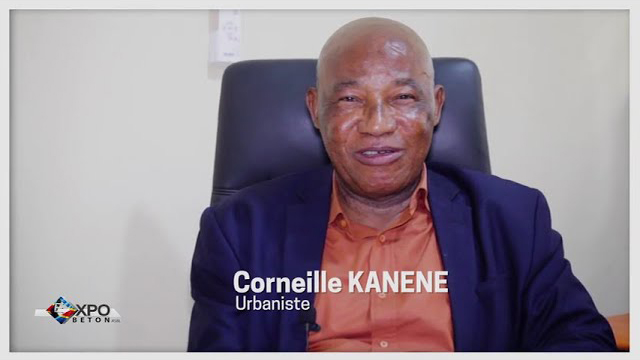
Corneille
Kanene Mudimubadu
Corneille Kanene Mudimubadu: I have to go back to when I was still a student of architecture, and I had a course, a course that was not part of the training program but that I had the privilege of taking. It was a course in tropical architecture taught by my honoured colleague, who is now deceased, that everybody knows, Dequeker. He came, he gave this course, and then after that, it was a seminar. He never came back after that. After that, I was in Louvain-la-Neuve to participate in an earth architecture workshop. I was asked to talk about architecture in Africa. I had made a presentation on tropical architecture. I was at the University of Tizi Ouzou in Algeria. That's when they asked me to present earthen architecture in the tropics at a workshop. After that, in 1986, I was invited to the International Congress on Architecture and Climate. It was the first International Congress on Architecture and Climate, by Professor André De Herde, who was chairing this Congress and had asked me to propose a paper. After that, I also wrote a paper for a seminar in Algiers. And then I returned to the country. When I returned to the Congo, Paul Dequeker asked me, "What did I do while abroad?" And then afterwards, he said to me, "Oh, but you have made many communications on architecture and climate. Would that be..." He invited me if we could get together to write a reference work. Based on his work, how can we say forty years, fifty years, of realisation of architecture in his countries, the Congo, in the tropics, not only the Congo but also look at the fact that he has been in many countries? These countries, Congo-Brazzaville, Chad, Kenya, and Angola, are what I'm looking for. Angola and Senegal have so many achievements across tropical countries. And we went for two years... Now, it's 1990.
ATK: The book L'Architecture tropicale has become famous and is a reference work today. That is why FAMagazine asked you for this issue on tropical architecture.
CMK: Yes, but we talk a lot about the book L'Architecture tropicale and often only speak about that. Still, afterwards, Professor André De Herde, who had written the preface to the book L'Architecture tropicale, is going to associate me with writing a book, which is the book on architecture and climate, which is in itself a whole treatise that they wrote with Alain Liébard, on architecture and climate, entitled Guide de l'architecture bioclimatique, but then in the entire world, where there are several booklets, there is, among the booklets, there is volume 6, which deals with the hot climate. It is a complete work; there are several volumes on architecture; the first volume talks about the basic principle, there are two volumes, and the sixth volume talks about architecture and climate in a hot environment, but the hot climate is this volume, where I invested myself. I spent almost a year in Louvain-la-Neuve to write this epaïment; it was about nine months in Louvain-la-Neuve to write volume 6, which deals with the hot climate.
ATK: Okay, do you think this book is much more significant than L'Architecture tropicale, which is better known?
CMK: No, L'Architecture tropicale remains the masterwork because the work on architecture and climate, which speaks much more about sustainable development, also refers to tropical architecture; from the moment that tropical architecture is a reference, even this work, which also has an excellent reputation, is a reference.
ATK: What approaches are developed in these works to address tropical architecture?
Everything starts with design, from knowledge of the climate, especially the tropical climate, to understanding the climate to knowledge of architecture. I call this vernacular architecture. Knowledge of the climate is part of the evolution of new architecture. We started from the end of modern architecture.
ATK: How is bioclimatic architecture regionalist?
CMK: It is regionalist because it has even changed its name from one region to another. We developed Mediterranean architecture when we were in the Mediterranean basin and understood the data on the Mediterranean climate. In countries where the Eskimos have these very windy regions, the Eskimos who already live in these regions have produced the igloo, an architecture adapted to those living there. So, we can talk about polar architecture. And then, well, in the tropics, we analysed the Malay house. It is a house for those in a hot, humid tropical climate. So, we said, it's tropical architecture. Tropical architecture is bioclimatic architecture adapted to the country living in the tropics. This architecture is adapted to the tropical environment. Still, it also references the achievements of vernacular architecture when we look at tropical climates, particularly in hot and humid tropical climates, where we have found examples of applications of bioclimatic architecture adapted to the context.
ATK: What example of traditional tropical architecture illustrates the bioclimatic approach?
CMK: This architecture is adapted to the tropical climate, as seen in the Malay house, which has low thermal inertia. Still, from an urban planning point of view, the homes in a Malay village are built so that each house can allow ventilation; I say ventilation can allow ventilation about the houses located downstream. The climate analysis brings us to an essential element. What is this crucial element? We are in search of comfort. But then, we quickly realised that comfort is very subjective. Why is the pursuit of comfort subjective? This is confirmed by analysing the fact that comfort depends on three elements of the climate: ventilation, temperature, and relative humidity. However, three factors depend on the individual. Do you see that? It depends on the individual because it depends on clothing. So, it depends on clothing and metabolism. And it depends, as I said, on each person's skin surface temperature. Comfort is subjective, which is the interest of this study of bioclimatic architecture, which analyses the spaces where comfort exists. In the tropical climate, ventilation winds come first. We talk about ventilation, but we talk much more about the difference between wind and ventilation. Wind is the air movement around the building, while ventilation is when the wind enters the space and emerges on the other side. So here, we have ventilation, and we want it to be cross-ventilation. This means that in its path, crossing the house, it does not encounter any barrier. This ventilation element will, of course, help us to deepen the bioclimatic study in tropical countries. But before that, there is still another element: the sun. This is the problem of shade. Shade is comfort, and tropical architecture seeks to achieve the conditions of comfort that prevail outside, under a tree. What is the case when I am in a hot and dry climate? In the hot and dry climate, shade is not comfortable. It is 40 degrees in the shade. In the tropical environment, where it is hot and humid, shade is comforting. We seek the conditions of comfort that prevail in the shade. We are also concerned with the cycle of seasons in hot and humid climates. We have two seasons: the dry season and the rainy season. But in both seasons, whether dry or rainy, we must be able to protect ourselves. So, we developed solar protection elements. We must be able to dissipate. We develop, and we maximise ventilation.
ATK: How to ventilate?
CMK: Ventilation is about allowing dissipation. So, with this basic concept of bioclimatic.
ATK: Many African architects want to use local materials to promote their identity. What place does bioclimatic architecture reserve for materials?
CMK: In bioclimatic architecture we can also arrive through a good knowledge of materials. If I have an excellent understanding of materials, I can also bring together the elements of comfort conditions. Good knowledge of materials will mean that I know the materials well and that these materials will retain energy but will not be a source of heat for the occupants.
ATK: Bioclimatism in hot and humid tropical Africa seems to rely heavily on ventilation. But when there is no wind, can we not get some ventilation?
CMK: So, we work on the chimney effect when there is no wind. We must study the ventilation flow. This ventilation flow will help us see how the house is built and how the windows are arranged to maximise ventilation. The other element of bioclimatism, tips, or other bioclimatic tools are tables, such as Karl Mahoney's tables.
ATK: Since you are also a teacher, what place is given to teaching bioclimatic architecture?
CMK: The teaching of bioclimatic architecture is what I teach. We need to contextualise the learning of architecture. Some people talk about situated architecture. However, what is general to international architecture is emphasising the identity elements. And there, it is wrong. So, we are not going to emphasise the identity elements by necessarily resorting to traditional forms, we mean, of the architecture of our ancestors. Still, we base ourselves instead on bioclimatic data. A whole symbiosis, an effort of complementarity, must be sought. But the teacher himself must be at the school of bioclimatism. If the teacher ignores this, he misses out on whether the person who made the training program ignores bioclimatism. You cannot train an architect without taking the context into account.
ATK: So, maybe one last question. After so many years of work, how do you define architecture?
CMK: But that's what we were already saying, that architecture, Vitruvius had already told us that architecture was the art of building, it was the act of building. Afterwards, we realised that if architecture were only the act of building, we would have remained in cave. And that architecture is... I prefer to talk about the organisation of space. So, if this is the correct definition for me, it is the organisation of space. and to do this; it is no longer functionalism that must guide us; what must guide us is the quest, as we were saying earlier, for bioclimatic architecture, it is comfort.
*
Interview by Alexis Tshiunza Kabeya