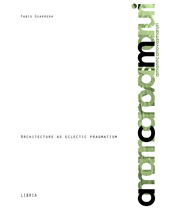
Amann,
Cánovas, and Maruri’s Eclectic
Realism
The studio led by Atxu Amann, Andrés
Cánovas, and Nicolás Maruri (Temperaturas
extremas) is a peculiar
“office of architectural services” in its own way. Just compare the wooden shrine that makes up the Arab Wall
Museum in
Murcia, the perforated corten steel defining the complex volume of the
visitor
center in Monteagudo, and the intricate geometry of the roof of the
Roman ruins
in Cartagena, composed of a structure of steel, perforated metal sheet,
and
polycarbonate. Alternatively, consider the galvanized iron and expanded
mesh
structure of the footbridge thrown over archaeological remains in
Murcia, the
metal cage in the Roman Curia Museum, the exposed concrete enclosing
the
underground spaces, both in Cartagena, and, finally, the fabric
covering of the
pavilion of the Dubai 2020 Expo. Comparing these projects is enough to
realize
the extraordinary versatility of this Madrilenian studio. But this is
not just
about technical expertise, something clearly has to do with the
“genetics” of
contemporary Spanish architecture: on this topic, «Spanish
architects have
always approached every architectural theme», as Fabio Guarrera
writes in his
clear-eyed introductory essay, «with eclectic realism, turning
specific
opportunities into starting points of contemporary design». For
A.C.M. studio,
this means giving design responses – even with stylistic
differences – to
address the various issues posed by functions and sites without bias.
As Fabio Guarrera
points out, this entangles being «independent from a preset
stylistic idea». Leafing
through the projects illustrated in these pages indeed suggests
something
elusive, refractory to our taxonomic mania of labeling authors
according to
their stylistic witticisms.
The works of
the A.C.M. studio, Fabio Guarrera's essay, Emilio Tuñon's
introduction, and
Maria Argenti's beautiful afterword also suggested to me other things
related
to teaching architectural design today. Amann, Cánovas, and
Maruri are
professors at ETSAM in Madrid. Furthermore, all three were born in the
early
1960s, with a firmly twentieth-century background. Yet, the academic
world's
theoretical research does not imprison them in granitic certainties
atrophying
their design versatility, unlike it is often the case. On the contrary,
their
extraordinary openness to contemporary architectural experimentation
seems
surprising. Moreover, they work in a group: few things prevent pursuing
stylistic consistency as much as working in a group.
In conclusion, in light of these considerations –
and especially in
light of A.C.M.’s works, so broadly described in Guarrera’s
monographic essay –
it almost seems evident that they would approve this
sentence by Spain's leading twentieth-century philosopher, José
Ortega y Gasset
– and indeed, he is cited by the author as one of the most
influent on the
Madrilenian trio’s design philosophy: «If an
architect’s project shows
admirable personal style, he is not, strictly speaking, a good
architect».
Alessandro Mauro
Author:
Fabio Guarrera
Title: Amann Cánovas Maruri
Subtitle: Architecture as eclectic pragmatism
Language: Italian and English
Publisher: Libria
Characteristics: 17 x 21 cm, 196 pages, paperback, color
ISBN: 9788867642830
Year: 2023