Introduction
Polesello encountered the Canary Islands in the early 1980s. In February 1983, he served as a visiting professor at the first International Seminar on Architectural Design held at the Escuela Técnica Superior de Arquitectura of the Universidad Politécnica de Las Palmas de Gran Canaria. Other prominent international figures, such as Josef Paul Kleihues, Manuel de Solá-Morales, and Fabio Reinhart, attended the same event. Four years later, in 1987, Polesello was called upon to design a university complex with Juan Manuel Palerm Salazar, Juan Ramírez Guedes, Manuel Bote Delgado, and Benito García Maciá. The complex now hosts the faculties of Marine Sciences, Mathematics, and Computer Science.
This contribution begins with a general description of the project, only partly implemented, and concentrates on the references that influenced Polesello's composition. The objective is to identify most of these relationships and connections, analysing them while also emphasising the links between the project and its context, clarifying the reasons behind such choices. A unifying theme across all these references is the physical and cultural journey the architect undertakes to reach his synthesis, one that enables the integration and dialogue of elements from distant worlds, seemingly unrelated. As Ildebrando Clemente states, «two compositional tools govern the inventions in Polesello's projects: the geometric grid and the axes of rotation» (Clemente 2016, p. 148). Delving deeper into Polesello's references, identifying their origins and reflecting upon them, is almost like navigating through his memories, inspirations, and intuitions, revealing the rationale behind his compositional choices.
Project Description
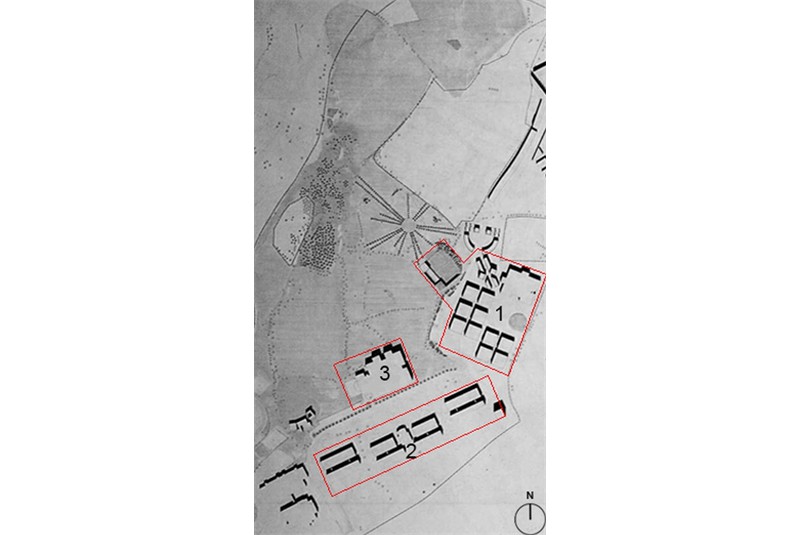
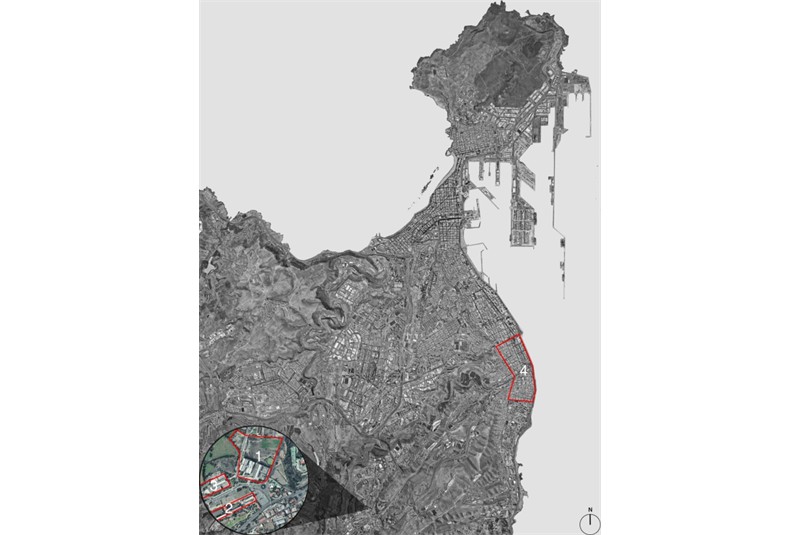
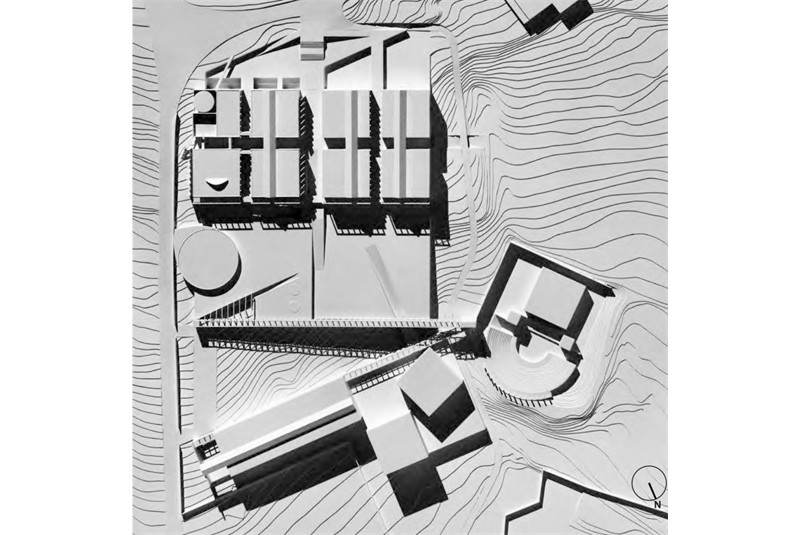
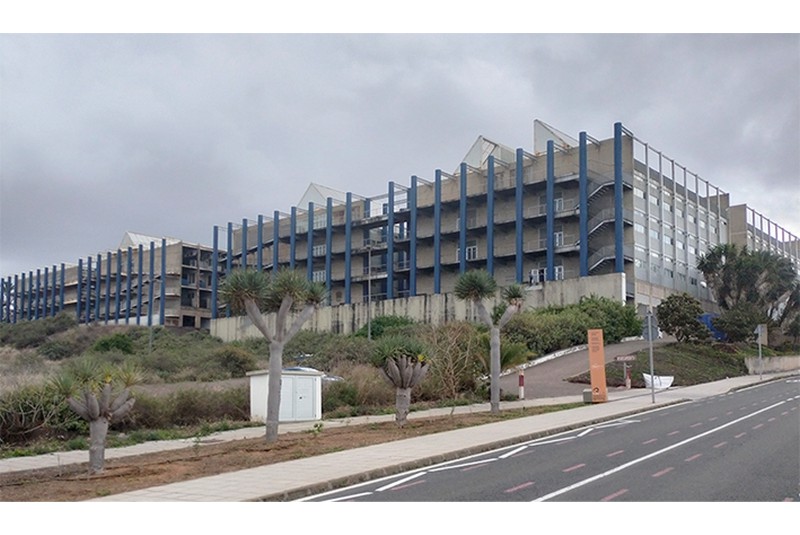
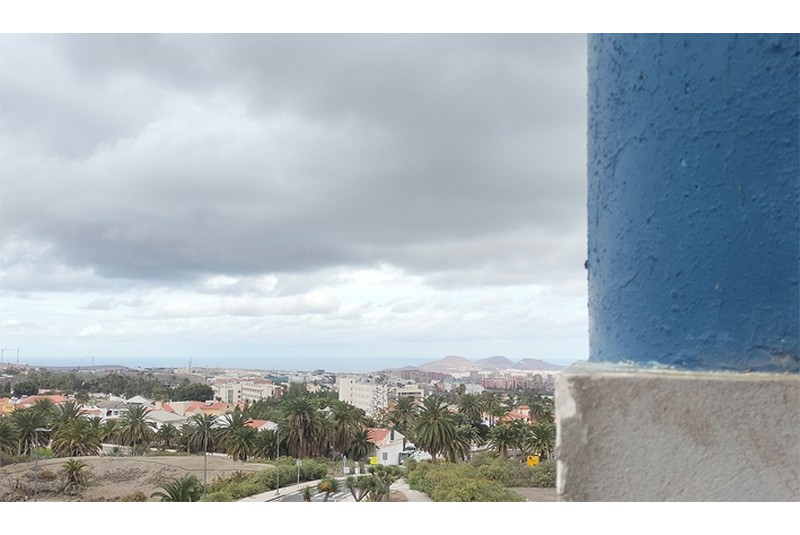
The project site is situated within the Tafira Campus, between Lomo Blanco Street, the former Diocesan Seminary, and the Faculty of Architecture of the Universidad de Las Palmas de Gran Canaria. The programme consists of three units, which (with some modifications) respect the guidelines of the Plan Parcial, namely a regular grid composed of 30 x 30 m modules spaced 7.5 m apart. The relationship with the site is mediated by a large podium (150 x 150 m) emerging from the terrain and sloping down from south to north, with access from the south. Polesello divides the podium, forming the project's first section, into four large quadrants[1], of which only the two southern ones were ultimately built. These latter are structured into eight sub-modules, which house the faculties of Marine Sciences, Mathematics, and Computer Science. The two northern quadrants instead form two paved plazas at different levels, faced by the central library and commercial spaces. The northernmost part of the area features a second unit: a sloping triangular plaza bordered by a linear building along the site boundary. This structure consists of three adjacent modules and two separate ones (also measuring 30 x 30 m), with one of the individual modules slightly rotated. The third sector, located to the west, includes an open-air theatre and an auditorium. A road separates the theatre/auditorium from the rest of the complex, connecting Lomo Blanco Street to the northern part of the campus. The natural slope of the terrain allows for the placement of several parking areas beneath the buildings (one occupies part of the lower levels of the southern and northwestern quadrants, another is located beneath the linear structure, and the remaining one is near the auditorium). The overall layout is conceived as a system of vantage points overlooking Las Palmas and the sea, blending the surrounding natural landmarks into the broader landscape context. Polesello also incorporates green pergolas and rows of palm trees that extend through and shape the large central triangular area, the patios, and the edges of the buildings. To sum up, the project comprises three units arranged according to a specific geometric pattern and interconnected by pedestrian pathways and open spaces, in a dialogue with the surrounding environment.
First Unit
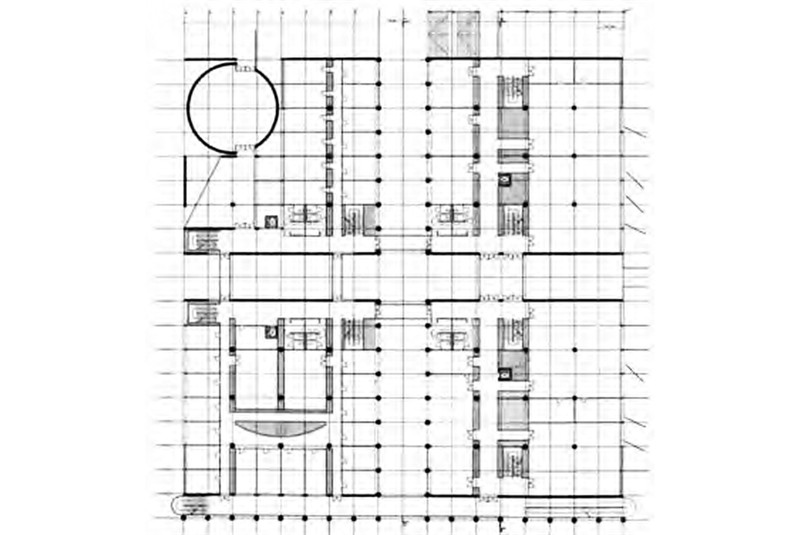
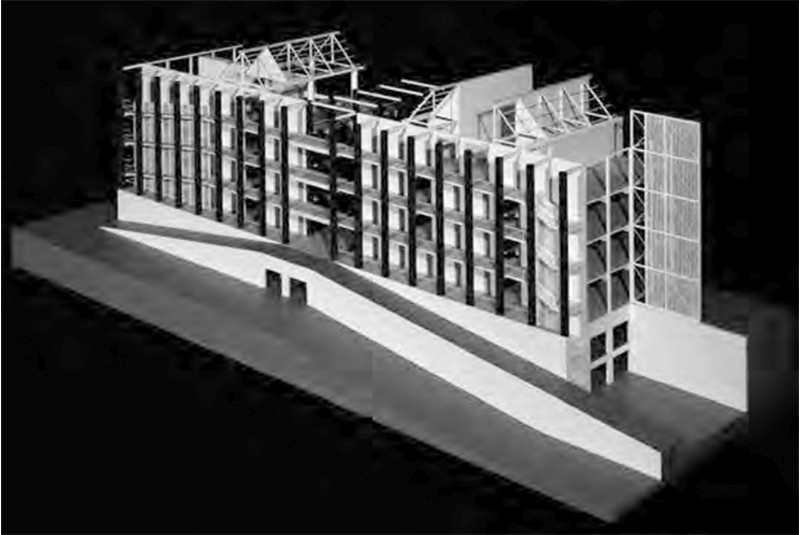
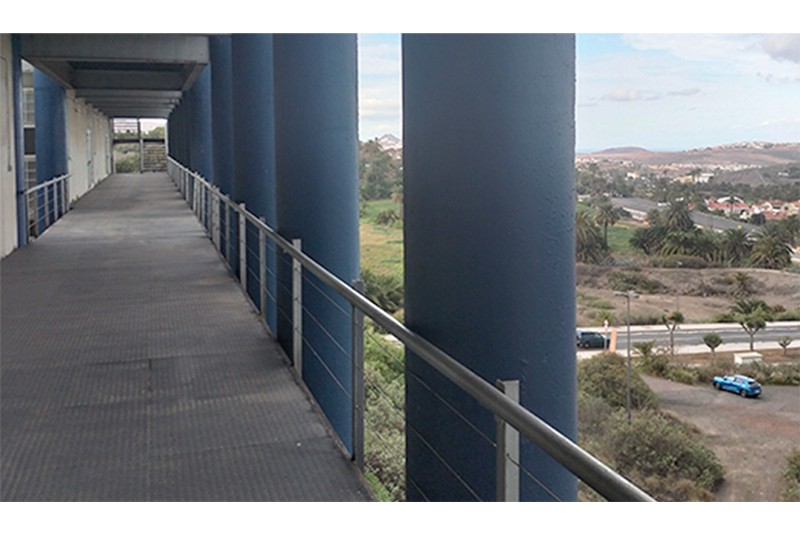
The first unit, situated in the southern part of the area, can be encompassed by a large square measuring 150 meters by 150 meters, located roughly 300 metres above sea level. It is further divided into four square platforms, each measuring 67.50 m, separated by 15-m-wide walkways. The platforms are positioned at different levels according to topography: the southeast platform is at ground level, while the southwest and northeast platforms are located at -3.75 m and -7.5 m, respectively. The southeast and southwest platforms accommodate eight 30 x 30 m modules. Both platforms are 11.25 m high, divided by secondary north-south streets, and feature a single façade facing north. A colonnade overlooks the two lower plazas; each column is equipped with a structure for setting up canvas tents for sun protection. The colonnade is crossed by bridges connecting the modules at levels 3.75 m and 7.50 m; at these same levels, it accommodates two balconies with a width of 3.75 m overlooking the rest of the Campus. Stairs and elevators offer indoor vertical access, while ramps and walkways also provide outdoor connections (Polesello et alii 1989, p. 120).
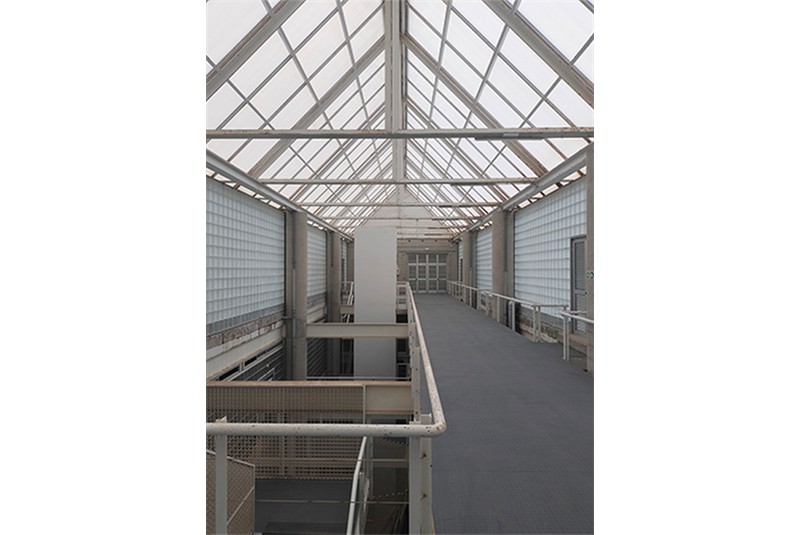
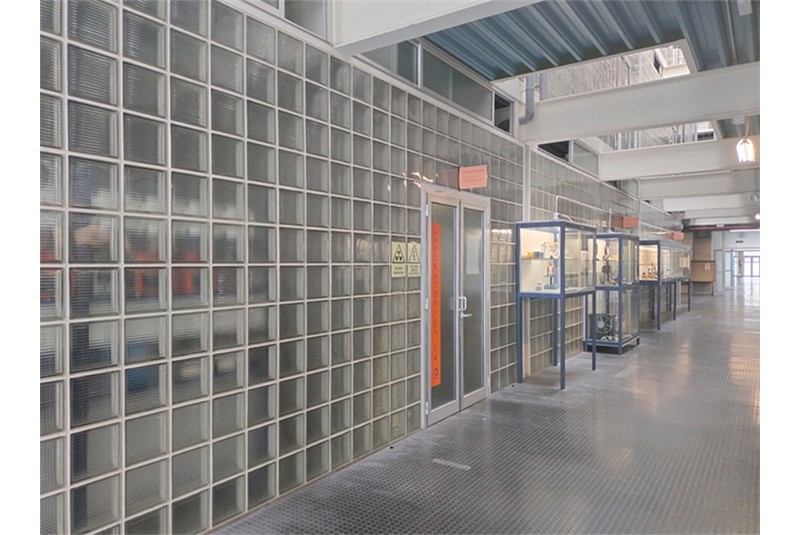
The southeast platform houses the departments of Computer Science and Mathematics, while the southwest one accommodates the Department of Marine Sciences and other university facilities. The northeast platform features the double-height central library, while the northwest platform includes a parking area, a commercial zone, and various services. A cylindrical building houses the stepped Lecture Hall (Aula Magna), directly accessible from the outside via stairs located on the southeast façade. The project is based on a regular grid with a 3.75 m module, which corresponds to the distance between the axes of the exterior structure. All dimensional units, including floor heights, refer to these axes. The structural system consists of reinforced concrete columns with a diameter of 0.75 m, spaced 3.75 m apart, positioned both inside and outside the modules. Steel beams, typically resting on columns, support ribbed slabs and solid walls, particularly on the north and south sides. The ribbed slabs rest on IPE steel beams spanning 7.50 m or C-beams spanning 3.75 m (Polesello et alii 1989, p. 123). In some areas, the mechanical systems are left exposed, while in others, they are hidden behind painted and sound-absorbing aluminium panels. Initially, the first unit featured brise-soleil on the east and west façades, designed as vertical elements rotated at 45°, which have since been removed. Concerning materials, brightness and flexibility are key characteristics of the project. The floors are continuous, while the interior partitions, designed to allow natural light into teaching and workspaces, are made of prefabricated panels assembled dry onto metal structures. The perimeter walls consist of glass block modules for thermal insulation, complemented by window strips for ventilation and exterior views (Polesello et alii 1989, pp. 126-127). Polesello decided to preserve a circular water reservoir used for irrigation (estanque), which was integrated into the northwest platform.
Second Unit
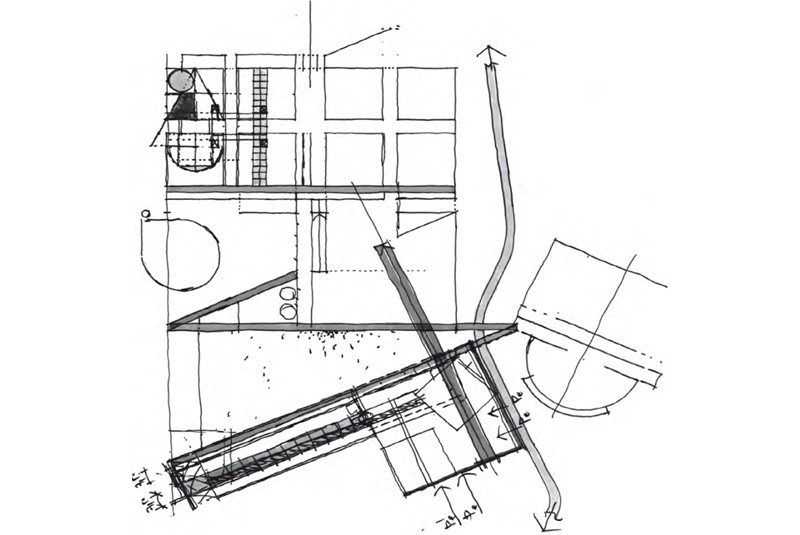
The second unit develops along its length, bordered by the artificial platforms supporting the university buildings, and opens towards a triangular sector that features a sloping public area with extensive green spaces (Polesello et alii 1989, p. 120). Downhill, a linear building parallels the northern boundary of the site; it consists of three modules measuring 30 x 30 m (totalling 90 m in length), with two additional modules arranged differently. One module is positioned slightly away from the linear building, while the other is rotated around an axis that originates from the southwest corner of the southeast platform. This axis intersects at a right angle with the diagonal of the rectangle formed by the two northern platforms, which together form the multi-level plazas. All modules house university facilities, which were yet to be defined during the design phase. The buildings are three stories high, with their height corresponding to the ground level of the southeast platform.
Third Unit
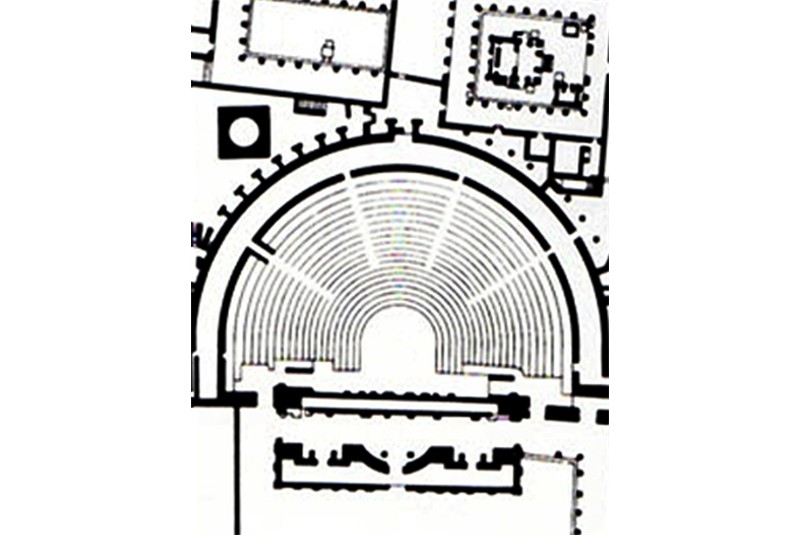
The third unit, situated west of the road that crosses the site, comprises an open-air theatre, an auditorium, and several service buildings. This sector is connected to the others through a system of pergola-like galleries, which extend at an elevated level around the large triangular plaza, resting on the two northern quadrants of the first unit and on the linear building of the second unit. These pathways, crossing over the underlying road, converge at a node featuring stairs and elevators that provide access to the area dedicated to entertainment and leisure. The open-air theatre is reminiscent of the Teatro Grande in Pompeii, while the paraninfo is a large polistilo hall designed to accommodate various performances (Polesello et alii 1989, p. 120). The service core meets the functional needs of both the theatre and the auditorium.
Project References
Polesello's project draws on references from various places, eras, and cultures that relate to the existing structures of the Tafira campus: Mesoamerican architecture, the ancient Roman and Greek worlds, the Canarian context (both urban and rural), and the maritime and naval environment. Further references derive from Euclidean geometry, as well as from the works of Paul Klee and Le Corbusier. In Polesello's architecture, Aztec pyramids, the Roman foundation system, and the representative nature of Greek acropolises mingle with myths, local history, and pure geometric forms. In the Las Palmas project, however, they emerge and take a unique shape. Analysing these influences is interesting in itself; however, it also helps understand how the architect arranges and transforms his references into new architectural themes. Polesello develops a complex design framework in which these references, although not always immediately apparent, frequently emerge and overlap.
Diocesan Seminary and Plan Parcial
Until 1987, the Diocesan Seminary, designed by Secundino Zuazo in the 1940s, dominated the hill of Tafira: a linear building with a 160-m-long façade and a church at its centre. Polesello states that the «terrain is 'equipped', levelled, and built as a platform on which buildings, porticoes, and gardens are arranged and composed». He implicitly admits that his first reference for the Tafira project was «the treatment of the terrain and the frontal dimension of the architecture» as well as «the geographical scale and architectural unity»[2].
Another key constraint in the preliminary design phase was the Plan Parcial of 1984, which also emphasised the prominence of the Diocesan Seminary and proposed the construction of 30x30 m block buildings with a maximum height of 15 m in the valley to the north, facing Las Palmas. It was a high-density plan that aimed to preserve the existing vegetation, primarily composed of palm trees and prickly pear cacti (tuneras). Polesello's design follows these guidelines, consisting of eight blocks, each 30 x 30 m, arranged in two rows of four, separated by two 7.5-m gaps and a central 15-m space, for a total length of 150 meters. These factors led to the creation of the first square unit, 150x150 m, as a platform supporting the eight university buildings, arranged in a regular grid that organises their arrangement.
The Mesoamerican World
I do not believe that the classical can be reduced, for example, to the use of Latin or Greek as languages; I do not believe that the classical can be reduced to a sort of dispute between Greek and Roman (Polesello 2000, p. 75).
Ever since their discovery, a close relationship has existed between the Canary Islands and the Americas, particularly with countries such as Cuba and Venezuela. The archipelago serves as the last stop before the great crossing, which is why most settlers passed through it. Cristoforo Colombo, for example, stopped several times in the Canary Islands[3]. Polesello identifies these links between Las Palmas and the New World, which grew stronger over the following centuries and were not only economic and social but also, and above all, cultural and artistic (Gutiérrez Viñuelas et alii 2018). He states that «from above, the city actually looks like a South American city» (Polesello 2000, p. 76). On the other hand, the history of Las Palmas leads Polesello to associate his project with the Mesoamerican world[4].
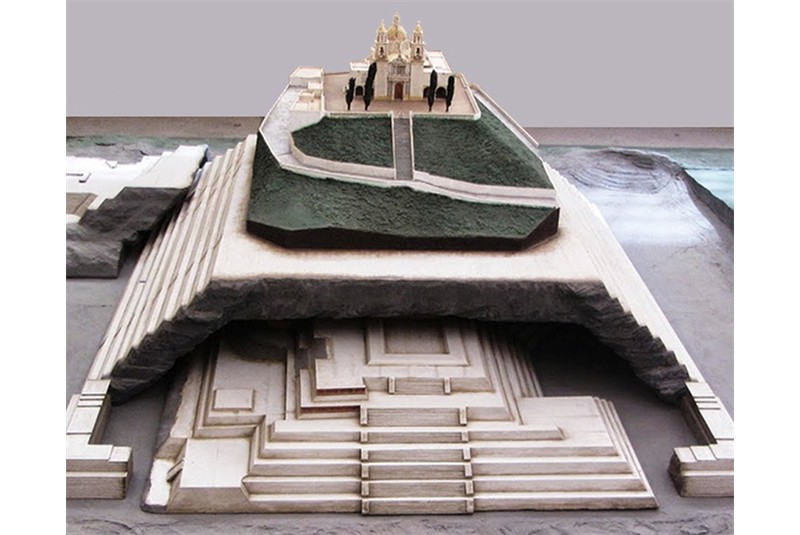
In Teotihuacan culture, terraced structures were entirely artificial[5], with a temple at their summit; all parts were connected, functioning as a unified building. A notable example is Tlachihualtépetl in Mexico, where the Jesuits repurposed the enormous pre-Columbian plaza to build the Santuario de la Virgen de los Remedios. Polesello proposes a similar concept: an upper section comprising eight university complexes, along with other buildings, arranged in the valley below, all part of the same complex interconnected by staircases and walkways. The pedestrian connections begin at the southern entrance of the site, cross the large square podium, and then branch into ramps that descend towards the triangular plaza and the linear structure, or take the pergola leading to the theatre and auditorium. This is a type of promenade architecturale, a ritual path akin to the stairways leading to the top of the teocalli, where human sacrifices to the gods were made. These rituals, after the conquest, were adopted by Christians in processions. Polesello's decision to include Mesoamerican monuments among the references can be explained by three reasons: technical (due to their being constructed on slopes), ritual, and foundational. Regarding the latter, the buildings positioned above the podium recall how pre-Columbian settlements, and later Jesuits', were built on the summits of teocalli. It is as if Polesello wanted to emphasise the stratigraphy of these structures, where there is not just a single foundational act but multiple re-foundations, each involving different cultures: «A sort of eternal return to the refounding action» (Amistadi 2019, p. 280).
Roman World
In the arrangement of the volumes on the podium at the top of the "pyramid," there is an apparent reference to Roman foundation layouts[6], namely a cardo and decumanus system, with additional secondary pathways. As in the Roman modus operandi, the roads shape the building footprints, connecting the green spaces and squares facing Las Palmas and the sea.
References to the Romans also appear in the third unit, for which Polesello states, «The open-air theatre, now that is indeed a copy of the Teatro Grande at Pompeii» (Polesello 2000, p. 76). Although the Friulian architect often employs similar layouts and solutions (each time with a different reason), here the rationale also stems from the history of the Canary Islands. The Romans were familiar with this archipelago and its agricultural, fishing, geographical, and climatic potential; accordingly, they named it the Islas Afortunadas (Fortunate Islands)[7]. It is also believed that they were the ones who either encouraged or brought the Canarians from North Africa, thereby initiating human life in this territory[8].
Greek World and Classical Mythology
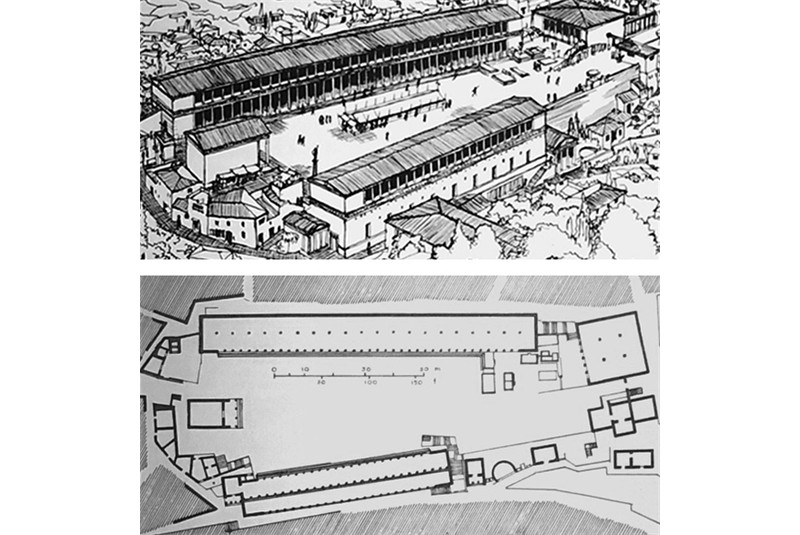
Descending northward, on the northern side of the large sloping triangular plaza, one encounters the second unit, which features a linear structure and two separate volumes that diverge from the grid of the Plan Parcial. This rotation is based on new geometric directions, as if expanding the view and providing the complex with an additional vantage point, while simultaneously defining the space and connecting it with the surrounding context (Clemente 2016, p. 164). Polesello describes it as «an elongated agora in the shape of a triangle, with cubic elements placed below. It is a copy, rather than an imitation, of the agora of Assos» (Polesello 2000, p. 76). Accordingly, Polesello proposes a longitudinal building for university services, comprising a linear structure with two additional square-plan volumes that overlook a kind of stoa, i.e., a green pergola marking the northern edge of the artificial platforms. Observing the ancient city of Assos (and Hellenistic urban layouts in general) further parallels with the Tafira project come to the fore. In both cases, the most prestigious buildings – at Assos, the temple of Athena, at Tafira, the university pavilions – occupy prominent positions. At the same time, the agora and the square mark the centre of the settlement, with the theatre at a lower level, directly overlooking the port and the urban core below. It can be argued that Polesello deliberately links these two places because of their similarities, later highlighting them through his project.
I am unsure if this project evokes Mediterranean memories. Certainly, in this part of the Atlantic, and at this latitude, the memories of Greek columns, which mainly serve to define a boundary, become the Pillars of Hercules. I have looked many times to see the Pillars of Hercules (and I believe I have seen them) (Polesello 2000, p. 78).
With this statement, Polesello establishes yet another link between the project's context and the classical world. He does so through mythology, referencing the Pillars of Hercules and later Sophocles' Antigone (Polesello 2000, p. 78). This is reflected in his work, where he introduces the concept of limits, both physical and mental, and their transcendence to reach new horizons, just as the Greeks, Romans, and Spaniards kept pushing their own boundaries — both geographical and cultural — to propagate their civilisations.
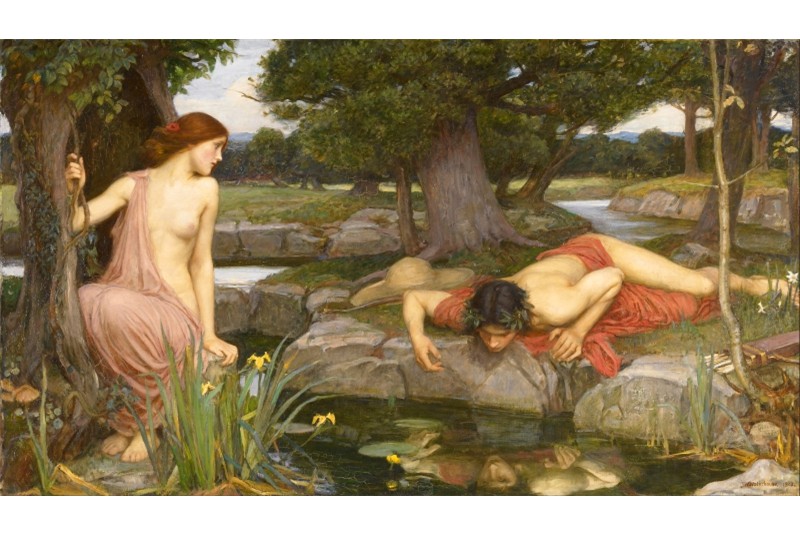
The columns Polesello refers to are also physically present; on the Tafira campus, they appear at various points and form the elevation overlooking the city and the sea. The role of the column, therefore, is not only structural but, above all, symbolic (Clemente 2016, p. 198). The main feature of a colonnade is the repetition of the same element, or seriality. This concept brings architecture closer to music, as evident in the famous Portico of Echo, located at the Sanctuary of Olympia, where the sound of a scream could be heard repeated seven times or more (Ramírez Domec 2022). It is no coincidence that the myths of the nymph Echo and Narcissus are linked: both feature the theme of repetition, multiplication, sound and images reflected in water. From this perspective, the inclusion of the water basin (estanque) on the University Campus and its juxtaposition with the colonnade take on a certain meaning. After all, «a symbol, a myth, a rational or entirely irrational logical premise is essential to act within reality, to project» (Clemente 2016, p. 199).
Paul Klee, Le Corbusier, and the Sea
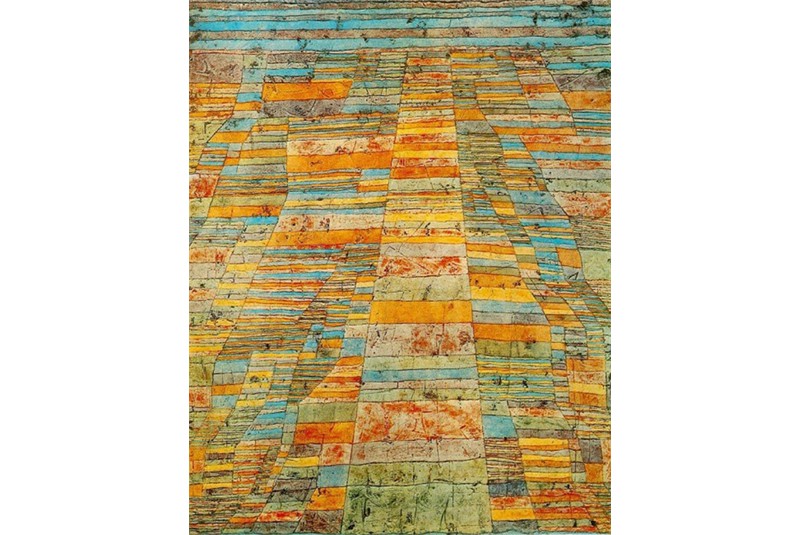
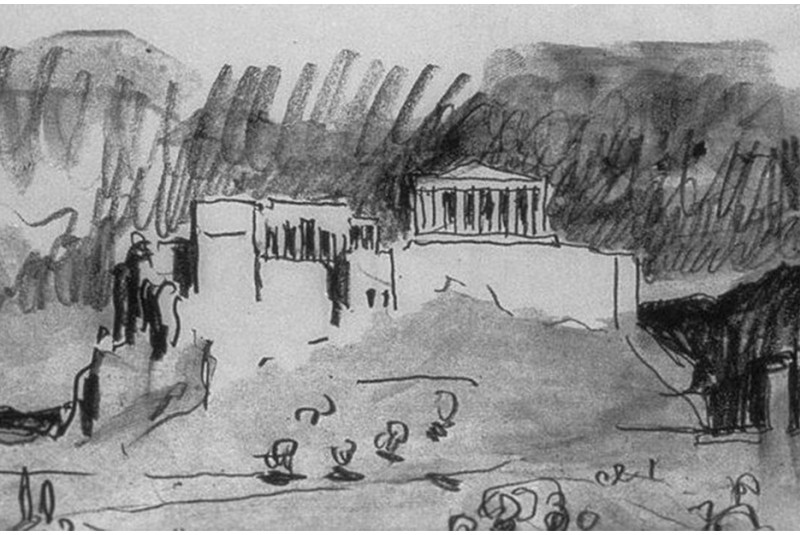
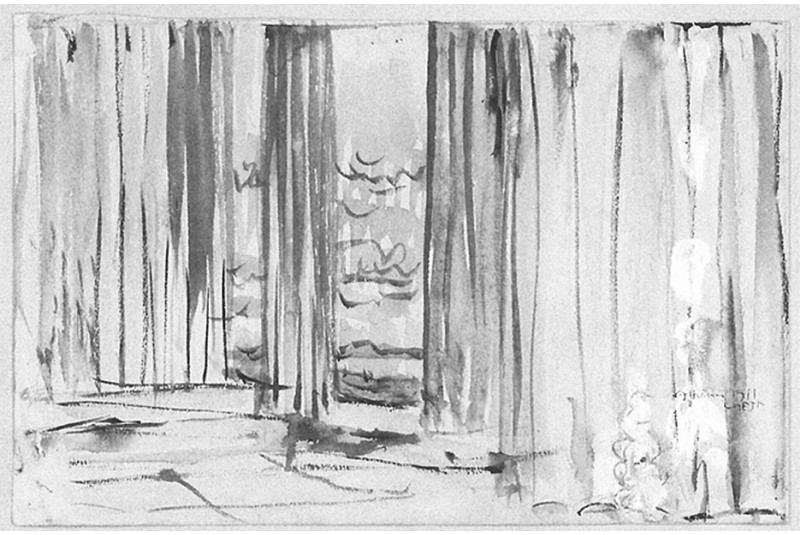
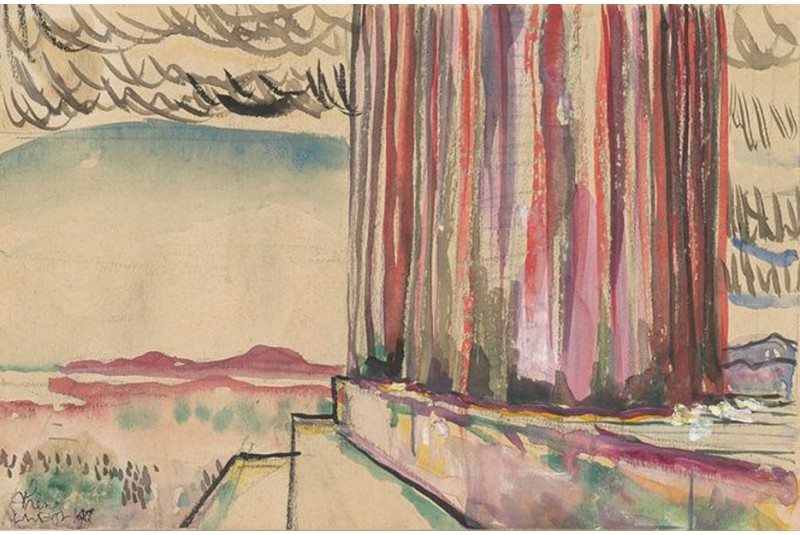
Secondary axes in the same orientation integrate the cardo and decumanus layout. Polesello emphasises this hierarchy by referencing Paul Klee's famous painting Highway and Byways (Polesello 2000, p. 77), while defining the land levelling process as a "clear-out", comparable to Le Corbusier's Plan Voisin (Polesello 1990, p. 207). Besides, many parallels can be identified between the Swiss master's sketches of the Acropolis of Athens and the Tafira project[9]. Among the most notable features are the elevated podium on which the entire complex is situated, the colonnades that mark the boundaries, and the views overlooking the city and the sea. Other intentional references can be found in the brise-soleil, now removed, installed on the east and west façades of the university buildings, which Polesello explicitly described as «inspired by Le Corbusier». These were vertical surfaces tilted at 45° in relation to the supporting walls, decorated with colourful climbing plants. They possessed an industrial character, reminiscent of port infrastructure and large ships, which particularly fascinated Polesello[10], especially for their presence within the urban fabric (Polesello 2000, p. 78). References to the maritime world are very evident in the Tafira project: «The sea is present everywhere, physically, as the backdrop and setting for every space and pathway, and metaphorically, as a reference to the architecture that inhabits it, to steamships and large vessels» (Neri 2015, p. 38). The sea and its associated activities are ever-present, even within the chosen colour palette. It is as if the building itself, extending towards the ocean, were a mighty ship, a steamship anchored to the land yet prepared to set sail.
Analysing these aspects reveals a connection between the circular forms and the maritime setting. The estanque, the blue-coloured columns, the amphitheatre, and the cylindrical building (which opens towards, or stands out against, the coastline) all share the same planimetric shape and relate to the same theme. Similarly, squares define the buildings[11]. The triangle, represented by the large sloping green plaza, embeds a natural space into the complex. Rectangles, in turn, shape pathways and connections. It can therefore be said that the circle evokes the maritime world, the triangle represents the landscape, and the rectangles and squares signify the built environment.
Anthropic Elements of the Canary Context
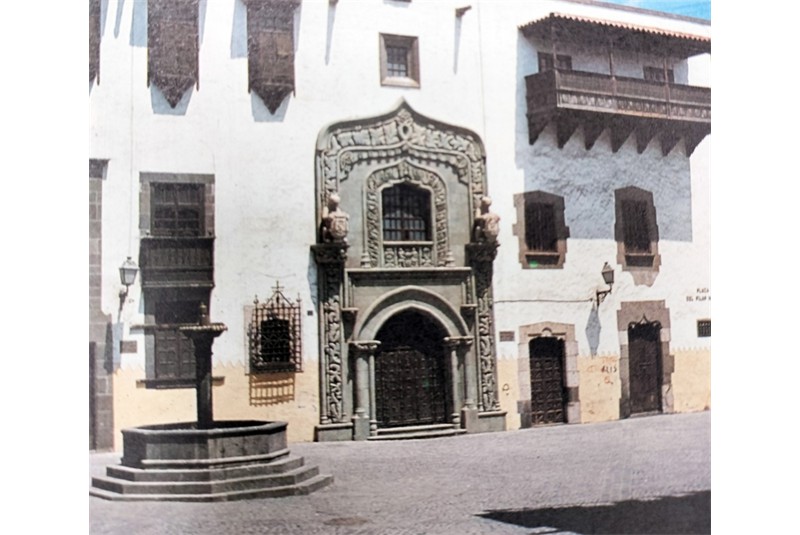
The anthropic aspect of the Canary context encompasses both rural and urban elements. Agriculture, along with port, commercial, and tourism activities, forms an essential part of the archipelago's economy. This has led to the transformation of the landscape, with the terracing of steep slopes (bancales)[12] and the introduction of estanques for irrigation[13]. The two large platforms forming the southern part of the lot, along with the linear structure that was never constructed, are essentially terraces — an ancient method of managing elevation changes in this area. This approach was also employed by the engineer Leonardo Torriani (Cremona 1559 – Coimbra 1628), a significant figure in the history of the Canary Islands, as he designed their fortification system. Polesello also follows his method, «By working with terraces, balancing excavation and fill, and establishing the foundations of the built environment in the form of horizontal platforms» (Polesello 2000, p. 77). Regarding references from the urban context, it is essential to highlight that Polesello was interested in Canarian architecture, particularly the traditional houses of the Vegueta district[14]. He was particularly drawn to their stratigraphy and their ability to let air and light pass through[15]. Doors and windows, in fact, were not mere voids in a façade but actual devices designed for ventilation and sunlight filtering. Even when closed, thanks to a system of lattices and partially open sections, they allow air and light to reach the interior and the patio, which is typically located at the central or opposite end of the street-facing side. Polesello incorporates these aspects with the goal of moving beyond the conventional window and creating a permeable façade.
«Bringing light 15 meters into a space naturally requires some design solutions: either everything is made artificial, electrically lit in the innermost parts, or all obscuring or opaque elements are largely eliminated» (Polesello 2000, p. 77). It can be said that he applies the concept of the Canarian window to the entire wall, creating partitions that do not enclose the building but instead allow air and light to pass through, as if aiming to make the perimeter walls disappear[16].
Conclusions
This study has identified the references used by Polesello in his work at the Tafira Campus in Las Palmas de Gran Canaria and linked them to the figurative and formal aspects of the project. The aim was to provide interpretations of Polesello's design choices and demonstrate how they are always motivated, sometimes explicitly, sometimes more subtly. It is precisely these subtle reasons that have been examined in detail, drawing on interviews with collaborators who worked with the architect in the Canary Islands, as well as personal interpretations derived from the analysis of documentary materials related to the project and its context.
Another aim of this study is to examine these references, connections, and allusions through the lens of travel, a sort of Grand Tour of Polesello's worlds, visions, and creations. It is not the souvenir itself that matters, but, as Luciano Semerani observes, it is «the internal idea that corresponds to it». He further states that for an architect, travel is an experience that lies «at the foundation of their intellectual construction» (Semerani 2000, pp. 44-45).
In Polesello's work, one characteristic of the classical within the modern, in his personal quest for the classical, is «repetition/invention as a pair of antagonistic terms, as a poetic technique related to urban and architectural motivations» (Polesello 2000, p. 80). It is precisely within this relationship between repetition and invention that the concept of travel is situated. His architectural choices reveal a continuous process of losing oneself, searching, finding, and rediscovering within these two expansive fields. In this regard, it can be said that for Polesello, architecture results from a Grand Tour that oscillates between past actions and new fantasies—both emerging from the same dynamic of repeating and inventing.
In this creative process called invention, drawing on an excerpt from Filarete, Polesello argues that «an architect should receive an annual salary for 'investigating and creating new fantasies'» (Polesello 2000, p. 80). This idea captures the core of his architectural vision: a continuous dialogue between past and future, memory and innovation, repetition and invention.
[1] Polesello defines these as "artificial platforms" (Polesello et alii 1989).
[2] Quotes from Polesello 1990, p. 204.
[3] On Cristoforo Colombo's routes in the Canary Islands cf. Santiago Rodríguez 1955, pp. 337-396.
[4] Interviewed in August 2024, Juan Manuel Palerm Salazar (Full Professor of Architectural Composition at the Department of Architecture of the University of Las Palmas de Gran Canaria), who collaborated at the Tafira project as partner of Palerm & Tabares de Nava Arquitectos since 1986, said that Polesello was particularly attracted by the Mesoamerican context, particularly concerning the pre-Columbian period.
[5] Through the talud-tablero technique, which in the teocalli allows for the insertion of horizontal planes interrupting the sloping ones, cf. Cash 2005.
[6] On this point, Polesello states: «Architecture, the project, is the design of a citadel rather than a single architecture, as an isolated object» (Polesello 2000, p. 77).
[7] Cf. Santos Yanguas 1988.
[8] Cf. Mederos et alii 1998.
[9] Raffaella Neri defined Polesello's project for the Tafira Campus as «a modern acropolis» (Neri 2015, pp. 36-40).
[10] Interview with Juan Manuel Palerm Salazar.
[11] Developing longitudinally and belonging to the second unit, the complex also comprises three square modules measuring 30x30 m.
[12] These structures are gradually disappearing with the depopulation of rural areas. The ITLA - International Terraced Landscapes Alliance is trying to preserve them, also in the Canary Islands, cf. Palerm Salazar 2019.
[13] For a proposal for the requalification of these anthropic elements of the Canarian landscape, see Dallatomasina et alii 2018, pp. 287-298.
[14] On the architecture of historic centres in the Canary Islands cf. López García 2010.
[15] Interview with Juan Manuel Palerm Salazar.
[16] Polesello also states: «In the overall project, the interior and exterior of the architecture are primarily characterised by glass (particularly glass blocks) and the total absence of windows, replaced by openings through which corridor-bridges connect the four modules on different levels» (Zardini 1992, p. 103).
AMISTADI L. (2019) – "Limes o lo spazio della fondazione". In: A. Morigi and C. Quintelli (eds.), Fondare e ri-fondare. Parma, Reggio e Modena lungo la via Emilia romana. Il Poligrafo, Padua, pp. 277-283. ↩
CASH C.L. (2005) – Locating the place and meaning of the Talud-Tablero architectural style in the early classic Maya built environment. The University of Texas at Austin. ↩
CLEMENTE I. (2016) – Lucus. Intorno al significato nell'architettura di Gianugo Polesello. Aión, Florence. ↩ ↩ ↩ ↩
DALLATOMASINA C. and LÓPEZ GARCÍA J.S. (2018) – "Conjunto histórico de Barranco Hondo de Abajo (Gáldar): correlaciones europeas y puesta en valor. Una propuesta de museo abierto". In: AA.VV., XX Simposio sobre Centros Históricos y Patrimonio Cultural de Canarias. Fundación CICOP, Arona, pp. 287-298. ↩
GUTIERREZ VIÑUELAS R. and LÓPEZ GARCÍA J.S. (2018) – Canarias y América. Puentes artísticos en el siglo XX. Cabildo de Gran Canaria, Las Palmas de Gran Canaria. ↩
LÓPEZ GARCÍA J.S. (2010) – Los centros históricos de Canarias. Anroat Ediciones, Las Palmas de Gran Canaria. ↩
MEDEROS A. and ESCRIBANO G. (1998) – "Posibles deportaciones romanas de norteafricanos hacia Canarias". Revista de Arqueología, n. 19 (206), pp. 42-48. ↩
NERI R. (2015) – "Una acropoli moderna". Architettura Civile, n. 15, pp. 36-40. ↩ ↩
PALERM SALAZAR J.M. (2019) – Re-Encantar Bancales. Canarias ayer y hoy (siglos XIX, XX y XXI). Rincones del Atlántico, La Orotava, Tenerife. ↩
POLESELLO G., BOTE DELGADO M., GARCÍA MACIÁ B., PALERM SALAZAR J.M., RAMÍREZ GUEDES J. (1989) – "Edificio Departamental de Informática y Matemáticas". In: J. Casariego Ramírez and G. Macías Castaneda (eds.), Universidad y ciudad: la construcción del espacio universitario. Caja Insular de Ahorros de Canarias, Las Palmas de Gran Canaria. ↩ ↩ ↩ ↩ ↩ ↩
POLESELLO G. (1990) – "Campus universitario a Las Palmas, Canarie. 1988-89". Zodiac, n. 3, pp. 202-223. ↩ ↩
POLESELLO G. (2000) – "Università a Las Palmas". In: R. Neri and P. Viganò (eds.), La Modernità del classico. Marsilio, Venice, pp. 74-80. ↩ ↩ ↩ ↩ ↩ ↩ ↩ ↩ ↩ ↩ ↩ ↩ ↩
RAMÍREZ DOMEC A. (2022) – Iter vitae. Intervención en el Campus de Tafira. Master's thesis. Escuela de Arquitectura, Universidad de Las Palmas de Gran Canaria. ↩
SANTIAGO RODRÍGUEZ M. (1955) – "Colón en Canarias". Anuario de Estudios Atlánticos, n. 1, pp. 337-396. ↩
SANTOS YANGUAS N.V. (1988) – "El mito de las Islas Afortunadas en la Antigüedad". Memorias de historia antigua, n. 9, pp. 165-175. ↩
SEMERANI L. (2000) – L'altro moderno. Allemandi, Turin and London. ↩
ZARDINI M. (1992) – Gianugo Polesello. Architetture 1960-1992. Electa, Milan. ↩