Travel Companions
With their feet here and eyes elsewhere (Jankélévitch 1974, p. 346)
Throughout their education and professional career, architects often find themselves[1] in an ongoing tension between physical presence and imaginative activity. The significance of travel — both in academic and professional development — has been extensively examined in literature, demonstrating how the act of travelling and the vividness of direct observation help develop a deeper understanding of the built environment, from broad contexts to specific design questions. Suppose travel is regarded as a vital moment in an architect's development. In that case, the objects collected during the journey — often called souvenirs[2] — can be seen as tangible expressions of a specific perspective, a deliberate choice, and ultimately, the realisation of an idea. In other words, collecting objects helps architects communicate and shape their ideas.
As evidence of a personal and informal way of learning, these objects raise an important question: are they genuinely part of the journey, and to what extent do they influence architects' built work? Sketches, photographs, books, prints, and models are a natural part of how architects document and fix in memory their travel experiences[3]. They reflect a conscious effort to hold impressions formed within unfamiliar contexts over a limited period. More than simple records of a journey, souvenirs offer insight into how architects engage with objects diachronically, revealing how they perceive and interpret reality.
In fact, such objects can function as tools for delayed and enduring reinterpretation. In some cases, souvenirs are fragments of travel impressions that have been reassembled, thereby revealing an internal reflection and imagination strictly adhering to the original. As portable objects, souvenirs are sometimes reassembled or decontextualised; they reflect a deeper, less linear process — one where perception and intuition guide early acts of critical thought reflection.
For an architect, the transition from simple documentation to imaginative reinterpretation frames the souvenir as a mediating tool between memory and design. The term souvenir thus goes beyond its etymological meaning, endowing objects with the capacity to evoke a place or moment from the journey in an idealised form. It is exactly this personal intentional filter that shapes the creative vision informing the design process, which arises from the unfolding of references, both real and idealised. Supporting this view of a non-cumulative accumulation of impressions, Adriana Bernieri (2015) considers travel as a process that turns perception into elaboration, where memory and imagination transform lived experience into design intents. The sensory aspect of cognition that unconsciously attracts architects to some objects over others reveals a sensuous[4] response that extends beyond conscious intention, encompassing not only visual documentation but also emotional and intuitive aspects.
To elaborate these hypotheses with concrete examples, we consider three architects — John Soane, Le Corbusier, and Gae Aulenti — whose works, despite differences in time and context, show a common ability to turn the experience of travel into spatial and formal innovations. Their extensive journeys, and the creative tension between what they learn while travelling and how they reinterpret it over time within design practice, qualify them as architectural grand tourists in a focused sense. Travel served as a vital mode of self-education triggered by the unfamiliar and had a lasting impact on their design work.
As the Italian anthropologist Vito Teti suggests in La Restanza (2022), the act of returning is not the end of the journey but the start of its active interpretation. In this very phase, souvenirs play a key role: they become tools for reflection and triggers for transforming memory into design intention. Some souvenirs are used in the design to reconnect fragments to their original context as visual quotations; others, once displaced or reassembled, acquire new formal autonomy and catalyse unexpected meanings.
The following examples illustrate these dynamics. This perspective echoes Vladimir Jankélévitch's concept of nostalgie ouverte, introduced in L'Irreversible et la Nostalgie (1974): a kind of nostalgia not tied to a specific object or place in the past, but open to what is yet to come — toward what has never existed, and for the architect, toward what can still be imagined and designed. Within this framework, reflecting on the approaches of these three architects — shaped by different historical and cultural contexts — reveals how the souvenir operates not as a marginal by-product of travel, but as an active and recurring component in architectural practice. Whether collected, selected, or fabricated, these objects trigger a way of thinking that is not necessarily linear, but depends on a receptive and well-prepared mind (Mindrup 2011, p. 4). In this view, the souvenir gains meaning only when it enters dialogue with a specific design context, becoming a prompt for invention rather than a reminder of what has been. What enables this potential is often the temporal and spatial distance from the original journey, which creates the conditions for the souvenir to reappear, no longer as a memento, but as a speculative tool within the design process.
A comparison between John Soane, Le Corbusier, and Gae Aulenti shows that, for architects, travel goes well beyond the mere collection of data, references, inspirations, or exemplary models. Instead, it develops as a process that gains significance through its reinterpretation upon return. This process involves reuses, manipulations, and reinterpretations that empower gathered materials into design tools. Travel functions not just as a collection of experiences but as a mechanism for critical selection and projective development. Therefore, the creative power of travel may be found in the moment of return, when the demands of a specific design challenge activate memory. Hence, souvenirs do not merely record a path once taken — they help architects who collect them to open up new directions, spark associations, and, when necessary, contribute to the development of design ideas.
Transpositions: John Soane and the Tivoli Corner
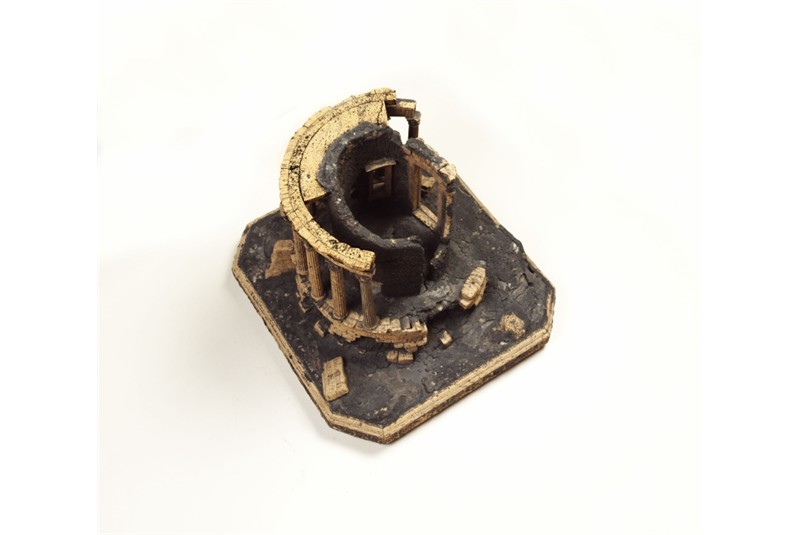
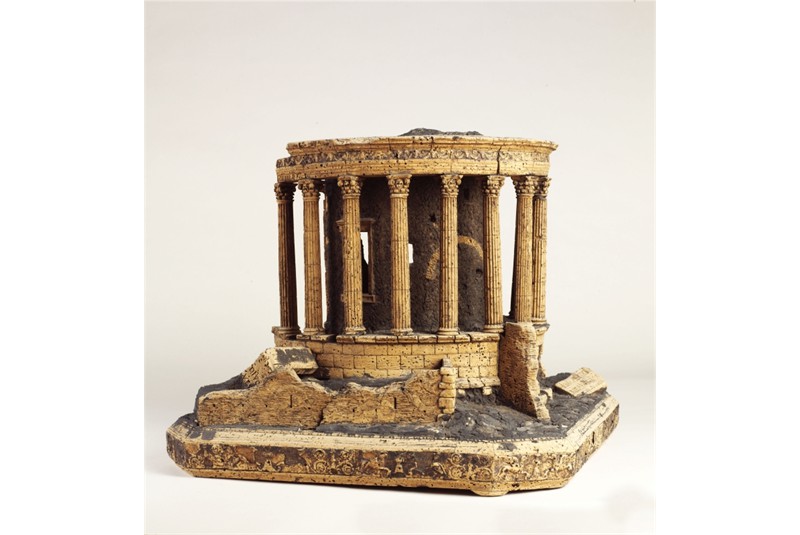
In the eighteenth and early nineteenth centuries, cork reproductions of Greco-Roman ruins circulated almost as widely as the travellers themselves. As tangible records of architectural encounters, these models served as genuine souvenirs. They were collected not only for their aesthetic or educational value but also as personal tokens of the Grand Tour experience. Alongside travel journals, prints, and sketches, they became an essential part of this formative cultural tradition. Tivoli, an ancient town east of Rome dramatically perched above the Aniene gorge, was among the most popular Grand Tour destinations. Known for the Temples of Hercules Victor and Vesta, perched on opposite sides of its rocky plateau, Tivoli provided travellers with stunning views over the Roman countryside and cascading waterfalls, making it a popular destination for artists and architects alike.
Starting in the early 1700s, this picturesque interplay between natural elements and ancient ruins attracted painters and architects from Northern Europe. Giovan Battista Piranesi, the renowned architect and engraver, depicted the temples of Vesta and the Sibyl, shaping a collective imaginary around these ruins (Darley 2008). Piranesi's views — which also became souvenirs of the Grand Tour over time — were not limited to mere reliefs, but evolved into genuine inventions; they combined documentation and interpretation, intentionally modifying certain proportions, aiming towards an aesthetic of gigantism or, in some cases, ideally reconstructing the missing parts. Alongside Piranesi's engravings, travellers often collected three-dimensional models that replicated these ruins out of context: portable, aesthetic souvenirs of their encounters with antiquity. Unlike Piranesi's imaginative views, the cork models provided a more perceptual memory of the ancient buildings. These three-dimensional objects proved versatile for domestic display and private collections, blurring the boundary between memory, ornament, and personal impressions through their arrangement.
Both types of souvenirs became widely popular in England, where they were also appreciated by John Soane, who encountered them during his training and subsequently collected them during his travels. In particular, the cork models of ancient buildings — now an integral part of his renowned collection — fully embody the design, representative, and decorative intent that a souvenir can assume. It is notable how Soane arranged these models thematically, integrating the rooms and decorative elements of his collections, along with similar objects that served a narrative purpose rather than merely a philological one.
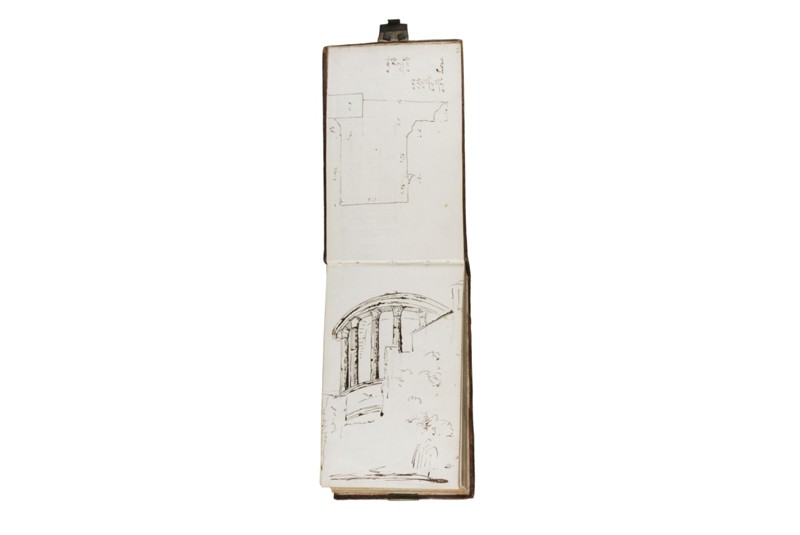
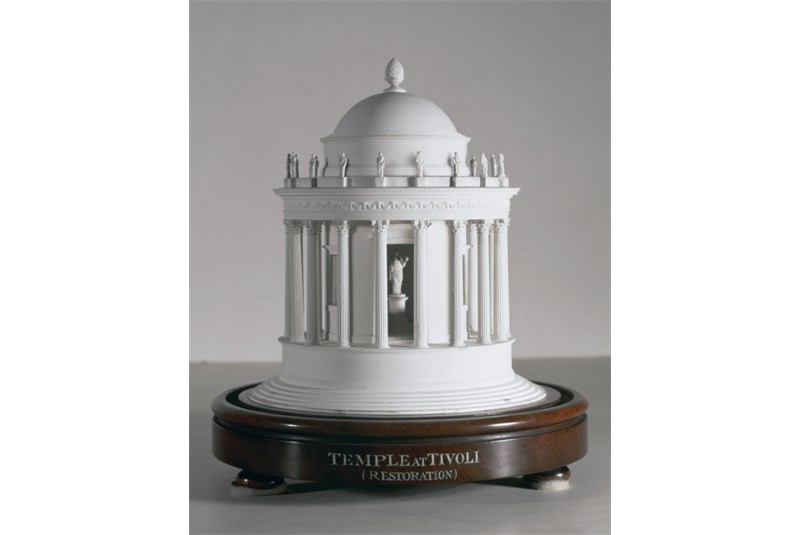
Back in London, Soane used cork models as design triggers, integrating them into his spatial reasoning and drawing from them in the development of new architectural solutions. One particularly revealing example is the model of the Temple of Vesta, which he mounted on a tall, rotating pedestal[5] beneath a dome. This arrangement enabled him to view the structure from different angles, rethinking its form with each turn. Far from just being a record of an ancient ruin, the model became the starting point of a creative process — an act of dislocation and imaginative reinvention.
For Soane, therefore, the model, rather than merely representing a geographically distant ruin, is a synthesis of observations and the creative process of removing the artefact from its original context; through adjustments, modulations, alterations, and transpositions into a new context, he shapes new original design solutions. In other words, relocating fragments of ancient structures is a precise compositional choice, offering solutions to similar problems in different contexts.
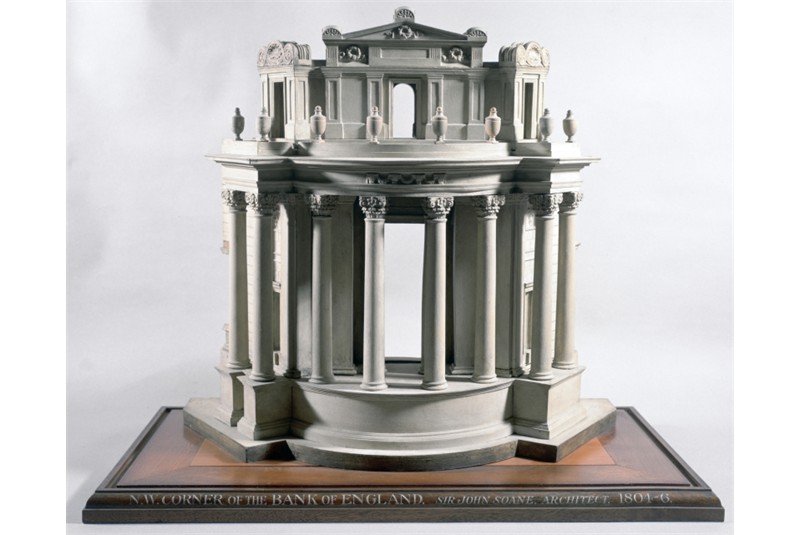
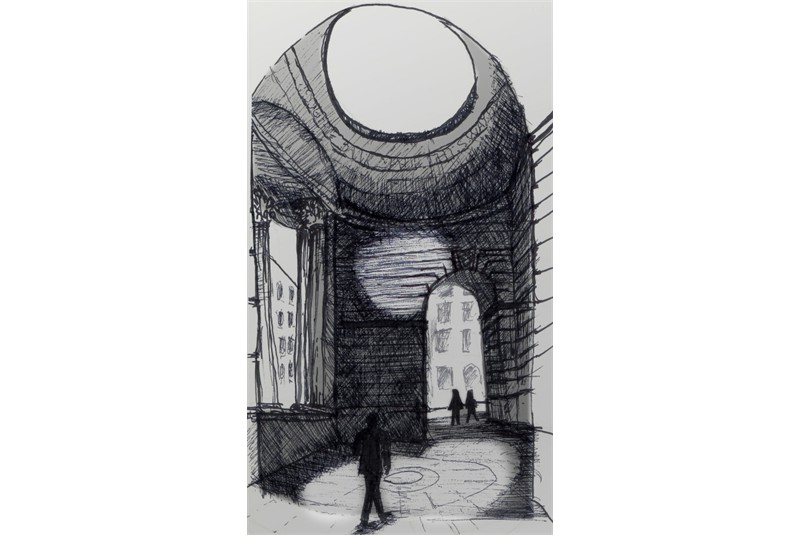
This conceptual leap from dislocation to reinvention finds its clearest built example in the Tivoli Corner, an angled element on the northwest block of Soane's Bank of England (1788–1833). The name refers to both the Roman precedent and the compositional strategy Soane employed. In this perspective, the inclusion of antique fragments in Soane's projects was not about reproduction or imitation; much rather it was a diachronic transplantation to solve specific design challenges. Soane shaped the corner of the Bank of England by abstracting a fragment and reinterpreting it through imaginative recontextualisation, to resolve the urban configuration of the block between Lothbury and Princes Street.
The Tivoli Corner reframes the experience of approaching a ruin within a dense urban context by translating a specific spatial condition — the angled and elevated perspective of the Temple of Vesta — into a contemporary architectural solution. Drawing on his travel sketches and Piranesi's oblique views, Soane reinterpreted this perception in the articulation of the corner of a London block. This architectural fragment has no clear function, yet it serves solely to define the building's edge through a theatrical gesture. The inhabitable space on the exterior of Tivoli Corner features a niche with a tympanum and a curved passage, while the outer structure directly reflects the circular form of the Temple of Vesta. The structure, enclosed by a convex entablature and colonnade, encourages movement and channels light through the space. Sunlight enters from above, casting deep shadows that evoke the ruined temple of Tivoli, just as Soane might have seen it during his visit to the site.
Soane's approach to the reuse of fragments is evident by analysing his collection of models, which included both cork replicas and idealised plaster versions.
Displayed together, these models captured the duality of ruin and abstraction but also reflected the interplay of memory and invention central to Soane's design process[6]. The cork models retained the marks of decay — cracks, moss, and erosion — while the plaster models abstracted these into pure, white geometries[7]. Together, they formed a balanced yet distinct ensemble: the fragment as a ruin and the model as an idea, the reality and its imaginative recontextualisation placed in dialogue[8].
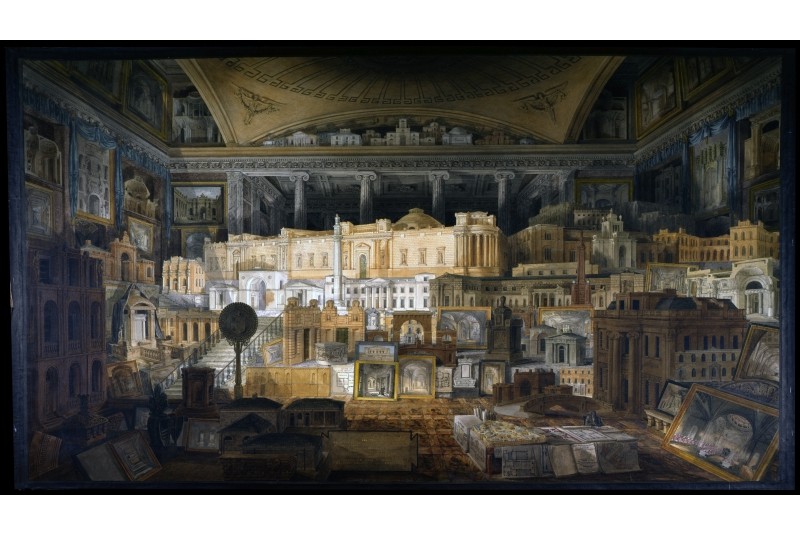
This interplay between decay and idealisation is captured in the famous watercolour by Joseph Gandy[9], which depicts 107 elements — models, drawings, interiors — arranged in a museum-like setting within a single room. The Bank of England dominates the composition, with the Tivoli Corner as a vertical counterpoint placed exactly as it appeared in Soane's travel sketch, highlighting its importance as both a memory and a design element (Moleon 2001). The painting suggests not only Soane's design process but also his method: combining experienced forms with imagined ones, using souvenirs as tools of projection and invention.
Soane's cork models are more than just memorabilia: they are representations of interiorised experience. Their forms lend themselves to manipulation and transformation, no longer bound to archaeological accuracy but reactivated through what might be called creative transpositions: spatial ideas sparked by memory and recomposed in new contexts.
The return from travel, for Soane, was not about replication, but reconfiguration. Based on the symbolic and metaphorical appropriation of historic forms, Soane's transposition was the most creative manifestation of the Grand Tour tradition that began in the seventeenth century (Bernieri 2015, p. 68). This appropriation, which took place during travels and surveys in the eighteenth and nineteenth centuries, contributed to the development of a repertoire of models that could be rearranged in modern conditions, making travel destinations less remote and more familiar. Soane was part of a generation of architects who, motivated by the prospect of changing English communities, regarded antiquity as a model to be interpreted rather than merely replicated. James Stuart, a well-known figure from this time, encapsulated its most obvious features:
Already many individuals, by their labours, their studies and researches abroad into the purest sources of the arts, had enriched our island with models of the most perfect kind. Italy was become, in a manner, our own; and even Greece, Syria, and Asia minor, hitherto unexplored, were made, for our use, to open their hidden treasures of the sublime and graceful Antique (Stuart 1771, p. 36).
For Soane, the creative displacement finds its clearest formulation in the interpretative phase of the return, that of autonomous elaboration. Ultimately, for Soane the journey of return allows one to «see things» and then «do them differently» (Bernieri 2015, p. 161).
Poetic Reactions: Le Corbusier and the Problem of Deriving Form
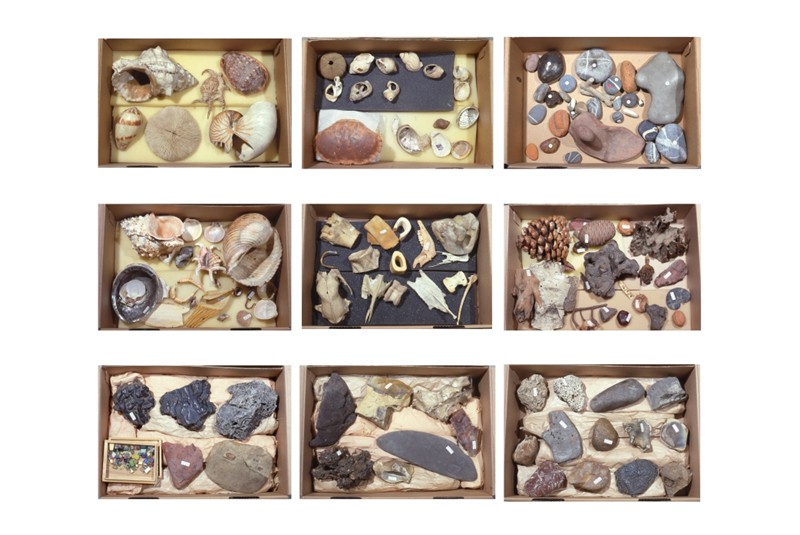
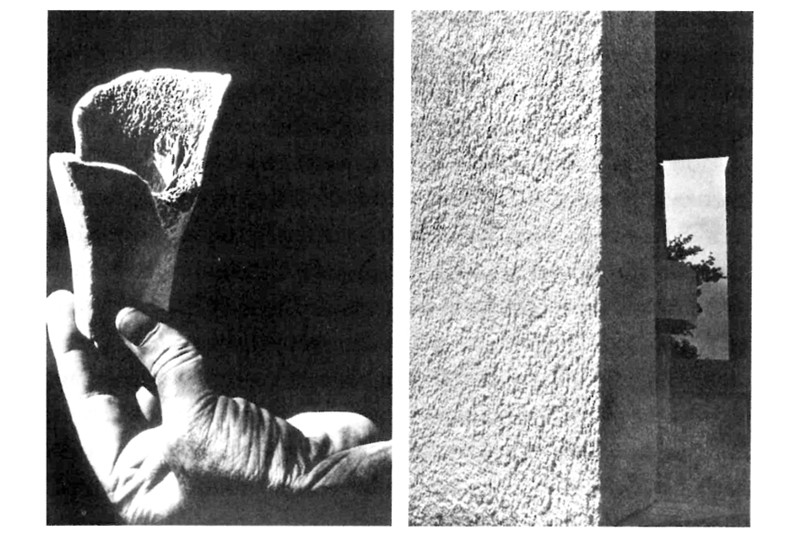
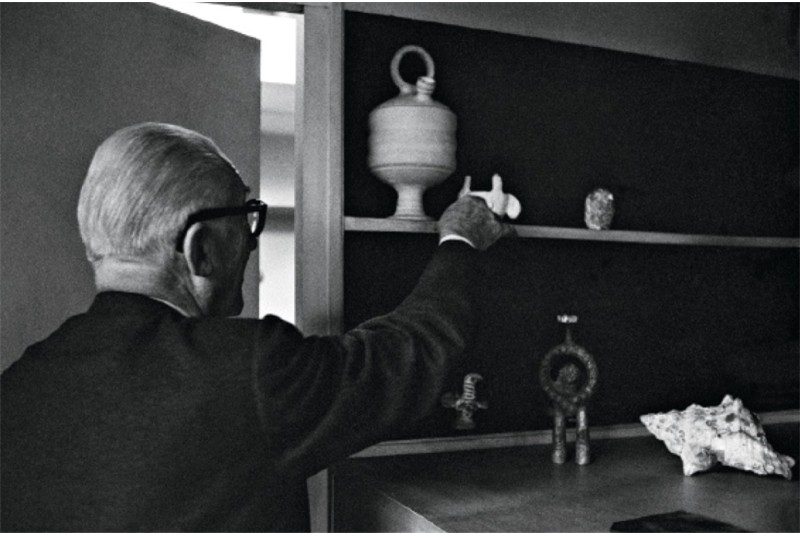
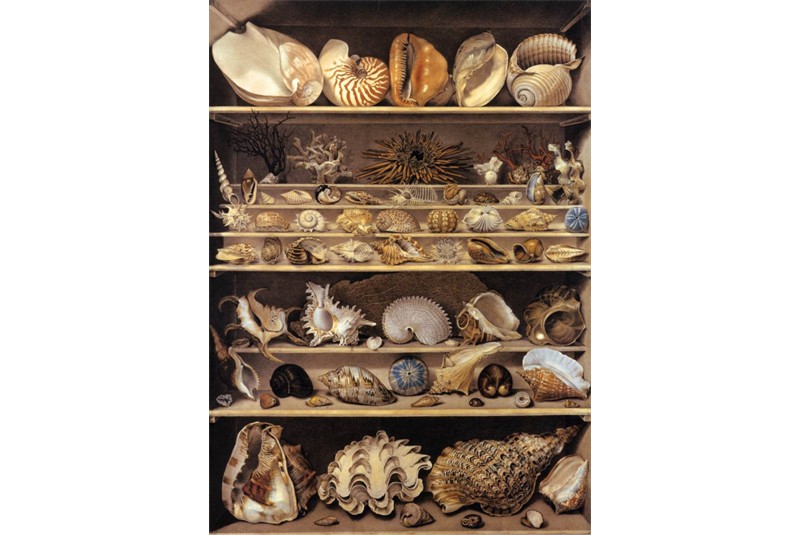
The display revealed boxes filled with shells, stones, bones, pinecones, and marine debris, all objects gathered from beaches which he described as «evocative companions» (Chironi 2021, p. 37; Le Corbusier 1999, p. 70) in the development of spatial and formal ideas.
Le Corbusier's habit of collecting everyday and folkloric objects shows how travel acted as a heuristic device: one that reframed the ordinary and unseen through a perspective of formal potential. Isolated from their context and inferred from empirical experience, these forms are regarded by the architect as carriers of directly experienced plastic qualities. What made them intriguing was their unfamiliarity — a key part of the travel experience, which combined perception and imagination to fuel a spatial language shaped by poetic meaning and sensory awareness. These objects, which Le Corbusier called objets à réaction poétique[11], can be considered souvenirs, even if not tied to a specific place or trip. He described them as (Le Corbusier 1999, p. 70):
[…] objects originating in any time and place whatsoever may aspire to this brotherly communion. Books are full of persuasive fairy tales, iconography, because of this. Artificially created by the agile fingers of man, these objects can be endowed with meaning by nature in its turn. Objects which evoke a poetic reaction are those which by their shape, size, substance and durability are worthy of a place in our homes. A pebble polished by the ocean is one example, another might be a broken brick rounded smooth by lake or river waters, or bones, fossils, tree roots or algae, sometimes almost petrified, or whole shells smooth as porcelain or carved in Greek or Hindu fashion. Broken shells reveal their amazing spiral structure to us. All these seeds, flints, crystals, pieces of stone and wood form the vast panoply of spokesmen who speak the language of nature. They are caressed by our hands, your eyes gaze upon them, they are evocative companions […]
Unlike sketches or photographs that capture what or how we see a building, tactile souvenirs appeal to all our senses. Their compact size makes them naturally fit in the hand. At the same time, their textured surfaces (grooved, smooth, curved, or angular) invite the hand to engage, making their tactile qualities central to a more intimate, sensory appreciation.
This haptic dimension is evident in Le Corbusier's sketches: while his architectural drawings are typically abstract and diagrammatic, the objets à réaction poétique are rendered with remarkable focus on texture, shadow, and contour.
A similar sensitivity to material perception emerges in the description of his visit to the Parthenon, where the experience of touch, «the marble under his hands»[12] played a crucial role. There, direct physical contact with material surfaces enabled an immersive form of understanding only attainable through firsthand experience.
Architectural historian Niklas Maak (2011) identifies three key stages in Le Corbusier's creative process: annotation, association, and transformation, which closely correspond to his exploration of poetic reactions among objects.
Annotation marks the initial, intuitive response: a spontaneous, sensory-driven attraction to an object. Association occurs as a process of mentally connecting the object's form to broader ideas or previously encountered forms. Finally, transformation pertains to reinterpreting that form into geometric, structural and ultimately poetic concepts, translating the raw impression of an ordinary object into architectural expression (Maak 2011). Hence, an objet à réaction poétique might become an accidental souvenir, one whose purpose lies in its ability to spark different spatial and formal inventions. These natural artefacts mediate between abstraction and the imitation of nature, bridging the intuitive encounter with material forms and their conceptual reconfiguration into architectural ideas.
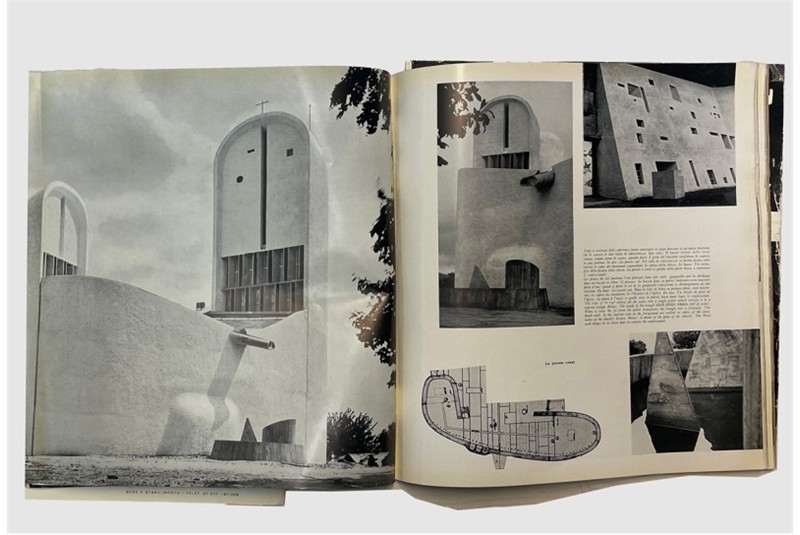
Le Corbusier's creative work, then, was not limited to simply recombining Euclidean forms — namely sphere, cube, pyramid — but rather reveals a deeper attempt to extract architectural principles from the geometries found in nature. This transformation shifts the architect's focus from personal curiosity to the ability to transcend natural forms, creating spaces whose poetic value lies in being perceived not only through logic but also through artistic sensibility — as genuine, inhabitable sculptural compositions. The most emblematic example of this process is the roof of the chapel at Notre-Dame-du-Haut in Ronchamp, which can be considered a spatial and formal invention by Le Corbusier. This formal and spatial invention breaks from the traditional church typology.
Built between 1950 and 1955, the chapel features an inverted concrete shell resting on a steel frame, a structural concept developed with André Maissonier and inspired by the engineering of aircraft fuselages. This structural principle may have emerged from an embodied experience of discovery during a walk along the beaches of Long Island, when Le Corbusier stepped on a crab shell. Impressed by the strength of the natural form, he initiated a cascade of associative reasoning that converted a natural impression into a design concept.
Viewed through this lens, the entire chapel might be interpreted as a built manifestation of the objet à réaction poétique. Its curved walls allow natural light to penetrate the sacred space, reminiscent of sunlight filtering through the cavities of a shell. This analogy, though speculative, highlights the importance of observing the sensory qualities of objects encountered during travel, which, over time, inspire architectural ideas. Even the contrast in surface texture, rough on the outside but smooth inside, seems to reflect the marine forms that may have inspired it. Instead of a literal translation of the crab shell, the final design derives a spatial concept from nature and reinterprets it into a proportional, buildable system.
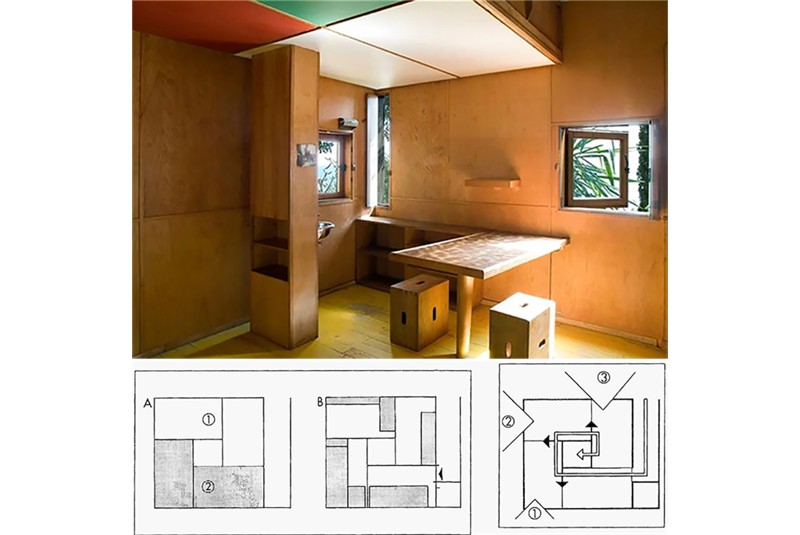
A comparable, though more abstracted logic appears in the Cabanon, Le Corbusier's seaside retreat. In this case, the spiral growth pattern, like that of a shell, serves as a spatial framework for the compact one-room dwelling, proportioned according to the Modulor system. Here again, the shell functions as both metaphor and model, allowing Le Corbusier to realise his vision of a minimal living unit: «giving man his own shell» (Maak 2011, p. 39).
Le Corbusier's example is valuable for emphasising the importance of human, embodied experiences, which may be the only way to translate observable natural forms into architectural design tools, as well as the value of preserving both visual and sensual awareness while moving. Le Corbusier's souvenirs, selected for their form rather than function, shift focus away from specific itineraries and toward the reinterpretation of experience as a central design strategy. These souvenirs reveal the lasting effects of travel not as physical records, but as imaginative tools embedded in the built environment.
Ritaglini (Cutouts): Travel Notes by a 'Steam-Powered' Architect[13]
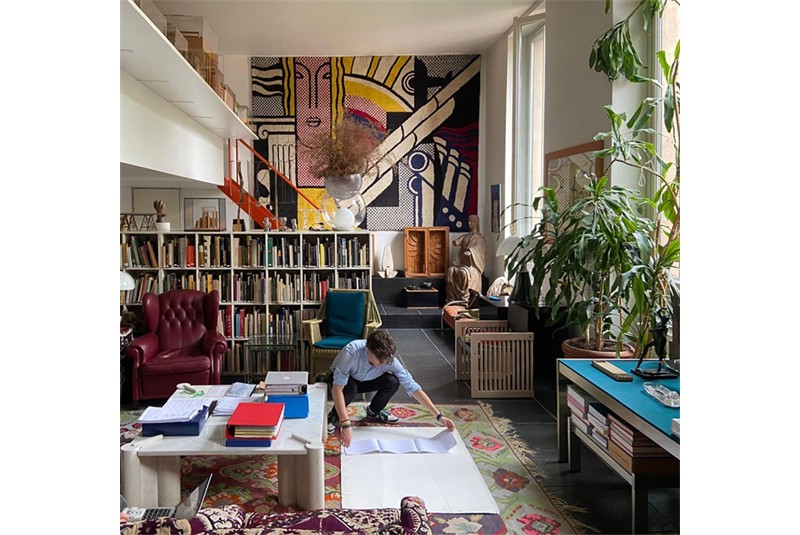
The 2023 publication Gae Aulenti. Cina 1974 (Artioli and Calamandrei 2023) and a significant retrospective of Gae Aulenti (1927-2012)[14] have, in recent years, brought her work back into the spotlight, shedding new light on how travel may have served as a learning tool and a testing ground for her architectural imagination. What also emerged, almost incidentally, was a rich collection of travel souvenirs now housed in her former home-studio in Milan.
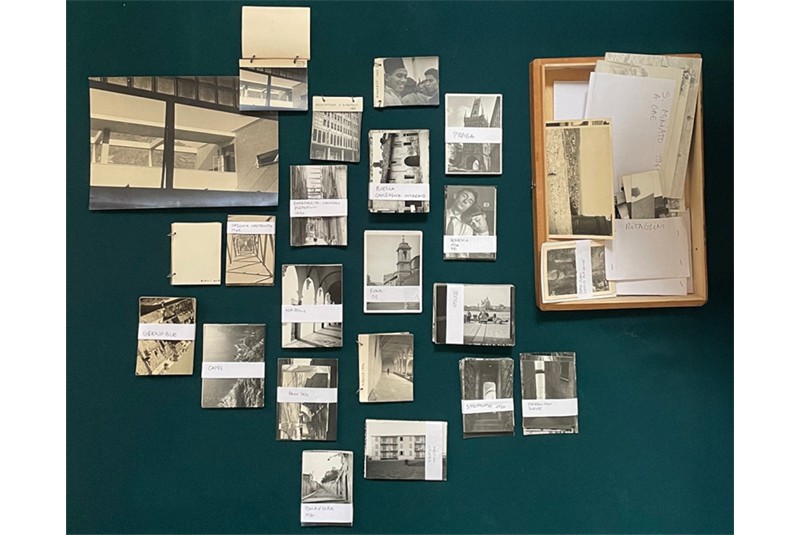
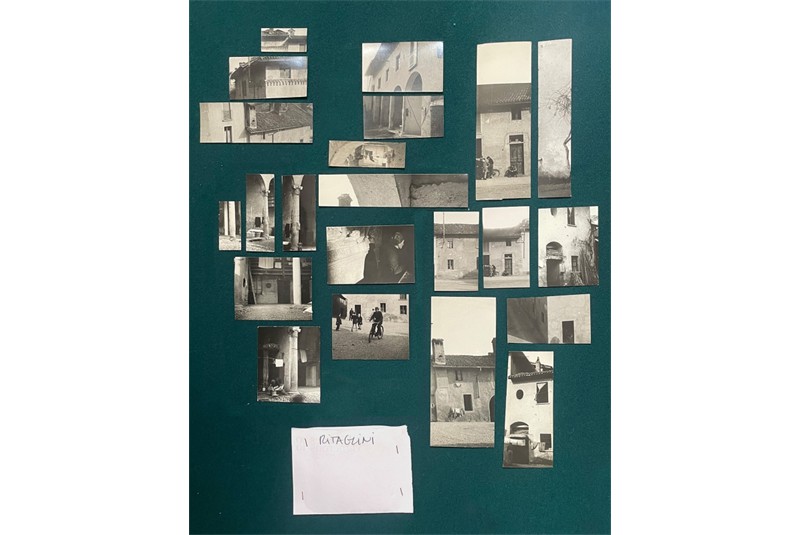
These objects — once scattered throughout her personal and professional life — have become compelling clues to a way of seeing the world: an inquisitive and intuitive compositional approach. Far from trivial mementoes, these souvenirs — encompassing books, textiles, folk crafts, and furniture — compose a fragmented, rich archive of her visual thinking. Among these, images are especially noteworthy, particularly the lesser-known ritaglini[15], namely framed photographic pieces — as they are detached from identifiable locations — that reflect the critical, instinctive gaze of a young architect still in her formative years.
By examining this photographic material, it becomes evident that travel was not merely a backdrop to Aulenti's career; it was a fundamental principle shaping both her personal life and professional approach. Her souvenirs fall into two distinct yet overlapping categories: those collected whilst travelling, and those created as manipulations of pictures taken during travel. Aulenti approached travel with a systematic eye, documenting places and experiences through detailed photography and written notes. On the other hand, she treated these records not as fixed memories, but as raw material to be creatively reworked — cut, rearranged, and reinterpreted — revealing a more imaginative layer in how she processed and internalised her experiences. Collecting images, objects, and cultural traces was never a passive activity. Each journey marked the start of a deliberate act of observation, where seeing was already infused with intention. Reinterpreting what had been observed was not an afterthought, but the core process through which memory was strengthened, and ideas started to develop.
This sensitivity may be traced back to Aulenti's formative years, marked by a state of constant displacement. Though born in northern Italy, Aulenti bore a southern Italian background; she often described a childhood characterised by frequent back-and-forth movement: «north to south, north to south, north to south»[16], as she put it, accompanied by a repeated hand gesture[17]. Rather than viewing this mobility as dislocation, she saw it as a valuable lesson in multiplicity — learning early how to interpret contrasting environments, traditions, and spatial cues. «In my profession — she reflected — it's essential to be trained to see, to recognise places and cultural differences. That's what enables me to work elsewhere. It gave me a way of reading the world»[18].
Although frequent travels within Italy shaped Aulenti's early life, it was during her time at the Polytechnic of Milan, under the mentorship of Ernesto Nathan Rogers, that she began to travel abroad extensively. In the late 1940s and early 1950s, as Europe was being rebuilt after the war, she made several trips through Italy and northeastern Europe, and these journeys laid the foundation for a deeply personal photographic archive.
For Aulenti, photography became a modern, agile way of capturing what the eye saw, and the mind might want to revisit later (Artioli 2023, p. 8). What began as a means to record the world gradually evolved into a way of shaping memory, turning simple images into a rich base for new reflections.
Although it was initially unintentional, reordering impressions became a way for her to reframe the outcomes of her journeys. This process took shape through the creation of heterogeneous souvenirs: contact sheets assembled into albums, scattered cutouts, and small photographic blocks, often systematically arranged by destination or theme (Artioli 2023, p. 7). In all cases, these materials document architecture, faces, and folkloric or everyday objects — carefully selected from a substantial body of images in search of a compositional and aesthetic balance between the human scale and that of the landscape, across its different registers.
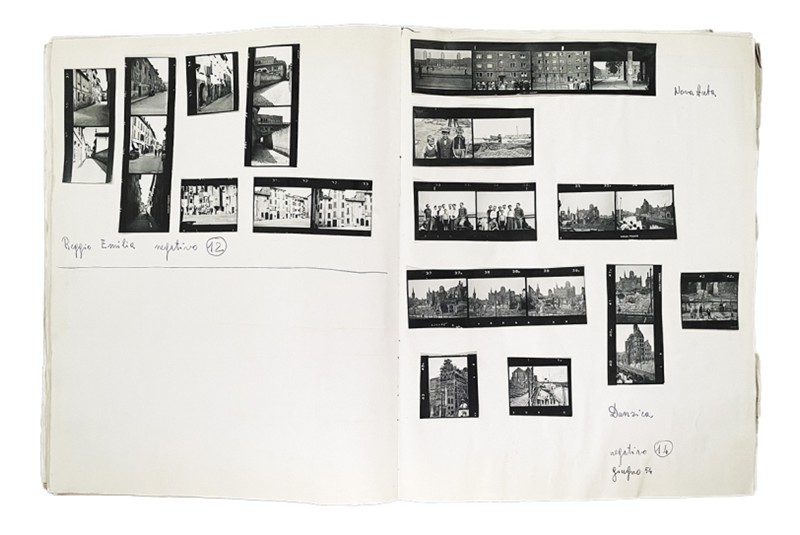
One of the main methods of organising this material involved the sequencing contact sheets within albums, where the images — arranged according to chronological or geographical logic — were laid out in a way that echoes cinematic storytelling.
A double-page spread in a 1954 album presents juxtaposed contact sheets taken in Reggio Emilia and Nowa Huta, Kraków[19]. Two visual strategies unfold across the pages: in some shots, perspective views suggest a gradual movement toward architecture; in others, a shift between zoomed-in details and wide frames captures both the intimacy and scale of place. The focus seems to fall naturally on rhythm and seriality, as well as on the compositions of façades or the uneven texture of historic urban fabric.
Rather than simply documenting what is in front of the lens, the sequence begins to act as a form of visual writing[20], shaped by a design sensibility that already anticipates abstraction, repetition, and spatial logic, all of which contribute to imbuing a narrative intent in reality.
Ritaglini are pieces of larger photos and might indicate some design intentions. Gae Aulenti analyses the precise compositional features of existing vernacular architecture by focusing on individual details, which, when taken out of context, allow the geometric forms of the built environment to be abstracted. This emphasis on geometric elements, reinforced by the cutout's shape itself, highlights the intention to interpret the actual architecture as a geometric abstraction. The pictures' attention to detail, including the window shutters and their shadows projected on the walls, highlights the connection between light and form, particularly how light reveals the wall's depth.
The same might be said for arches or columns.
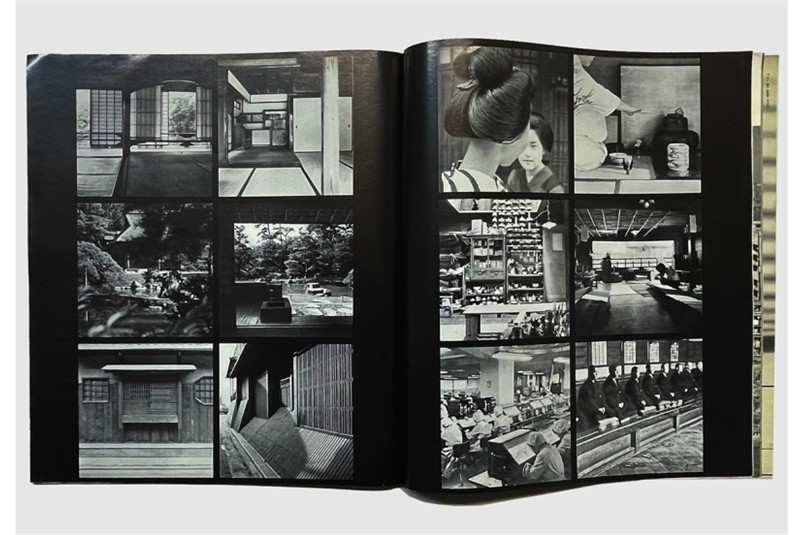
Post-production became Aulenti's distinctive ability, and the experience gained through the years is evident in the layouts of travel reports published in «Casabella Continuità». Such a complex approach is exemplified in Sergio Asti's 1963 travel report, Civiltà del Giappone (Civilisation of Japan) (1963), where visual and textual materials intertwined. The images were organised over a double-page spread and contributed to building a narrative rhythm that moved from solely architectural form to understanding the interactions with the surrounding environment, people and the broader cultural context.
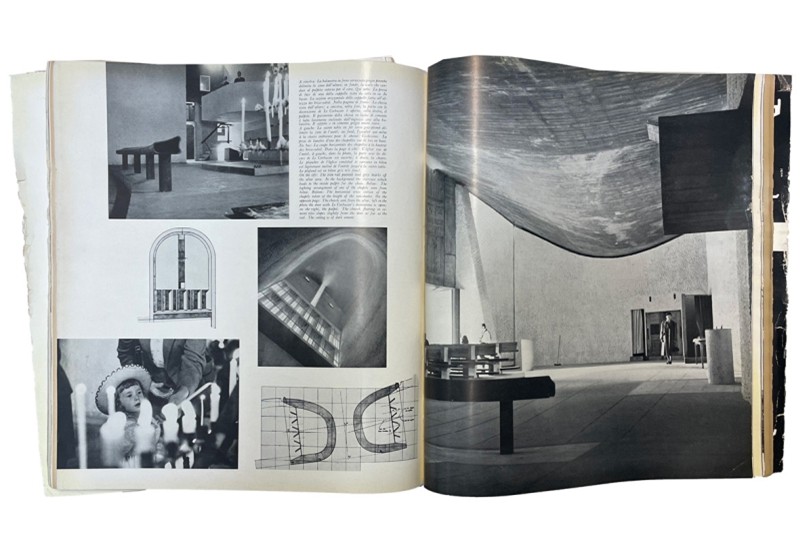
The visual storytelling Gae Aulenti crafted for «Casabella» did not rely solely on photography. In the 1955 article Le Corbusier. La chiesa di Notre Dame du Haut a Ronchamp (1955), the main goal was to describe the building, so she included drawings and cut-outs of sketches along with photography. In general, images were laid out in a manner that allowed narrative intentions to prevail over the constraints of the usual page format, frequently developing evocative sequences that stood out for their originality.
Through all these materials, one can trace a process of refinement that characterised Gae Aulenti's method of selection and montage of visual materials; a skill she developed through the manipulation of travel souvenirs as it helped her build confidence in the way she «reads, corrects, cuts, and trims» (Agosti 2024).
Collections
Souvenirs, whether explicitly touristic or, as in these cases, marked by a creative impulse, often held a central place in both the domestic and professional lives of these three architects. Their collections were not incidental but thoughtfully arranged within everyday spaces, following a compositional logic that blurred the lines between work and life, turning their homes into deeply personal environments.
In Le Corbusier's apartment-studio on Rue Nungesser-et-Coli in Paris, for instance, niches were designed with precise proportions, forms, and colours to house his collection particulière, composed mainly of travel souvenirs and objets à réaction poétique. Grouped by aesthetic affinity rather than chronology or type[21], these objects established subtle formal relationships and visual echoes, fostering a fertile ground for poetic and intuitive reflection.
The Model Room in Soane's house features a distinct, yet equally intentional, arrangement of collected materials. Here, a dense assemblage of souvenirs — paintings of Italian cities and landscapes, casts, copies, and fragments of ancient architecture — produced a layered, spatial composition. Rather than pursuing visual harmony, Soane embraced juxtaposition and the generated tension of this disorder to stimulate analogical reasoning. The encounter of fragments from disparate origins and scales generates a productive dislocation, encouraging unexpected associations and speculative architectural thinking.
These contrasting arrangements suggest how souvenirs, depending on how they are framed and activated, can support distinct modes of design exploration — from the poetic and associative to the analytical and compositional. Soane and Le Corbusier merged their collections into meticulously choreographed, museum-like settings, i.e., spaces where souvenirs contributed to a greater, public story of their architectural thought. In contrast, Aulenti's approach was more contemplative.
Her collection, now preserved in her archive, reflects a private practice in which the souvenir blends with the everyday and the self-designed. Rather than a structured display, her logic is one of proximity and resonance. This comparison illustrates how souvenirs can assume various roles in design, serving as instruments of spatial reflection and analogy for Soane and Le Corbusier, and as intimate, open-ended traces in Aulenti's evolving creative process.
[2] Duccio Canestrini (2022, p. 35) describes the souvenir as an object that reflects the genius loci, the spirit, creativity, and characteristics of its place of origin. As part of the whole, it captures the natural and cultural attractions of the area. Etymologically, the word souvenir originates from the Latin subvenire and means to go to the aid, to come to mind. It then developed into the noun souvenir, derived from the verb se souvenir de meaning to remember something.
[3] According to Alcolea and Tarragó (2011, pp. 17-18) the materials documenting these journeys fascinate us so much because they are directly filtered by the architect-travellers, embodying the tangible aspect of a subjective vision through visual storytelling: «The media used for all of these journeys or travels, whether sketchbooks, texts, photographs, or movies, attract us precisely because they come directly from the hands and visions of architect-travelers, who bring us fragments of their own work. They are the tangible part of these filtered outlooks. We can recognize other places in them, places we no longer need to travel to because they now come to us».
[4] Referred to the senses.
[5] The collection in John Soane's house includes various types of pedestals and supports, differing in shape, height, and material. A notable example is a set of mahogany pieces made in 1834. These are characterised by square tops and bases, supported by four reed-like columns. The bases and tops feature plain collars. Bolt holes are visible on the upper surfaces of the bases, likely remnants of the fastening systems used to fix the models. Architectural drawings related to the models were often placed on chests of drawers holding these pedestals. Another set of supports similar in shape but made from different materials is located near the fireplace in the Model Room. A third type consists of pedestals with three sets of four columns supporting the upper shelf. These columns are bundled reeds with upper and lower collars, with a modern replacement in the middle front pair. This support has a deeper base and a projection of approximately 12 cm. Each support is made of mahogany (Dorey 2008).
[6] Richard Gillespie (2017) studied the popularity of cork models in Britain as souvenirs for the Grand Tour. John Soane's cork model of the Temple of Vesta was made by Giovanni Altieri, a Neapolitan craftsman specialised in reproductions of ancient structures. The craft of producing cork models was generally Neapolitan and originated from the tradition of including models of classical ruins in nativity scenes. The plaster models owned by Soane were made by Jean-Pierre and François Fouquet, who worked in Paris in the early 18th century.
[7] The cork models retained the marks of decay — cracks, moss, and erosion — while the plaster models abstracted these into pure, white geometries.
[8] The architectural model was a means through which Soane conveyed the spatial qualities of a design, both to clients and to students. Over time, the souvenir-models displayed in the Model Room became didactic tools, shifting in purpose from personal experience to transmissible knowledge. As Helen Dorey notes, this transition coincided with the growing capacity of craftsmen and clients to interpret architects' technical drawings (Dorey 2022).
[9] The original title of the work is A selection of parts of buildings, public and private, erected from the designs of J. Soane, Esq. R.A. in the metropolis, and in other places of the United Kingdom, between the years 1780 and 1815.
[10] The exhibition Le Corbusier: Travels, Objects and Collections, curated by Cristian Chironi (10 March — 30 May 2021), was organised in collaboration with the Fondation Le Corbusier and held at the Pinacoteca Agnelli in Turin. A catalogue was published by Corraini Edizioni. See Chironi 2021.
[11] Le Corbusier distinguishes between objets ambiguës (derived from Paul Valéry), objets trouvés, and objets à réaction poétique. The main difference between the objet trouvé and the objet à réaction poétique is that the former is man-made, while the latter is a product of nature (Maak 2011).
[12] Description from the documentary Le Corbusier par lui-même, Video 1, part of a trilogy composed and curated by Jacques Barsac in 1992.
[13] This text draws on interviews and documentaries. The quote «Sometimes I feel like a locomotive full of steam ready to explode. And so I go, alone, always following itineraries related to architecture or the protagonists of architecture,» which inspired this section, was extracted from two interviews: Gae Aulenti 1981, from the RAI current affairs programme TAM TAM on TG1 (6 March 1981); and Gae Aulenti — Racconti Ravvicinati, from the RAI programme Donna e Architetto (2011). Two posthumous documentaries were also consulted: Gae Aulenti from the docu-series Illuminate (Rai3, 2020), and Semplicemente, Gae (Sky Arte, 2022), both of which combine original interviews with accounts by collaborators, family members, and friends.
[14] Exhibition held at the Triennale di Milano from 22 May 2024 to 12 February 2025, curated by Giovanni Agosti with Nina Artioli and Nina Bassoli.
[15] The term ritaglini (cutouts) appears annotated on a white envelope containing these photographic fragments. It was coined by Nina Artioli, current director of the Gae Aulenti Archive, to identify a specific type of photographic object. The ritaglini were kept in a box that held small ring-bound photo booklets, in which the architect organised travel images by recurring themes.
[16] From the interview Semplicemente, Gae, directed by Didi Gnocchi and Matteo Moneta for Sky Arte. Italy, 2022, 52 min.
[17] Ibid.
[18] Ibid.
[19] Nowa Huta is a district in Kraków, designed and built from 1949 to house workers of the large steelworks complex Huta Lenin. The district was founded by order of the communist government and was considered one of the most significant examples of socialist urban planning in Eastern Europe.
[20] An emblematic example is the sketch for the Sakuraokacho Hotel-Office project in Tokyo (1992), which can be interpreted as an analogical reduction of the skyscraper to the archetype of the column-monument. The resulting figurative choice, based on tripartition, brings Gae Aulenti's design closer to the image of a column than to that of a skyscraper.
[21] For further reading on the topic of display, see Max Bill, Le Corbusier and P. Jeanneret, Oeuvre Complète, 1934–1938.
AGOSTI G. (2024) – ''Come si può studiare Gae Aulenti''. In: G. Agosti (a cura di), I Mondi. Gae Aulenti (1927-2012) Guida alla mostra. Electa, Milano, pp. 90-91. ↩
AGOSTI G. (2024) – ''Una vita''. In: AGOSTI G., I Mondi. Gae Aulenti (1927-2012) Guida alla mostra. Electa, Milano, pp. 88-89.
ALCOLÉA R. e TÁRRAGO J. (2011) – ''Spectra: Architecture in Transit''. In: C. Buckley e R. Pollyanna (a cura di), Architects' Journeys. Building Travelling Thinking/Los Viajes de los Arcquitectos. Construir Viajar Pensar. GSAPP Books, New York. ↩
AMIRANTE R. (2013) – ''Entres les lignes: l'éxperienxe du Voyage d'Orient''. In: R. Amirante (a cura di), L'Invention d'un architecte. Le Voyage en Orient de Le Corbusier. Editions de la Villette, pp. 83-91.
ARTIOLI N. (2023) – "Viaggi di osservazione". In: ARTIOLI N. e CALAMANDREI S. (a cura di), Gae Aulenti. Cina 1974. Humboldt, Milano. ↩ ↩
ARTIOLI N. e CALAMANDREI S. (a cura di) (2023) – Gae Aulenti. Cina 1974. Humboldt, Milano. ↩
ASTI S. (1963) – "Le civiltà del Giappone". Casabella Continuità, vol. 273, pp. 39-45. ↩
AULENTI G. (2021) – Vedere molto, immaginare molto. Edizioni di Comunità, Milano.
BERNIERI A. (2017) – La scala del Viaggio. Processi di ricreazione dell'architettura. Tesi di Dottorato, Università degli Studi di Napoli Federico II, Napoli. ↩ ↩ ↩ ↩
BLOCK K. (2014) – ''The Miniature Monuments of ACE Architects''. Room One Thousand, n. 2, pp. 199-203.
BILL M., LE CORBUSIER e JANNERET P. (1939) – Oeuvre Complète 1934-1938. Girsberger, Zurigo.
BOESIGER W., STONOROV O. e BILL M. (1947) – Le Corbusier - Complete Works 1934-1938. Vol. 3, Les Editions d'Architecture, Zurigo.
CANESTRINI D. (2022) – Trofei di viaggio. Per un'antropologia dei souvenir. Bollati Boringhieri, Torino. ↩
CHIRONI C. (2021) – Le Corbusier Viaggi, oggetti e collezioni. Corraini Edizioni, Mantova. ↩ ↩
COLOMINA B. (2011) – "Toward a Global Architect". In: C. Buckley e R. Pollyanna (a cura di), Architects' Journeys. Building Travelling Thinking/Los Viajes de los Arcquitectos. Construir Viajar Pensar. GSAPP Books, New York. ↩
DARLEY G. (2008) – ''Wonderful Things: The Experience of the Grand Tour''. Perspecta, vol. 41, pp. 17-25, 28-29. ↩
DE MAIO F. e TOSON C. (2022) – ''Editoriale. Il viaggio dell'architetto''. Engramma, vol. 196, pp. 7-14.
DOREY H. (2022) – ''The place of models and drawings in Sir John Soane's house and museum''. In: GOFFI F., The Routledge Companion to Architectural Drawings and Models. Routledge, Londra e New York, pp. 80-99. ↩ ↩
GILLESPIE R. (2017) – ''The Rise and fall of Cork Model Collections in Britain''. Architectural History, vol. 60, pp. 117-146. ↩
JANKÉLÉVITCH V. (1974) – L'irreversible et la nostalgie. Champs essais, Parigi. ↩ ↩
JONES K.B. (2000) – ''Unpacking the Suitcase: Travel as Process and Paradigm in Constructing Architectural Knowledge''. In: P. Andrzej e W. R. Julia, The Discipline of Architecture. University of Minnesota Press, Minneapolis e Londra, pp. 127-157.
LE CORBUSIER (1925) – ''Confession''. In: Le Corbusier, L'Art décoratif d'aujourd'hui. Crès, Parigi, pp. 210-210.
LE CORBUSIER (1955) – "La chiesa di Notre Dame du Haut a Ronchamp". Casabella Continuità, pp. 7-29. ↩
LE CORBUSIER (1999) – Talks with students. Princetone Architectural Press, New York. ↩ ↩
LE CORBUSIER (autore), CERRI P. e NICOLIN P. (a cura di) (2010) – Verso una Architettura. Longanesi, Milano.
LEED E. J. (1992) – La mente del Viaggiatore. Dall'Odissea al turismo globale. Il Mulino, Bologna.
LOZANOVSKA M. (2017) - "Europe, Le Corbusier and the Balkans". ABE Journal on-line, p. 11. ↩
MAAK N. (2011) – Le Corbusier. The Architect on the Beach. Hirmer, Monaco. ↩ ↩ ↩ ↩
MAITLAND P. (2014) – "RM1000: Souvenir Nostalgia". Room One Thousand, vol. 2, pp. III-XI.
MARCOUX J.S. (2017) – "Souvenirs to Forget". Journal of Consumer Research, n. 43, pp. 950-969.
MINDRUP M. (2015) – "La Réaction Poétique of a Prepared Mind". In: Le Corbusier, 50 years later. International Congress. Universitat Politecnica de Valencia. Valencia. ↩
MOLEÓN GAVILANES P. (2001) – John Soane (1753-1837) y la arquitectura de la razón poética. Mairea, Madrid. ↩
MORGAN N. e PRITCHARD A. (2005) – "On Souvenirs and metonymy. Narratives of memory, metaphor and materiality". Tourist Studies, n. 5, vol. 1, pp. 29-53.
PASSANTI F. (1997) – "The Vernacular, Modernism, and Le Corbusier". Journal of the Society of Architectural Historians, n. 56, vol. 4, pp. 438-451.
PETRAZAN M. (1996) – Gae Aulenti. Rizzoli, Milano.
POSENER J. (1988) – "Le Corbusier 1". In: P. Saddy (a cura di), Le Passé à réaction poétique. Caisse nationale des Monuments Historiques et des Sites, Parigi.
ROMAN M. (2015) – "You Are How You Collect". Perspecta, vol. 48, pp. 161-169.
RÜEGG A. (2017) – "Living with Objects-Learning from Objects: Le Corbusier's 'Collection Particulière'". In: A. Rabaça (a cura di), Le Corbusier. History and Tradition. Imprensa da Universidade de Coimbra, Coimbra.
RUSSO A. (2016) – "Le Corbusier e le sue ville bianche". In: A. Boschia e L. Lanini, L'architettura della villa moderna. Quodlibet, Macerata. ↩
STEWART S. (1993) – On Longing: Narratives of the Miniature, the Gigantic, the Souvenir, the Collection. Duke University Press, Durham.
STUART J. (1771) – Critical Observations on the Building and Improvements of London. John Dodsley, Londra. ↩
TETI V. (2020) – Nostalgia. Antropologia di un sentimento del presente. Marietti, Bologna.
TETI V. (2022) – La Restanza. Einaudi, Torino. ↩
VOGT A.M. e DONNEL R. (1987) – "Remarks on the "Reversed" Grand Tour of Le Corbusier and Auguste Klipstein". Assemblage, vol. 4, pp. 38-51.
VON MOOS S. (2013) – "Notes sur les architectes voyageurs". In: R. Amirante, (a cura di), L'Invention d'un architecte. Le Voyage en Orient de Le Corbusier. Editions de la Villette, Parigi, pp. 26-47.
ZAKNIC I. (1989) – "Le Corbusier Sans Fin". Journal of Architectural Education, n. 3, vol. 42, pp. 49-59.
ZARZYCKA M. e MOGUL J. (2015) – "Introduction: souvenirs and objects of remembrance''. The Journal of Decorative and Propaganda Arts, pp. 7-11.