Massimo Zammerini
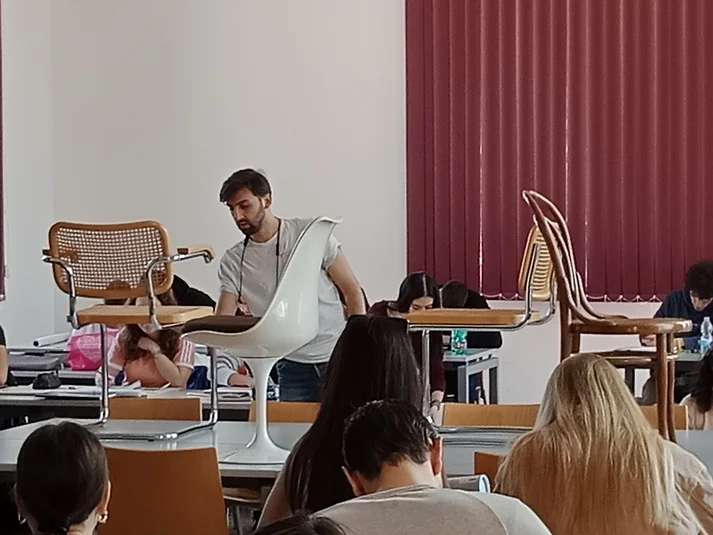
In 1974, at the age of twelve, I visited for the first time what was then called the Gallery of Modern Art in Rome, now GNAMC. Beyond the columns of the entrance hall was a large rectangular room overlooking the internal garden, furnished for exhibition with shiny tubular metal furniture supporting strips of leather, canvas, and pony skin, swivel chairs, and single-leg tables, white and very slender, with stools in natural wood with eye-catching connections between the legs and the seat. I learned that they were pieces by Le Corbusier, Marcel Breuer, Eero Saarinen, and Alvar Aalto. Almost no one knew them, only architects and a few admirers. They had been put into production, with the courage and foresight of Italian and foreign entrepreneurs in the 1960s, by Amedeo Cassina, Dino Gavina, Knoll International, and a few others, and were not yet called "design classics." I never stopped redrawing them in my notebooks or on the blackboard, and one Sunday morning in the summer, on the No. 30 tram, I took a small group of school friends from Monteverde to Parioli to admire these objects, which I have never stopped loving and collecting, so much so that fifty years later, I brought them into the classroom at Valle Giulia, a few meters from the Gallery, from my home, so that the students could observe, measure, and redraw them from life, which they greatly appreciated (Fig. 1).
Palma Bucarelli, superintendent of the Gallery from 1945 to 1975, had realized since the late 1940s that good modern architecture was also a legitimate form of artistic expression. In 1987, Daniela Fonti interviewed Bucarelli1: «[...] since 1945, having found an audience completely unaware of developments in modern art, I devised and carried out an annual program of activities that I called educational (at the time, the initiative caused a scandal), accompanied by a leaflet that was sent in thousands of copies especially to schools, with my personal letter to the principals recommending that they distribute it, and to museums and cultural institutions around the world so that they would be promptly informed of the annual calendar, from June to October, divided into: conferences with color projections on Sunday mornings, alternating with art documentaries and films by artists; exhibitions of large color reproductions of major artists and movements accompanied by biographical, historical, and critical writings; what I called the "Work of the Day," an important work placed in particular evidence in its hall and also accompanied by biographical, historical, and critical writings; evening lectures (I did this as an experiment, thinking that no Romans would come, but instead I had the pleasure of seeing the room always full, so much so that I had to install loudspeakers in the adjacent rooms)». And to the question "If you were to return to direct the Gallery, what would you do?" she replied: «In the educational sector, in addition to resuming all the events I mentioned, I would rearrange the beautiful large educational exhibition on the history of modern architecture, consisting of large photographs and illustrative writings, as well as models of the most famous buildings and examples of industrial design such as the tables and chairs by Le Corbusier, Mies van der Rohe, and Alvar Aalto». I believe that the presence of these pieces of furniture served as a link between high-quality modern architecture and everyday objects, which, although "different," established a familiar relationship with visitors, and in any case aroused curiosity that soon turned into admiration and appreciation. The secret of this success makes us reflect on the potential that cultural institutions possess. The Gallery's educational vocation is still reaffirmed today under the direction of Renata Cristina Mazzantini, an architect, with initiatives that open the doors to the city, triggering a process of involvement extended to the general public, including on architectural issues and through direct contact with the artist, who approaches people and tells his story.
I wanted to introduce my reflections with a reference to a personal experience because I believe that the dissemination of architecture involves a reciprocal relationship between institutions and citizens and is fundamentally based on personal knowledge of the works and their creators. This statement is consciously counter to the media bombardment based on the quantity of images available on the Internet, which is finally beginning to be viewed with growing detachment and concern. The reasons are well known and it would be redundant to repeat them, but I would like to refer once again to a personal case where the relationship between "inside and outside school" acts as a "hinge". During a lesson at the Piazza Borghese campus, I projected a photograph of Via Fontanella Borghese taken in the early afternoon with the slanting light emphasizing the reliefs of the facades in perspective towards Trinità dei Monti, and I asked the students to observe this single photograph for two hours and do whatever they thought was most appropriate: a drawing, a piece of writing, or just observing. I knew that when they left the faculty, they would only have to take a few steps to find that vantage point. The students' reaction was initially one of bewilderment, followed by silence and intense concentration. I had never seen them so interested, and once outside, they were all there to see for themselves what they had been fantasizing about. Above all, for two hours, they had devoted themselves to one thing and were, I think, focused. Finally, having closed Pinterest, which takes you around the world in eighty seconds, they had "seen" the beauty in those projecting cornices, those windows surmounted by protruding gables with the sharp shadows of a beautiful sunny day. They had finally noticed what they had always had before their eyes, every day.
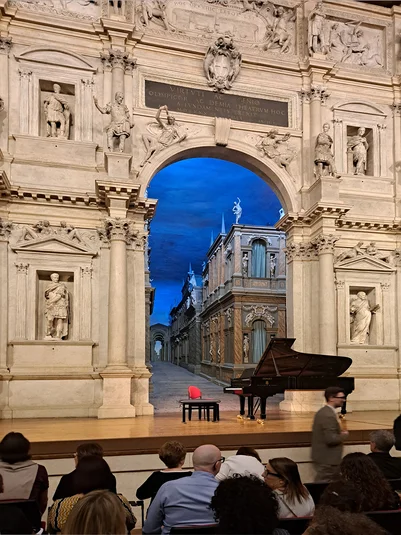
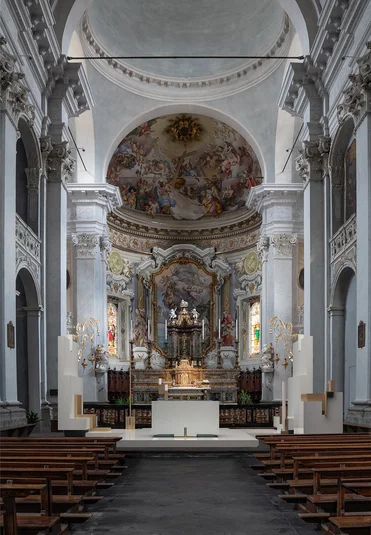
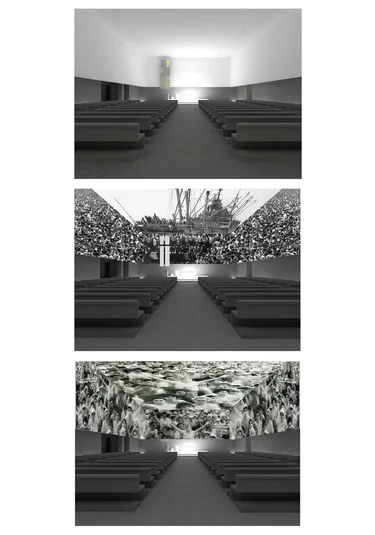
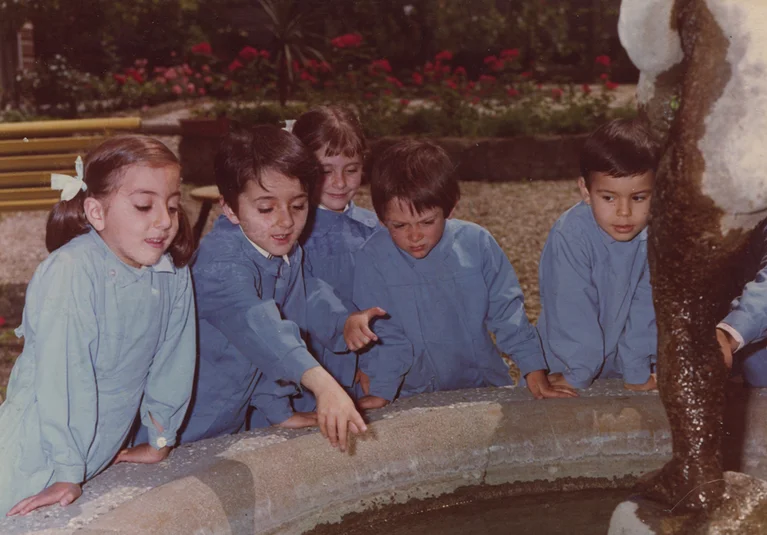
If real life is more beautiful than virtual life, an architect's creativity feeds on reality but also on dreams, projections, and intangible culture. And if Rome, an open-air stage, teaches us the "theatricality" of architecture, theater is an art form where architecture also enters as an intrinsic element of the narrative, with the dimensions of space and time subjected to daring manipulations, and has always been the place designated for the transmission of knowledge (Fig. 2). The coexistence of a real and virtual dimension, typical of theatrical representation, expresses precisely the magnificent richness of architecture, which responds both to man's practical needs and to his aspiration to access the deeper meanings of existence. This is also found in the reason for the construction of religious buildings, which provide food for thought starting from the narrative tradition of frescoes, one of the most powerful means of communication and teaching in history, which, however, has nothing to do with the "immersive" character that is so celebrated today (Fig. 3, 4). It is sometimes said, with a certain smugness, that modern life is immersed in another world thanks to technology, but even a cultural activity such as a virtual tour of a building, not to mention exhibitions where you can "enter" Van Gogh's paintings, express that intransitive character which, in our view, is the source of many evils. The idea of immersiveness shifts the focus from the object to the subject, culminating in the most devastating manifestation of our age: the selfie. The direct relationship with works of art, like leafing through an architecture book, are transitive operations that allow us to step outside ourselves and go out to meet others. Without encounter, there is no teaching and there is no life, because life is the product of encounter. The shift of attention to the virtual environment causes growing disinterest, especially among the younger generations, and the results are a rejection of care for the real context and interpersonal relationships, with all the harm that ensues. It is very difficult to sow seeds in this arid soil, and until we manage to find the right balance, the effects of knowledge dissemination will continue to be lukewarm. I believe that we need to work hard on education in the early years of an individual's life, continuously stimulating love and interest in what is immediately around them and what can be experienced without the mediation of technology (Fig. 5). In this sense, "beyond school" encompasses a broader dimension of the concept of school, where all manifestations of life, in some way, teach.
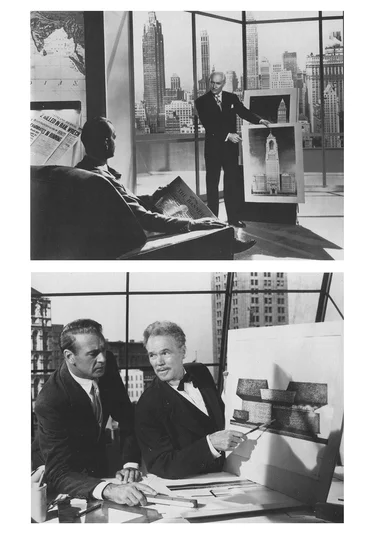
Art house cinema is a form of expression that often includes architecture as a distinctive backdrop and has an impact on the viewer's memory, who will remember the scenes that struck their imagination for a long time to come. Modern American villas, including those designed by Bruce Goff and chosen by set designer Ken Adam for the James Bond series, have remained etched in the memory of the general public, who have become familiar with Wrightian aesthetics through houses "similar" to those of the master of organic architecture. The narrative requirements of a screenplay lead to the need to set the events according to certain choices. The director, set designer, and director of photography research the locations they deem appropriate, supplemented by sets created for the occasion. Many directors have had a particular sensitivity to architecture, and each has sometimes had precise ideas about the role that sets should play in relation to the narrative. Michelangelo Antonioni captured the anxieties of affluent Italian society against the backdrop of the cold, newly built apartment blocks in the semi-deserted EUR district of the 1960s in L'eclisse (1962). Luchino Visconti captured the drama of architecture, a silent witness to our lives that flow within it, always well anchored in the choice of locations or in studio reconstructions: with the Macchiaioli for Senso (1954), in the popular and geometric dwellings of Albini chosen for Rocco e i suoi fratelli (1960), with the appropriate opulence of Il Gattopardo (1963). An interesting portrait of the complex relationships between architect, client, and civil society appears in The Fountainhead (1949) (Fig. 6), then the great visionaries such as Peter Greenaway, from The Draughtsman's Contract (1982) to The Belly of an Architect (1987), or films directly dedicated to architects, from Sidney Pollack's Frank Gehry: The Dream Maker (2005) to Wim Wenders' extensive filmography, in which architecture always plays a leading role. Art cinema, as Jean Nouvel points out, is also an effective vehicle for disseminating architecture and raising awareness of the art of seeing and framing reality.
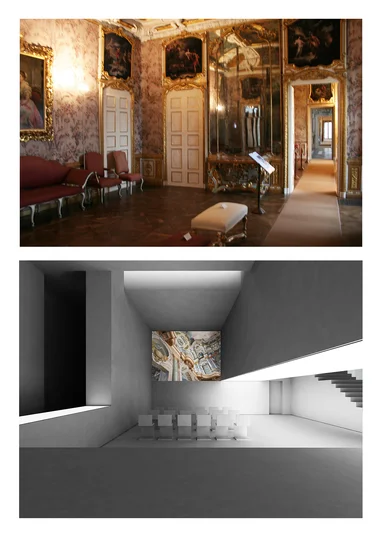
Photography presupposes the choice of a subject to portray, a point of view, and the definition of a frame. The use of cell phones has exponentially multiplied the abuse of photography as the main tool for impersonal memory and dissemination. Associated with the Internet and social media, photography has lost its direct relationship with its author. The depersonalization of photography, acquired from social media or various websites dedicated to architecture, amputates the formative experience of the architect, who does not personally create the frame, but undergoes it uncritically or, at best, chooses it. The loss of authorship of the shot favors the stereotypical dimension of photography, already introduced in some way with the transition from analog to digital. Once again, we insist on the loss of the transitive dimension between subject and object, which is the basis of any reasoning on the very concept of dissemination. But framing is also a real design tool, it is pure intention, and guides the fundamental choices of the project, in the dual and reciprocal relationship between interior and exterior, between buildings and contexts, in the layout of floor plans, in the design of sequences, passageways, and entrances. A good example of this is the Renaissance and Baroque enfilade of doors in rhythmic sequence adjacent to windows. The art of framing, with its rules and rituals, is a powerful means of transmitting the most solid regulatory principles of architecture, and there is a mutual transfer in the act of design, as the use of perspective has demonstrated over the centuries (Fig. 7).
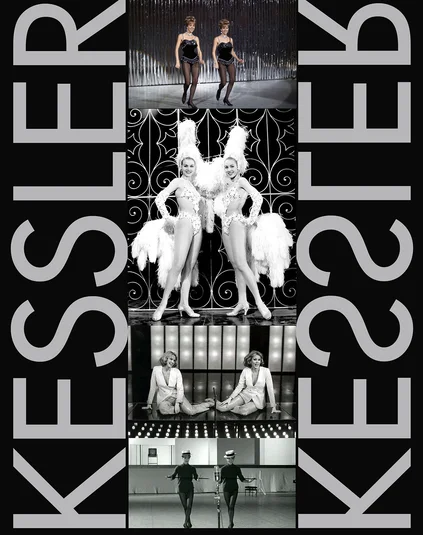
TV is an exceptional communication tool, including for culture. We are reminded of this by the many initiatives of Rai, starting with the idea of mass literacy curated by Alberto Manzi in the program Non è mai troppo tardi, broadcast from 1960 to 1968 and then exported to 72 foreign countries, to programs dedicated to art and architecture, including the light-hearted variety shows of the 1960s, often produced with tasteful sets and carefully studied characters designed to have a strong impact on the audience (Fig. 8), and even commercials, among which we remember a particular series of "Caroselli Barilla" from the late 1950s, entrusted to Oscar-winning architect and set designer Pietro Gherardi, who worked on many of Federico Fellini's films. In these commercials, Mina sings against the backdrop of locations that are nothing short of ingenious, perfect for the black and white of the time: the "Colosseo quadrato", the mirror maze at Luna Park, the roofs of Morandi's railway station, a veil of fringed curtains moved by fans on curved tracks reminiscent of a Mies van der Rohe installation, a building site under construction, and a small scenographic cameo by Mario Ceroli with wooden silhouettes of enigmatic faces.
Television could have been an extraordinary vehicle for education, but this has only been partially true, especially since the advent of commercial TV. The need to sell products to a vast audience has led to the development of easily understandable languages, and this is how stereotypes are born. Television commercials require backgrounds for the actions, external and internal settings that are not random but appropriately frame the message. The criteria that guide the choice of locations for fiction are not very different, so much so that location managers have actual illustrated catalogs divided by type to show to directors and set designers. The television era has led to a symmetrical relationship between fiction and reality: the villa with a lawn and barbecue for the family, the "New York" apartment for the intellectual or the ambitious single person, from Woody Allen to Sex and the City, the dynamic open-plan workplace, from Three Days of the Condor to Working Girl, the countless "emergency rooms", prisons, the loft, now obsolete, a conformist symbol of an unconventional life, but above all the opulent and tacky Californian villas of the most watched soap operas, from Dallas to Dynasty to The Bold and the Beautiful. These houses appeal to the growing desire for individualism. We are in the 1980s, at the height of Reaganite hedonism, and they will find enormous public approval, so much so that they will become models to be replicated in real life. Institutions involved in architecture underestimate the phenomenon, but the world does not look to universities and does not listen to our conferences.
Television in those years, and today especially the Internet, are the most powerful tools for disseminating all kinds of content. Therefore, schools, universities, and cultural institutions will have to find a way to influence programming schedules and content. The creators of programs dedicated primarily to the history of architecture have tried and succeeded, even if the price to pay is the trivialization of 3D reconstructions where the Colosseum looks like a suburban outlet mall, but better than nothing, for now.
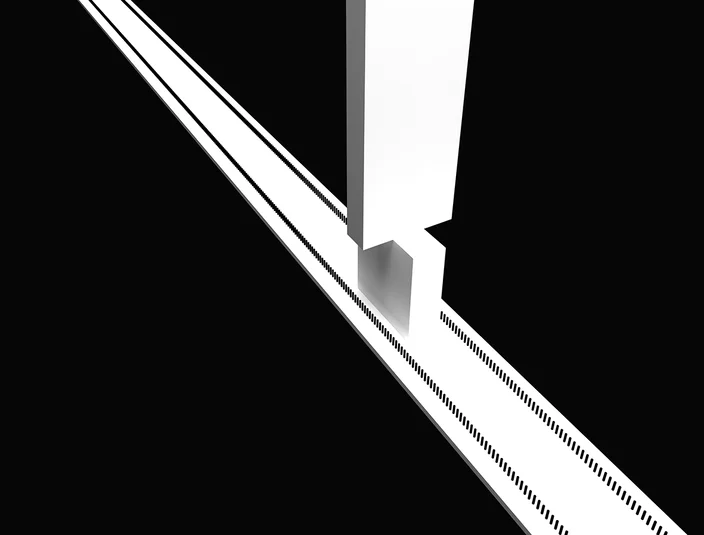
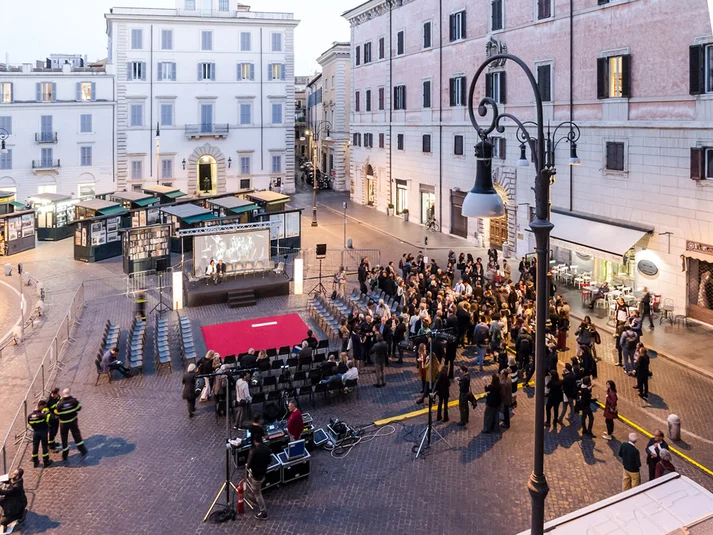
Conveying the culture of modern architecture beyond stereotypes is no easy task. The cultural and technical revolution at the turn of the 19th and 20th centuries also affected architecture. The advent of reinforced concrete has made possible, for better or worse, a profound transformation of the face of entire cities. Zoning urban planning has left indelible marks on a global scale, and Italian legislation has allowed professionals who are less culturally prepared than architects to build (up to three stories) the widespread, mediocre buildings that characterize all neighborhoods built after the 1950s. All this certainly did not contribute to a positive assessment of the very concept of modernity in architecture and produced a mass addiction to an idea of architecture and the city that has no basis in history. For every beautiful modern building by Moretti, there are thousands of others that have sprung up without any architectural culture. So what should be conveyed, even outside of school, if not rare examples of good architectural practices? Certainly international architecture exhibitions which, as in the case of the Venice Biennale, systematically address contemporary issues from a broad perspective that encompasses global scenarios and dramatic problems (Fig. 9), or local initiatives supported by institutions that leave their buildings to meet citizens and raise their awareness of urban and architectural issues, such as Roma come stai?, which was created with the idea of bringing the contents of university research activities out of the school gates and into the streets2 (Fig. 10). Then there are the many well-known initiatives, from Open House to associations that promote guided tours, to the FAI, thanks to which anyone can access the country's many architectural sites, and many other organizations linked to the dissemination of architectural heritage in particular.
Last but not least, one of the essential vehicles for experiencing architecture firsthand is travel, which has always been an opportunity for discovery, sharing, and growth.
1 The account of the thirty years, from 1945 to 1975, of the work of the Superintendent at the Galleria Nazionale d'Arte Moderna di Roma. From «Giornale dell'Arte» no. 48, August 1987. ↩
2 An initiative of the Department of Architecture and Project at Sapienza University of Rome, founded in 2017 by Orazio Carpenzano, Stefano Catucci, Fabrizio Toppetti, Massimo Zammerini, Fabio Balducci, Federico Di Cosmo, and from 2023 also by Giulia Ghia, Maria Chiara Ghia and Luca Porqueddu. ↩
Hertzberger H. (1991) – Lessons for Students of Architecture. 010 Uitgeverij, Rotterdam.
Panofsky E. (1927) – La prospettiva come «forma simbolica» e altri scritti. Campi del sapere / Feltrinelli, Milan.
Rand A. (1943) – The Fountainhead.
Wenders W. (1994) – L'atto di vedere / The Act of Seeing. Ubulibri, Rome.
Zammerini M. (2021) – "Elementi e artifici prospettici del progetto scenico nel teatro all'italiana: permanenze e trasformazioni". Disegnare idee immagini, 63, Gangemi Editori International, 84-95.
Zammerini M. (2019) – "Traiettorie curvilinee tra architettura, teatro, cinema e design". In: De Carlo L., Paris L. (edited by), Le linee curve per l'architettura e il design, Franco Angeli, Milan, 237-252.
Zammerini M. (2013) – "Il consenso in architettura. 1 – Il prospetto". In: Comoglio G., Marcuzzo D. (edited by), L'architettura è un prodotto socialmente utile?, Proceedings of the 3rd Forum of the National Coordination of Architectural Design Professors, Icar 14/15/16, Torino, 4-5 ottobre 2013, 270-273.
Fig. 1 – Second-year students in the Design Laboratory at the Faculty of Architecture study from life and redraw the details of certain modern pieces of furniture of particular historical significance, brought into the classroom by their teacher, who in turn had encountered them as a boy, fifty years earlier at the Gallery of Modern Art in Rome, one of the many institutional places "beyond school" dedicated to the dissemination of art and architecture culture. Direct, personal experience guarantees a form of knowledge that is sheltered from passive and impersonal reception and helps to observe things beyond stereotypes. Photo M. Zammerini 2023.
Fig. 2 – Andrea Palladio's Teatro Olimpico in Vicenza, with its fixed stage design by Vincenzo Scamozzi, is a piece of architecture that can itself be a vehicle for the transmission of knowledge, the perfect place to recognize the ideal communion between community, institutions, and architecture. Photo A. Capanna 2025.
Fig. 3 – The expressive power of the fusion between architecture and fresco painting offers the faithful a form of learning mediated by art. Collegiate Church of St. John the Baptist in Morbegno, dating back to the mid-17th century, with rich paintings by Pietro Ligari and liturgical adaptation proposed for the national competition, finalist project by Massimo Zammerini, Liturgist Don Mauro Dibenedetto, Collaborators J. Di Criscio, G. Feliziani, J. G. Simion, 2023.
Fig. 4 – A technological transposition of the idea of a fresco, where the temporary subjects are photographic shots depicting major themes of suffering on a global scale, projected as in a 360-degree cinema onto the ceiling. The declared artifice removes the design idea from an "immersive" characterization, which is rejected as ambiguous and incongruous. The observer remains fully aware of their "distance" from the dramatic events depicted. Project by Massimo Zammerini for the Vicariate of Rome's invitation-only competition for the Church of San Carlo Borromeo in Via Amaldi, Rome, 2005.
Fig. 5 – One of the principles for establishing a relationship with reality, and with the architecture that surrounds us, is a transitive attitude towards objects outside oneself. In this 1966 photo, a kindergarten child points out the fish in a fountain in the school garden to his classmates. This action reflects the attitude of sharing the pleasure of knowledge with others, a basic principle in educational processes that is not so obvious today, partly inhibited by the narcissism induced by the abuse of cell phones and social media, which tend to shift attention towards oneself and not towards the outside world, especially thanks to "selfies." Photo by M.P. Zammerini, 1966.
Fig. 6 – Gary Cooper plays architect Howard Roark in "The Fountainhead" (1949), Turner Entertainment, in: Film Architecture, From Metropolis to Blade Runner, edited by Dietrich Neumann, Prestel Munich New York, 1996, pp. 129–133.
Fig. 7 – The enfilade of doors as a framing device for sequences is a recurring spatial theme in the Renaissance and Baroque periods. Eighteenth-century interiors of the Villa della Regina in Turin and projection of Filippo Juvarra's frescoes in the new entrance hall intended for activities related to the historic villa. Competition for the New Reception Wing of the Villa della Regina in Turin, designed by M. Zammerini, 2010.
Fig. 8 – Graphic illustration by the author on the theme of "symmetrical twins" proposed by Rai with Alice and Ellen Kessler, television variety dancers in the 1960s. During these years, black and white television identified certain types of shows that would have an enormous influence on public taste. The linear sets of these years then gave way to a profound gradual degeneration, made even more evident with the arrival of color. The medium of broadcasting became increasingly pervasive, entering every home on a daily basis, but the models proposed became flattened in order to appeal to the masses, implying that the general public was not sufficiently intelligent.
Fig. 9 – "Smooth as rails on the black sea, the door is still open." "The infinite pier and the monument to PASSAGES visualize the extreme and precarious condition of migrants. Just press the button to activate the hinge and the monolith reassembles itself. No passage, no hope, the rail breaks. But fortunately, the obelisks are heavy and no longer move." Massimo Zammerini, still image from the video "PASSAGGI," 19th Venice Architecture Biennale curated by Carlo Ratti, Arsenale Italian Pavilion, curator Guendalina Salimei, session "Social Activation and Participation," May 10/November 23, 2025.
Fig. 10 – "Roma come stai?" Three evenings in Piazza Borghese in Rome to promote architectural culture. First edition 2017. Curated by Orazio Carpenzano, Stefano Catucci, Fabrizio Toppetti, Massimo Zammerini, Fabio Balducci, Federico Di Cosmo, DiAP Department, Sapienza University of Rome. Photo M. Zammerini 2017.