On drawing, in an interlocking game*
Guido Canella
Fig.
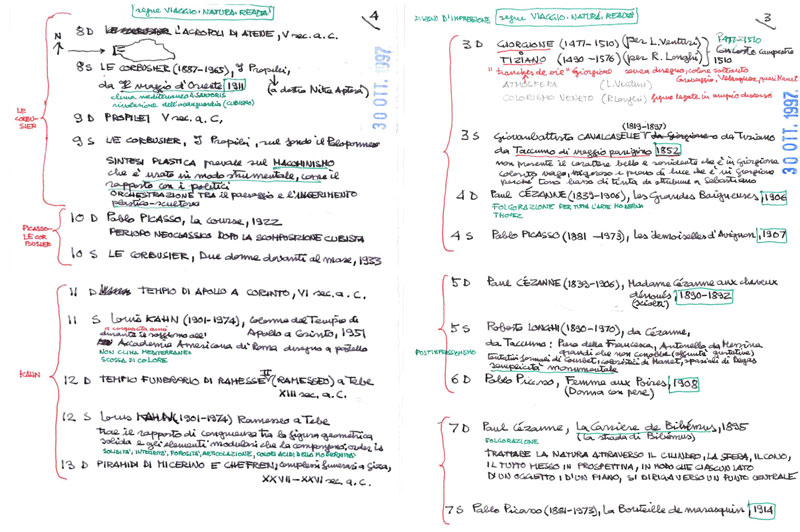
1s - Piazza del Popolo in Rome, 1625. [Quaroni 1969, p.279].
Fig. 1d - Johann Wolfgang Goethe (1749-1832), Roma from Porta del
Popolo,
1780 ca. [Femmel 1977, ill.1].

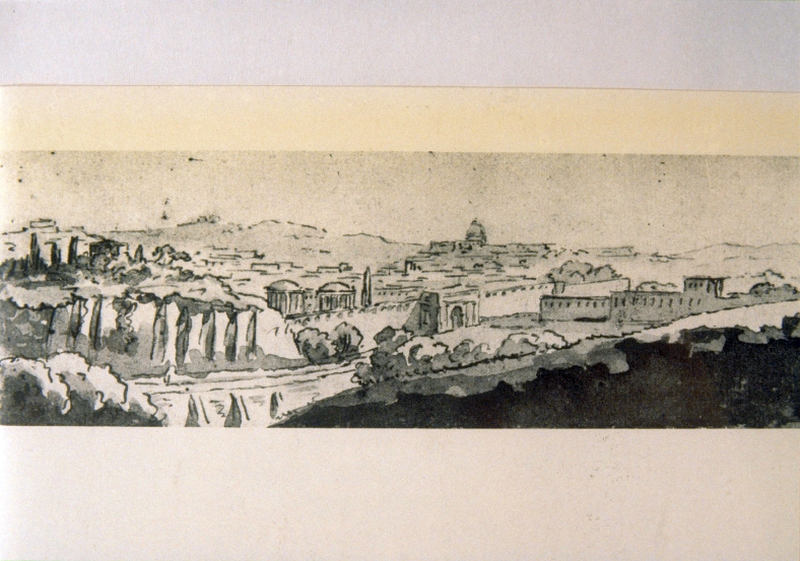
Fig.
2s - Andrea Palladio (1508-1580), Ca' del Diavolo (Palazzo da Porto
Braganza), Vicenza realized by Vincenzo Scamozzi, 1602. [AA.VV.,
ill.129, p.111].
Fig. 2d - Johann Wolfgang Goethe (1749-1832), Ca’ del
Diavolo, sketch. [Femmel 1977, ill.49].
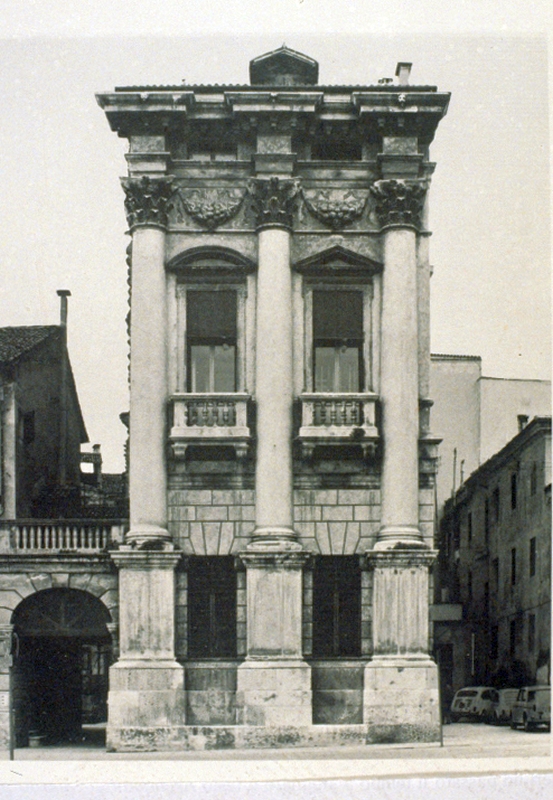
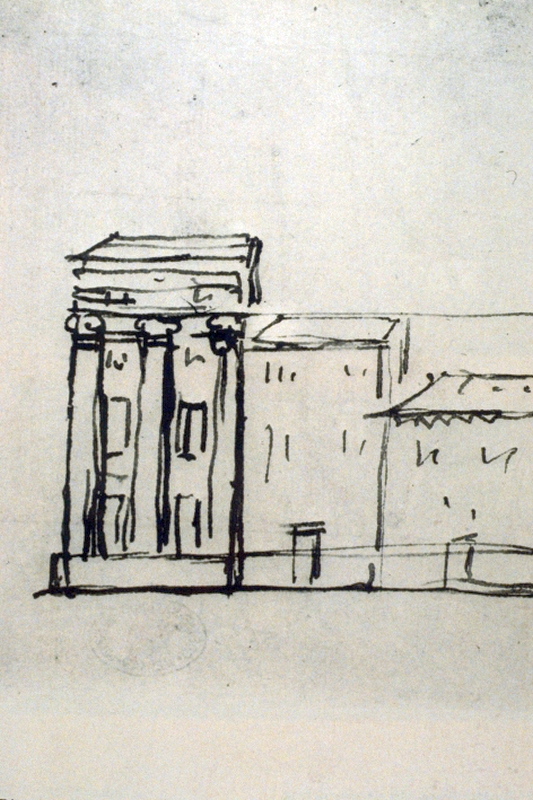
Fig.
3s - Giorgione (1477-1510) o Tiziano (1490-1576), Country concert,
1510. [Venturi 1957, p.102].
Fig. 3d - Giovanni Battista Cavalcaselle (1819-1897),
Analysis and redesign of the country concert. From Travel
NotebookParisian
, 1852. [Moretti 1973, ill.87].
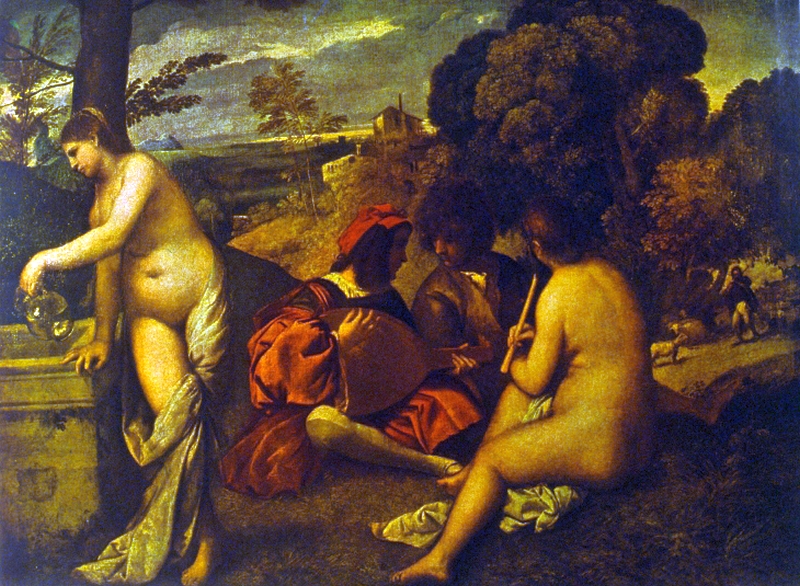
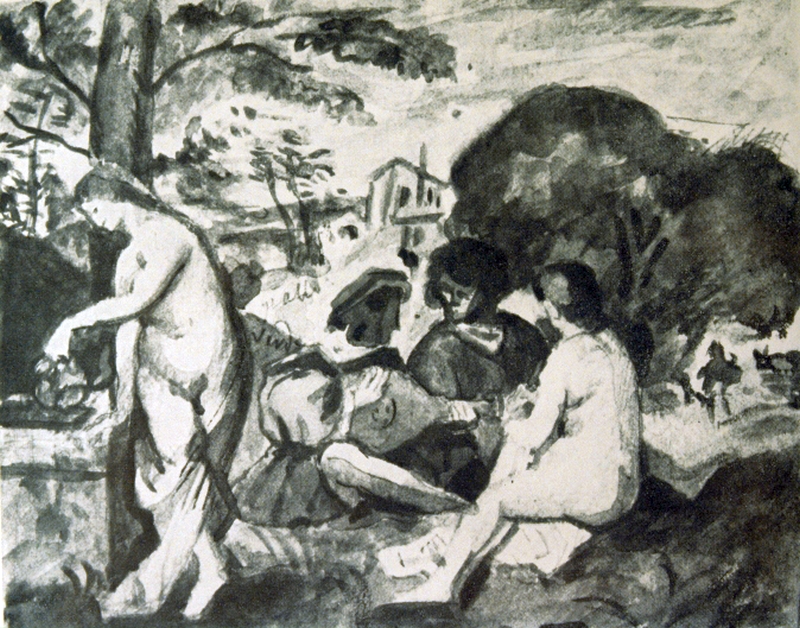
Fig.
4s - Paul Cézanne (1839-1906), Les grandes baigneuses, 1906.
[Cachin 1995, ill.219, p.500]. [Argan 1990, p.187].
Fig. 4d - Pablo Picasso (1881-1973), Les demoiselles
d’Avignon, 1907. [Argan 1990, p.328].
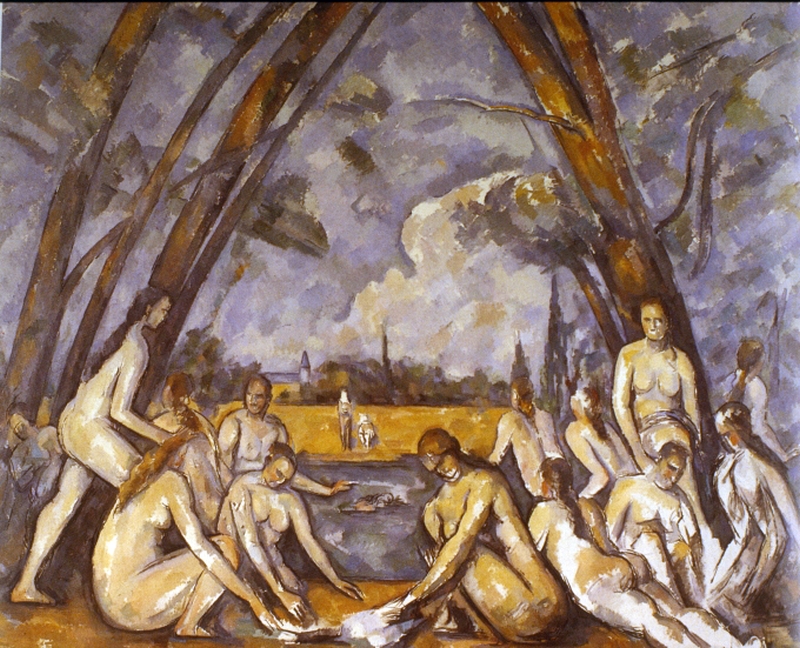
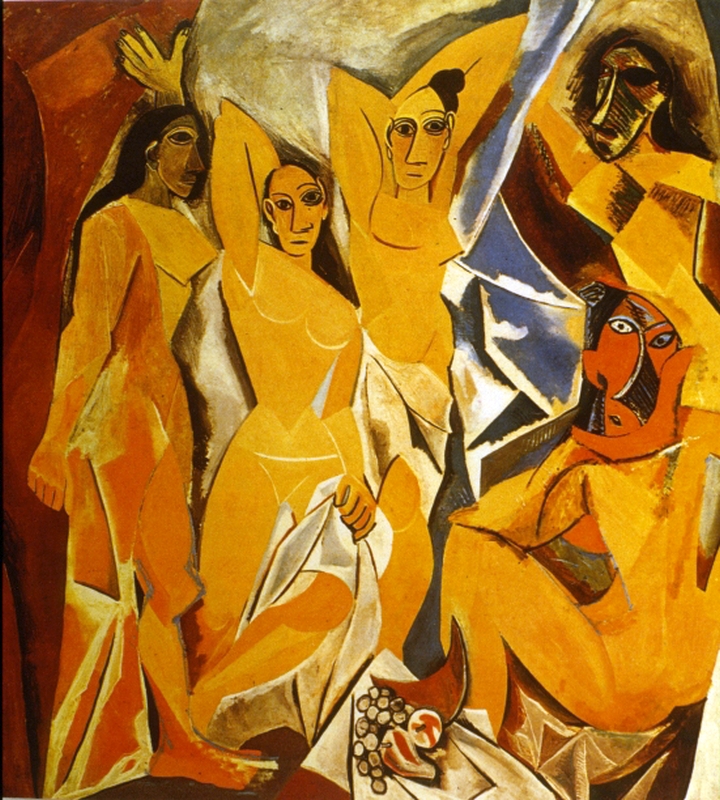
Fig.
5s - Paul Cézanne (1839-1906), Madame Cézanne aux
cheveux dénoués, 1890-92. [Cachin 1995, ill.138,
p.347].
Fig. 5d - Roberto Longhi (1890-1970) from Cezanne. From Taccuino: Piero
della Francesca, Antonello da Messina. [Testori 1980, ill.27].
Fig. 6 - Pablo Picasso (1881-1973), Femme aux Poires, 1908. [Gomez de
la Serna 1945, tav. X].
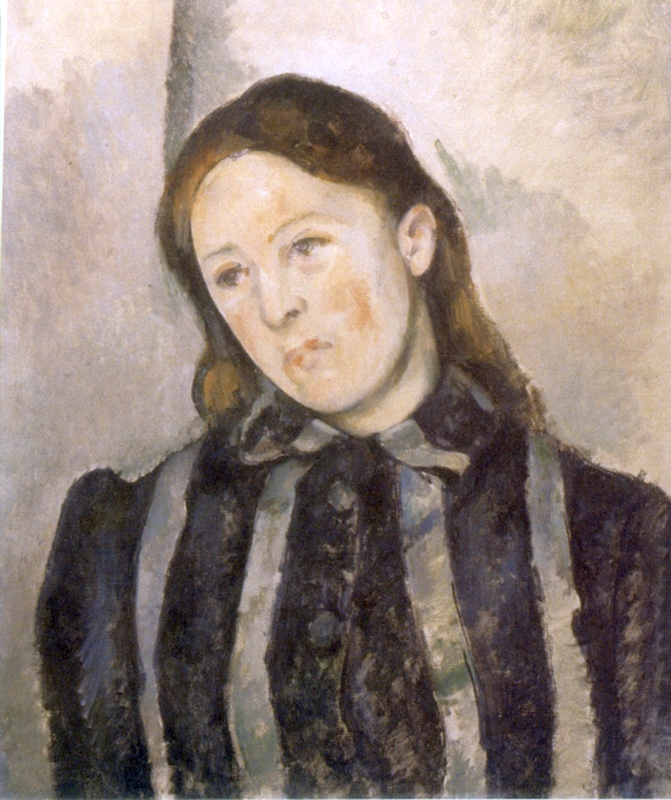
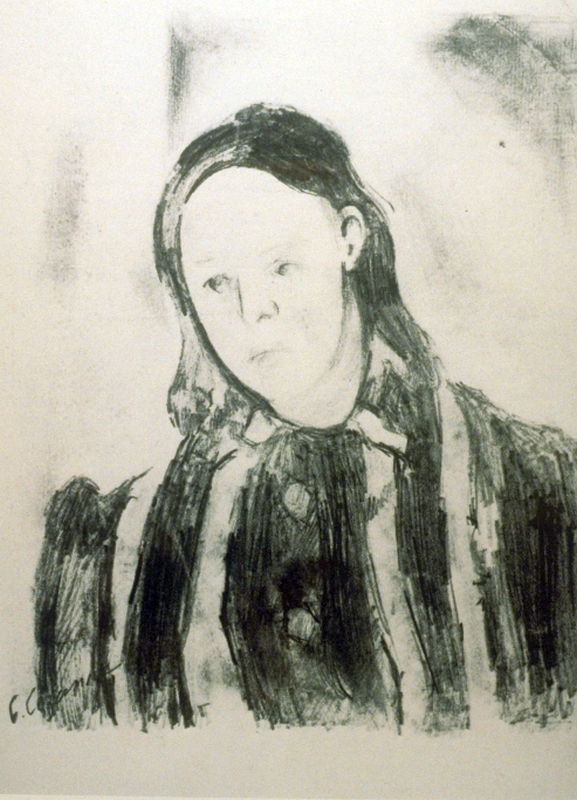
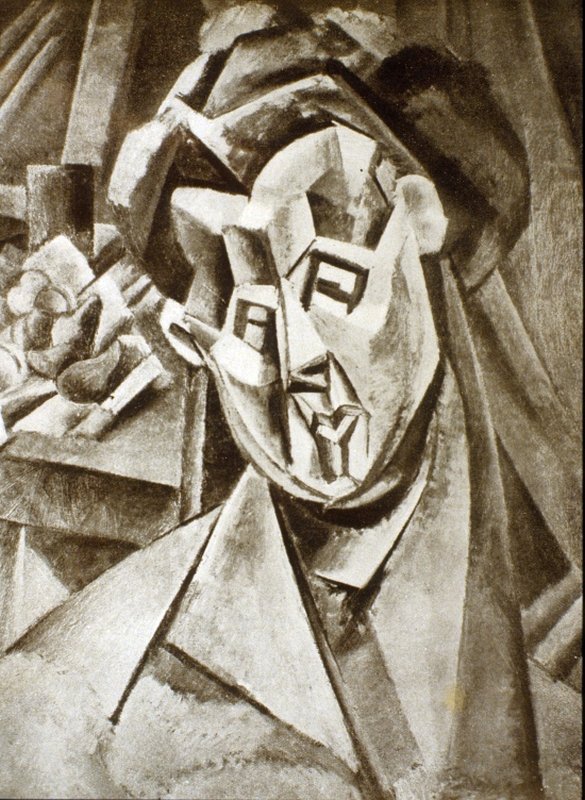
Fig.
7s - Paul Cézanne (1839-1906), La Carrière de
Bibémus, 1895. [Cachin 1995, ill.138, p.365].
Fig. 7d - Pablo Picasso (1881-1973), La bouteille de
marasquin, 1914. [Gomez de la Serna, 1945, tav. XIV].
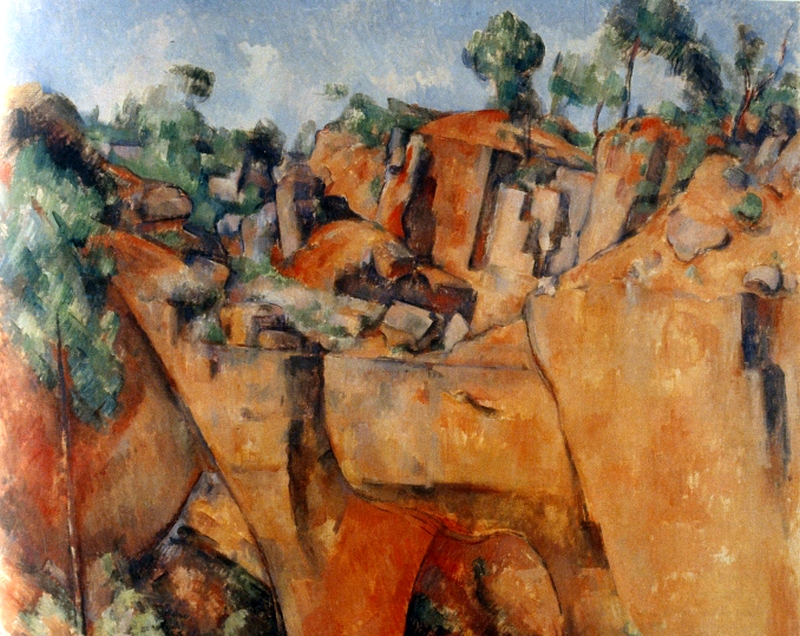
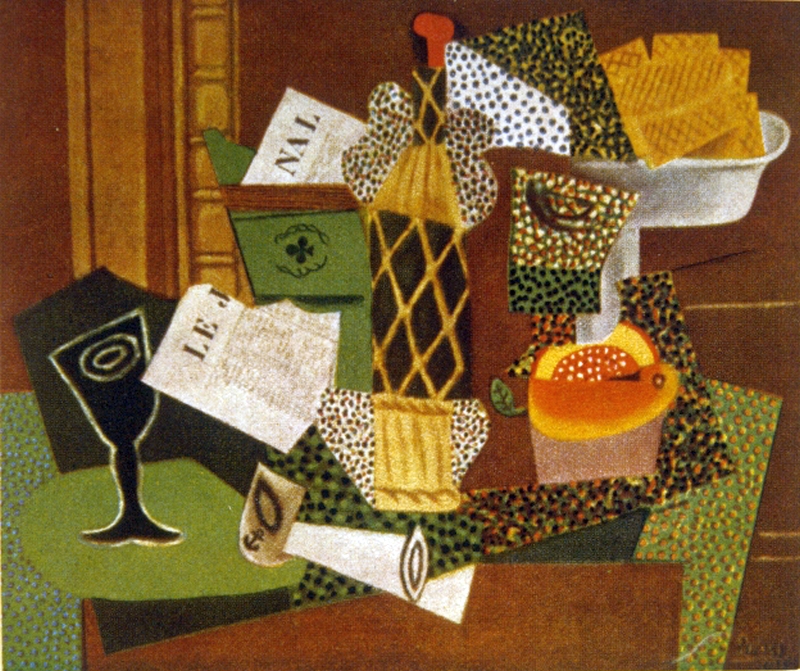
Fig.
8s - The Acropolis of Athens seen from the west, V Century. a.C.
[AA.VV. 1967, ill.
39].
Fig. 8d - Le Corbusier (1887-1965), The Propylaea with the
temple of the Victory Attera (on the right), 1911. [Le Corbusier 1965,
p.179].
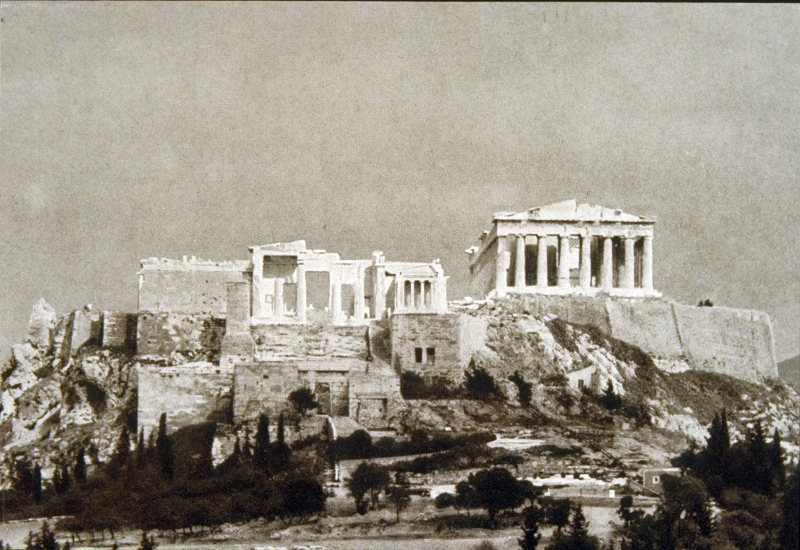
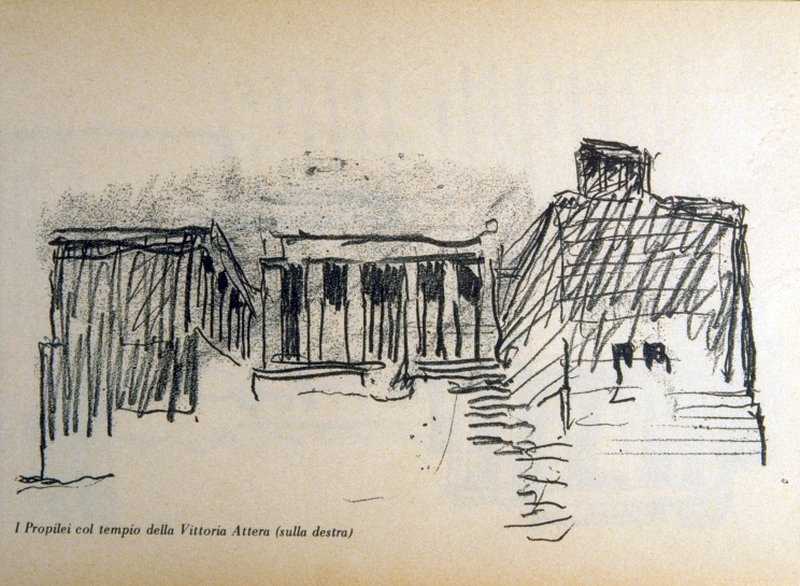
Fig.
9s - The Propilei, V sec. a.C. [AA.VV. 1967, ill. 40].
Fig. 9d - Le Corbusier (1887-1965), The Propilei: on the
bottom the
Peloponnese, 1911. [Le Corbusier 1965, p.180].
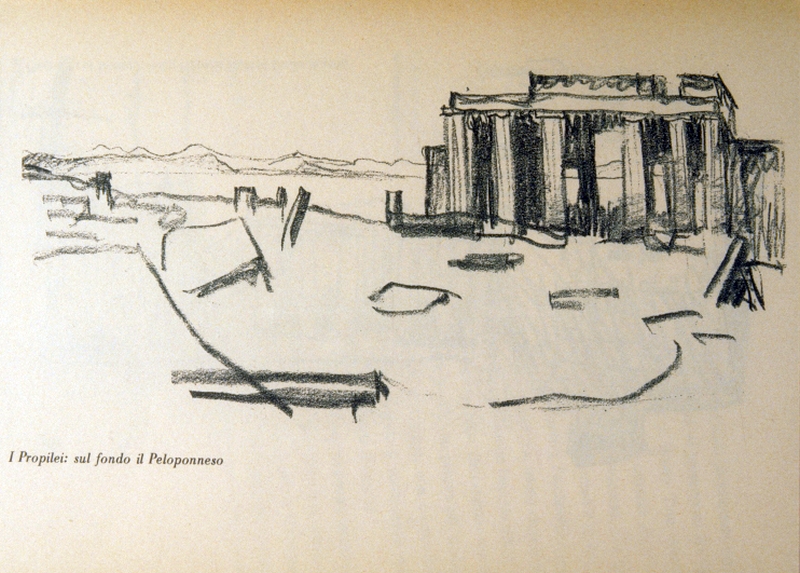
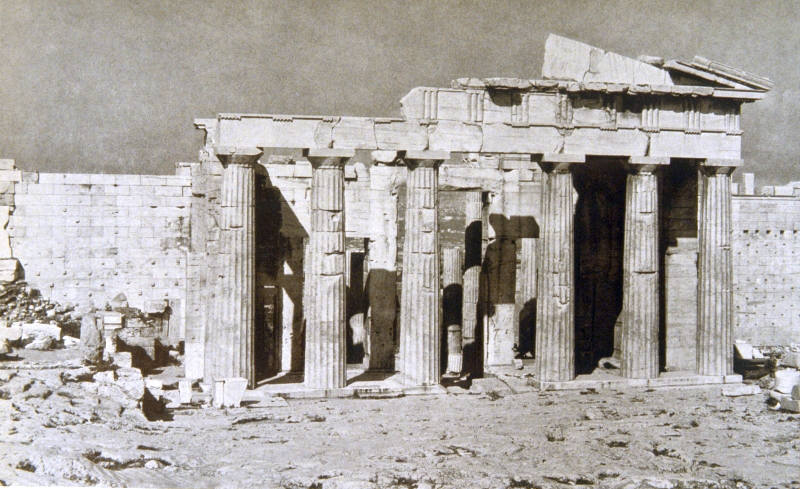
Fig.
10s - Pablo Picasso (1881-1973), Deux femmes courant sur la plage (La
course), 1922 ca. [Gomez de la Serna, 1945, tav. XXIV].
Fig. 10d - Le Corbusier (1887-1965), Deux femmes nues
assises sur des rochers en bord de mer, 1933. [AA.VV. 1963,
tav.XXXVIII, n.87].
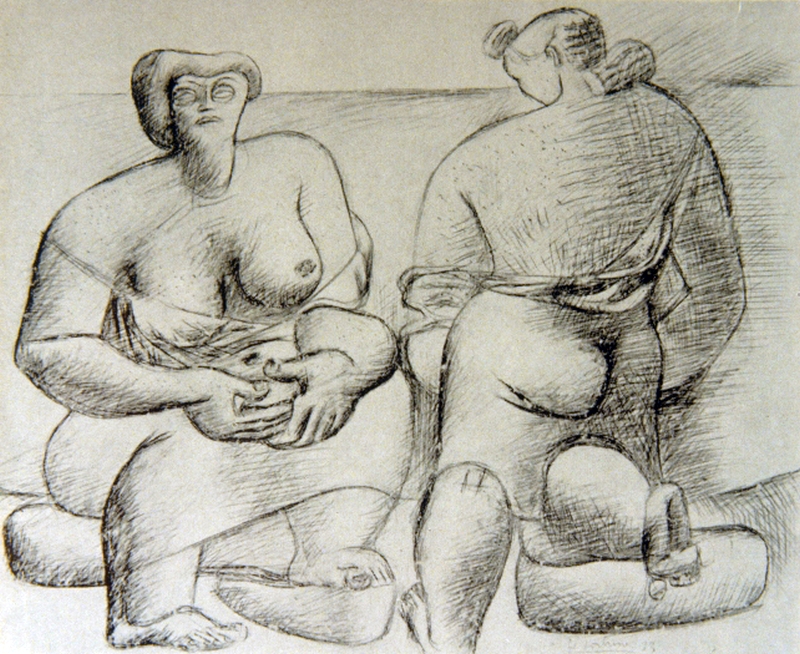
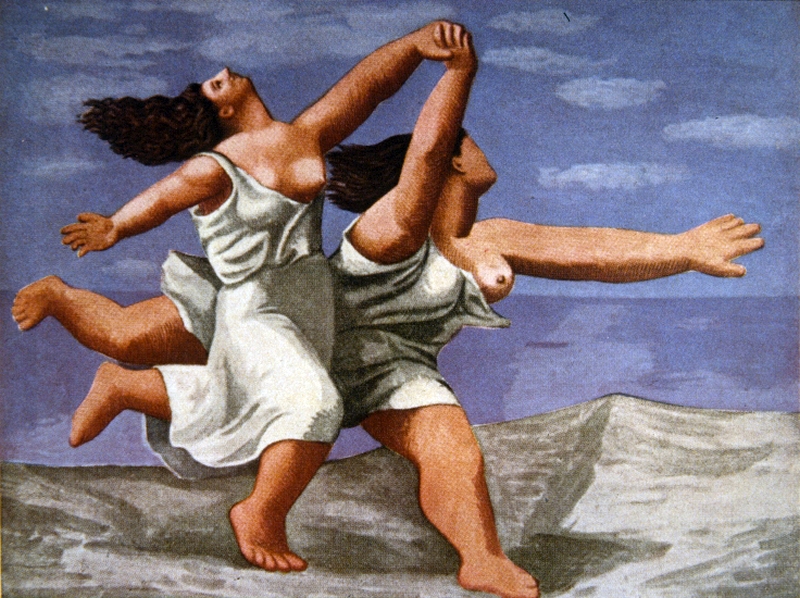
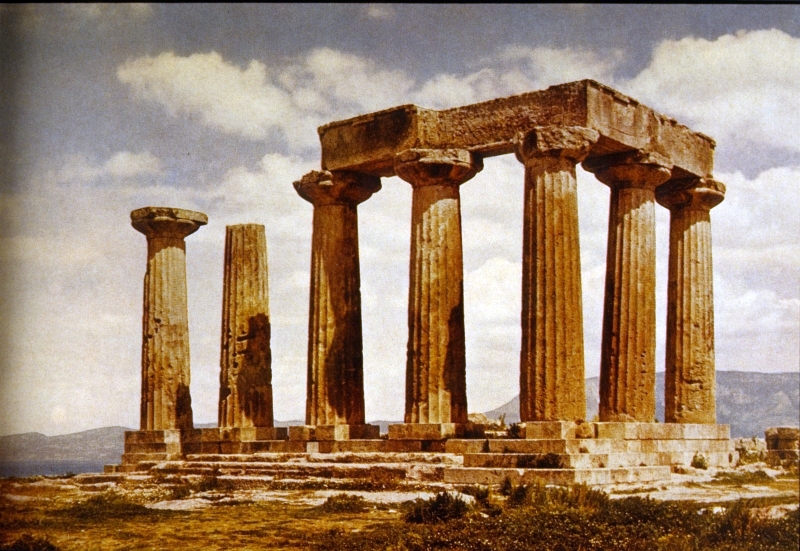
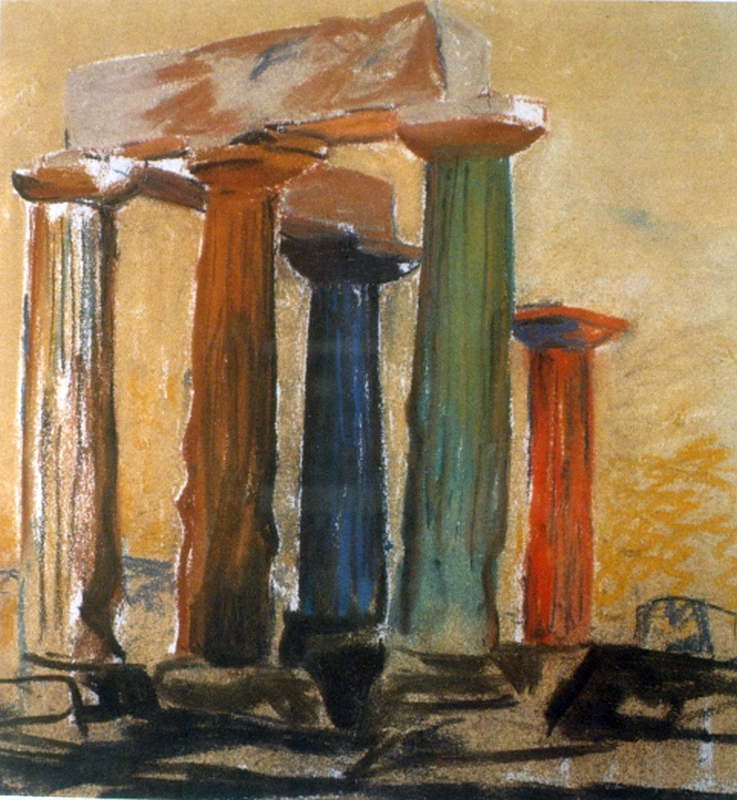
Fig.
11s - Temple of Apollo seen from the southwest, Corinto, half of the
sixth century. B.C. [AA.VV. 1967, ill.1, p.35].
Fig. 11d - Louis Kahn (1901-1974), Columns of the Temple of
Apollo in Corinth, 1951. [AA.VV. 1979, ill.8, p.26].
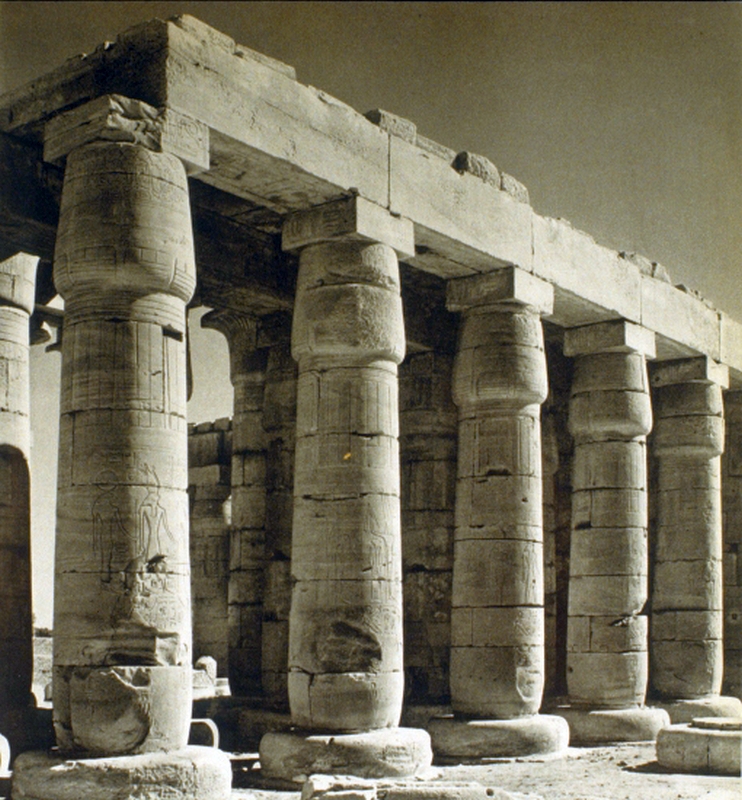
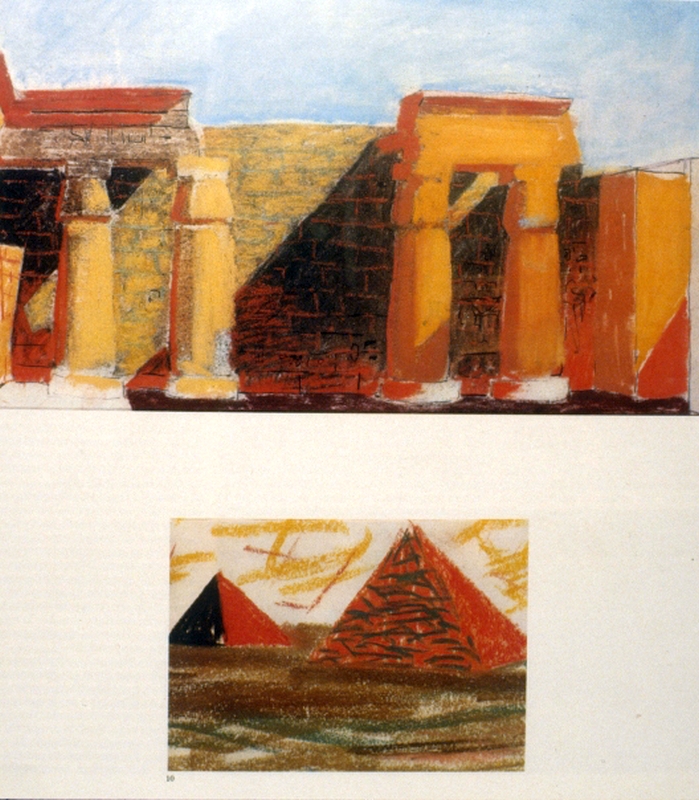
Fig.
12s - Mortuary temple of Ramesses II, Tebe, XIII sec. a.C. [de Cenival
1964, p.109].
Fig. 12d - Louis Kahn (1901-1974), Ramesse a Tebe. [AA.VV.
1979 ill.9-10, p.27].
Fig.
13s - Pyramids of Menkaure and Chephren, Giza Funeral Complexes,
XXVII-XXVI cent. B.C.
[de Cenival 1964, p.36].
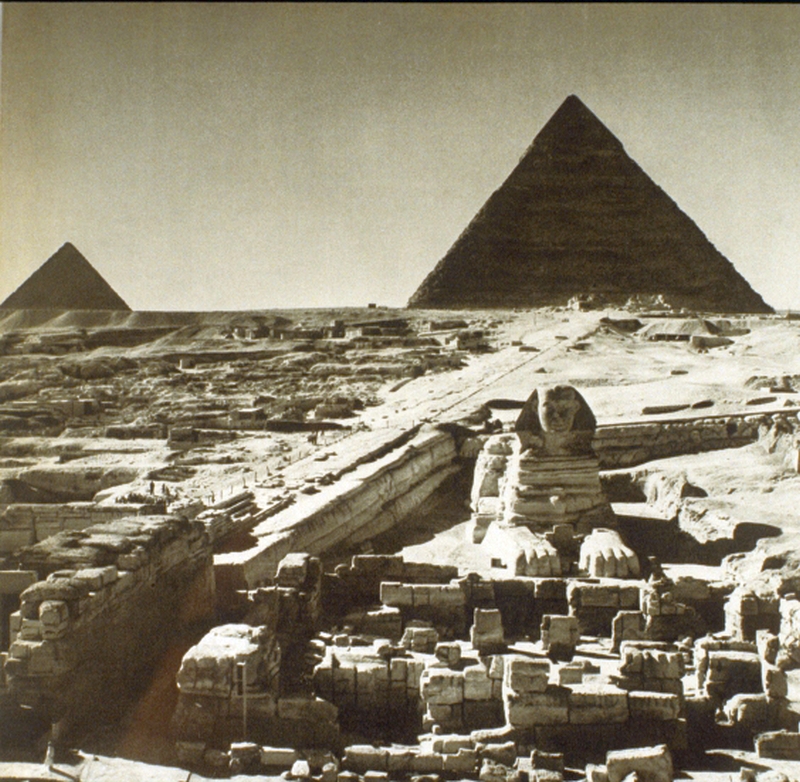
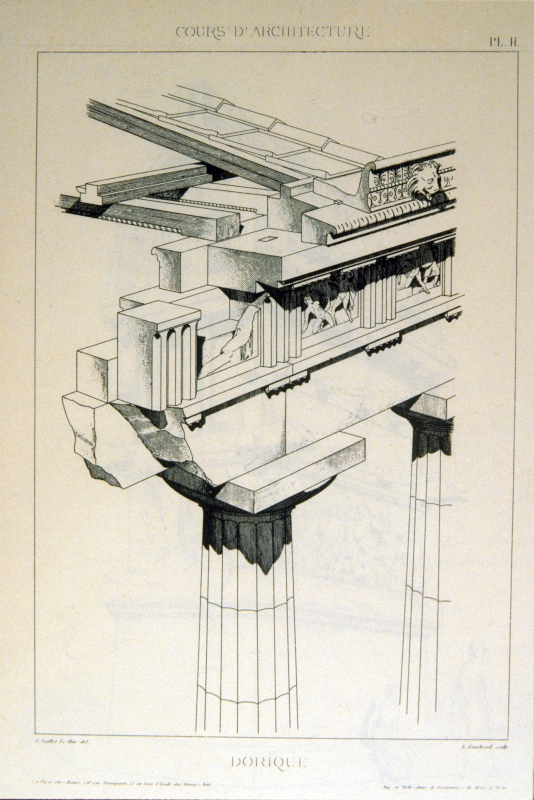
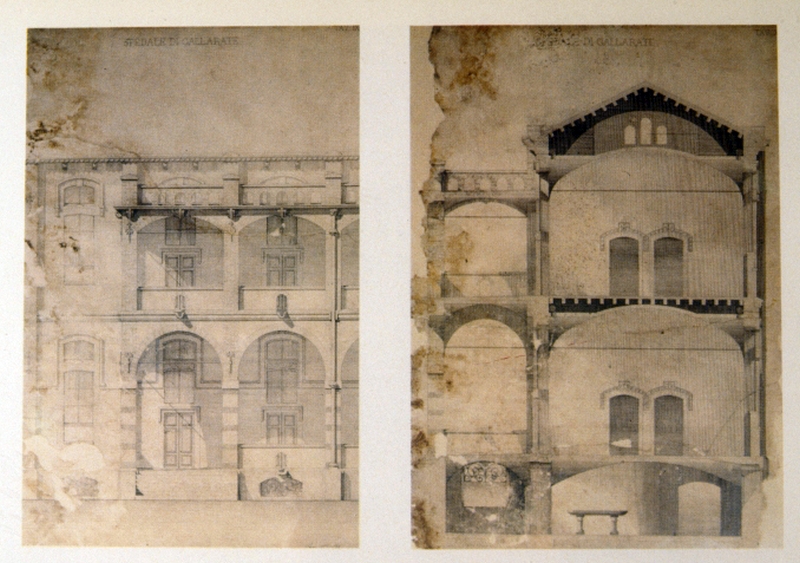
Fig.
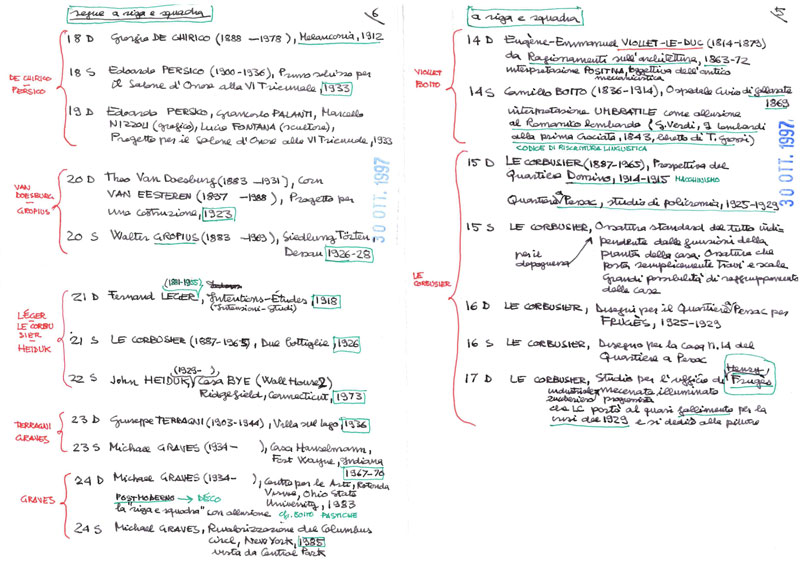
14s - Eugène-Emmanuel Viollet-le-Duc (1814-1879), The Doric.
From: Entretiens sur l'Architecture, 1863-72.
[Viollet-le-Duc 1977, pl. II].
Fig. 14d - Camillo Boito (1836-1914), Ospedale Civico di
Gallarate, 1869. [Grimoldi 1991, ill.8].
Fig.
15s - Le Corbusier (1887-1965), Perspective of the Domino District,
1914-1915. [Brace Taylor 1972].
Fig. 15d - Le Corbusier (1887-1965), House structure
Domino, 1915. [Boesiger, Stonorov 1948, p.23].
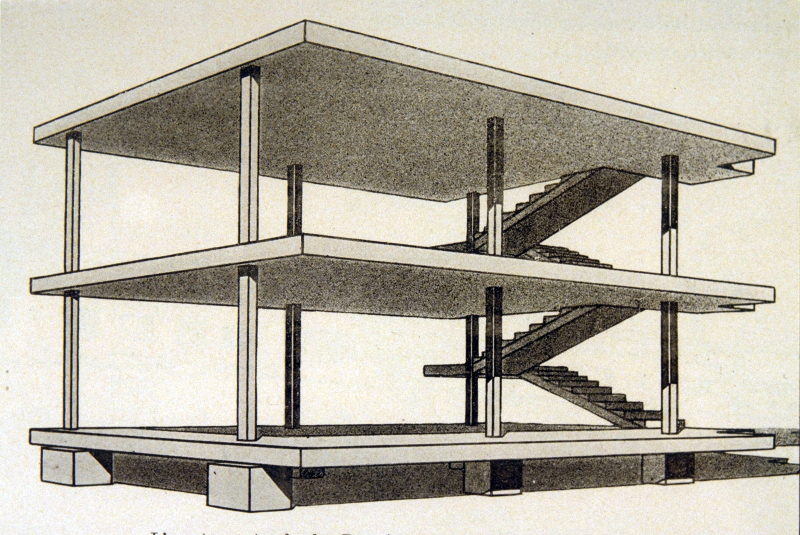
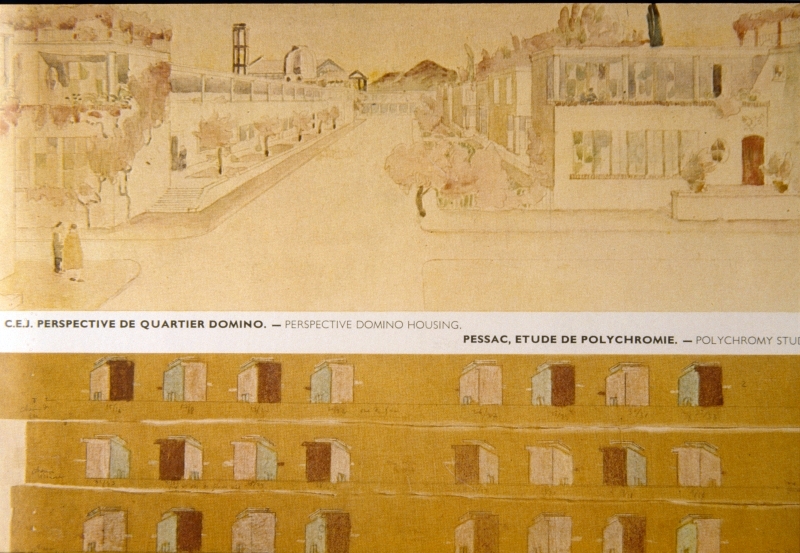
Fig.
16s - Le Corbusier (1887-1965), Drawings for the neighborhood in Pessac
for
Henry Frugès, 1925-1929. [Brace Taylor 1972].
Fig. 16d - Le Corbusier (1887-1965), House design 14
of the Neighborhood in Pessac, 1925-1929. [Brace Taylor 1972].
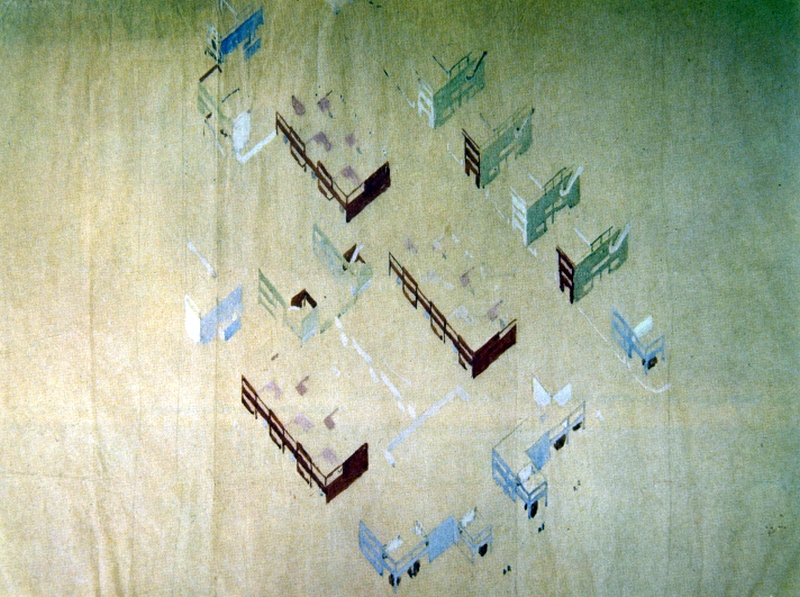
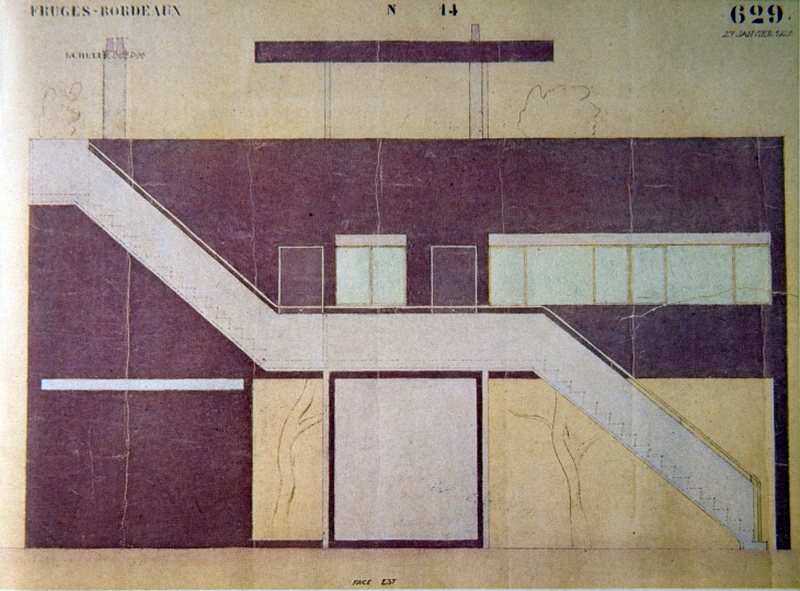
Fig.
17s - Le Corbusier (1887-1965), Study for Henry Frugès
office, 1925-1929.
[Brace Taylor 1972].
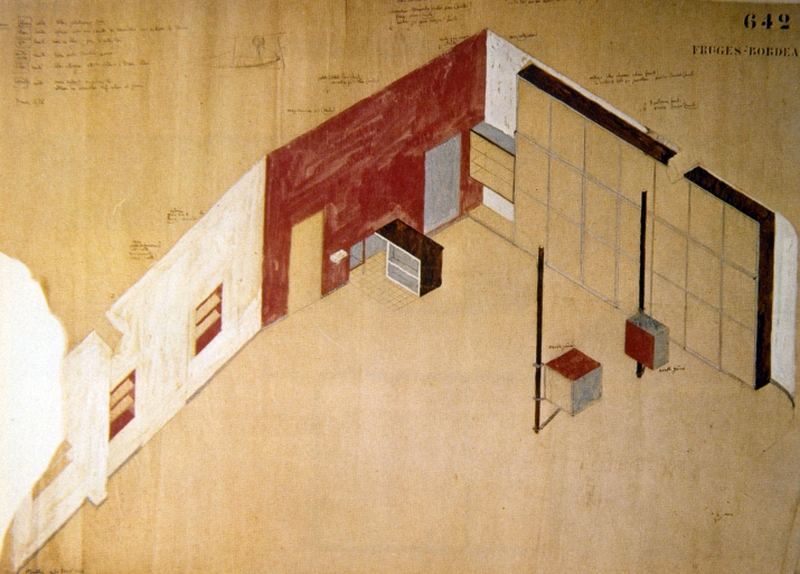
Fig. 18s - Giorgio De Chirico (1888-1978), Melanconia, 1912.
[Benzi, Tolomeo Speranza 1992, p.103].
Fig. 18d - Edoardo Persico (1900-1936), First sketch for the
Salone d'Onore, VI Triennale, 1935. [Veronesi 1964].
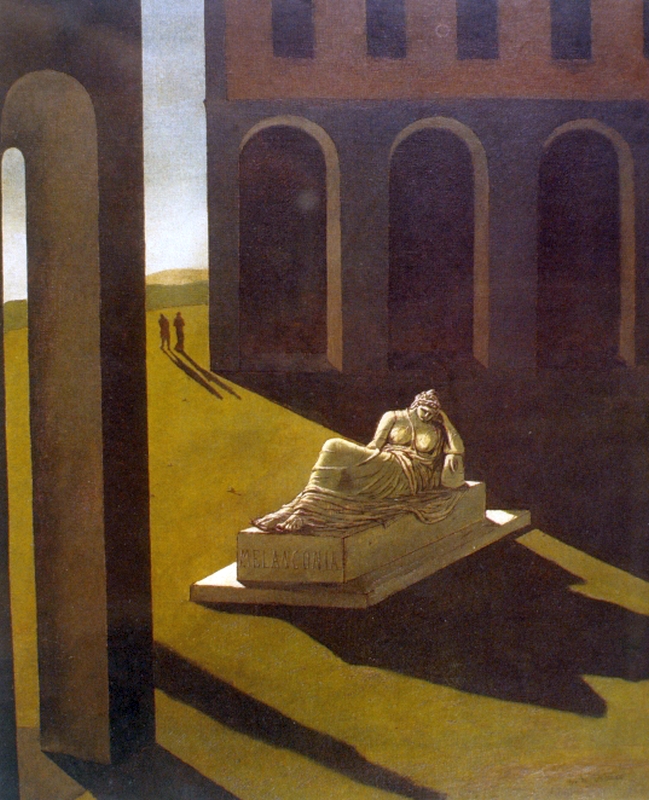
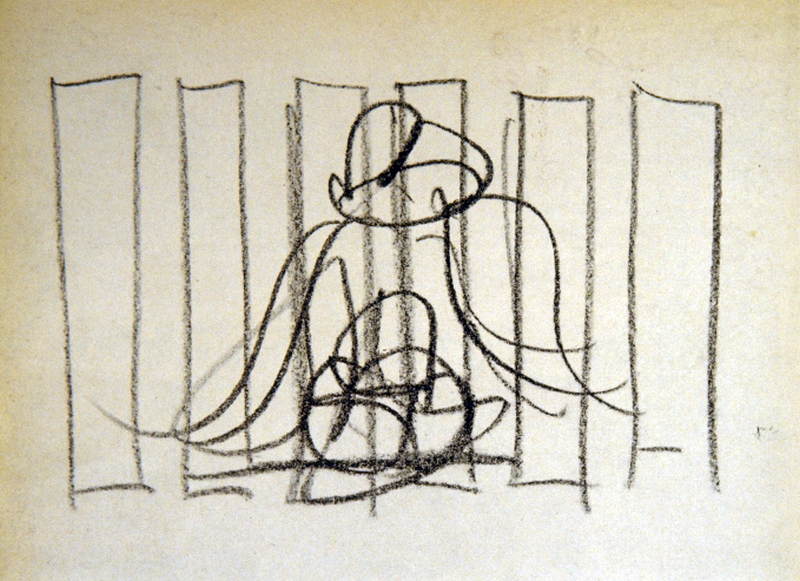
Fig. 19 - Edoardo Persico, Giancarlo Palanti, Marcello
Nizzoli (grafico), Lucio Fontana (scultore), Project for the Salone
d'Onore, VI Triennale, 1935. [Veronesi 1964].
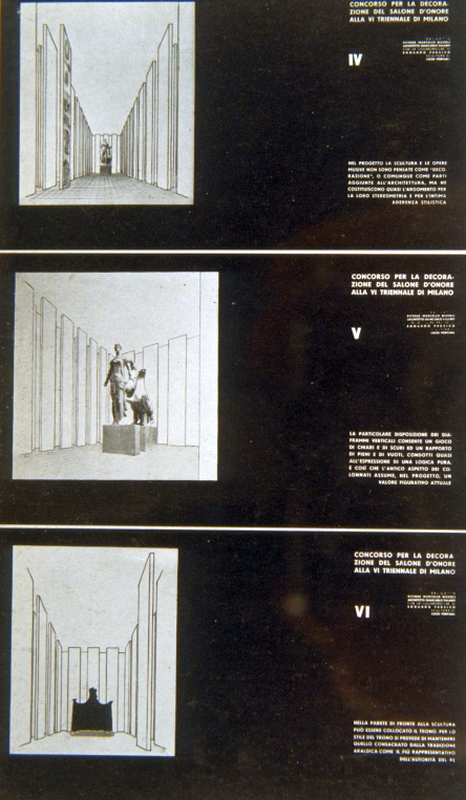
Fig. 20s - Theo Van Doesburg (1883-1931), Cornelis van
Eesteren (1897-1988), Project for a building, 1923.
[Jaffé 1964 tav. 5].
Fig. 20d - Walter Gropius (1883-1969), Siedlung
Törten, Dessau, 1926-28. [Argan 1951, ill. 43].
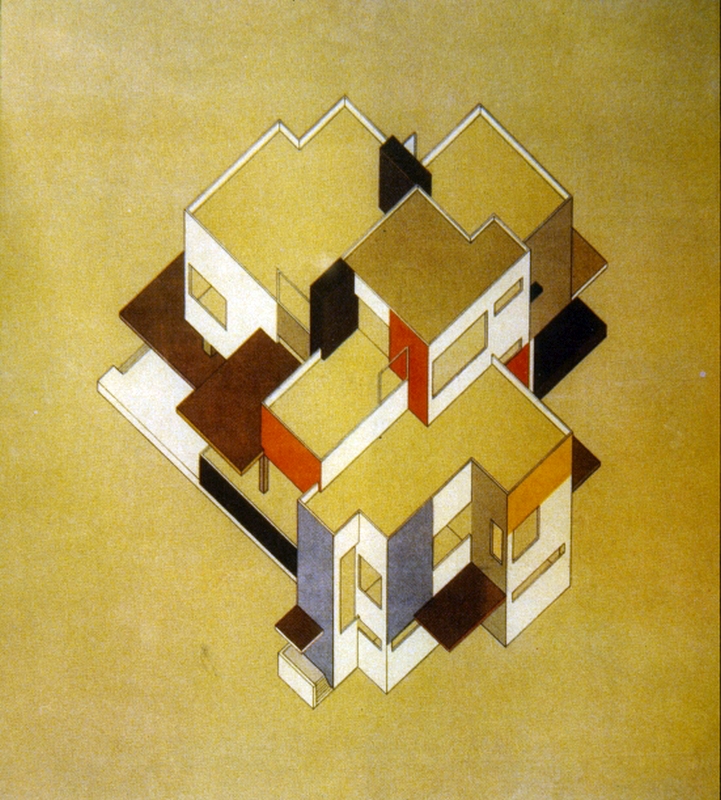
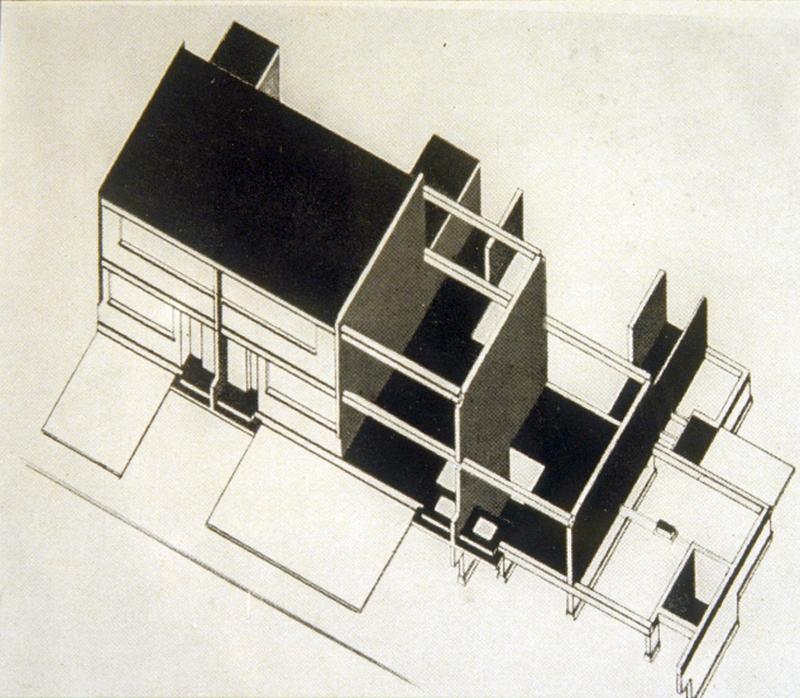
Fig. 21s - Fernand Léger (1881-1955),
Inventions-études, 1918. [Lassalle 1989, n.74, p.141].
Fig. 21d - Le Corbusier (1887-1965), Two Bottles, 1926.
[AA., VV. 1963, tav. XXVI, n. 68].
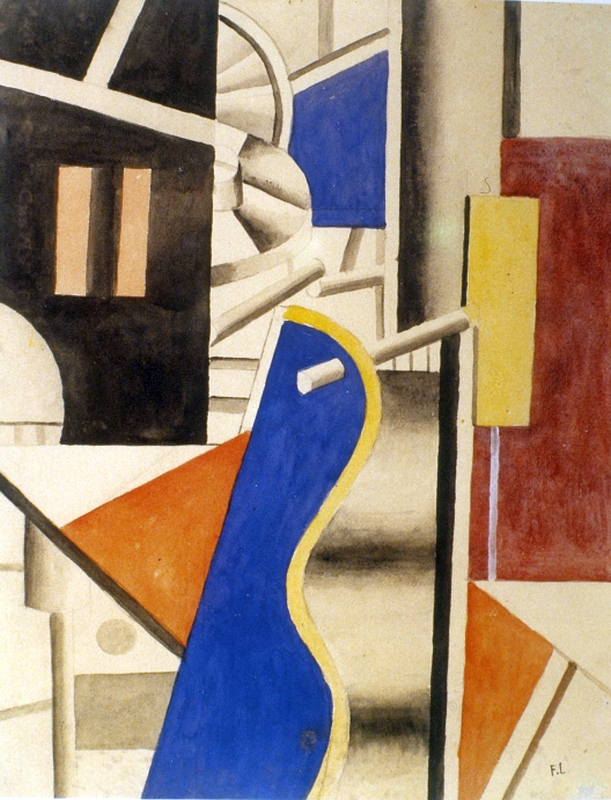
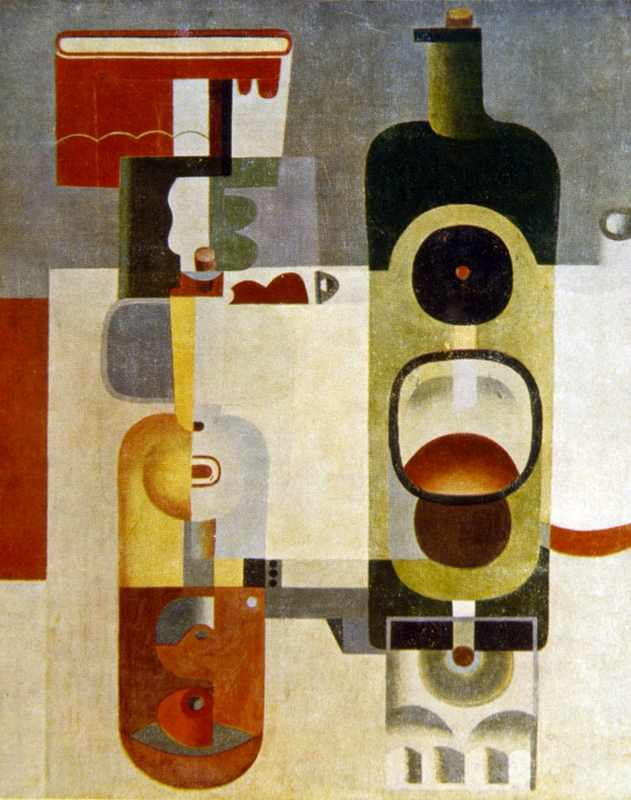
Fig. 22 - John Hejduk (1929-2000), Bye House (Wall House 2),
Ridgefield, Connecticut, 1973. [Gubitosi, Izzo 1976, p.67].
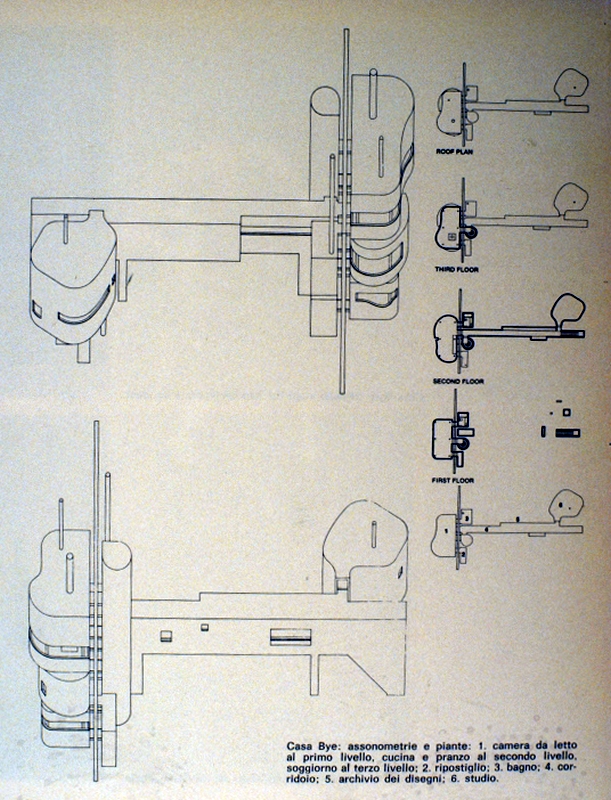
Fig. 23s - Giuseppe Terragni (1903-1944), Lake Villa,
1936. [Schumacher 1992, p. 102].
Fig. 23d - Michael Graves (1934-2015), Hanselmann House,
Fort
Wayne, Indiana, 1967-70. [Gubitosi, Izzo]1976, p.84].
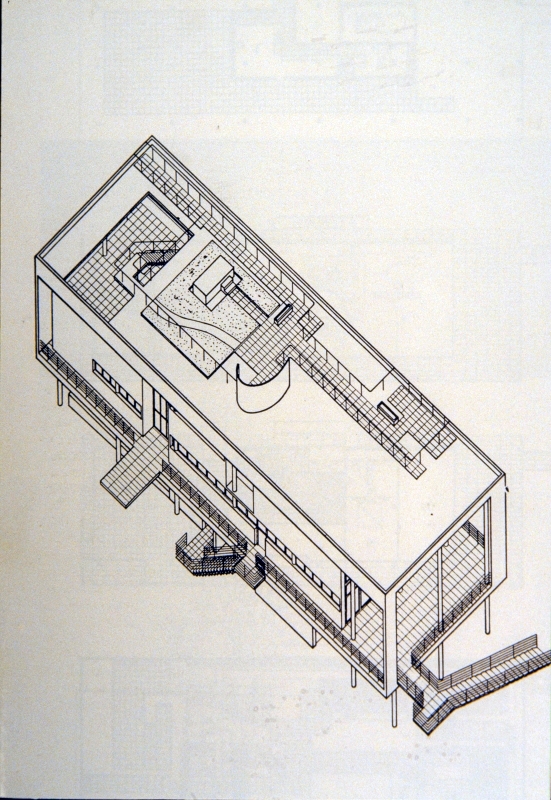
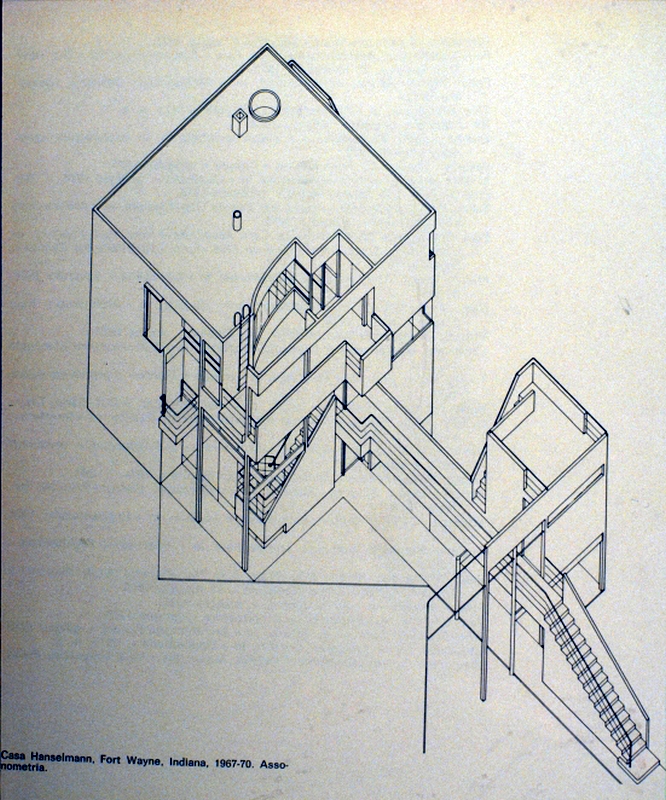
Fig. 24s - Michael Graves (1934-2015), Wexner Center for the
Arts, Ohio State University, 1983. [AA.VV. 1991, p. 98].
Fig. 24d - Michael Graves (1934-2015), Columbus Circle, New
York, 1985, view from Central Park. [AA.VV. 1991,
p. 167].
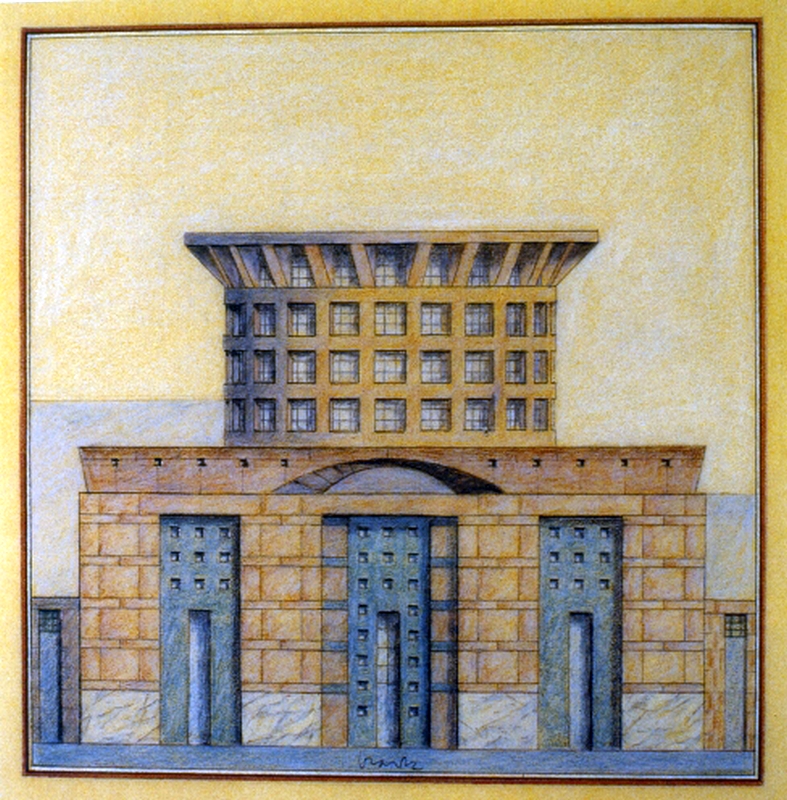
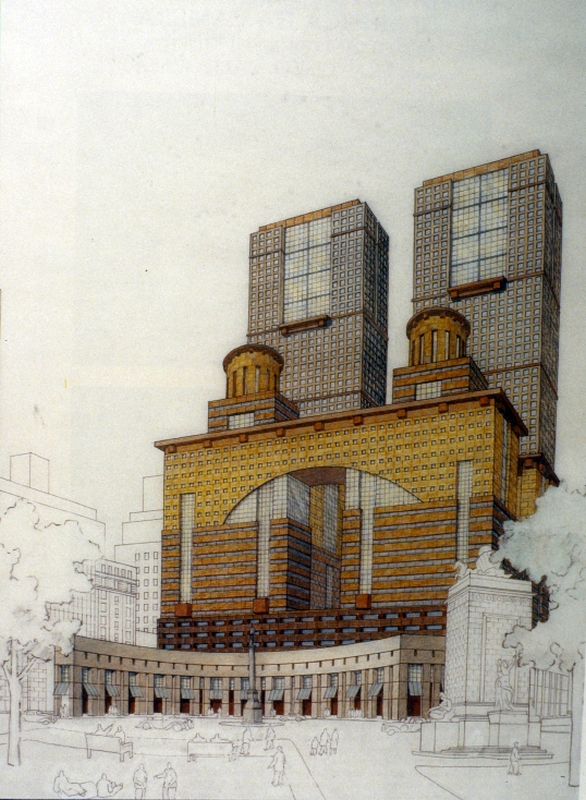
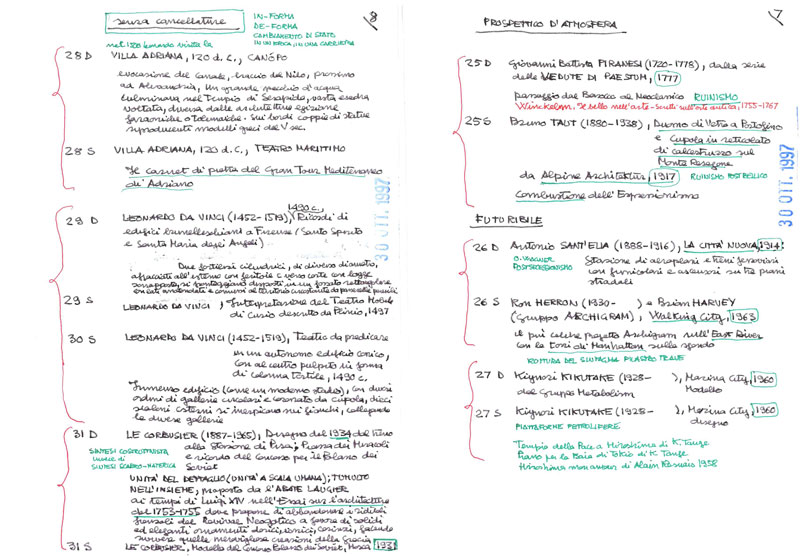
Fig. 25s - Giovanni Battista Piranesi (1720-1778), From the
series of views of Paestum, 1777. [Focillon 1967, ill. 143].
Fig. 25d - Bruno Taut (1880-1938), Glass Dome in Portofino
(above) and Concrete Grid Dome on Mount Resegone (below). From Alpine
Architektur, 1917. [Caramel, Longatti 1987
cat. 300, p. 121].
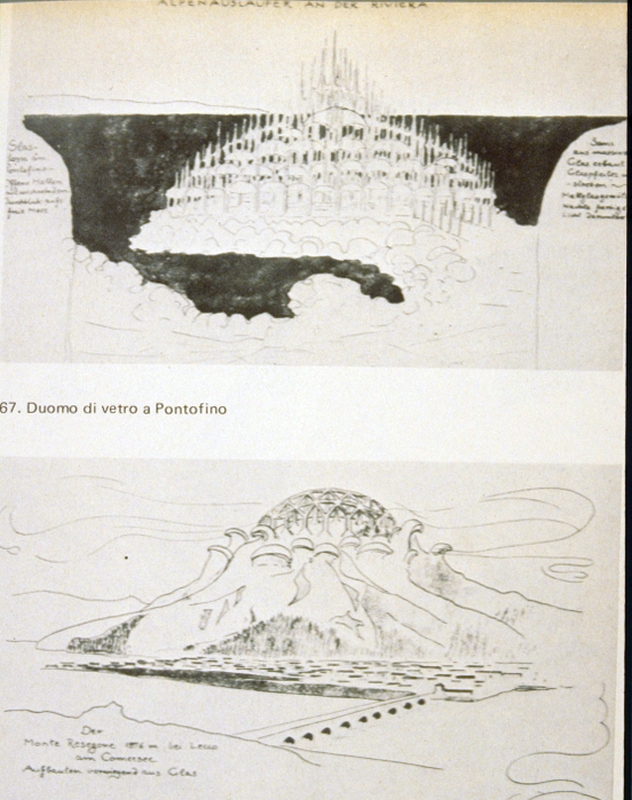
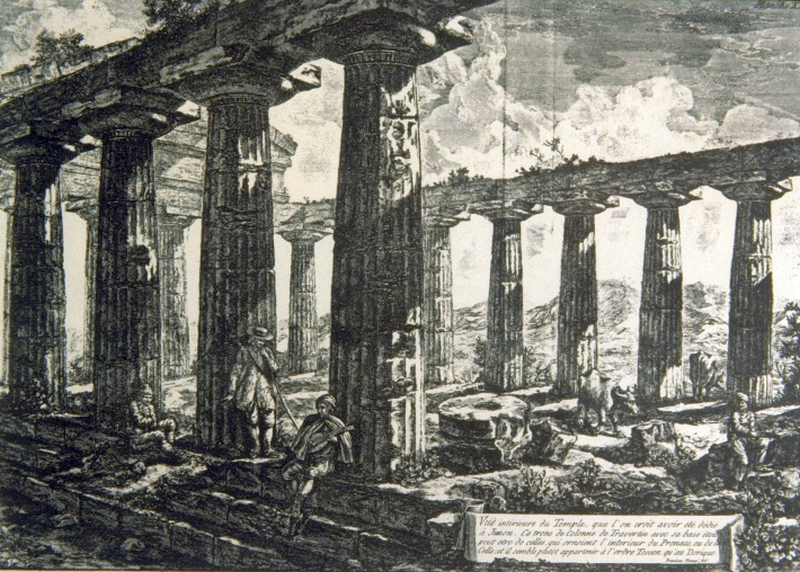
Fig. 26s - Antonio Sant'Elia (1888-1916), La
città nuova, station, 1914. [Caramel, Longatti, 1987, cat.
300, p. 121].
Fig. 26d - Ron Herron (1930-) and Brian Harvey, A Walking
City, 1963. [Banham 1980].
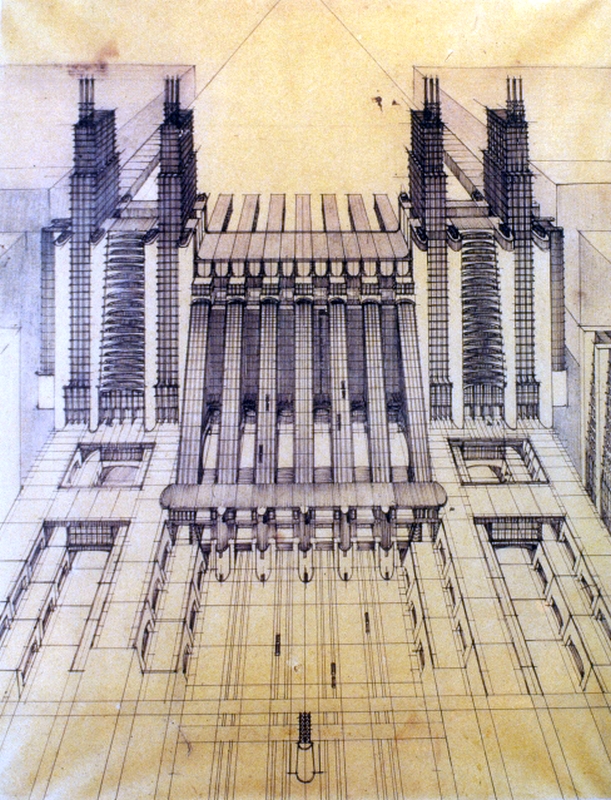
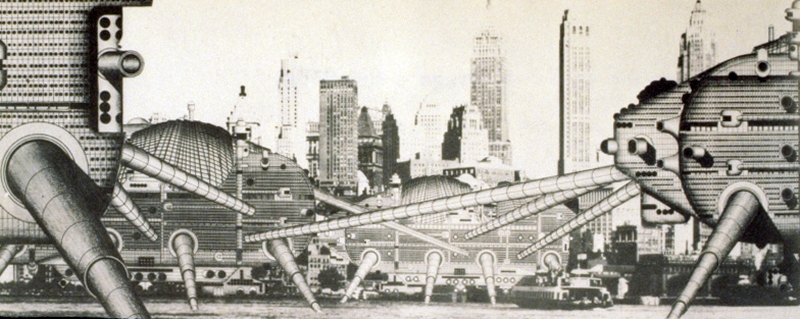
Fig. 27s - Kiyonori Kikutake (1928-2011), Marine City,
Disegno, 1960. [Riani 1969, p.228].
Fig. 27d - Kiyonori Kikutake (1928-2011), Marine City,
Modello, 1960. [Riani 1969, p.229].
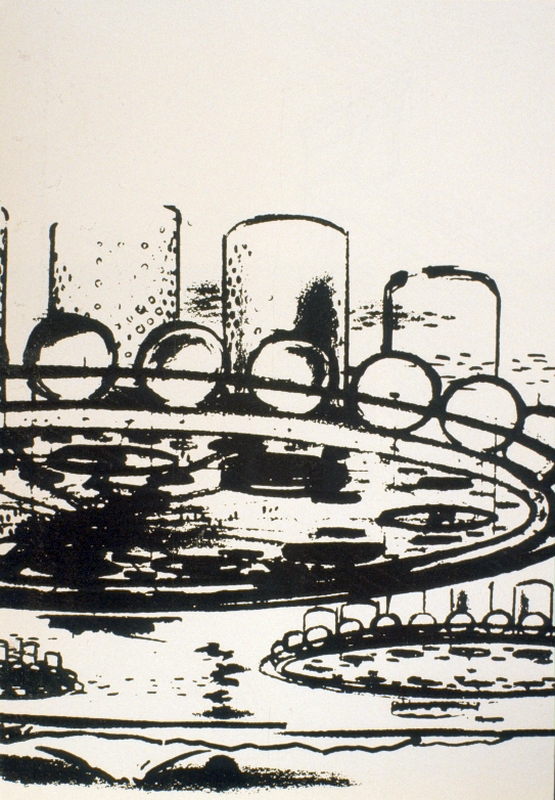
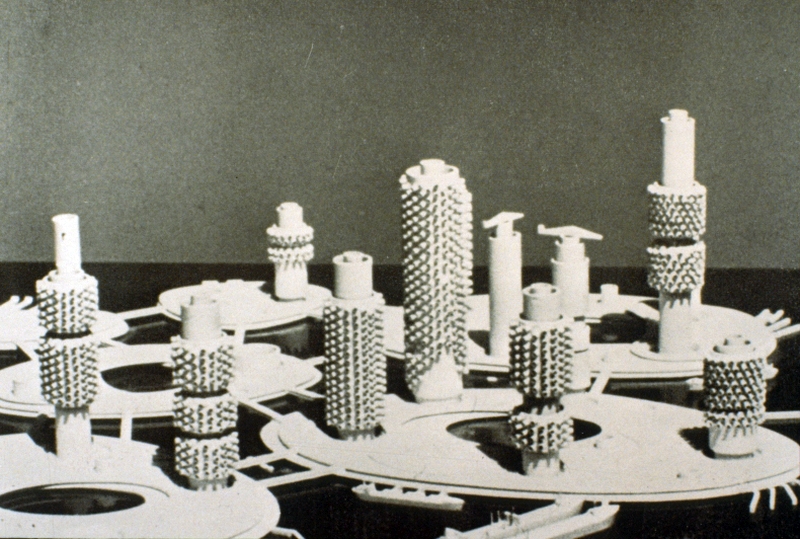
Fig. 28s - Villa Adriana, Canopo, 120 d.C. [Picard 1965,
p.124].
Fig. 28d - Villa Adriana, Teatro Marittimo, 120 d.C. [Picard
1965, p.125]. [Canella 1991, p.6].
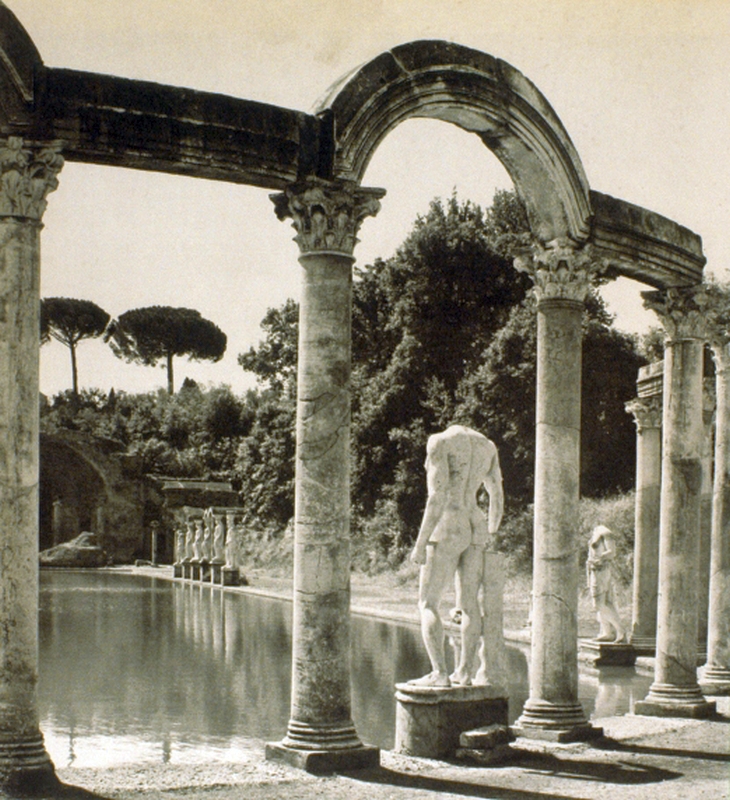
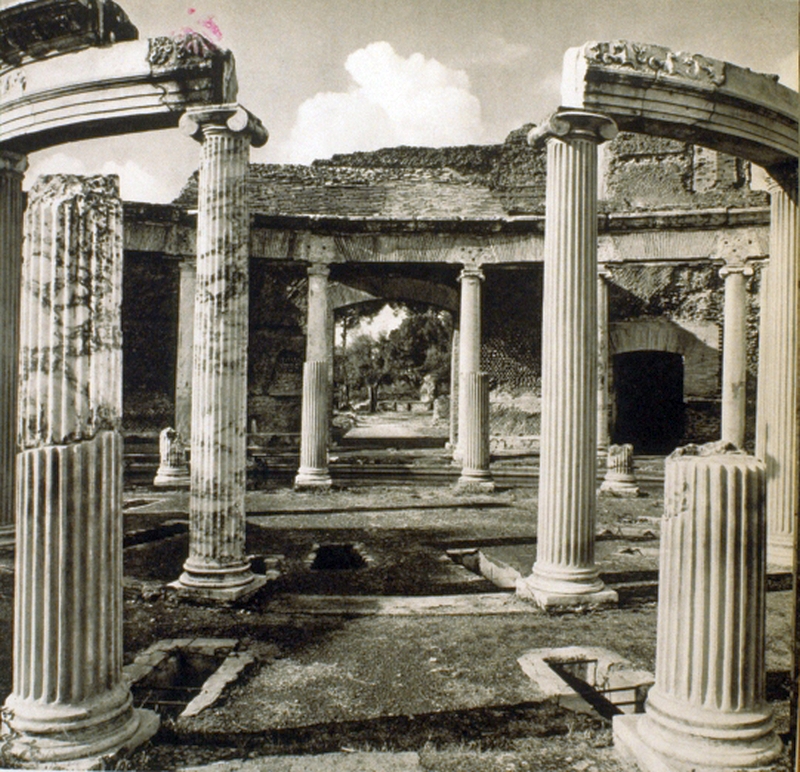
Fig. 29s - Leonardo da Vinci (1452-1519), Memories of
buildings
brunelleschiani in Florence (Santo Spirito and Santa Maria degli
Angeli) e
plan and elevation of the pavilion in the garden of the Castle in
Milan, 1490
ca. [Pedretti 1978, ill. 81, pp. 66-67]. [Canella 1989, p. 74].
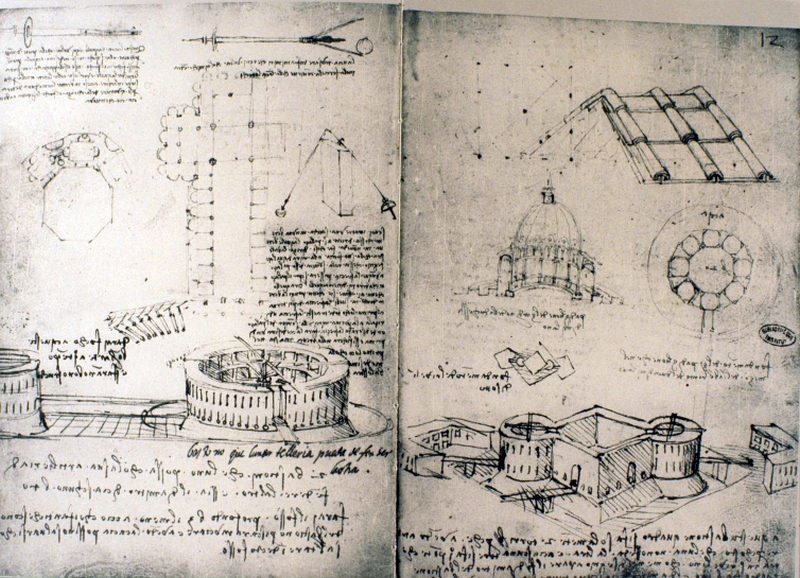
Fig. 29d - Leonardo da Vinci (1452-1519), Interpretation
of the Mobile Theater of Curzio described by Pliny, 1497. [AA.VV. 1974,
ill. 2, p. 270-271].
Fig. 30 - Leonardo da Vinci (1452-1519), Theater to preach
in a self-contained conical building, with a pulpit in the center in
the form of
twisted column, 1490 ca. [Firpo 1962, p. 60].
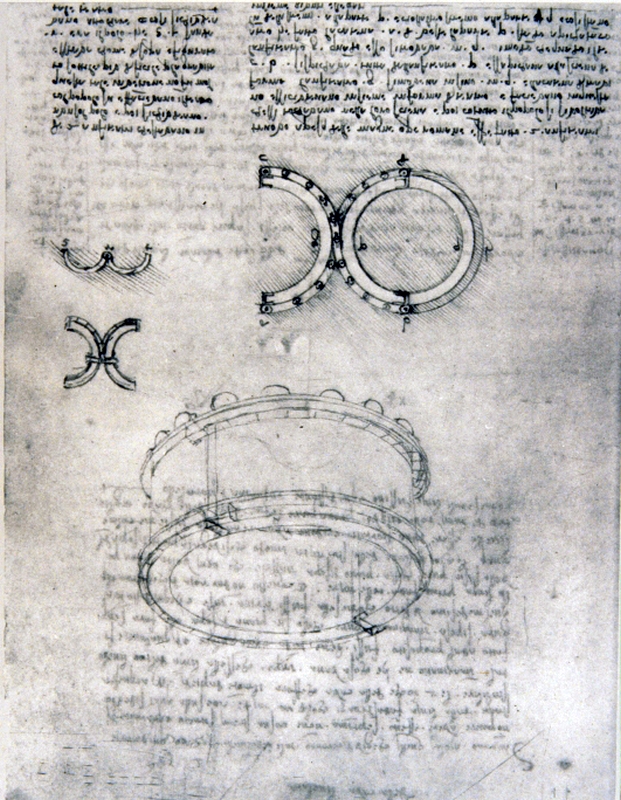
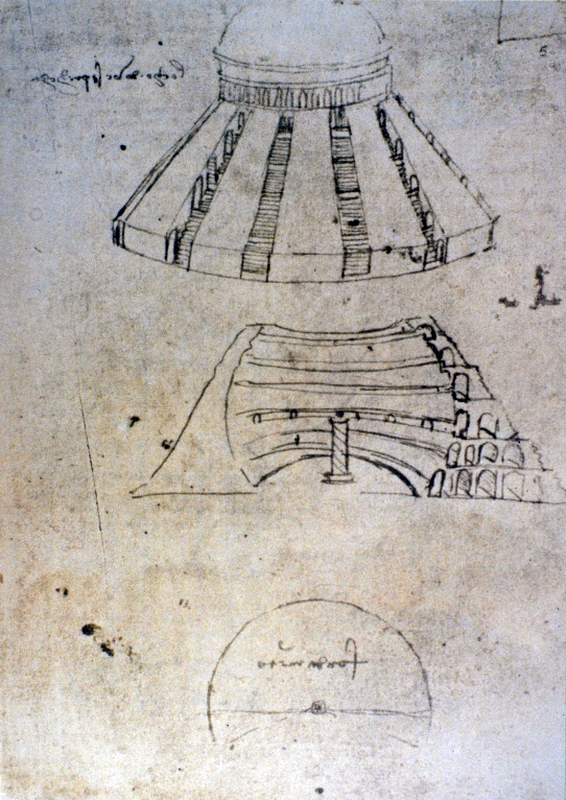
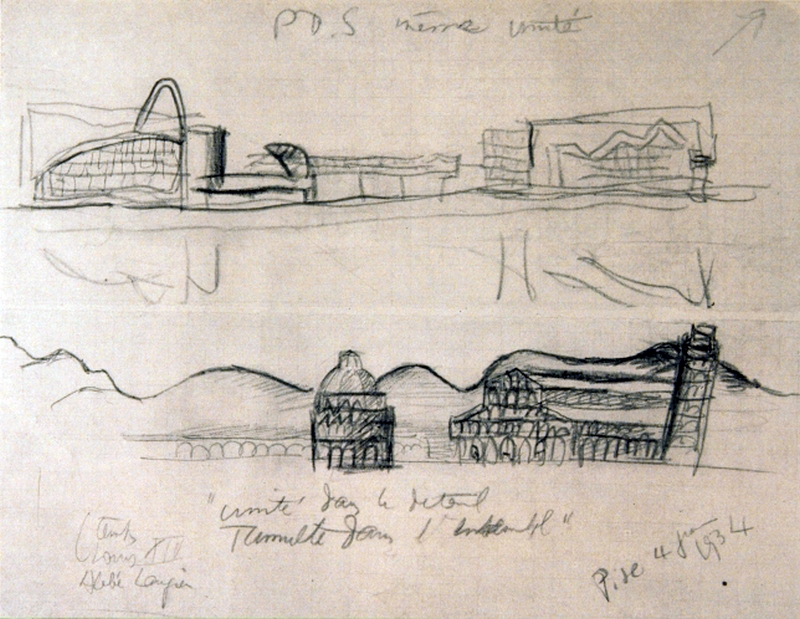
Fig. 31s - Le Corbusier (1887-1965), Drawing from train to
Pisa station; Piazza dei Miracoli and memory of the Competition for
Palace of Soviets, 1934. [Boesiger 1952, p. 132].
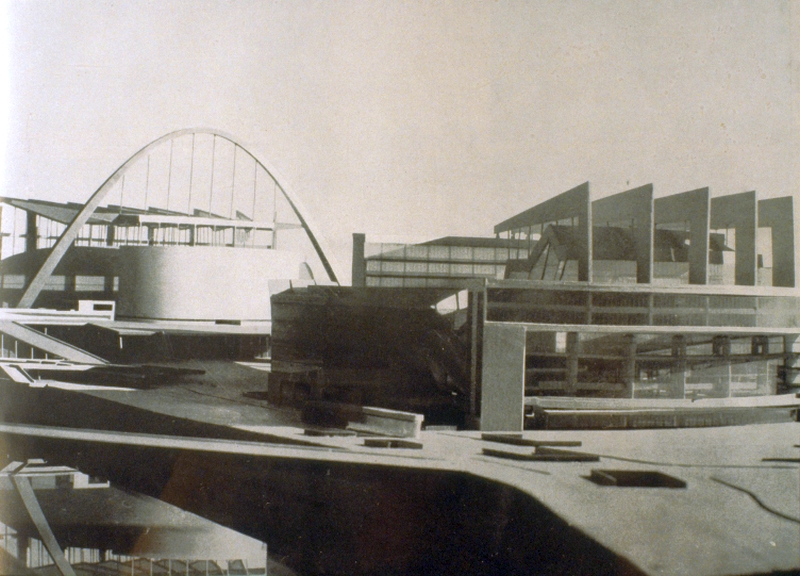
Fig. 31d - Le Corbusier (1887-1965), Project Model
for the Competition for the Palace of Soviets, Moscow, 1931. [Boesiger
1952,
p. 133].
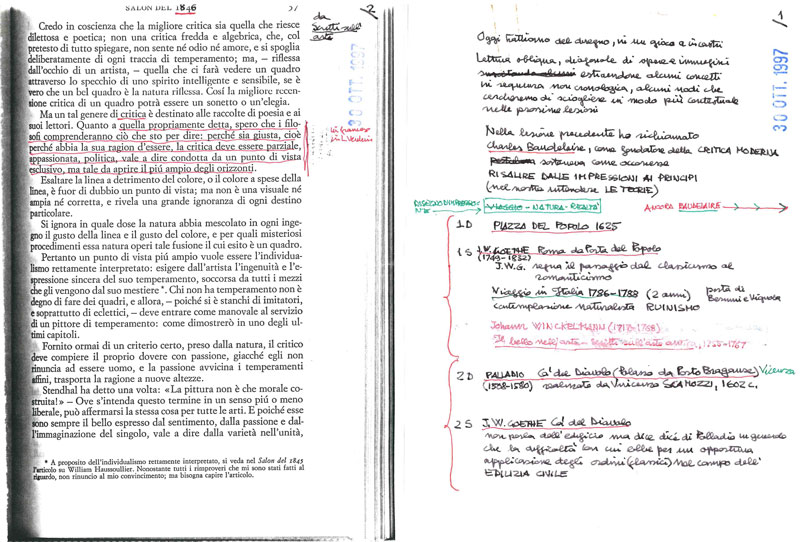
Guido Canella, Appunti della lezione Sul disegno, in un
gioco a incastri, Milano 1997.
Archivio Guido Canella, Milano.
Guido Canella, Appunti della lezione Sul disegno, in un
gioco a incastri, Milano 1997.
Archivio Guido Canella, Milano.
Guido Canella, Appunti della lezione Sul disegno, in un
gioco a incastri, Milano 1997.
Archivio Guido Canella, Milano.
Guido Canella, Appunti della lezione Sul disegno, in un
gioco a incastri, Milano 1997.
Archivio Guido Canella, Milano.
Today I will consider drawing in an interlocking game.
Last time I mentioned how ours is an oblique, diagonal, non-deductive
reading, which tries to give an account of the impression we get from
the works and images. I seem to have mentioned, again last time,
Baudelaire, the French intellectual, poet, writer, art critic who is
considered the true founder of modern criticism.
Baudelaire argued that criticism must be partial, passionate,
political, in the sense of being exclusive but at the same time opening
up to all possible horizons of knowledge. Baudelaire, always with
regard to criticism, said that it must go back from impressions to
principles. These principles are a bit like the theories we try to talk
about, following Baudelaire’s procedure.
Today we are dealing with the theme of drawing and you know that
drawing in architecture is something different from drawing, from the
sign in painting. The drawing for painting is structural, and I would
say inherent in the birth and development of the work. There is the
design of the music that is made on the musical scores and has its own
trace, its own logic, its own coherence that translates into something
else. Drawing is also present in the alphabets, in the signs of the
language, with which the language is transmitted.
Drawing in architecture is something that can be similar to that of
painting, sometimes precisely to that of music or language, in the
sense that drawing in architecture is sometimes inside the construction
of the work, while drawing is outside, contemplates it from the
outside.
The drawing we are going to talk about today concerns the different
genres of drawing that have to do with architecture, some of these,
because they are many: there is the impression drawing, there is also a
team design that tends to the executivity of the work, there is an
atmospheric design, which in some way wants to make up for reality and
therefore describe together with the work, also the target context.
There is a futuristic design, that drawing that portrays a perspective
of a time to come. Then there is the drawing without erasures, that is
an intuitive design that in my opinion is the most innate to
architecture, it is the famous architectural sketch, which already
contains in germ the genetic assumptions of the work of architecture.
Here, we will talk a little about these genres and improvise some
impressions from the images and comparisons that we will tend to
establish.
Here you can see an engraving of 1625 of Piazza del Popolo in Rome
(Fig. 1s) with a sketch by Johann Wolfgang Goethe, made during the trip
that this extraordinary character made to Italy in about 1780 (Fig.
1d).
If you notice, you see how in the engraving, Piazza del Popolo is
surrounded by a building connective that does not appear in
Goethe’s drawing. The two points of view are different, but
in
both cases you can recognize the central obelisk (Goethe’s
vision
was at a high altitude, so much so that you see the dome of St.
Peter’s), the Door is always that of Bernini and Vignola, yet
in
Goethe’s sketch intervenes a sort of rarefaction for which
the
countryside predominates over the built.
We can attribute this vision of Goethe to what he personifies in the
history of modern culture, that is, where Classicism, Neoclassicism
tends to open up to Romanticism and therefore the naturalness of
Goethe’s vision involves a sort of archaeological enhancement
of
the architectures that are chosen to fit into this naturalness. It is
what with a current term could be called an “early
ruinism”, “ruinism of ruin”, that is, the
fact of
considering architecture in a sense, in an archaeological dimension.
Think that the architectures that Goethe reproduces within his sketch
are not so far from being considered archaeological finds. They are
architectures that date back to 150 years before, yet he treats them in
this way, the impression is this, the vision is panic, that is,
overall, in which the architecture is reduced in turn by painting.
This is the architecture designed by Andrea Palladio, built in Vicenza
by his pupil Vincenzo Scamozzi, in 1602 (Fig. 2s).
It is the portion of a palace, which there is nicknamed
“Ca’ del Diavolo”, that Goethe still
sketches and you
can see it in this other image (Fig. 2d).
Think that even in this case Goethe considers Palladio’s
architecture as something extraordinary, as the synthesis of a process
that is that of the Renaissance. But we deduce from Goethe’s
sketch that he dwells on an aspect that particularly interests him,
namely the combination of classical orders and the building’s
civil building purpose. In other words, Goethe extracts from
Palladio’s architecture, in this case but also in other
cases,
this domestic coefficient that is inserted within a courtly structure,
within a monumental structure. This also underlines Goethe’s
vision of the transition from a classicist conception to a romantic
condition. Another dimension intervenes which is the subjective
dimension, the personal dimension, the dimension of a narrower and more
subjective scope with respect to the scope, to the presumption of
objectivity that Classicism brought with it.
Still talking about the impression drawing, I show a fairly famous
painting. This framework has had several attributions. It was initially
attributed to Giorgione and later to Titian. The subject is that of a
country concert (Fig. 3s).
Here we are interested in considering the reason for these different
attributions.
This painting is generally dated around 1510 which if I am not mistaken
is the date of Giorgione’s death. Titian is younger than
Giorgione, both belong to the Venetian School that has its fundamental
character in colorism, but the controversy arises on the fact of the
predominance of color backgrounds over drawing.
In fact, Roberto Longhi, who is a critic I also spoke about last time,
who is the antipole compared to Lionello Venturi, who is another critic
to whom we will now refer, argues that the drawing that structures the
painting is sufficiently strong to be attributed to Titian’s
youthful phase.
For Venturi, on the other hand, the predominance of the color
backgrounds that dominate the structure of the drawing, is instead to
be attributed to Giorgione.
This picture interests us in another respect.
An Italian critic, Giovanni Battista Cavalcaselle, on the mid-800,
backpacking travels far and wide Europe and on a notebook, the
so-called, “Parisian notebook”, analyzes the
different
paintings, the different works of art, Italian and foreign, but above
all Italian who are abroad redesigning them, reinterpreting them.
The drawing you see is precisely a redrawing of the Cavalcaselle of
this Giorgionesque or Tizianesque country concert (Fig.3d).
You see it is important because, I repeat, we are in the middle of the
800 and only in 1906 a great artist, a great painter, Paul
Cézanne, paints this picture, Les grandes baigneuses
(Fig. 4s) that somehow can remind us of the country concert we talked
about.
If you notice, Cavalboxe’s notes on the country concert are
not
so far from the approximation with respect to reality, to the truth
with which Cézanne paints. Instead, Cézanne, you
know
well, is considered a great founder of modern art, of the figurative
arts.
What runs between these two works, between these two reproductions of
impressions received, half a century apart?
It is the different awareness of this interpretation and distortion of
the picture. In Cézanne, there is now the full awareness of
a
revolution that modern art must accomplish that generally concerns the
painting of the past, but even the impressionist painting in which
Cézanne was trained.
Another Italian art critic, Enrico Thovez, a critic who was somewhat of
an interpreter of Art Nouveau in Italy, argued that Cézanne
was
a failed painter. He said that he himself admits that he can paint
better than he can.
In fact, Cézanne, in some notes with which he accompanied
his
entire career as a painter, claimed that he could not paint more really
than he did. His effort was, in fact, precisely to represent reality.
In this half century that goes from the mid-’800 to the early
years of the ‘900 (this is one of the last paintings painted
by
Cézanne), runs the awareness of modern art, modernity, runs
the
awareness of deformation, runs the awareness that reality is not
necessarily the reproduction of the visible, but is instead what
affects our ability to perceive. This sense of reality that is the
basis of all modern art is represented in the works but also in the
autobiography, that is to say in the notations with which
Cézanne accompanies his painting.
This picture is a fairly well-known picture that you no doubt know. It
is Les demoiselles
d’Avignon
by Picasso (Fig. 4d). Just think, it is a painting that is painted by
Picasso a year after Cézanne’s painting.
Cézanne
died in 1906, and this painting by Picasso is painted in 1907. See how
quickly the trigger that starts from Cézanne’s
painting
evolves.
Here we see another painting by Cézanne, painted around
1890, is Madame
Cézanne aux chaveux dessones (painted with
loose hair) (Fig. 5s).
Roberto Longhi, that critic I was talking about, follows the path of
Cavalcaselle and he too has a notebook on which he memorizes the
paintings that interest him most. Then draw. Then impression drawing
and through this drawing transfigure.
In Longhi’s transcription of Cézanne’s
work, we
could also derive the critical judgment he gives of
Cézanne’s painting. Under this sketch, under this
redrawing (Fig. 5d), there are notes by Longhi that recall a phrase by
Cézanne where he says: “Treat nature through the
cone, the
cylinder, the sphere. Put everything in perspective so that each side,
each plane converges at a central point.” This notation of
Cézanne is made its own and incorporated into the
considerations
that Longhi makes and becomes the critical motif on which Longhi sets
the rereading of Cézanne.
I told you that Madame
Cézanne is from 1890, while this painting by
Picasso that we see is Femme
aux Poires (The
Woman with Pears)
from 1908 (Fig. 6d). You see that acceleration that I was talking about
with what intensity it takes place in a decisive decade, which is the
one immediately preceding and immediately following the First World
War. These are fundamental years for the history of art in general and
that in fact identify the birth of modern art.
A last work by Cézanne. It’s a landscape. The
title is La
Carrière de Bibémus (The road of Bibémus)
(Fig. 7s), also from the 90s of the nineteenth century.
When I quoted you just now the phrase noted by Longhi in his notebook,
Cézanne’s phrase, precisely, “to treat
nature
according to the cylinder, the cone, the sphere, so that each side and
each plane converges at a central point”.
The painting we see now by Picasso (you will no doubt have recognized
him) is from 1914, and is entitled
La bouteille de marasquin (The bottle of maraschino)
(Fig. 7d). You can see with what acceleration and with what capacity of
intuition triggering Cézanne grasps the principles of modern
art.
Here, finally let’s talk about architecture. Impression
drawing.
You will have recognized the image of the Acropolis of Athens (Fig.
8s). You see in the central part (the Parthenon remains on the right)
the Propylaea and, just next to it, the temple of Athena Nike.
What you see is a sketch by Le Corbusier (Fig. 8d). Corbusier around
the age of 25, in 1911, made a journey and this trip gave rise to a
book, Voyage
d’Orient.
Corbusier is impressed by the architecture that he sees in this journey
to the East in the different countries of the Mediterranean. I would
say that the Mediterranean is precisely the area in which
Corbusier’s poetics were born and developed. We will see this
by
comparison. But already now we can grasp with what look, with which
eyes Corbusier looks at the architecture of the Mediterranean, the
great architecture of Mediterranean antiquity.
In my opinion, Corbusier’s regard enhances the presence of
synthesis with which the architecture of the past imposes itself on the
landscape. This synthesis is the constant of all the poetic development
of Corbusier, which passes as for all artists different phases, but
which remains the central core from which his poetics develops. So his
vision is a vision that enhances the relationship between context,
between surrounding surroundings and monument.
Vision of the Propylaea (Fig. 9s) and another sketch by Corbusier (Fig.
9d).
I would say that it should be noted already in this sketch, the
decision with which Corbusier treats for example the columns, the
decisive, peremptory way with which he even mentions the scaling, the
shadow that highlights the individual elements of the composition. Yet
the compositional phrase: column, beam, entablature and the different
elements that make up the architecture, such as the capital, base,
etc., these elements enter into a concertation, which is precisely a
synthetic concertation of Corbusier, as a value of synthesis. This is
the important aspect that, to the young Corbusier who was born in 1887
and therefore, in 1911 he was around 25 years old, gives a point of
view that through these impression drawings we will be able to confirm
and see in the development of his future career.
Here, see this famous painting by Picasso that must be from 1922, Deux femmes courant sur la plage
(La course),
(Fig. 10s).
See also a sketch by Corbusier that is from 10 years later, from 1933, Deux femmes nues assises sur des
rochers en bord de mer (Fig. 10d).
What I show you is the parenthesis of the speech I am making, to say
that there is this progressive evolution in the career of an artist.
Picasso moves from the era of Cubism to the period that is called
neoclassical, like other great artists. You know that Stravinsky also
has a period called neoclassical. Much of the Italian painting of the
‘900, for example Carrà, in the immediate post-war
period,
follow this sort of watchword which is precisely the return to order.
So from the explosion of Cubism, Futurism, etc., we return to a greater
concentration and therefore to a deformation of a different order that
involves, for example, the reintegration of the represented body, be it
the human body, a still life, or a landscape.
You also see Corbusier who has a sort of poetic development quite
parallel to that of Picasso, so much so true, and we will talk about it
in a while, that an Italian critic, Edoardo Persico will establish a
sort of equation, saying that Corbusier is to Cubist painting, as
Gropius is to painting, to neoplastic poetics. Thus, it is the
conclusion that Persico proposes, the new Italian architecture should
look at metaphysical architecture. This is a parenthesis that I make to
see how even in continuity and fidelity to one’s own of
understanding, feeling and depicting there are different periods in the
development of an artist.
We are faced with the Temple of Apollo in Corinth (Fig. 11s) which is
prior to the Parthenon which is from the fifth century and at the same
time we see an impression drawing by another great architect, Louis
Kahn (Fig. 11d).
Unlike Corbusier who made his journey to the East in 1911, Kahn made it
forty years later, in 1951, at the beautiful age of fifty. You know
that Kahn is an architect who has matured, he has come to fame late.
At this point we are interested in defining the differences that exist
between these two architects. They are both architects, uprooted
artists, so to speak. You know that Corbusier was born in Switzerland,
which he left to go to France. You know that he becomes a citizen of
the world in the sense that he continues to travel from Latin America
to North Africa, to India where he will have important assignments.
Louis Kahn is Estonian by birth, but he also moved to the United States
with his family in his early childhood. There takes place the
incubation of his poetics that explodes precisely in Italy.
In fact, in these early 50s, in 1951, Kahn found himself with a sort of
scholarship at the American Academy in Rome and from there he made a
series of excursions in the Mediterranean basin, to chase the monuments
of antiquity.
What is the difference between portraying Corbusier and portraying
Kahn?
I would say that in the case of Kahn we are completely outside what is
Corbusier’s Mediterranean climate. That bluish, that
greenish,
that orange, etc., which becomes stringy, as if they were fabrics, as
if it lost the stone with which these architectural elements are built,
lost its peremptory, its solidity, its integrity. It is like an
electric shock that in portraying Kahn’s pastel tends to
consider
the individual architectural elements for what they are, as if in
Kahn’s sensibility we always started from a geometric,
abstract
figuration, that is, distracted from the context, from the landscape in
which it is located and in this abstract, mental figuration, there was
a process that tends to establish the way to disaggregate the
solid-geometric figure into elementary parts. This way of understanding
that Kahn introduces in these representations comes from a culture so
to speak technical, which Kahn had and which gives a constructive
capacity of an almost industrial character, almost as if the precision,
the perfection with which Kahn builds interlocking, as if there were no
need for a binder, almost as if one element superimposed on the other,
With a sort of magnetic cohesion, they stay together as if there were
no need for mortar, or consolidation additives. Here, this interlocking
way that Kahn has is precisely the one that starts from within the form
and therefore his archaeological vision is a vision that is always
inside the work, almost as if this archaeological vision, this detached
vision, this diachronic vision, that is not contemporary, could even be
found by going through his works, looking at his works from the
internal space for example to another internal space, or from the
external figures to the interior space. In this sense I would say that
Kahn’s compositional process is so to speak opposite to that
of
Corbusier, even if both these two great architects looked at the world
of classical antiquity as an indispensable source of inspiration.
This is a temple of Ramesses in Thebes, (Fig. 12s) that as you can see
Kahn redraws with that sketch (Fig. 12d). In the other sketch there are
the famous pyramids of Menkaure and Chephren of the XXVI century BC
(Fig 13s).
We conclude here provisionally the question of impression drawing,
about which we have tried to understand through the eyes of the artist,
the painter, the architect, the principles that guided its
interpretation.
Here we are faced with another type of drawing, as you can see, it is
the row and square drawing, the drawing that, started with the square,
the parallel line and then passed to the drafting machine, arrived
today on your table with the computer.
What is the line and square drawing for?
It is first of all that product that is destined for those who have to
carry out the architectural work. But it is also that design that
serves didactically not only to scholars of architecture, to lovers, as
they say, but also for example to customers, and in general to those
who must enjoy a forecast, something to see before the work is
realized.
The drawing you see is a drawing made by Viollet-le Duc, (Fig. 14s) a
famous scholar of architecture, author of several books, including the
famous Entretiens sur l’architecture, which represents in
summary
the phrase of the Doric style. The work of Viollet-le-Duc is precisely
that immersed in the culture of Positivism. The work of art, the work
of architecture, the artefact of architecture are considered as the
equal combination of different elements, almost as if the architectural
composition had to correspond to a process by anastylosis. You know
that anastylosis is the method by which the finds of a ruined, ruined
monument are reassembled through original pieces.
Viollet-le-Duc’s conception, regardless of whether it has to
do
with historical artifacts from antiquity, is precisely this mechanics
of construction. But, mind you, it is a mechanic that takes place with
pieces that have a weight, therefore a typically architectural
weighting. There is no mechanism in what we will later have the
opportunity to deal with le Duc’s conception, but a mechanic,
something that uses juxtaposition, also because le Duc operates in a
period of time in which the processes of industrial reproduction begin
to assert themselves. So he generally conceives the destiny of
architecture, as a destiny in which reproducibility tends to become a
mystifying element; the architectural work will no longer be a unicum,
but will tend to have to refer to some models and the models are those
of Classicism.
I told you, these reasonings on architecture are about the middle of
the last century and about ten years later, Camillo Boito, an Italian
architect, draws this table for a work that he will be able to realize
and it is the Municipal Hospital of Gallarate (Fig. 14d).
You see, however, that although only a decade has passed, Boitian
positivism is cloaked in romanticism.
That is to say, from this Boitian drawing you can grasp how there is
something that goes beyond the individual architectural elements and
that although they are constructive drawings (it is a front and a
section), it also focuses on the atmosphere.
Camillo Boito, as you surely know, is an architect called
“neo-Romanesque”, who looks at the
“neo-Romanesque” style as that style in which a
sort of
Lombard koinè must be found: we are in the years preceding
the
Unification of Italy, but regardless of the Risorgimento which is a
phenomenon of national unification, in the case of Boito there is this
desire to root modern architecture, Modern architecture for him, the
architecture of his time, to certain contexts and one of these contexts
is that of the Lombard Milanese. Boito has a formation partly Lombard,
partly Venetian and the same things apply from another point of view in
Padua, etc.
But there is a sense of umbratility in this Boitian design, which goes
beyond the analytical restitution of the construction to rest even
within an atmosphere. This atmosphere is the poetic conception that the
architect has and therefore also his possible references to the history
of architecture itself.
Let’s go back to Corbusier. This perspective you see concerns
a
neighborhood designed by Corbusier around 1915, the Domino neighborhood
(Fig. 15s). It is a district resulting from a technical process that
aims to solve the problems of production and reproduction as is now the
case in industrial systems.
These houses that you see are structured, they have a skeleton that is
what you see in this other image (Fig. 15d): it is a system in which
simply pillars, beams and stairwell groups leave the floors completely
free, so the distribution arrangement inside the accommodation is very
free.
Here, in this regard, however, it is worth making a small digression.
How important is machinism in Corbusier’s poetics?
Corbusier is the architect who looks to the future and conceives the
metropolis through a process of rarefaction and consolidation of tall
buildings, the so-called Cartesian skyscrapers of Corbusier. He was
accused, when he was still alive, but now also in our times, of being
an architect who is strongly responsible for the appearance of
today’s cities.
[Text not decipherable
for cassette change]
In my opinion, Corbusier starts instead from that aspect of synthesis
that makes him an artist on a par with Picasso, for example, or other
artists of his time. He is truly an artist, he is first of all an
artist, who then from time to time finds in worldly occasions, that is
to say in what the society of the time offers him, the way to always
reach this result of plastic synthesis that is what dictates to him
inside the soul, the invention, the inspiration. Also in this case,
where we are faced with an almost trilithic expression so to speak, of
construction, which will then be taken up in many other versions (here
we are in 1915, with the so-called prefabricated buildings that will
fill the world, there will be a plethora of architects, design
institutes that will deal with this problem: producing the house as the
consumer goods of industry are produced, for example cars) I said, even
in this case you can perhaps see, perhaps with some effort, the plastic
intent that is inside this Corbuserian scheme: it will be given by the
shading, it will be given by the proportions that the uprights have
with respect to the slab, to the floor, it will be that staircase that
is freed. There is always at the base of Corbusier’s work
this
extraordinary sense of synthesis, this plastic capacity within which to
reduce even the problems of architecture (because Corbusier is not a
sculptor, he was also a sculptor as the painter did, but he is above
all an architect); There is this capacity in which the laws that govern
architecture and therefore oppose it being treated as a sculpture, but
he always manages to find through these difficulties, of the architect
compared to the pure artist, sculptor or painter, etc., this way of
regenerating them plastically.
Then you see how the prospect of this Domino neighborhood is all in all
a deception, that is, that sense a bit naïve, watercolor that
you
see, is a bit that captatio
benevolentiae
that Corbusier practices towards his customers and you know that
Corbusier’s customers constitute another aspect quite
structured
to his way of acting and also of designing.
This image is instead a work that Corbusier does with a sugar
industrialist, Henry Frugès, who falls in love with
Corbusier.
You know that this aspect concerns not only Corbusier but many artists,
in the past it is enough to remember Richard Wagner and the
relationship he had with Ludwig II of Bavaria.
You know that the client, the client for the architect, but generally
for the artist is the decisive element, but this is even more so for
titanic personalities such as Corbusier’s personality.
These you see are polychromy studies (Fig. 16s) and this is the drawing
of one of these houses, house 14 if I’m not mistaken (Fig.
16d).
This is the interior of the studio of Henry Frugès (Fig.
17d),
precisely the client. We can see how even in this phase that I would
dare to call cubist, in Corbusier’s architecture, this sense
of
plasticity remains, especially in this drawing that is a line and
square drawing, with color backgrounds that could be the work of an
abstract painter. You see how the same tonalities, the way in which it
is composed underlie precisely this plastic sense that
Corbusier’s architecture has, which is never to be confused
with
an abstract conception of figuration.
Of course, Henry Frugès, after this experience with
Corbusier,
fails because this neighborhood in Pessac is not built and will end his
years painting, plagiarized by the master.
You will certainly have recognized the image we are seeing, it is a
painting by Giorgio De Chirico, entitled Melanconia and is
from 1912 (Fig. 18s).
Do you remember that just now I mentioned Persico, this very important
critic of the history of modern Italian architecture, who establishes
those comparisons and equations: Cubism-Corbusier,
Neoplasticism-Gropius, Metaphysics for Italian architecture (modern
Italian architecture must look at Metaphysics).
Metaphysics is also the painting of De Chirico, of which he is the main
exponent, at least the best known of the culture of his time and still
today.
The sketch you see is a sketch of Persico’s hand, a sketch
from
1935: Persico is preparing for a competition that is announced by the
Milan Triennale for the preparation of the Salone d’Onore
(Fig. 18d). It is a synthetic sketch, but he has already incorporated
what will later be the execution of his work.
These are the executive tables that Persico presents at the
competition, the sculpture is by Lucio Fontana, Giancarlo Palanti, who
was the partner of Albini and Nizzoli as a graphic designer
collaborates with him and this is the line that Persico traces and on
which he invites young Italian rationalist architects to converge (Fig.
19). He will be followed, but we will talk about it another time, by
some of the most promising and sensitive Italian architects of the
time, to whom we will mention when we talk about Italian Rationalism.
Corbusier-Cubism equation, Neoplasticism-Gropius. Now I will make a
parenthesis: see this project that Theo van Doesburg and Cornelis van
Eesteren, as part of the neoplastic movement of which a painter like
Mondrian is part, etc., realize in 1923 (Fig. 20s); then you see this
project by Gropius for Siedlung in Dessau (Fig. 20d), which suffers and
is shown here for that form of equation that Persico mentioned.
Again, the relationship between figurative art and architecture. You
see a painting by Fernand Léger, a painting from 1918,
called Inventions-études
(Fig. 21f) and then you see a drawing, a painting by Corbusier, who was
also a sculptor and painter, entitled Two Bottles,
from 1926 (Fig. 21d). This awareness on the part of Le Corbusier with
respect to the figurative movements of the time is a constant. We have
seen the relationship with Picasso’s so-called neoclassical
period, now we see it in the purist aspect that has the painting of
Léger on the one hand and the feeling of Corbusier on the
other.
We were talking about row and square design.
This drawing you see is by a then young American architect John Hejduk,
an architect who was born in 1928, this work seems to me to be around
the 70s (Fig. 22).
Hejduk is one of those who at the beginning of his career were
identified as Five Architects, which also included Peter Eisenman,
Michael Graves and others. These Five Architects have particularly
tuned in to a fairly European wavelength, contravening a bit the rules
of the professional market in the United States, which are those of the
large studio that perhaps then operates and establishes a network of
production relationships that however end in a form of centralization.
North American studies are very large and very powerful.
The Five Architects, on the other hand, operate in the opposite
direction. They are, so to speak, sponsored by a form that is more that
of the gallerist than the young painters, than that of the professional
field. Their affirmation in many cases will be a statement destined to
last over time even if individually, because this temporary association
lasts a certain number of years and then each of them takes its own
path. As I said, this way of theirs has a disruptive effect in the
North American cultural and professional world. For example, their
commission tends not to be that of the great American corporations,
that is, office buildings, etc., but tends more to be that of the
dwelling house, the villa and then, as their affirmation is
consolidated, that for example of the museum.
Meyer is one of the Five Architects and you know that he is the author
of numerous museums. These architects look at European architecture and
I would say that their sensitivity is first of all figurative and
therefore not very ideological, but above all figurative. In this
relationship, for example, between rectilinear traces and the freedom
of the curve, which is not a geometric shape, but is a deformed
conical, there is this recovery of cubism that is the basis of the
figurative research of Léger and in that period also of Le
Corbusier.
These two images are one a project of a villa at Lake Terragni of 1936
(Fig. 23s) and the other is a project by Graves, also done around the
years ‘70-’75, it is the first way of Graves,
intended for
the Hanselmann house in Fort Wayne, Indiana,
‘67-’70 (Fig.
23d).
Here, with regard to European architecture, in the case of Graves, but
not only of him, also in the case of Peter Eisenmann and Meyer, there
is this particular regard to Terragni. It will happen, but we will talk
about it in more depth, for that excavation work that Terragni performs
on the volume.
More than a neoplastic construction as we have seen in the case of the
project of Theo van Doesburg and van Eesteren, that is, obtained by
interlocking juxtapositions of planes, in the case of Terragni it seems
that the procedure is that of excavation from the parallelepiped and
therefore the strong shading is consistent with this in-depth work.
Parallelepiped, if you want box in which parts are torn, in the case
for example of Graves’ project in the corner part, you see
with
that arbitrary cut that enters, and that constitute a poetic vein that
has distinguished Mediterranean architecture.
The exegete of this Mediterranean architecture was Alberto Sartoris who
is still alive for more than a hundred years (he wrote a famous work in
three volumes, in which he divided modern architecture into Nordic
architecture, Mediterranean, etc.).
In this climate in particular Terragni manages to feed a language that
I would say is not at all personal. There is this radiance in Terragni
that comes from a series of plots and concerns towards for example the
architecture of Sant’Elia, the expressionist painting of
Sironi
etc., which make it a theme that we will try to address in depth next
time.
We are at the end of the row and square drawing and it is the latest
version of Michael Graves (Figs. 24s, 24d), the author of the purist
project that you have just seen and that we compared with the work of
Terragni.
There is this development of Graves’ personality, of what we
could define today Postmodern, albeit with a certain organicity and
with a certain approximation.
I would say that Graves’ work is above all a
“neodeco” work, that is, a presence of certain
American
architecture, the Chrysler building for example and others, it takes up
that sense of decorated modernity, which has distinguished the most
popular aspect of modern art of the 20s and 30s.
Here, we are not so much interested in the path of Graves, as to see
how the architecture in line and square brought to a certain level of
levitation, tends to become atmospheric architecture, that is,
captivating enough that somehow manages to influence its own possible
becoming.
In fact, speaking of atmospheric drawing we see an image, an engraving
that you surely know how to attribute: it is that series of Views of
Paestum that Giovanni Battista Piranesi produces shortly before he
died, in the middle of the ‘700 (Fig. 25s).
Think that Piranesi marks the transition from Baroque architecture to
the wrinkling of classical architecture then, to Neoclassical.
These views are a bit counter-faced, we could say of a work instead
written by Johann Winckelmann, who is considered the founder of
neoclassical art, for writings that he published about ten years before
these engravings by Piranesi and which were then spread in Europe,
where Winckelmann fed the cult of classical art, denying the period of
involution of Classicism of the Baroque and Rococo periods.
Here, vision of atmosphere, ruinism as we said at the beginning, and
comparison of this moment of transition reproduced in this
representation, with a series of drawings that a German architect,
Bruno Taut, draws up in 1918 (Fig. 25d), just after the First World
War, in a famous text, entitled Alpine
Architektur.
This vision, this atmosphere that Taut builds through these drawings,
is the result of a sort of sense of unraveling caused by the war and
therefore the hypothesis of a necessary confinement in the utopia of
any process of civil regeneration.
What you see above is a glass Duomo
in Portofino and the one below is a dome in concrete mesh on our
Mount Resegone.
Alpine Architektur
of Taut:
there is a component of Expressionism of which Taut is one of the main
protagonists and representatives, which is also utopia, but we will
deal with Expressionism in any case on another occasion more
specifically.
What you see now is a famous drawing of St. Elijah, which is part of a
series of drawings of the New Town (Fig. 26a). It is an intermodal
station we would say today, which has, you see, an aircraft runway, a
railway station, and on three levels the possibility of interchanging
different transport systems.
The drawing of St. Elijah is a drawing that is backward, compared to
his futurist vision. It refers, not directly, to Otto Wagner, to the
Viennese Secession, that is, to the Austrian pupils of Wagner; the
illustrative aspect, almost cartoonish of
Sant’Elia’s
drawings, combines this precision of drawing with visionary content,
which involves certain types, extremizing them in a future context.
The figure of Sant’Elia, whom architecture has identified as
the
standard-bearer of modern Italian architecture and who almost always
constitutes the image of introduction in all the period texts that have
dealt with rationalist architecture, is actually a case that should be
considered. It should be considered for certain aspects of a
traditional nature that the drawings of Sant’Elia preserve,
especially with regard to the architectural scores.
Different is the case we see now. This is the Walking City, by
two architects who are part of the Archigram group (Fig. 26b).
This drawing-project is from 1963 and the authors are Ron Herron and
Brian Harvey. This prediction of the future city is located in New
York: you see the skyscrapers of Manhattan in the background. This
capsular regime that their architecture proposes, tends to contradict
the traditional type structure of architecture, that is, the classical
phrase: support, pillar, beam. Thanks to plastics, this vision becomes
disruptive.
That architecture that today goes by the name of High-tech, for
example, in England, think of Foster, but also in Italy has some
representatives, has received a certain impulse from this vision of the
Archigram group, which constituted a turning point of a decisive type
also in the Anglo-Saxon architecture of that period.
Perhaps the Archigram group was partly inspired by another group of
then young architects, Metabolism. One of these architects Kiyonori
Kikutake, Japanese, in 1960 designed this Marine City (Figs.
27a, 27b).
Also in this case, the recourse to organic forms, the renunciation of
any survival that still smacks of a traditional conception of building,
is evident. Perhaps it is precisely these Metabolisms that inspire the
same Archigrams.
I would say that the inspiration of this Japanese group is to be traced
back a bit to the particular conditions in which Japan found itself
after the Second World War: the collapse of a whole series of ideals
and assumptions that in these architects had also determined a break
with traditional architecture, even with the architecture of Japanese
rationalist architects, architects like the best known, Tange. And
think, it will be this coming and going of inspirations, it will be
Tange to be inspired by the Metabolism group, when, for example, he
will present that famous and grandiose project for Tokyo Bay.
We have concluded the futuristic design and we are going to conclude
with the images.
Here I show you two images of Hadrian’s Villa: the Canopus
(Fig.
28s) that ends in this exedra, the mirror of water and so on.
Hadrian’s Villa was built by Emperor Hadrian in 120 AD.
Emperor
Hadrian is back from a journey for him too, we could say of the East,
whose notebook is not written, but put in stone. Adriano returns to
Rome and at Tivoli he builds this villa that is made up of a whole
series of places-memories. Each of these places-memories reminds him
from time to time of the Canopus, which is this channel that branches
off from the Nile to Alexandria in Egypt, Greece, because the Canopus
as you see is surrounded by a series of statues of the classical Greek
school. It is Hadrian’s stone notebook. (Fig. 28d).
Why am I talking to you about this? Because it appears that Leonardo,
the great Leonardo, visited at the end of the fifteenth century,
Hadrian’s Villa in Rome.
Leonardo, you know that he comes to Milan to work with Ludovico il Moro
and in a panel that we now see, sketches a composition made up of two
fortresses, circular in shape, but of different radius, which have a
series of loopholes on the outside and instead a series of loggias
inside. At the center there is a machine that is used for lifting
weights, it could also be a military device, it is not clear (Figs.
29s).
Here, on this table there are also marked the plan of this Latin cross
building that seems to be the S. Spirito by Brunelleschi, as well as
the oratory of S. Maria degli Angeli always by Brunelleschi.
Perhaps you yourselves can see a contradiction between
Brunelleschi’s drawing in its purity and in its classical
revolution, compared to Leonardo’s sensitization to the
moods, to
the humidity of the Milanese, for which Leonardo who works after
Brunelleschi and even after Leon Battista Alberti, seems in some way to
close himself within a conception that makes a virtue of necessity,
compared to the Lombard landscape of that period. Lombard landscape
that is characterized by the abundance of water, that is, by the
availability of water that guarantees wealth to the Duchy of Milan. It
is almost as if Leonardo understood that in Milan in those years, there
is no room for the language of the Italic center, the language of the
Renaissance Italic center and therefore there is like a closing in a
fortress architecture, which at the same time is also worldly
architecture, perhaps even of delights. It may be that this fortress
system is also an integral part of a complex, of a villa, perhaps a
choral one. Hence Leonardo’s exemplification, for example in
the
transcription of the Teatro di Curio (Fig. 29d): Leonardo reads Pliny,
reads how the Teatro di Curio worked, with these two rotating elements
that can from time to time combine in an introverted amphitherical
form, or rotating with a complex system of chains, opening into two
hemicycles. Here, they are exercises that Leonardo carried out in that
period and that were not appreciated perhaps for the potential they
have from the typological point of view.
The last drawing I show you of Leonardo is this so-called Preaching
Theatre (Fig. 30).
It is a grandiose building: you see the different orders of galleries,
with a vertical hallway system given by bleachers that surround the
building itself. The galleries overlook this twisted column, which
would then be a pulpit. This form of extraordinary theater that
Leonardo designed and described in his various codices is still a
possible destination for the Lombard landscape of that period, that
Lombard landscape that is not conceivable in Brunelleschi’s
square that the architects of Italic center training have in mind and
therefore does not fit the fabric, the context of the Italian city
center Italic, But that must instead lead on this humid plain, which is
that of Milan.
What you see I would call drawing without erasures, drawing without
repentance.
It is the way of noting the idea that we have seen particularly in
Leonardo and now we see in Corbusier and it is present in all the
drawings of notes that Corbusier delivers to his contemporaries: it is
a way of drawing that already has in embryo the result of what will be
architecture.
However, to conclude (these are the last two images that I show you), I
want to refer to a retrospective drawing that Corbusier traces one day
in 1934, in the station of Pisa, looking at the so-called Piazza dei
Miracoli: there is the tower of Pisa, the Duomo, etc. (Fig. 31s).
Look at the Piazza dei Miracoli, write down on his notebook the sketch
you see, baptistery, cathedral, tower ... and then above he redraws
from memory, the project that he submitted to the competition for the
Palace of Soviets in Moscow in 1931. But he adds at the bottom of
pencil, unity in detail... Corbusier opens a parenthesis and says:
“Unity and human scale all in the whole”. It is the
synthesis of how this complex of Pisa appears to him and it is also the
synthesis that he compares with the project of the Palazzo dei Soviet.
This project of the Palace of Soviets (Fig. 31d) is an extraordinary
work in the career of the Franco-Swiss master: he manages to sensitize
himself with this project that if I were Boris Yeltsin I would have
realized today, because I find it one of the most beautiful projects
that have ever been done by modern architecture, it is a project that
manages to synthesize the experience of constructivist architecture,
that in the ‘20s in the Soviet Union was produced with great
results, together with the plastic sense, the sense of synthesis that
is typical of Corbusier’s personality.
Although the project is the set of different parts that apparently
appear to us as articulated, I do not know if you can see the capacity
for synthesis that has this system conceived with two main bodies and
with this correspond to different structures to tie rods, shelves,
load-bearing arches, developed according to an attention that takes
into account the efforts, etc. In this game of this wizard of
architecture.
I would say that this return of drawing to recover something that, in
fact, compared with a monumental piece of the city, perhaps better than
anyone else, represents this phase of the drawing that I have defined
without repentance and without erasures, as the ability to express
synthetically and summarily the development and tradition in
architecture.
* The text published here takes up almost verbatim, with minimal
corrections, the transcription, not revised by the author, of the
lesson, with the same title, held by Guido Canella on October 30, 1997
at the course of Theories and techniques of architectural design,
Faculty of Civil Architecture of Milan Bovisa.
The layout follows the criterion of projection with double projector,
which Guido Canella often used to critically compare the different
images. The latter are taken from the original slides of the lesson
preserved at the Guido Canella Archive, Milan.
Bibliography and
iconographic sources
AA.VV. (s.d.) – Mostra del Palladio.
Vicenza/Basilica Palladiana, Electa Editrice, Venice.
AA.VV. (1963) – L'opera di Le Corbusier.
Exhibition catalogue, Palazzo Strozzi, Florence.
AA.VV. (1967) – The Art and Architecture
of Ancient Greece. Thames and Hudson, London.
AA.VV. (1974) – Leonardo da Vinci.
Letture vinciane I-XII. 1960-1972. Giunti-Barbera, Florence.
AA.VV. (1979) – Louis I. Kahn 1901/1974.
In «Rassegna», n. 21, march.
AA.VV. (edited by) (1991) – Michael
Graves. Costruzioni e progetti degli anni '80. Federico
Motta
Editore, Milan.
ARGAN G.C. (1990) – Arte Moderna.
RCS Sansoni Editore, Milan.
ARGAN G.C. (1951) – Walter
Gropius e la Bauhaus. Giulio Einaudi Editore, Turin.
BANHAM R. (1980) – Le tentazioni
dell'architettura. Megastrutture. Editori Laterza, Bari.
BENZI F., Tolomeo Speranza M.G. (edited by) (1992) –
Giorgio De Chirico. Pictor optimus. Exhibition
catalogue, Palazzo delle Esposizioni, Rome, 1992- 1993, Edizioni Carte
Segrete, Rome.
BOESIGER W., STONOROV O. (edited by) (1948) – Le
Corbusier et Pierre Jeanneret. Oeuvre complète de 1910-1929.
Les Éditions d’architecture Erlenbach, Zurich.
BOESIGER W. (edited by) (1952) – Le
Corbusier et Pierre Jeanneret. Oeuvre complète de 1929-1934.
Les Éditions Girsberger, Zurich.
BRACE TAYLOR B. (1972) – Le Corbusier et
Pessac 1914-1928. Fondation Le Corbusier - Harvard
University, Paris.
CACHIN F., RISHEL J.J. (edited by) (1995) – Cézanne.
Exhibition catalogue, Grand Palais, Paris, 25 september 1995 - 7
january 1996, Edition de la Reunion des Musees
nationaux, Paris.
CANELLA G. (1989) – Teatri e pseudoteatri.
In «Zodiac», n. 2, II semester.
CANELLA G. (1991) – Su certe devianze
dell'archetipo museale. In «Zodiac», n.
6, marzo-agosto.
CARAMEL L., Longatti A. (1987) – Antonio
Sant’Elia. L’opera
completa. Arnoldo Mondadori Editore, Milan
DE CENIVAL J.-L. (1964) – Architettura
Egiziana. Il Parnaso Editore, Milan.
FEMMEL G. (1977) – Disegni di Goethe in
Italia. Neri Pozza Editore, Vicenza.
FIRPO L. (edited by) (1962) – Leonardo
architetto e urbanista. UTET, Turin.
FOCILLON H. (edited by Calvesi M. e Monferini A.) (1967)
– Giovan Battista Piranesi, 1918. Alfa,
Boulogne.
GOMEZ DE LA SERNA R. (1945) – Completa y
veridica historia de Picasso y el cubismo. edited by C.
Mollino, Chiantore, Turin.
GRIMOLDI A. (edited by) (1991) – Omaggio
a Camillo Boito. Franco Angeli, Milan.
GUBITOSI C., IZZO A. (edited by) (1975) – Five
architects NY. Officina Edizioni, Rome.
JAFFE' H.L.C. (1964) – Per un’arte
nuova. DeStijl 1917-1931. Il Saggiatore, Milan.
JUNGHANNS K. (1968) – Bruno Taut.
1880-1938. Franco Angeli Editore, Milan.
LASSALLE H. (edited by) (1989) – Fernand
Léger. Exhibition catalogue, Palazzo Reale,
Milan, 1989-90, Mazzotta, Milan.
LE CORBUSIER (1965) – II viaggio
d'Oriente, 1911. Faenza Editrice, Faenza.
MORETTI L. (edited by) (1973) – G.B.
Cavalcaselle. Disegni da antichi maestri. Exhibition
catalogue, Neri Pozza Editore, Vicenza.
PEDRETTI C. (1978) – Leonardo architetto.
Electa, Milan.
PICARD G. (1965) – Architettura Romana.
Il Parnaso Editore, Milan.
QUARONI L. (1969) – Immagine di Roma.
Editori Laterza, Bari.
RIANI P. (edited by) (1969) – Architettura
giapponese contemporanea. Exhibition catalogue,
Orsanmichele, Florence, 15 march-15 april 1969, Centro Di edizioni,
Florence.
SCHUMAKER Th. (1992) – Giuseppe Terragni
1904-1943. Electa, Milan.
SKIRA-VENTURI R. (1957) – La pittura
italiana, secondo volume: II Rinascimento. Albert Skira
Editore, Geneve
TESTORI G. (1980) – Disegni di Roberto
Longhi. Compagnia del Disegno, Milan.
VERONESI G. (edited by) (1964) – Edoardo
Persico. Tutte le opere (1923-35), secondo volume: architettura.
Edizioni di Comunità, Milan.
VIOLLET-LE-DUC E.-E. (1977) – Entretiens
sur l’Architecture (1863-72).
Pierre Mardag Editeur, Paris.