
In 1947 Edwin Maxwell Fry (1889-1987) and Jane Drew (1911-1996) published a small manual titled Village Housing in the Tropics. The ambitious objective was to provide support to officials and managers called to operate in non-urban areas and in the absence of personnel specifically designated for planning. The subtitle – with special reference to West Africa – was even more eloquent and tells of the approach to a theme still lacking real disciplinary codifications: in its first architectural formulation, in fact, the tropical question is first and foremost a problem of political order and almost automatically linked to the territories of West Africa; in this case, to those areas of the continent which were progressively liberating themselves from the sovereignty of the British Empire. The very particular attention paid to West Africa represents a specific feature that this article attempts to unfold, with the aim to understand how and for what reasons this portion of the continent represented a key place for the construction of a future design orthodoxy that would soon spread out of the original geographical imprint.
In 1956, on the basis of the professional experience gained in the Gold Coast and Nigeria for a decade, Edwin Maxwell Fry and Jane Drew updated their work in the form of a manual, beyond their body of works, with images and drawings of architectures from all over the world - from Florida to North Borneo, from Venezuela to Kuwait – and for all climatic conditions (LeRoux 2008). Revised and corrected, tropical architecture would lose any sort of political connotation, coinciding with the corpus of residences, schools and public buildings built within a specific geographical and climatic area – the intertropical one – and according to rules immediately attributable to a strict modernist orthodoxy, although appropriately reinterpreted and adapted. At the same time, the rigorous reference to the rural dimension of the first book would be lost, a fact testifying the complete transition toward the urban landscape. With the volume by Otto Koenigsberger (1908-1999), published for the first time in 1964 and entitled Manual of Tropical Housing and Building, the urban and international vocation of Fry and Drew’s study will give way to a further generalization. In the interpretation offered by Koenigsberger, tropical architecture would materialize in the undifferentiated application of extremely specific technical – today one would say geolocated – prescriptions: almost a heterotopia, in its global aspiration as well as in the almost complete lack of references to physical places and built works.
Village Housing in the Tropics, the first book by Fry and Drew, turns up as a heterogeneous collection of recommendations, examples and models and represents one of the first attempts to systematize and summarize in the form of a manual a series of experiences and research conducted within the Building Research Stations of the British colonial Empire. The built work of Fry and Drew (1947) had in fact benefited from a large body of knowledge acquired and matured over the previous decades – both in environmental and climatic issues, and in the settlement field – of which the authors themselves had been among the creators in their capacity of planning advisors for the Colonial Office, and of which institutions later involved in the first self-help operations on a global scale would make extensive use. In this sense, Village Housing in the Tropic[1] is a colonial product, despite many of the ambitions and contents addressed in the text represent an effective anticipation of what the United Nations and International Bank for Reconstruction and Development (IBRD) will try to implement over the years. The problems that Fry and Drew aim to address, in fact, are those encountered by colonial officers during the exploitation of an alleged virgin territory; a territory overflowing with contaminated waters and unhealthy environments to which the colonizers had tried to adapt through devices of all kinds, and which Fry and Drew tried to transform by providing suggestions and indications regarding the improvement of the quality of air, water and light exposure. The two authors were not worried of deviating from architecture with several behavioral prescriptions, as in the case of advice on clothing, diet and correct nutrition. Framed in this way, Fry and Drew’s work is a practical response, perhaps the last, to the infinite series of European hypochondrias that had directed the planning policies of the British Empire, especially in Africa, and that manuals such as that of the two architects tried to alleviate (Galli 2022).
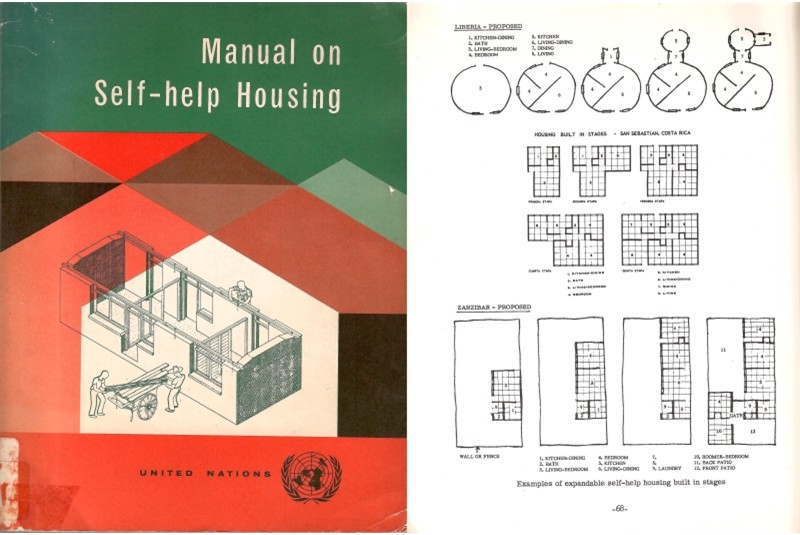
Compared to past colonial examples, however, Fry and Drew’s manual was not aimed at the survival of the European man. On the contrary, by extending to the locals, perhaps for the first time, the anxieties, obsessions and paranoias of the colonizers, it operated in the direction of their readaptation through subtle actions of resettlement and displacement in “sanitized” areas made practicable by the wise “modern” practice. But not only that: the work of the two British architects is also the first to question ways and tools for the mitigation of phenomena such as erosion or floods which European penetration into the continent had made increasingly pervasive and frequent, especially in areas where land reclamation and operations of intensive agriculture had been implemented with greater force. For this reason, the premise of the manual deals with agriculture, and with the village as its “built” counterpart, in the belief that growth and well-being could stem only from that type of anthropized environment. The recommendations provided by the manual, in this sense, are all rather clear, directed towards an embryonic yet evident process of modernization that would affect the scale of the settlement as well as that of the furnishings, up to the design of the clothing. The drawings of small siedlungen placed along the roadside and gathered around the place of worship alternates with details of showers, kitchens and wells, towards the formalization of a new compliant lifestyle made up of covered markets, schools, shops, cinemas, museums, and tennis courts. But also concrete blocks, plastic – “no discussion of building materials could be complete without a reference to plastic”, write Fry and Drew (1947) – asbestos, iron, and corrugated iron. The presumed improvement of the continent’s housing conditions would start from here; readjusting the costume of the African man to criteria and conventions that the English motherland had already metabolized over the last century. At stake was not so much the adaptation of architecture to the environmental conditions of the tropics, but rather the adaptation of human beings to standard models of life and behavior far removed from local customs. The attention to the decency of customs and the healthiness of environments, however, would be gradually integrated with the recognition of equal dignity and equality between people. The creator and spokesperson of this instance will be the United Nations Organization (UN), which ratified the Universal Declaration of Human Rights during the third session of the General Assembly in 1948. The United Nations, in the years immediately following, will begin to make efforts to transfer and apply the principles set out in the Declaration in those environments and areas where disparities manifested themselves most clearly: among them, the habitat in the territories that had recently obtained or were preparing to obtain independence, not only in Africa (Kwak 2016).
However, the changing political and cultural scenario will not correspond to an effective rethinking of the tools. For most of the initiatives conducted by the UN and linked to the improvement of housing conditions, in fact, reference to the works of Fry and Drew will continue to be an obligatory passage, especially because of the incredible amount of information and knowledge it contained[2]. It is no coincidence that it was Fry that Jaqueline Tyrwhitt (1905-1983) turned to during the preparations for the first UN Regional Seminar on Housing and Community Development, promoted by the United Nations Technical Assistance Administration (UNTAA) and organized by Tyrwhitt herself in her capacity as head of the Indian division of UNTAA (Shoshkes 2016)[3].
Despite the obvious conceptual and geographical gap – the seminar was held in India, and was organized to respond to overpopulation problems in the areas of South-East Asia – the thematic focus remained the one already identified by Fry and Drew seven years earlier – the village – and Africa itself the main reference in terms of knowledge and availability of information. Tyrwhitt seemed to be fully aware of the risks underlying the village’s paternalistic narrative; an awareness that she would manifest with a certain lucidity by focusing on the need to safeguard the village as a closed entity, out of the manufacturing or production “infiltrations” that would have transformed the inhabitants from productive subjects to objects of exploitation (Tyrwhitt 1985). At risk, according to Tywrhitt, was the very permanence of the village as a model of development. Indeed, the risk would not have taken long to reveal itself, and the United Nations’ self-help policies were soon directed towards urban-scale environments, where financial capital naturally tended to concentrate. On the contrary, the tropical background would resist as a general framework, despite losing much of the political connotation that had characterized its earlier formalisation: while Tyrwhitt titled the bulletin edited on behalf of Doxiadis Tropical Housing and Planning Monthly – a collection of reports and documents from projects in developing areas[4] –, Fry and Drew would update their work by publishing Tropical Architecture in the Dry and Humid Zones starting from the design and construction experiences undertaken in the same years across Ghana and Nigeria. Once again, Africa was the center and premise of the tropical world.
The tropics, however, were no longer considered a “political” entity: in 1956, three years after the start of the Tropical Architecture course at the Architectural Association in London (Chang 2016), the area between the two tropics had in fact turned into a geographical area that found its conceptual roots in the climate as well as in the polar coordinates that defined its extension – including areas and territories that had never been considered until then –, but also and above all in a new architectural practice with shared and at the same time specific traits. Of this extension, the first critic would be George Anthony Atkinson, Colonial Liaison Officer since 1948 and professor in the Department of Tropical Architecture in London. Atkinson reviewed Fry and Drew’s volume just a year after its publication, in 1957, highlighting the numerous shortcomings that characterize its technical apparatus (Atkinson 1957). It would have been more useful, Atkinson wrote, to narrow the field of investigation and further specify the singularities and characteristics typical of each area, beyond what had already been detected by the Commonwealth Building Research Stations and reported in the volume. But Fry and Drew’s ambitions were no longer the same as it was ten years earlier. Tropical medicine had made giant strides and the hypochondria that was at the basis of the colonial discourse gave way to an increasingly bold and generalized aspiration for comfort, well-being and development; while the city became the environment where transformation and growth had to take place.
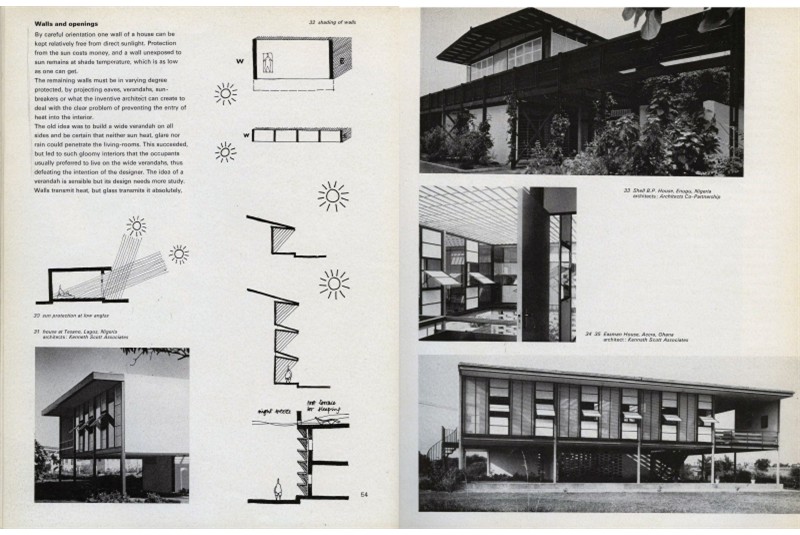
Of this transition, of course, the couple was profoundly aware: between 1947 and 1956, in fact, they had designed and built a large number of buildings in urban areas of Nigeria and the Gold Coast: mostly public facilities, homes and neighborhoods serving a society now ready for westernization (Uduku 2006). And it is precisely starting from these examples that the manual develops, divided into chapters based on the functions and roles of buildings, plus an appendix of data and technical devices regarding shading, solar radiation, water collection, thermal expansion of materials, defense from hurricanes, protection from termites and fungi, minimum residential standards, and construction costs (Fry and Drew 1956)[1]. The examples collected and depicted in the first section of the text display an incredible variety of strategies and solutions; a vocabulary that greatly exceeds the detail of recommendations and prescriptions provided in the appendix, opening up to the substantial ambiguity already partially noted by Atkinson. The redundancy of the architectures and devices described in the volume, in fact, almost seems to deny or contradict the claimed scientific nature of the approach reported at the end, testifying for a practically unlimited portfolio of design possibilities; not considering the authorship of the individual works, since the authors of the volume exclude the name of the designer from the captions of the images[5]. The result, almost paradoxical, is that of a large “tropical international”; a network of architects faithful to modern orthodoxy and capable of operating with the utmost ease in a world where Africa stands at the center - and the Caribbean, Latin America and South-East Asia at its margins. Indeed, most of the built work included in the volume is concentrated precisely in Africa: in 1956, the African population was now ready for modernization and urbanization, and the architecture designed and built for this purpose acted as samples of a practice to be developed throughout the world.
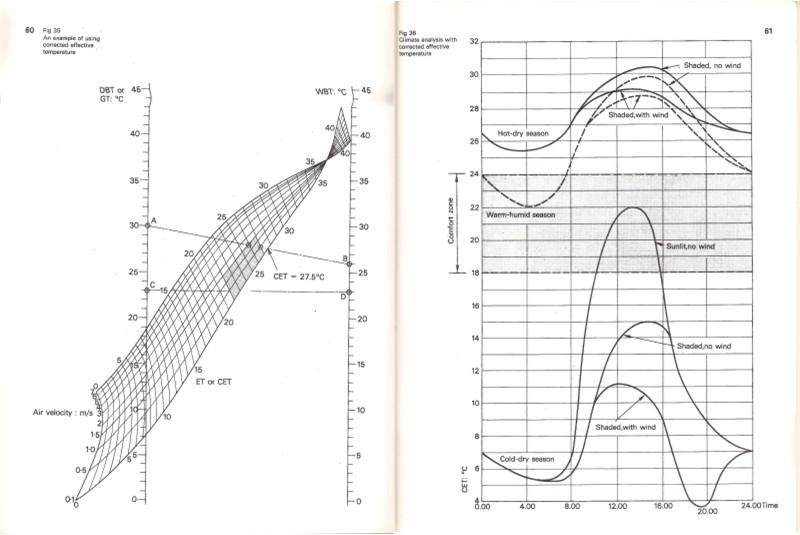
In 1974 Otto Koenigsberger (1974) published the Manual of Tropical Housing and Building, the first of a series of volumes dedicated to design and construction in a tropical environment. The book – the only one in the series actually published – focuses extensively on climate issues and represents a significant change of direction. Fry and Drew’s open approach, in fact, is supported by a meticulous analysis of climate data, in the hypothesis that these can be transferred and transformed into spatial devices capable of responding directly to individual inputs. The continually renegotiable spirit established by models and examples of built architecture is therefore replaced by a ready-to-wear system, less rich in nuances but easier to understand and immediate to apply; at least for those who would use it, and provided they were “in tune” with the rigid system of rules that governed its functioning. In this sense, the Manual of Tropical Housing and Building is not necessarily to be understood as an evolution of Tropical Architecture but, rather, as a complementary work that transposes, accepts and integrates its operational limits, attempting to resolve its contradictions: the same, moreover, already recorded by Atkinson in his 1957 review.
Before the publication of the manual, in fact, the careers of Fry, Drew, Atkinson, Tyrwhitt and Koenigsberger had been intertwined in various ways, first within the operations conducted by the various colonial offices in Africa and India, then in London with the opening of the Department of Tropical Architecture and finally in New Delhi, during the UNTAA conference of 1954. On behalf of the United Nations Koenigsberger would travel through the newly independent territories of Africa and Asia undertaking a large number of missions (Baweja 2008). And it is during these experiments – which will also lead to the creation of pilot projects, as in the case of the Gold Coast – that Koenigsberger understood the need to lay the foundations of a technical knowledge compliant with the modernization process underway. The missions on behalf of the United Nations began in the Gold Coast in 1954, with the experiments on the Roof Loan Scheme, continued to Pakistan and the Philippines to head back to Africa, in 1962, with the proposal of aided rehabilitation for the metropolis of Lagos; and finally concluded, in 1963, with the landing in the Far East and the implementation of the Singapore Ring City plan (D’Auria, De Meulder and Shannon 2011, Pappalardo 2021). Starting from these experiences, Koenigsberger will be increasingly convinced of the impossibility of proceeding case by case; and, at the same time, of the need to build a core of hard, scientifically appropriate knowledge that would guide and instruct architectural design in all its phases.
A body of knowledge, the one imagined by Koenigsberger, which necessarily started from scratch and which, perhaps for this reason, had to be first and foremost based on questions external to the field of architecture. Operating mostly in areas of the non-Western world, in fact, Koenigsberger had realized that the universalism of the architectural manuals developed in the First and Second World War postwar years was only presumed; and that the most of prescriptions were neither extendable – nor even applicable – to climatic and social conditions differing from those in which they were conceived. Hence, the idea of an appropriate product, made of everything that precedes or revolves around – like the sun – architecture. As if what had already been created or conceived up until then was in some way “deviant” with respect to criteria not yet fully explored or stated. According to this new perspective, the actual role of architecture resided therefore only and solely in its effectiveness, or rather in its responsiveness to external and pre-established topics, including climate and material performances. In other words, the quality of the built environment had to be achieved exclusively through the resolution of technical problems and the slavish application of the rules set out in the manual. A process that eliminated not only every form of complexity and conflict inherent in the colonial paradigm shift. In fact, it was also and above all architecture that was dissolving as it had been understood up to that moment, and not only by Fry and Drew: subjected to the outcome of application processes that were always identical to themselves and paradoxically almost georeferenced in the last attempt to adapt its forms to extremely specific conditions, Koenigsberger’s work definitively challenges the rules of authorship to project itself into the galaxy of hegemonic expertise and knowledge, as the system of power that generated them is hegemonic and on a global scale (De Dominicis and Tolic 2022). In this sense, Africa once again becomes the place where everything begins: the main space of experimentation in which the technological and apparently “scientific” knowledge of the manual not only overlaps with the mythopoetic processes necessary for the establishment of new national realities, but ends up directing customs and material development according to new forms of dependence.
Notes
[1] This work is to be considered the result of common discussion that the two authors developed within the framework of their respective interests, the part concerning the Fry&Drew manuals is mainly attributable to Jacopo Galli and the one on Tyrwhitt and Koenigsberger to Filippo De Dominicis. Given the breadth of the topic, it was not possible to provide a sufficiently exhaustive bibliography, for which reference should be made to the monographic texts of the authors.
[2] In this sense, a statement released by Leonard W. Rist, one of the main managers of the World Bank’s activities in Africa, is interesting. Interviewed as part of an oral history program at Columbia University, he admitted that for New York officials Africa remained a substantially unknown territory, and that much of the information necessary for the investigation of the projects was obtained from the dispatches of colonial officials, especially British.
[3] At the UN Regional Seminar in New Delhi in 1954, experiences and research conducted in India, Southeast Asia, Indonesia, the Caribbean and Africa were presented by Otto Koenigsberger, Ernest Weissmann, Robert Gardner-Medwin, Jacob Thijsse, Charles Abrams, Constantinos A. Doxiadis, and Arieh Sharon, just to mention some of the best known profiles; and here the foundations will be laid for some of the most important design experiments of the years to come.
[4] The Tropical Housing and Planning Monthly Bulletin, compiled monthly by Jaqueline Tyrwhitt between 1954 and 1957, is in fact the precursor of Ekistics, a magazine created and published by the Greek planner Constantinos A. Doxiadis (1913-1975).
[5] In addition to Edwin Maxwell Fry and Jane Drew, Architect Co-Partnership and James Cubitt, the names of Richard Neutra, Paul Rudolph and Oscar Niemeyer also appear among the architects whose works are included in the volume.
[1] The technical appendix included at the end of Tropical Architecture in the Dry and Humid Zones is taken from research by the Building Research Stations of the British Colonial Office, the list of which is reported at the beginning of the section.
Bibliography
ATKINSON G.A. (1957) – “Tropical Architecture in the Humid Zone by Maxwell Fry and Jane Drew”. Journal of the Royal Society of Arts, 105, 4999, pp. 348-349.
BAWEJA V. (2008) – A Pre-history of Green Architecture: Otto Koenigsberger and Tropical Architecture, from Princely Mysore to Post-colonial London. PhD Thesis in Architecture, University of Michigan.
CHANG J.H. (2016) – A Genealogy of Tropical Architecture. Colonial networks, nature and technoscience. Routledge, London-New York.
D’AURIA V., DE MEULDER B., SHANNON K. (2011) – “Placing and (re)Locating Human Settlements. Projects, Events and Texts”. Landscape architecture China, 33, pp. 32-53.
DE DOMINICIS F., TOLIC I. (2022) – “Experts, Export and the Entanglements of Global Planning”. Planning Perspectives, 37-5, pp. 871-887.
FRY E.M., DREW J. (1947) – Village Housing in the Tropics, with special reference to West Africa. Lund Humphries, London.
FRY E.M., DREW J. (1964) – Tropical Architecture in the Dry and Humid Zones. Batsford, London.
GALLI J. (2022) – “Hypochondria as form factor: The role of colonial anxieties as shapers of buildings and urban spaces in British Africa”. Planning Perspectives, 37-1, pp. 103-126.
KOENIGSBERGER O. (1964) – Manual of Tropical Housing and Buildings. Part 1: Climatic Design, Longman, London.
KWAK N. (2019) – “The United Nations and self-help housing in the tropics”. In: F. Karim (edited by), The Routledge Companion to Architecture and Social Engagement. Routledge, New York.
LE ROUX H. (2003) – “The networks of tropical architecture”. The Journal of Architecture, 8-3, pp. 337-354.
PAPPALARDO S.A. (2022) – Le origini progressive del ‘development approach’. I paradigmi di una progettazione incrementale. PhD Thesis discuss on 23-09-2021, Università Iuav di Venezia, Scuola di dottorato in Architettura, città e design, XXXIII ciclo.
SHOSHKES E. (2016) – Jaqueline Tyrwitth. A Transnational Life in Urban Planning, Routledge. London-New York.
TYRWHITT J. (1985) – “The village center at the Exhibition on Low-Cost Housing, Delhi, 1954”. Ekistics, 314-315, pp. 430-431.
UDUKU O. (2006) – “Architecture and the ‘tropical’ in West Africa: the tropical architecture movement in West Africa, 1948-1970”. Habitat International, 30, pp. 396-411.